Artwork
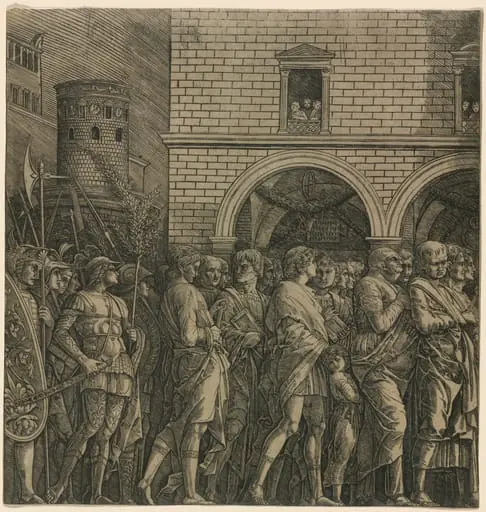
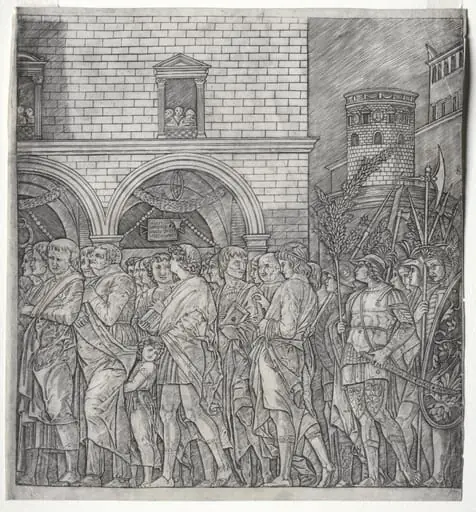
The Triumphs of Caesar: The Senators
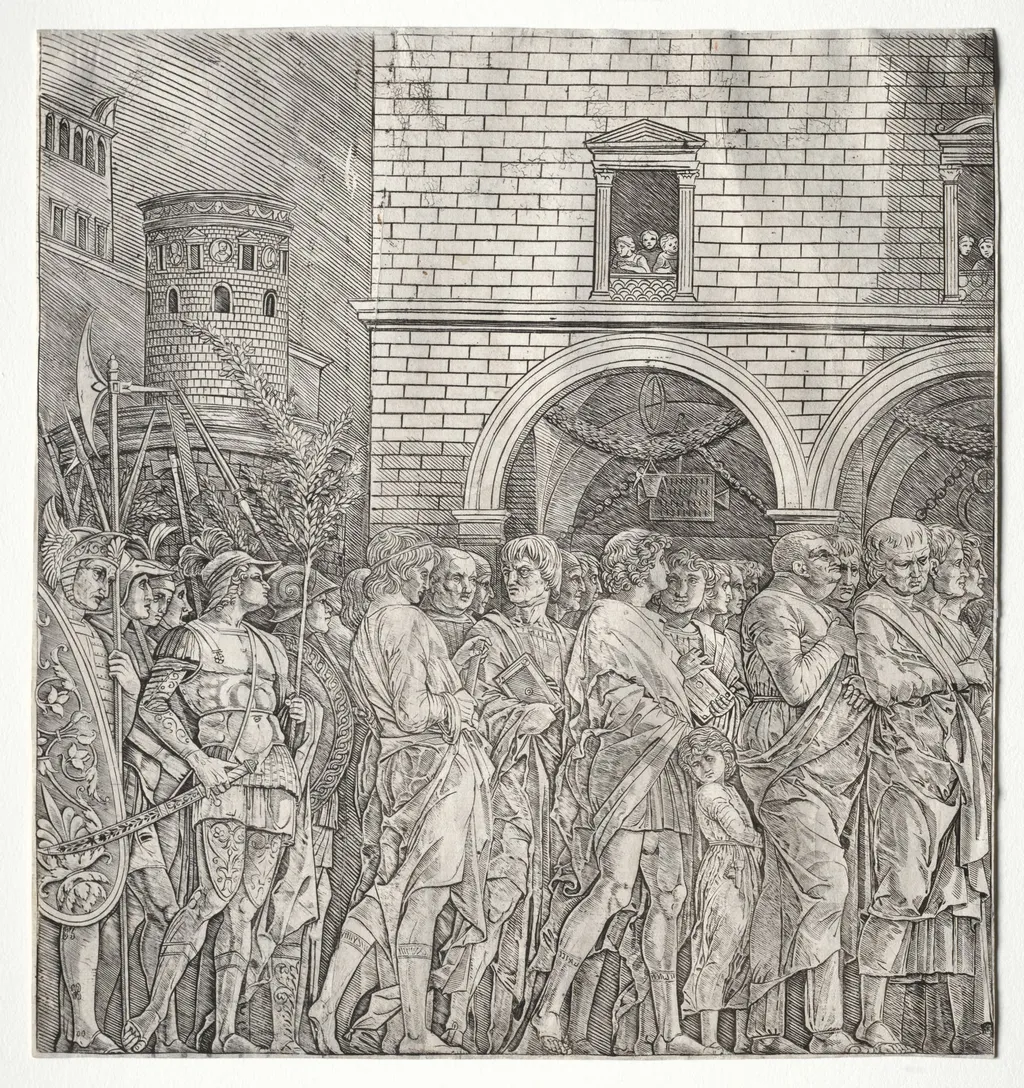
The Triumphs of Caesar: The Senators is a print by the Renaissance artist Andrea Mantegna. It dates from 1404 and is held in the collection of the Cleveland Museum of Art.
About this work
Overview
Created between 1484 and 1492, this panel is part of a nine-painting series by Andrea Mantegna depicting the triumphal procession of Julius Caesar.
Created between 1484 and 1492, this panel is part of a nine-painting series by Andrea Mantegna depicting the triumphal procession of Julius Caesar. Executed in tempera on canvas, it belongs to a cycle commissioned by the Gonzaga family of Mantua. The work reflects Mantegna’s deep engagement with Roman history and his technical mastery of spatial composition, achieved through a low vantage point that amplifies the imposing presence of the figures and architecture.
Subject & Meaning
The scene portrays Roman senators advancing in ceremonial order, their robes and attributes signaling rank and civic duty. They precede the central triumphal chariot, establishing their role as pillars of the Republic even within an imperial celebration. The inclusion of spears, shields, and banners underscores the military and political authority of Rome. The procession is not a narrative moment but a symbolic representation of institutional continuity and Roman civic idealism.
Technique & Style
Mantegna renders figures with sculptural clarity, emphasizing angular folds in fabric and metallic sheen on armor and insignia. His use of a lowered horizon line compresses the space, drawing the viewer’s eye along the procession’s axis. Details in architecture and costume are meticulously rendered, reflecting his study of ancient reliefs and coins. The palette is restrained, relying on tonal variation rather than color to convey depth and texture.
History & Provenance
The series was commissioned by Ludovico Gonzaga, Marquis of Mantua, and remained in the Gonzaga collection for over a century. After the family’s decline, the paintings were sold to King Charles I of England in the early 17th century. They entered the Royal Collection and have been housed at Hampton Court Palace since the 1660s, where they remain today as one of the most complete Renaissance processional cycles in existence.
Context
Mantegna’s work emerged during a period of renewed interest in classical antiquity among Italian humanists. His training under Francesco Squarcione exposed him to ancient artifacts, which he studied closely. Unlike contemporaries who idealized antiquity, Mantegna favored archaeological accuracy, integrating real Roman motifs into his compositions. His approach influenced later artists seeking historical authenticity in narrative painting.
Legacy
The Triumphs of Caesar series set a precedent for the depiction of historical processions in Western art, influencing Baroque and Neoclassical painters. Mantegna’s fusion of classical form with spatial innovation demonstrated how ancient subjects could be rendered with psychological and architectural rigor. The series remains a key reference for understanding Renaissance engagement with antiquity beyond mere imitation.
Artist & collection
Artist
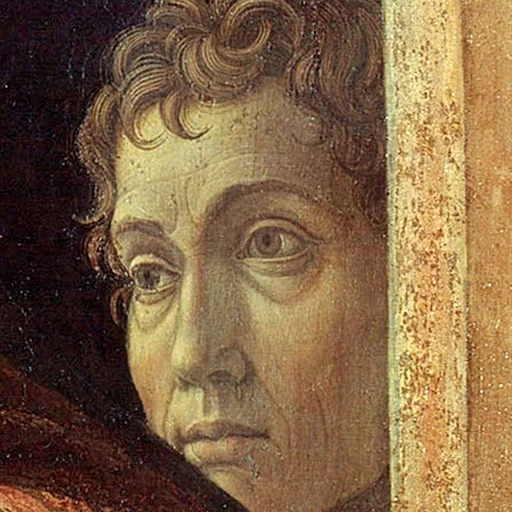
Andrea Mantegna (UK: , US: ; Italian: ; c. 1431 – September 13, 1506) was an Italian Renaissance painter, a student of Roman archaeology, and the son-in-law of Jacopo Bellini. Like other artists of the time, Mantegna…

 The Triumph of Caesar: The Senators
 Triumph of Caesar: The Senators
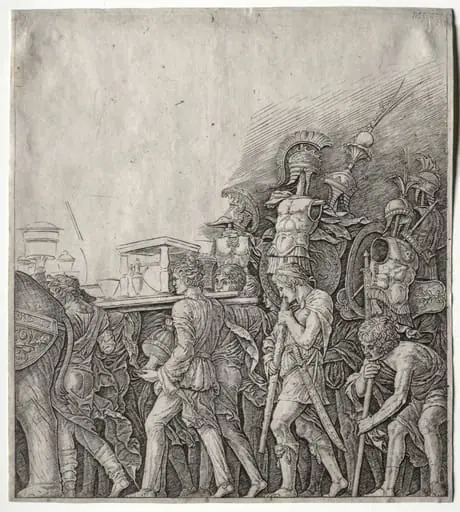 The Triumphs of Caesar: The Corselet Bearers
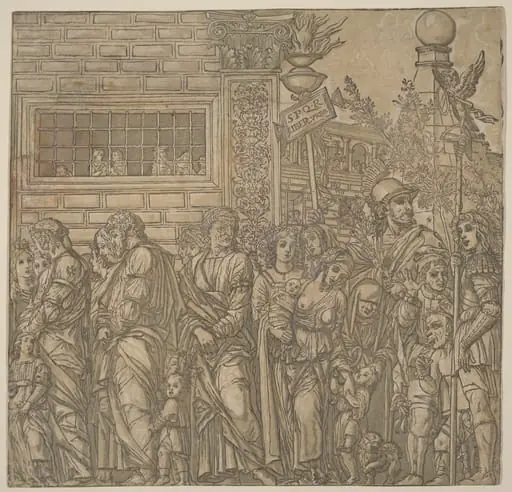 The Triumph of Julius Caesar
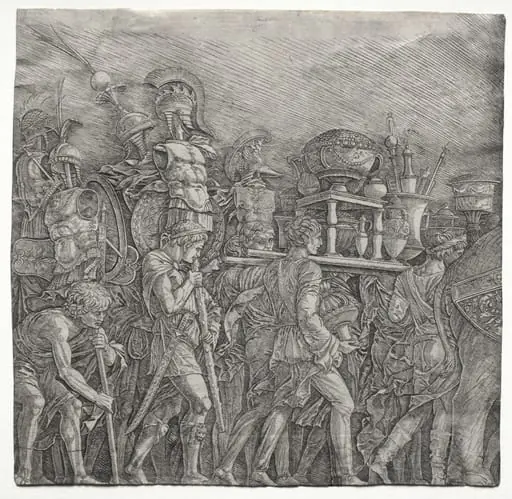 The Triumphs of Caesar: The Corselet Bearers
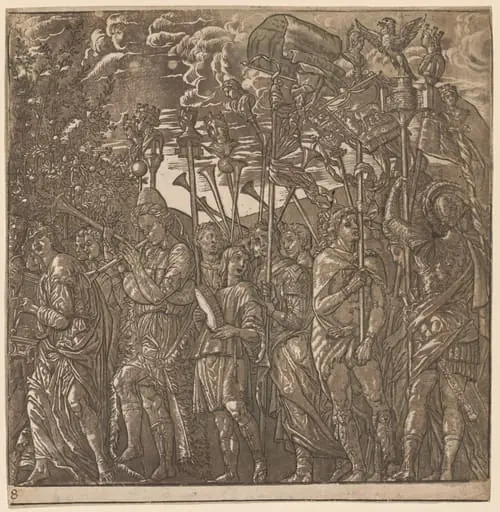 The Triumph of Julius Caesar: Soldiers Carrying Banners and Standards
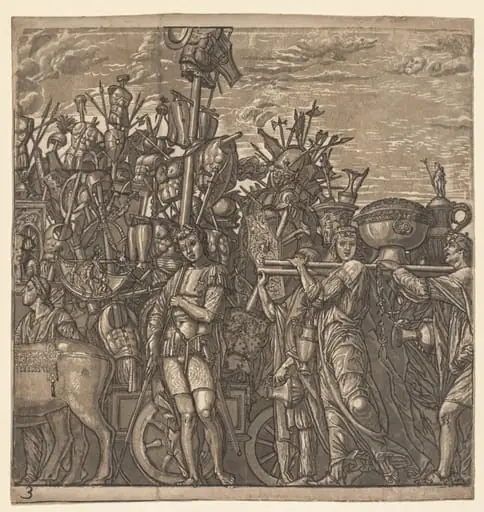 The Triumph of Julius Caesar: Soldiers Marching with Trophies of War
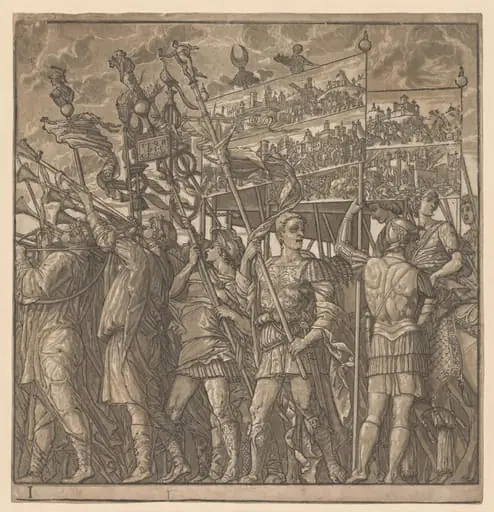 The Triumph of Julius Caesar: Soldiers Carrying the Pictures of War
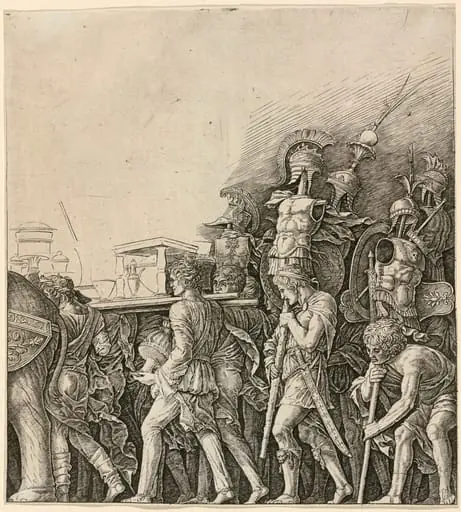 The Triumph of Caesar: Soldiers Carrying Trophies
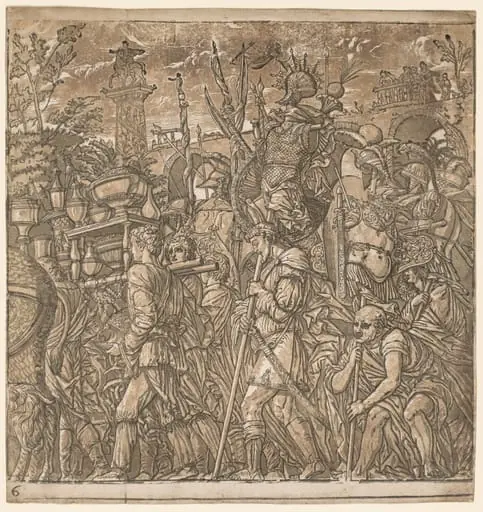 The Triumph of Julius Caesar: Soldiers Carrying Vases and Trophies of War