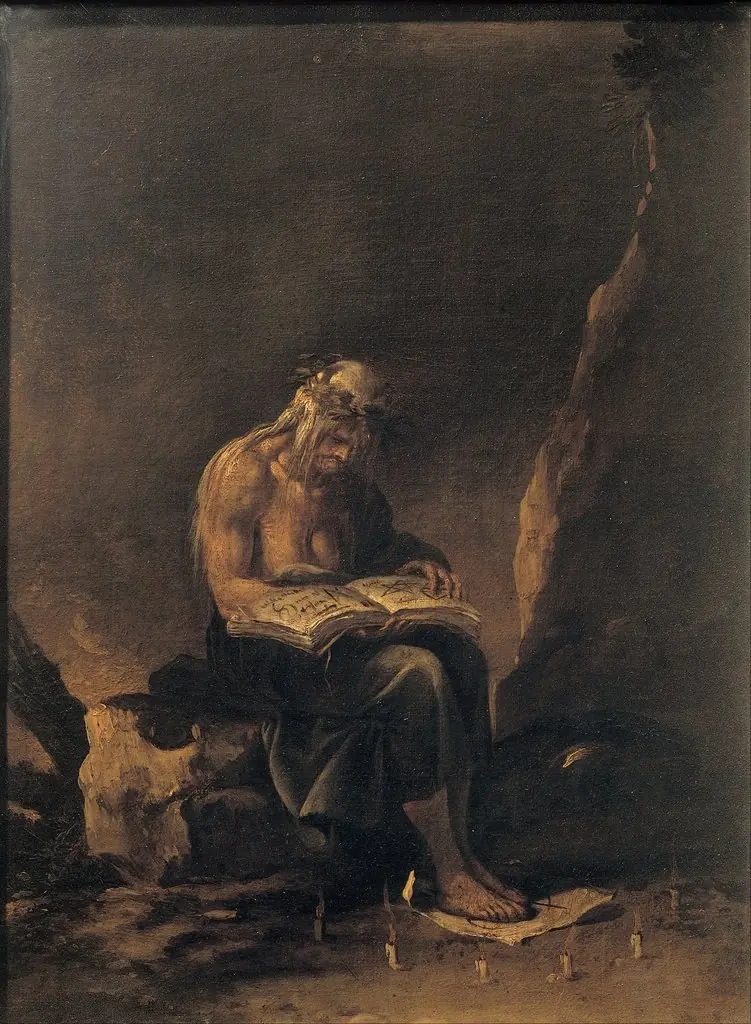
Artwork
St Jerome
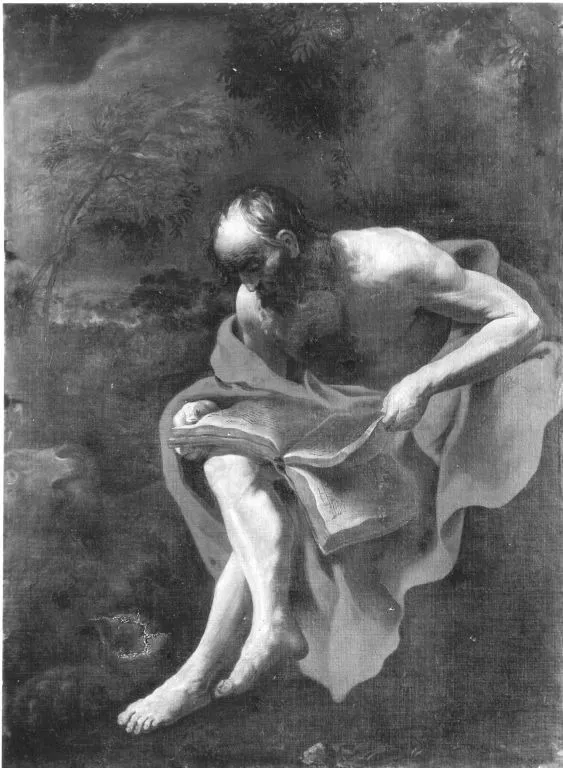
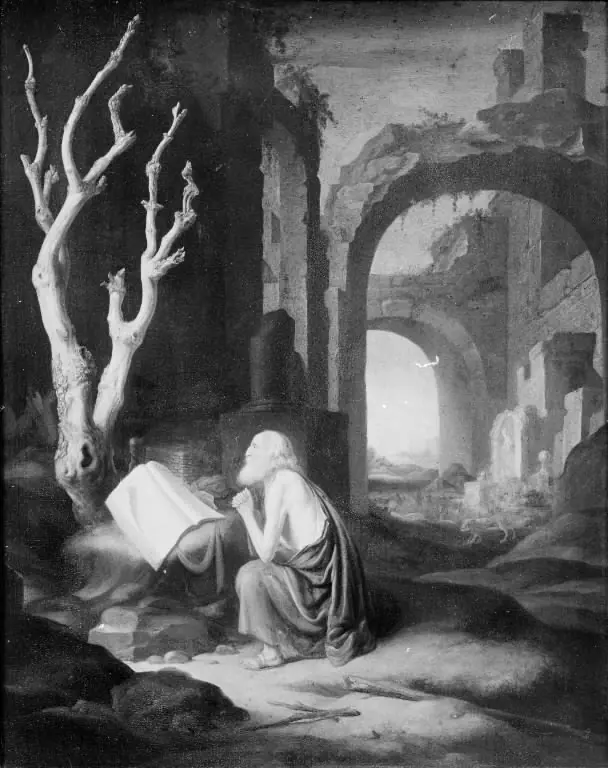
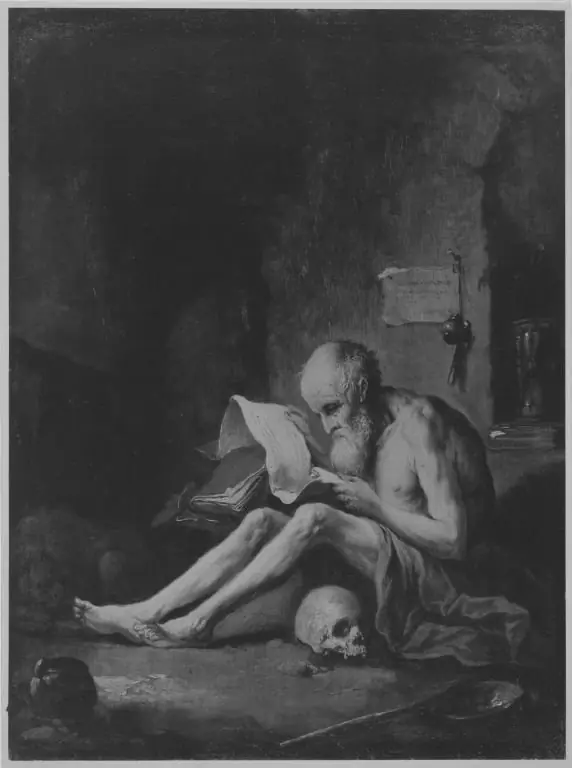
St Jerome is an unspecified painting by the Early Baroque Italian artist Unknown. It dates from 1608 and is held in the collection of the Bavarian State Painting Collections. Created in 1608 by an unidentified hand, this oil painting presents a solitary figure seated upon a rock.
About this work
If you're interested in exploring more works like this, you might want to look up the artist Unknown, who created this piece in 1608.
This painting depicts a man sitting on a rock, engrossed in reading a book. He is barefoot and draped in a cloth, with his right leg crossed over his left. The man's facial expression conveys deep concentration as he reads.
The background of the painting features a subtle, dark landscape that adds depth to the scene. The overall atmosphere is one of quiet contemplation, with the man's focus on his book creating a sense of intimacy.
If you're interested in exploring more works like this, you might want to look up the artist Unknown, who created this piece in 1608.
Overview
Created in 1608 by an unidentified hand, this oil painting presents a solitary figure seated upon a rock. The man, traditionally identified as St Jerome, is absorbed in a book, his gaze fixed and his posture relaxed with the right leg crossed over the left. A muted, shadowy landscape recedes behind him, lending depth while preserving the intimate focus on the act of reading.
Subject & Meaning
The work portrays the biblical scholar St Jerome, renowned for translating the Bible into Latin. His barefoot state and simple cloth suggest ascetic devotion, while the intense concentration on the manuscript underscores his scholarly labor and spiritual contemplation. The quiet setting invites viewers to share in the reflective atmosphere that characterizes Jerome’s hermitic life.
Technique & Style
Rendered with a restrained palette, the artist employs soft chiaroscuro to model the figure against a dimly lit backdrop. The brushwork is delicate around the folds of the cloth and the texture of the rock, while broader, smoother strokes convey the atmospheric depth of the distant landscape. The composition balances realism with a modest, devotional tone typical of early‑17th‑century religious genre.
History & Provenance
The painting’s creator remains unknown, and documentation of its early ownership is scarce. First recorded in a 19th‑century inventory of a private collection, it later entered the public domain through donation to a regional museum. Its dating to 1608 is based on stylistic analysis and the material characteristics of the canvas and pigments.
Artist & collection

 Domestic Scene
 Giacomo and Cardinal Marco, investing Andrea, Abbot of San Zeno, with his Benefice
 The Nymph of Fontainebleau
 Portrait of a Woman
 Madonna and Child with Saints in the Enclosed Garden
 Venus and Minerva
 Family Group of Four on Sofa
 Wall painting from Room H of the Villa of P. Fannius Synistor at Boscoreale