Artwork
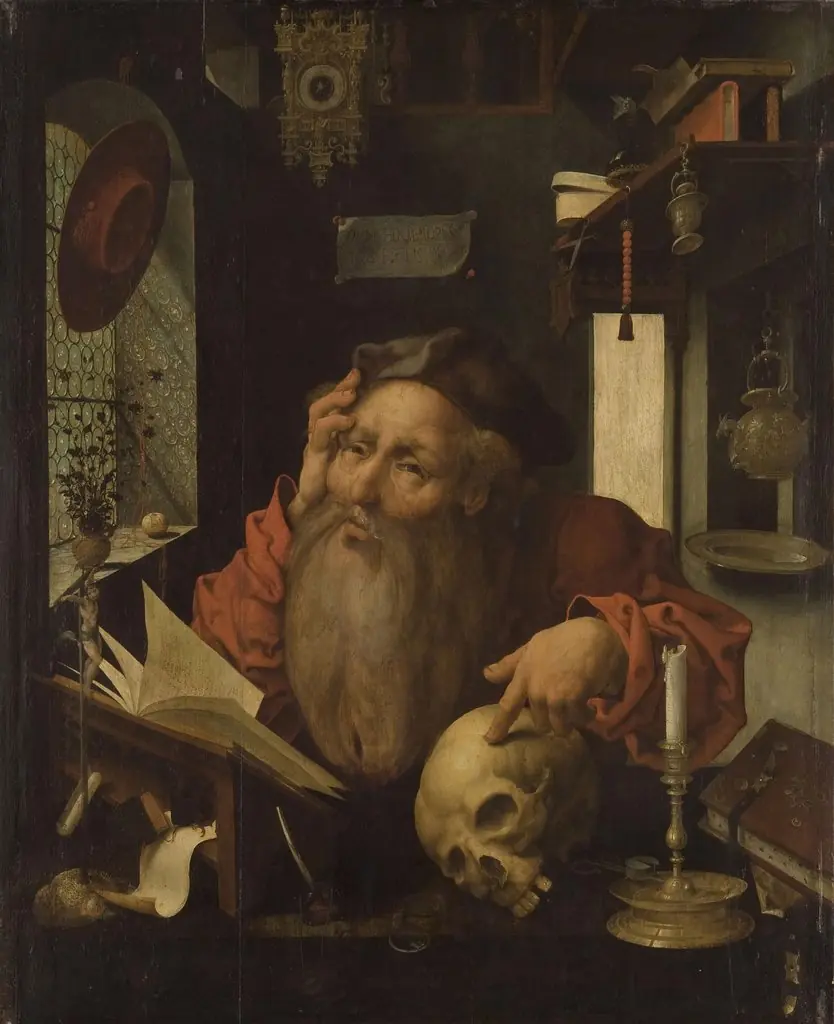
St Jerome in his study
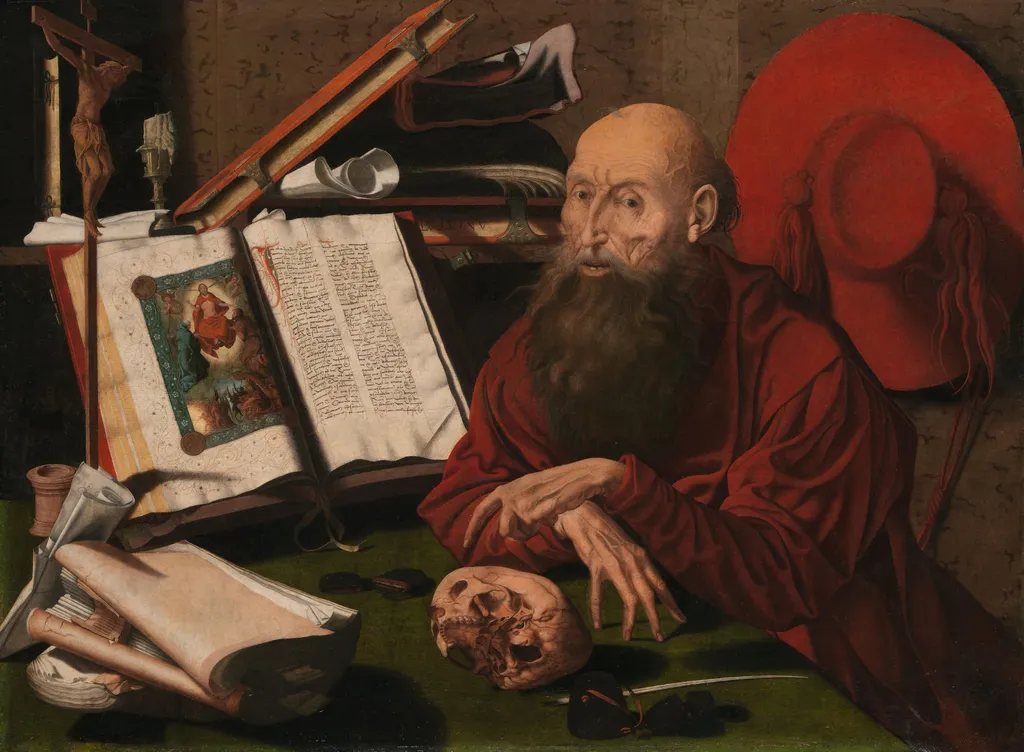
St Jerome in his study is an unspecified painting by the Mannerist artist Unknown. It dates from 1535 and is held in the collection of the Rijksmuseum.
About this work
Overview
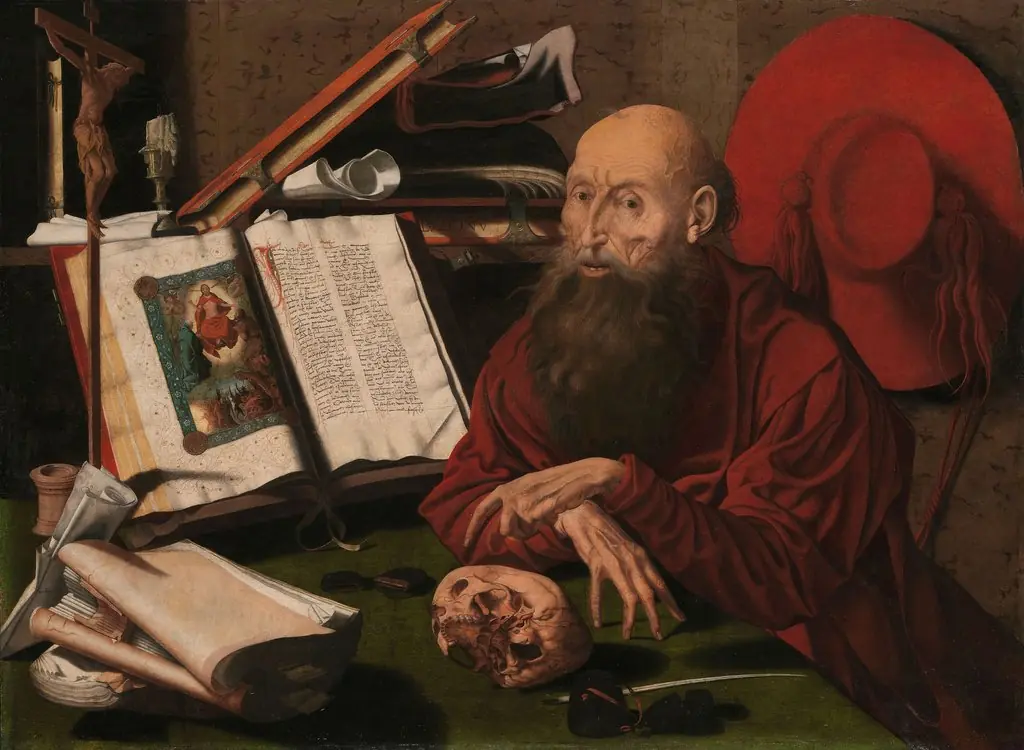
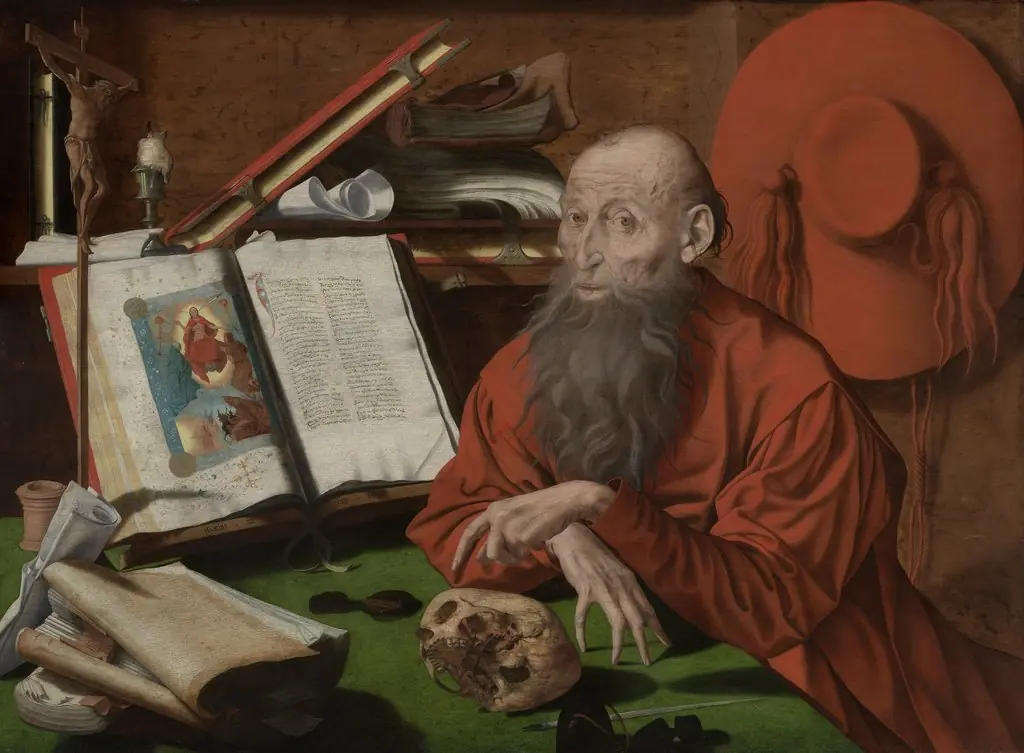
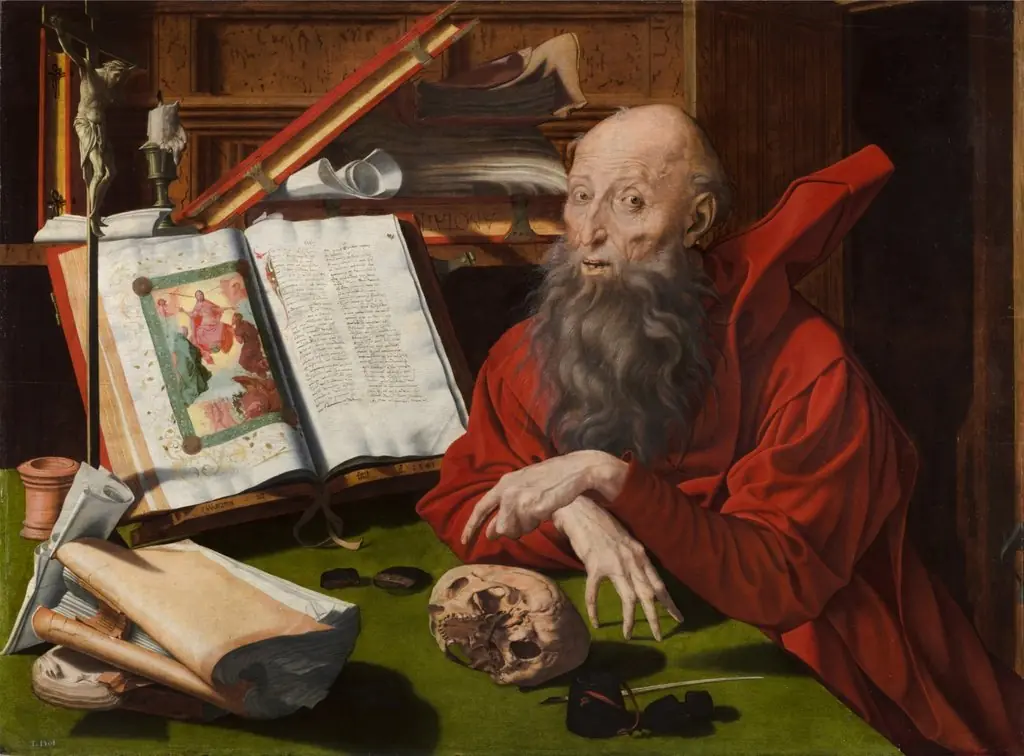
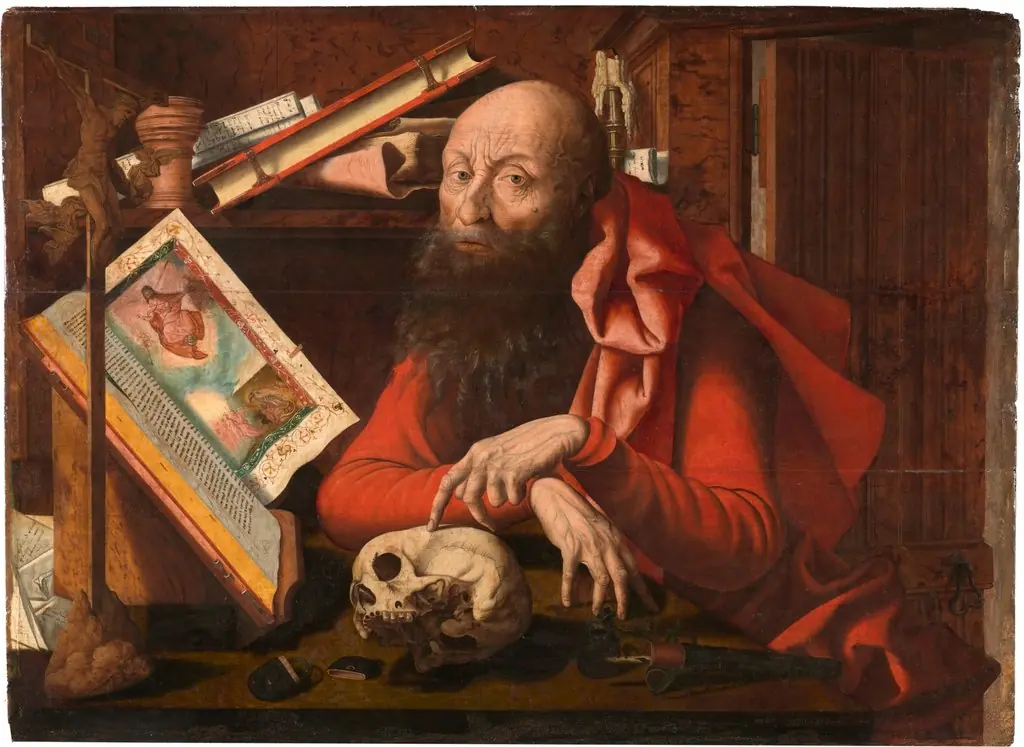
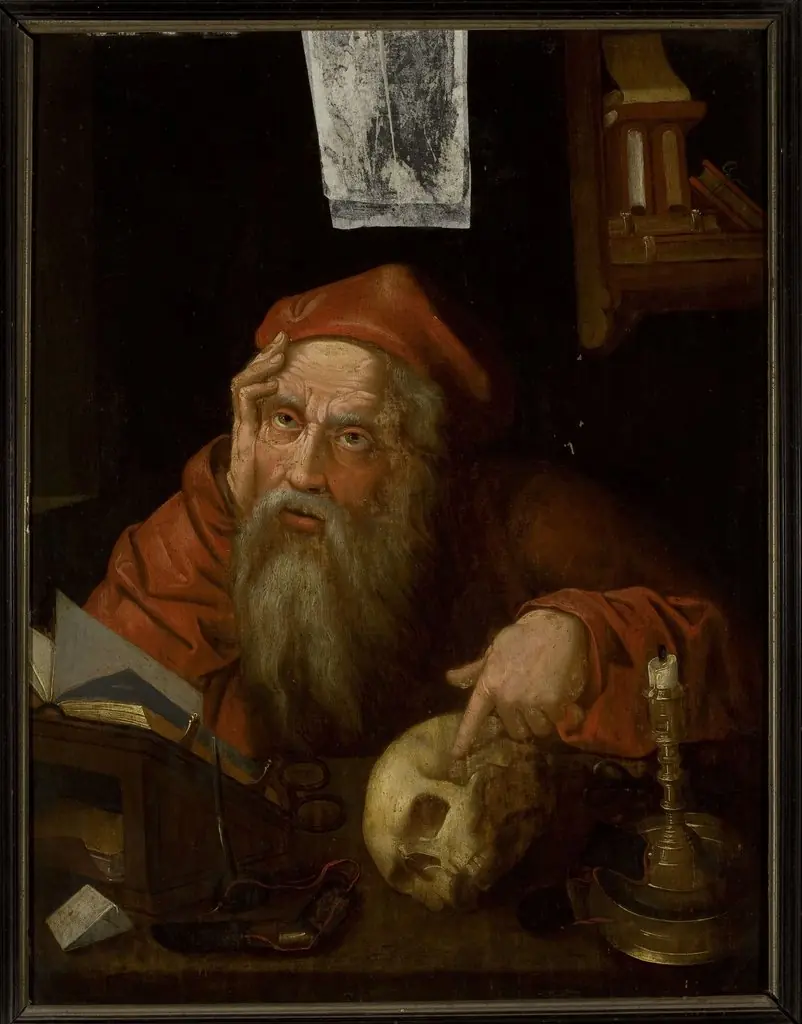
This painting depicts Saint Jerome in a quiet, book-filled study, replicating a well-known composition originally created in 1541 by Albrecht Dürer.
This painting depicts Saint Jerome in a quiet, book-filled study, replicating a well-known composition originally created in 1541 by Albrecht Dürer. The scene captures the saint in a moment of contemplation, surrounded by scholarly tools and symbolic objects. Though a later reproduction, it preserves the essential elements of the original, reflecting the enduring appeal of Dürer’s iconography among 16th-century artists.
Subject & Meaning
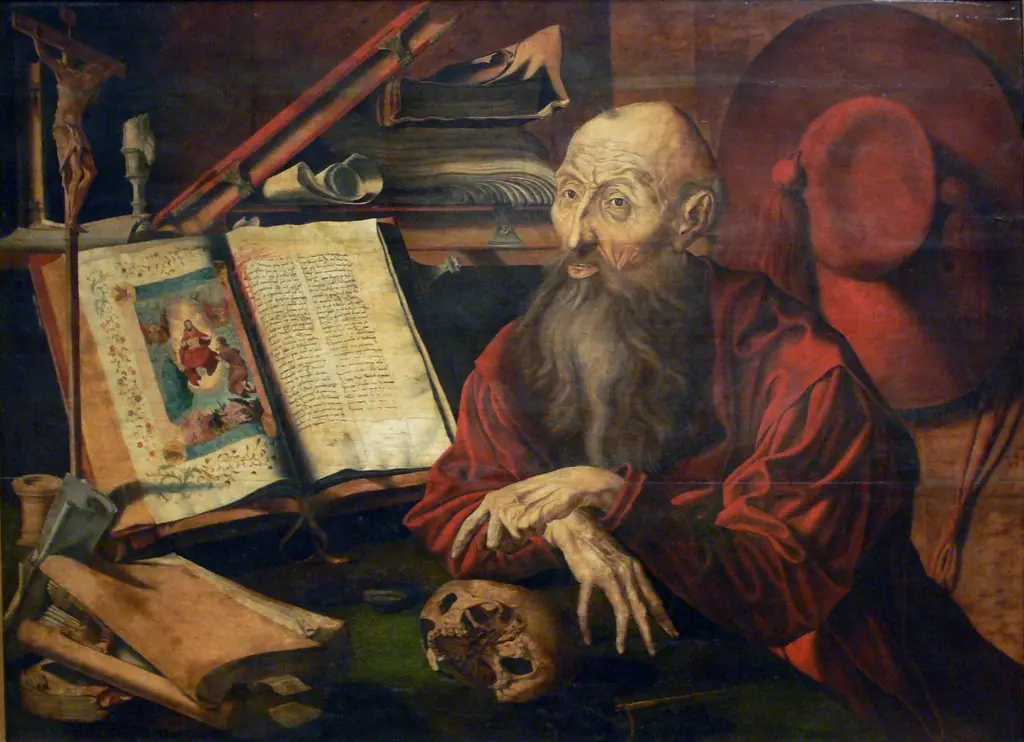
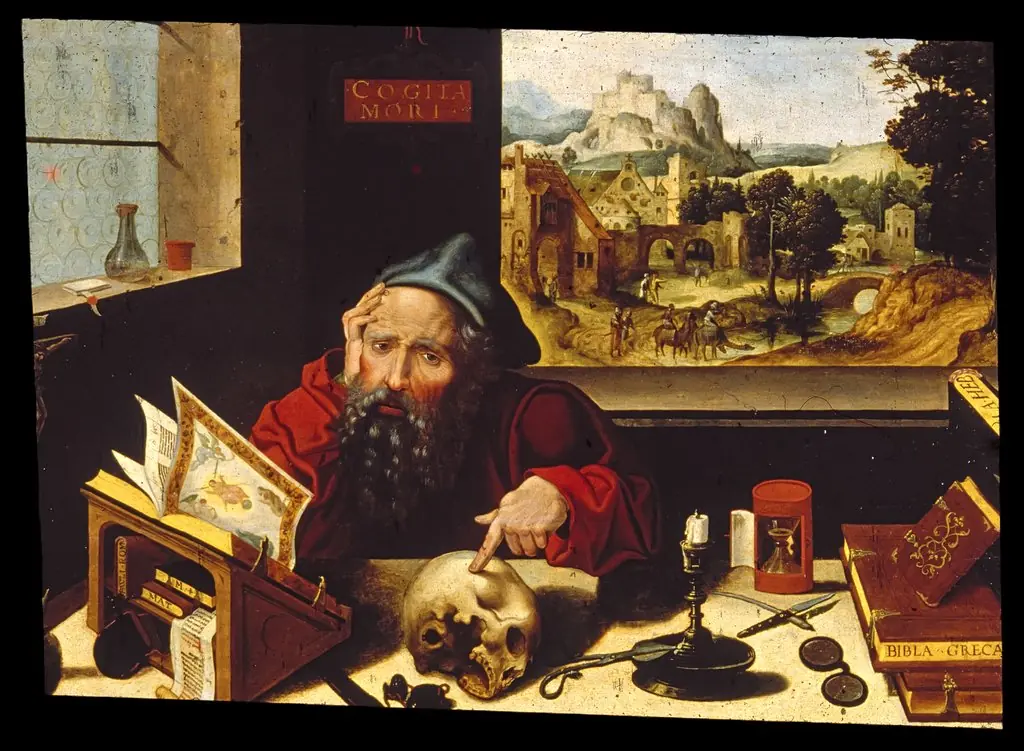
Saint Jerome, a Church Father known for translating the Bible into Latin, is shown meditating on mortality. His gesture toward the skull evokes memento mori, a reminder of death’s inevitability. The open book revealing a miniature of the Last Judgment ties intellectual pursuit to spiritual accountability. The cardinal’s hat and lit candle reinforce his ecclesiastical rank and the fleeting nature of earthly life.
Technique & Style
The work employs precise, detailed brushwork typical of Northern Renaissance traditions. Objects are rendered with careful attention to texture—wood grain, parchment, metal—creating a sense of tangible realism. The composition is tightly organized, with each item placed to guide the viewer’s eye toward the skull and the illuminated manuscript, balancing symbolism with domestic intimacy.
History & Provenance
The painting is a 16th-century copy of Dürer’s 1541 original, now in the Prado Museum. Its existence reflects the widespread circulation of Dürer’s imagery through prints and replicas, a phenomenon common among popular compositions of the era. This version, held at the Rijksmuseum, demonstrates how artists adapted the original with subtle variations in lighting, detail, and arrangement.
Context
In the decades following the Reformation, images of Saint Jerome served as models of devout scholarship. His study became a visual metaphor for the Christian life: disciplined, reflective, and oriented toward eternal truths. The inclusion of personal items—glasses, quill, candle—humanized the saint, making his piety accessible to lay viewers seeking spiritual guidance through learning.
Legacy
Multiple versions of this composition attest to its resonance across generations. Artists reproduced it not merely as homage but as a means of engaging with theological and humanist ideals. The persistence of these copies highlights how Dürer’s imagery became a shared visual language, bridging religious devotion and intellectual culture in early modern Europe.
Artist & collection

 Domestic Scene
 Giacomo and Cardinal Marco, investing Andrea, Abbot of San Zeno, with his Benefice
 The Nymph of Fontainebleau
 Portrait of a Woman
 Madonna and Child with Saints in the Enclosed Garden
 Venus and Minerva
 Family Group of Four on Sofa
 Wall painting from Room H of the Villa of P. Fannius Synistor at Boscoreale