Artwork
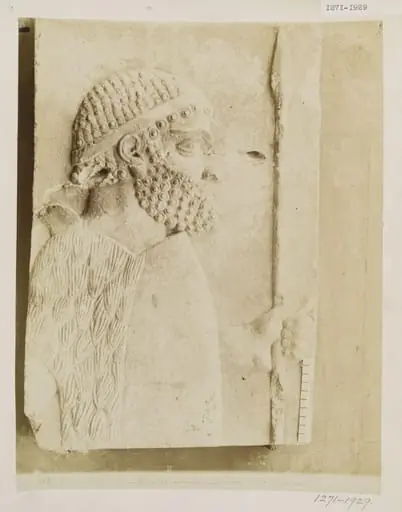
Stone sculpture of a head of a warrior, probably from Palace of Xerxes
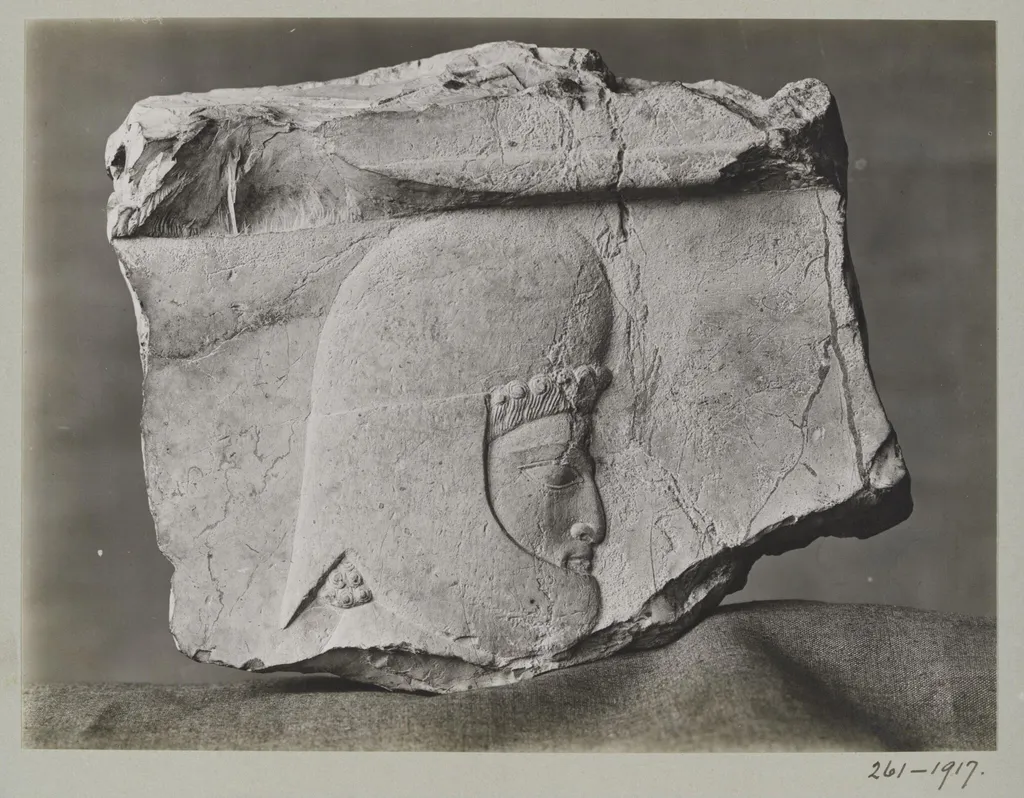
Stone sculpture of a head of a warrior, probably from Palace of Xerxes is a photographic photography by Unknown. It dates from 1917 and is held in the collection of the Victoria and Albert Museum. A 1917 black-and-white photograph depicts a weathered stone fragment of a warrior's head, captured in profile.
About this work
The damage suggests it’s very old, but the carving is still clear enough to see details like the beard and headdress.
This is a broken stone carving of a person’s head and shoulders. The face is simple, with straight hair and a beard. The stone is rough and cracked, showing wear over time. The figure wears a headdress with a feathered top, carved in low relief.
The photo was taken in 1917, likely of a fragment from an ancient palace. The damage suggests it’s very old, but the carving is still clear enough to see details like the beard and headdress.
Check out the Victoria and Albert Museum to see more ancient sculptures like this.
Overview
A 1917 black-and-white photograph depicts a weathered stone fragment of a warrior's head, captured in profile. The image showcases a worn, ancient carving.
Subject & Meaning
The stone carving represents a bearded male figure wearing a headdress adorned with feathers, likely a warrior. The simplicity of the face and the detail of the headdress suggest a specific cultural or historical context.
Technique & Style
The carving is executed in low relief, with visible texture and wear on the stone surface. The level of detail preserved, despite damage, indicates a high level of craftsmanship.
History & Provenance
The fragment is believed to originate from an ancient palace, possibly that of Xerxes. The condition and style of the carving support its antiquity.
Context
The photograph was taken in 1917, documenting the fragment's state at that time. The Victoria and Albert Museum holds related ancient sculptures.
Artist & collection

 Domestic Scene
 Giacomo and Cardinal Marco, investing Andrea, Abbot of San Zeno, with his Benefice
 The Nymph of Fontainebleau
 Portrait of a Woman
 Madonna and Child with Saints in the Enclosed Garden
 Venus and Minerva
 Family Group of Four on Sofa
 Wall painting from Room H of the Villa of P. Fannius Synistor at Boscoreale
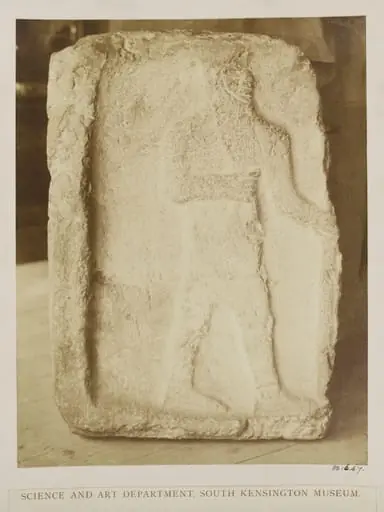 Assyrian sculpture relief of a bearded man
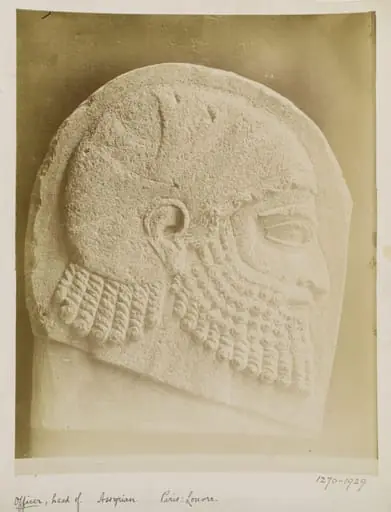 Relief of head of Assyrian officer. Paris: Louvre
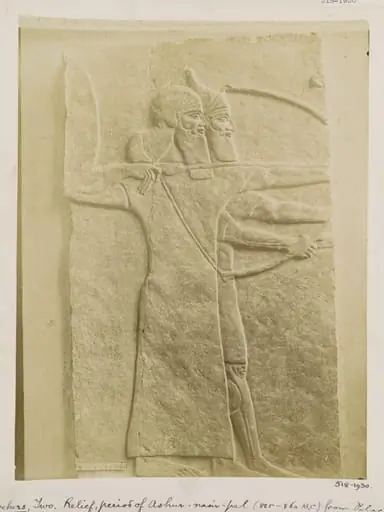 Relief depicting two Assyrian archers from the period of Ashur-Nasir-Pal II (885-860 B.C.) from the Palace of Nimrud. Louvre, Paris
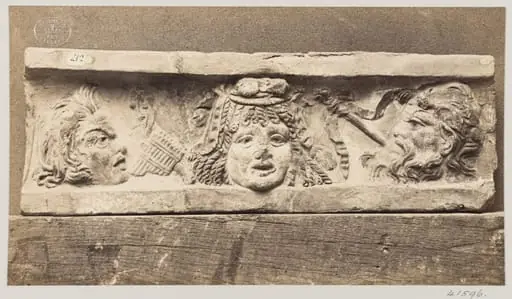 Bas-relief of three masques in terra cotta
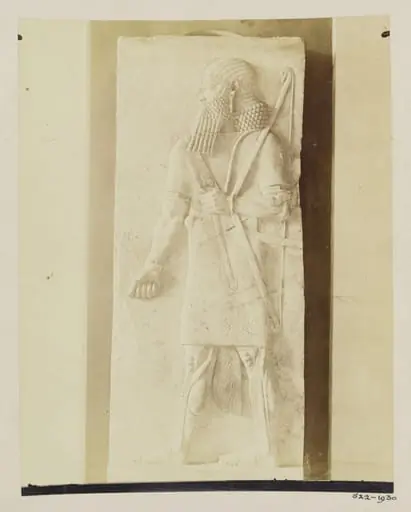 Sculpture of Assyrian archer, 9th century B.C., Louvre, Paris
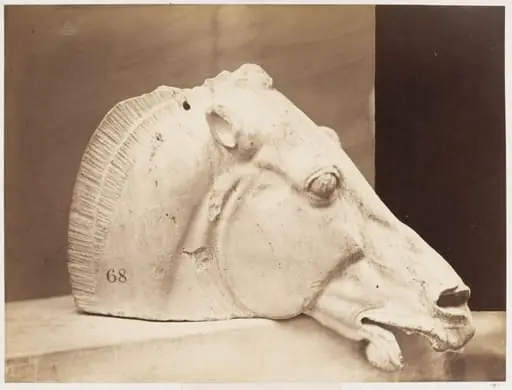 Head of one of the horses of the car of Silene
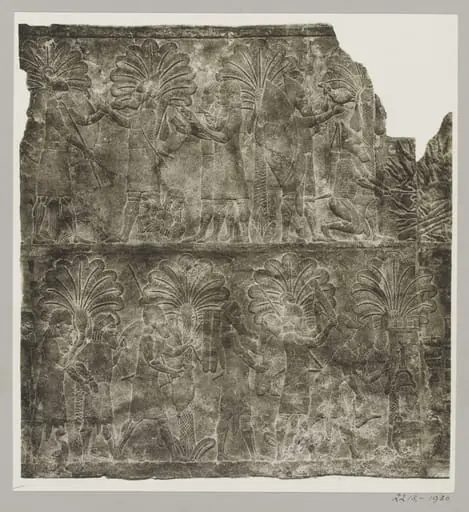 Assyrian reliefs depicting Ashurbanipal and warriors in their camp at Nineveh (Kuyuryick). London, British Museum
 Bas-relief of a warrior, Louvre, Paris
 Colossal Figure at Abou Simbel, Nubia
 Colossol Monolith of Amenhotep III, Gournah
 Ostracon with a Drawing of a King
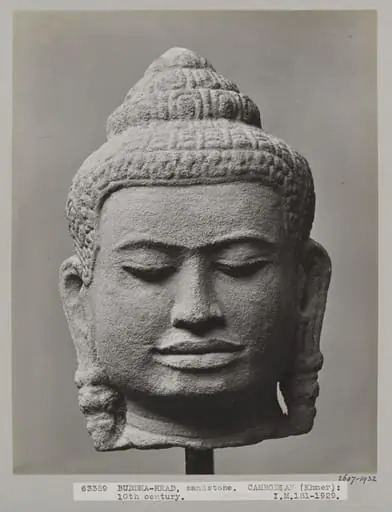 Cambodian Bayon style sandstone sculpture of head of Buddha, 10th century A.D., V&A Museum, London