Artwork
Cambodian Bayon style sandstone sculpture of head of Buddha, 10th century A.D., V&A Museum, London
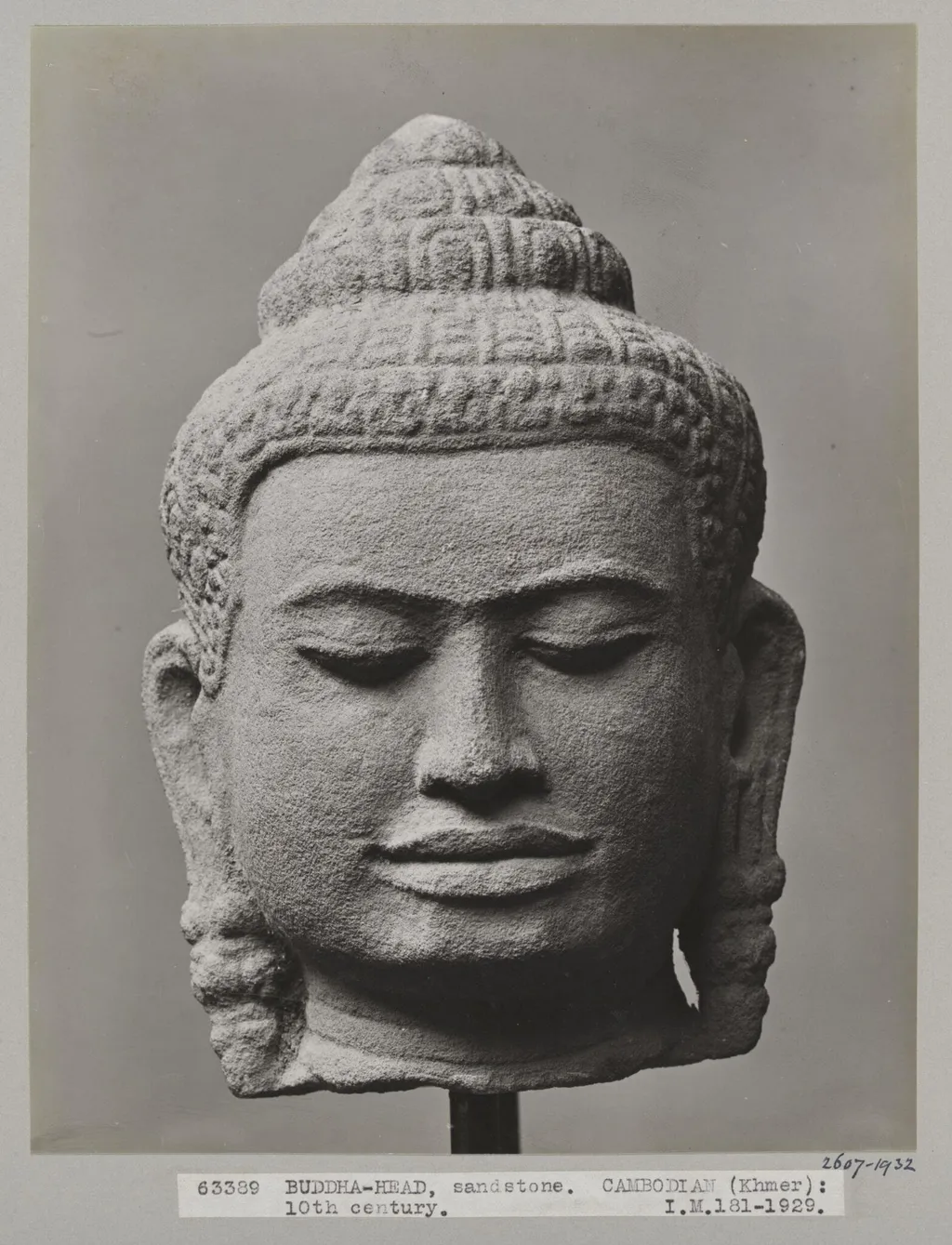
Cambodian Bayon style sandstone sculpture of head of Buddha, 10th century A.D., V&A Museum, London is a photographic photography by Unknown. It dates from 1924 and is held in the collection of the Victoria and Albert Museum.
About this work
Overview
The image presents a black‑and‑white photograph of a sandstone head representing the Buddha, attributed to the Bayon artistic tradition of Cambodia. The carving dates from the tenth century CE and is part of the collection of the Victoria and Albert Museum in London. The portrait captures a tranquil expression, with the figure’s eyes gently closed and a faint smile.
Subject & Meaning
The sculpted head embodies the Buddhist ideal of inner serenity, a hallmark of Bayon iconography. The composed facial features and subtle smile convey a state of meditative calm, reflecting the spiritual aspirations of the period. The stylised hair, arranged in orderly curls beneath a rounded headdress, reinforces the canonical representation of the enlightened figure.
Technique & Style
Carved from locally sourced sandstone, the work demonstrates the precision of Bayon stonecraft. The surface is largely smooth, though the passage of time has worn away any original pigment, leaving a monochrome finish. The headdress’s rounded form and the disciplined curls typify the Bayon aesthetic, which favours idealised, serene visages over naturalistic detail.
History & Provenance
Originating in Cambodia during the 10th‑century flourishing of the Bayon style, the sculpture eventually entered the holdings of the Victoria and Albert Museum. Its acquisition reflects the broader 19th‑ and early‑20th‑century interest in Southeast Asian art by European institutions, where it now serves as a representative example of early Khmer religious sculpture.
Artist & collection

 Domestic Scene
 Giacomo and Cardinal Marco, investing Andrea, Abbot of San Zeno, with his Benefice
 The Nymph of Fontainebleau
 Portrait of a Woman
 Madonna and Child with Saints in the Enclosed Garden
 Venus and Minerva
 Family Group of Four on Sofa
 Wall painting from Room H of the Villa of P. Fannius Synistor at Boscoreale
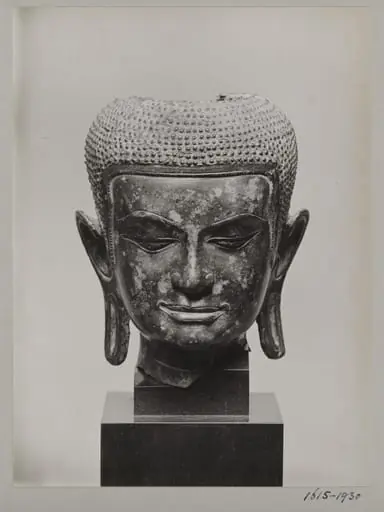 Cambodian bronze sculpture of Buddha head, ca. 13th century A.D., V&A Museum
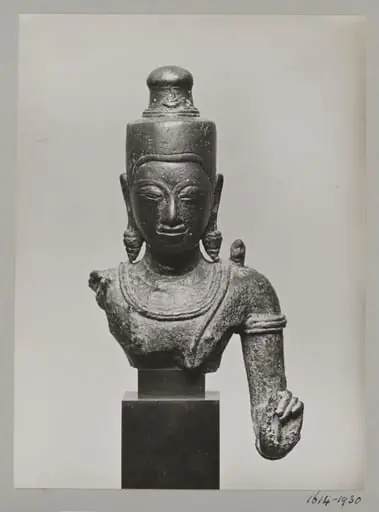 Bronze Cambodian sculpture of Buddha, ca. 13th century, V&A Museum, London
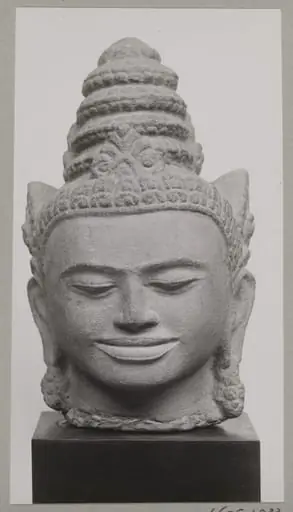 East Siam sculpture of head of Bodhisattva, ca. 12th century, H.G. Quaritch Wales Collection
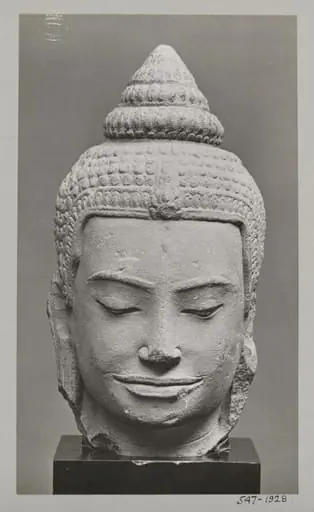 Sandstone sculpture of head of Buddha, Siam, 9th century A.D., V&A Museum, London
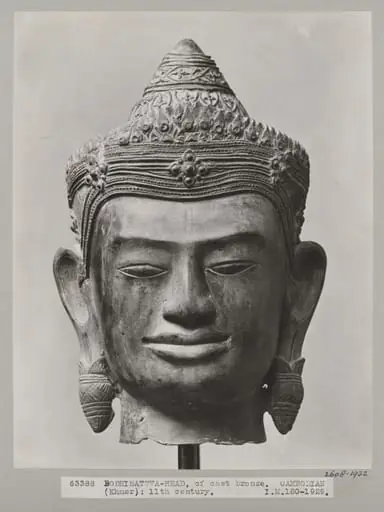 Cambodian bronze sculpture of head of Bodhisattva, 11th century A.D., V&A Museum, London
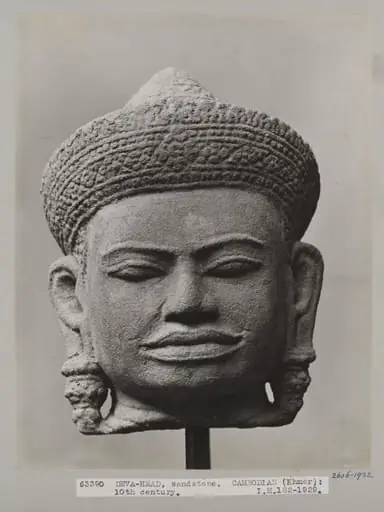 Cambodian sandstone sculpture of head of Deva, 10th century, V&A Museum, London
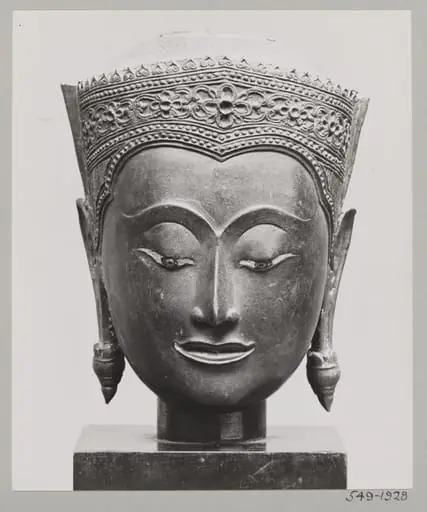 Siamese bronze sculpture of Buddha, 14th or 15th century, V&A Museum
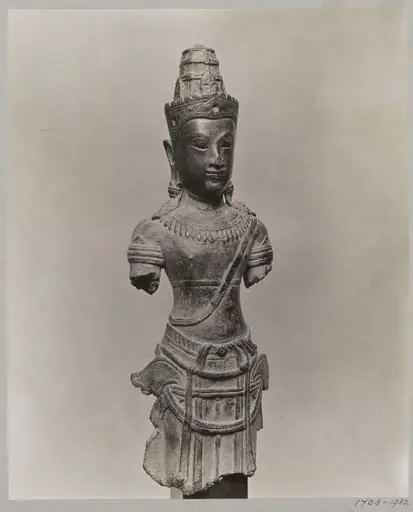 Bronze Cambodian sculpture of Bodhisattva, ca. 13th century, A.D., V&A Museum, London
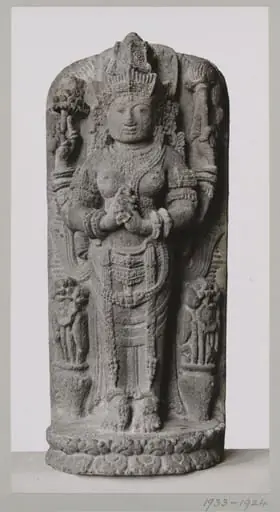 East Javanese volcanic rock sculpture, relief figure of Umā, early 15th century, V&A Museum, London
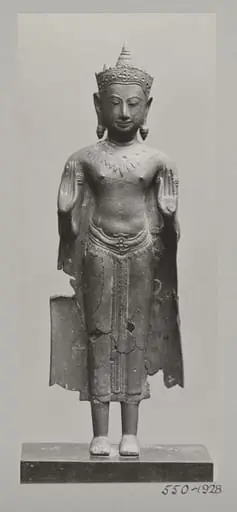 Bronze sculpture of standing figure of the Dipankara Buddha, V&A Museum
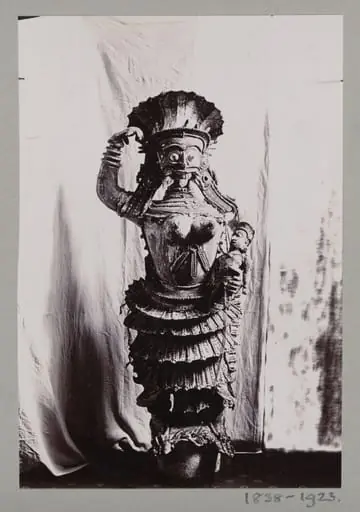 Carved wood sculpture, Goddess, Javanese (?)