Artwork
strachină
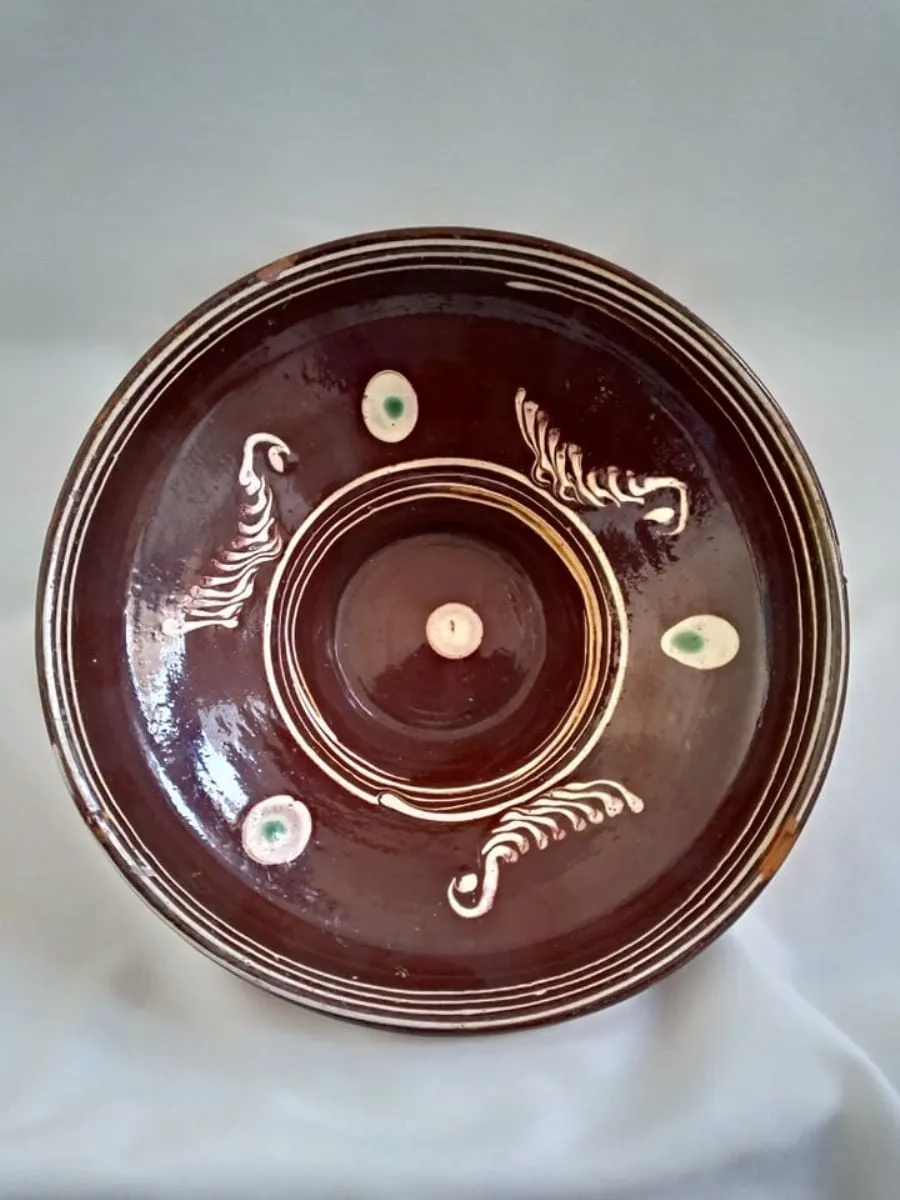
strachină is a photography by Unknown. It dates from 1963 and is held in the collection of the Moldova National Museum Complex.
About this work
Overview
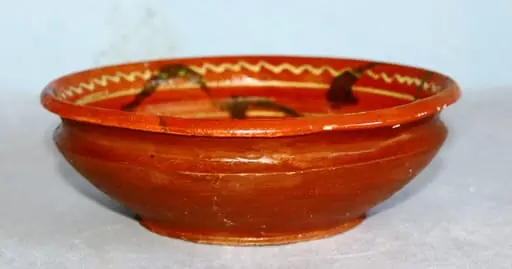
The rim is adorned with three delicate white swirls and a scattering of tiny green and white dots, creating a quiet visual rhythm.
This circular ceramic plate, known as a strachină, features a dark brown body with a minimally decorated surface. The rim is adorned with three delicate white swirls and a scattering of tiny green and white dots, creating a quiet visual rhythm. The glaze appears uneven, hinting at handcrafting and traditional kiln firing. Its modest ornamentation suggests utility paired with subtle aesthetic care, typical of regional folk pottery traditions.
Subject & Meaning
The plate carries no figurative imagery; its meaning lies in its form and restrained decoration. The swirling motifs may reflect local symbolic patterns tied to natural cycles or protective motifs, though no definitive iconography is recorded. The use of white on dark provides visual clarity without narrative, emphasizing craftsmanship over storytelling. Its function as a serving vessel implies daily ritual rather than ceremonial use.
Technique & Style
Made by hand, the plate shows irregularities in glaze application and form, consistent with pre-industrial pottery methods. The white pigment, likely iron-based or chalky slip, was applied with a fine brush or stylus to create the swirls and dots. The firing process produced a matte, uneven surface, enhancing the tactile quality. The style is minimalist, favoring repetition and contrast over complexity.
History & Provenance
Strachină plates originate from rural communities in Eastern Europe, particularly Romania and Moldova, where such ceramics were produced for household use. This example likely dates to the late 19th or early 20th century, a period when traditional pottery remained widespread despite industrialization. Its presence in museum collections suggests it was collected as an example of vernacular craft during ethnographic surveys.
Context
This plate belongs to a broader tradition of utilitarian ceramics made in village kilns across the Carpathian region. Similar vessels were used for serving food, storing dry goods, or as part of dowries. Decoration was often regional, with motifs passed down through generations. The scarcity of written records means much of its cultural context is inferred from comparative artifacts and oral histories.
Legacy
Strachină plates are now preserved primarily in ethnographic museums as artifacts of rural life. While mass production has largely replaced such handmade wares, contemporary artisans occasionally revive the technique as cultural heritage practice. The plate’s quiet design continues to inform modern ceramicists interested in simplicity, material honesty, and regional identity.
Artist & collection
 Domestic Scene
 Giacomo and Cardinal Marco, investing Andrea, Abbot of San Zeno, with his Benefice
 The Nymph of Fontainebleau
 Portrait of a Woman
 Madonna and Child with Saints in the Enclosed Garden
 Venus and Minerva
 Family Group of Four on Sofa
 Wall painting from Room H of the Villa of P. Fannius Synistor at Boscoreale
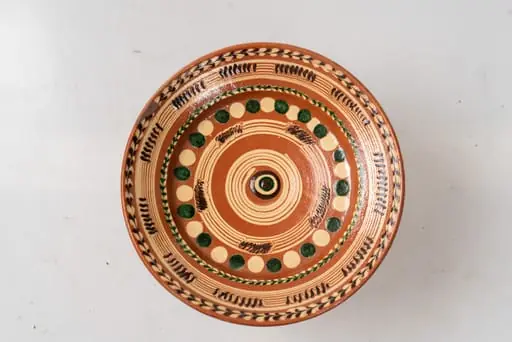 Farfurie de formă aplatizată, cu buză evazată; piesa este modelată din lut la roata olarului, nefiind angobată. Decorul este realizat prin pictare cu cornul și se compune din diverse motive geometrice dispuse pe întreaga suprafață a farfuriei (linie spiralată și linii fine dispuse sub formă de cercuri concentrice de culoare albă, șir circular de puncte groase de culoare verde și alb, grupuri de linii mici paralele, de culoare maro, suprapuse peste grupurile de linii circulare albe; bordura interioară a farfuriei și marginea buzei sunt decorate cu câte un șir fin format din motivul frunzei duble). Cromatica: alb, maro, verde, pe fondul lutului ars. Farfuria este acoperită pe fața ornamentată cu un strat de smalț transparent.
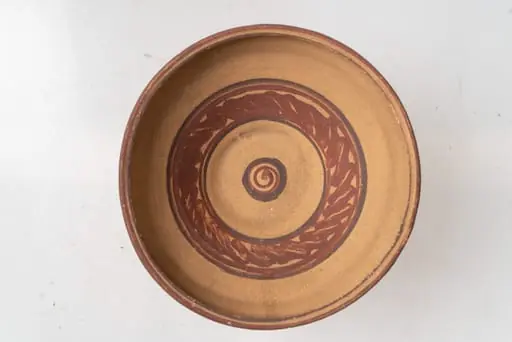 Farfurie adâncă de tip castron, cu bază îngustă și corp tronconic, buză îngustă dreaptă și muchia buzei concavă spre interior; piesa este modelată din lut la roata olarului nefiind angobată. Decorul foarte simplu este realizat cu angobă maro și roșu-închis, prin pictare cu cornul și se compune din motive geometrice: linii circulare, linie groasă ondulată, neglijent executată, linie spiralată. Cromatica: maro, roșu-închis, pe fondul lutului ars. Farfuria este nesmălțuită.
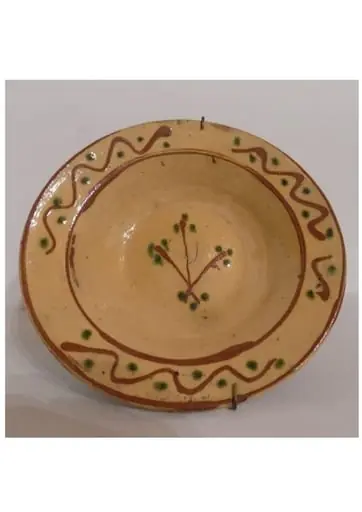 Talger
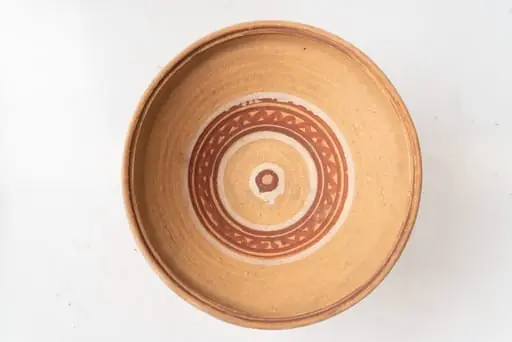 Farfurie adâncă de tip castron, cu bază îngustă și corp tronconic, buză mică dreaptă; piesa este modelată din lut la roata olarului nefiind angobată. Decorul foarte simplu este realizat cu albă și roșu-închis, prin pictare cu cornul și se compune din motive geometrice: linii circulare, linie ondulată, cercuri concentrice. Cromatica: alb, roșu-închis, pe fondul lutului ars. Farfuria este nesmălțuită.
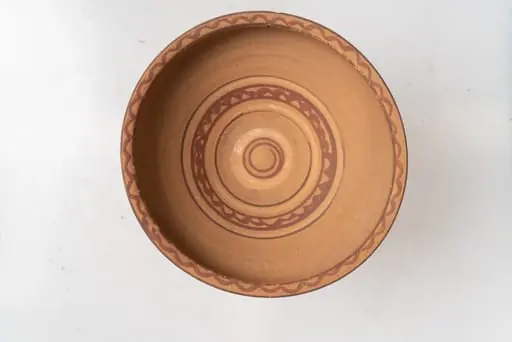 Farfurie adâncă de tip castron, cu bază îngustă și corp tronconic, buză dreaptă și muchia buzei evazată; piesa este modelată din lut la roata olarului nefiind angobată. Decorul foarte simplu este realizat cu angobă maro și roșu-închis, prin pictare cu cornul și se compune din motive geometrice: linii circulare, două linii ondulate, neglijent executate, linie spiralată. Cromatica: maro, roșu-închis, pe fondul lutului ars. Farfuria este nesmălțuită.
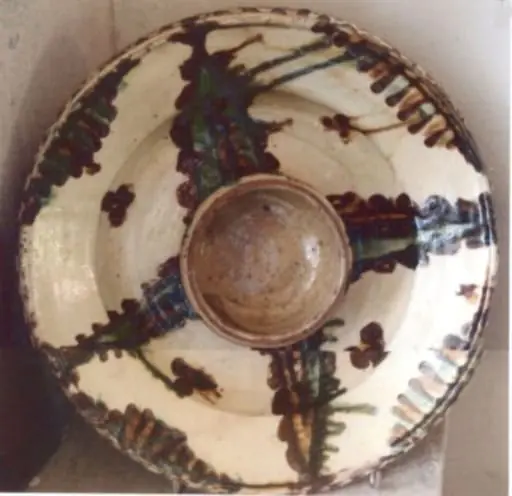 farfurie de ritual
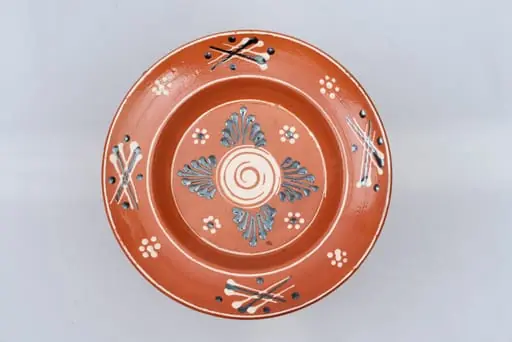 Farfurie adâncă, cu buză dreaptă evazată. Decorul este realizat prin pictare cu cornul și se compune din motive geometrice: central pe fundul farfuriei este pictată o linie spiralată circulară, de culoare albă, pe exteriorul căreia se găsesc patru grupuri de linii dispuse în formă de triunghi, de culoare maro. Decorul din registrul central este completat cu patru flori mici realizate din puncte de culoare albă și maro. Buza farfuriei este decorată cu patru motive formate din linii hașurate intersectat și puncte de culoare maro și alb, plasate diametral opus sub formă de cruce și separate de câte o floare mică formată din puncte albe. Câte o linie circulară de culoare albă marchează fundul farfuriei, bordura interioară a acesteia și muchia buzei. Suprafața ornamentată a farfuriei este acoperită cu un strat de smalț transparent. Cromatica: maro-închis, alb, pe fondul neangobat al lutului ars.
 Piesă de formă circulară, adâncită, cu partea superioară concavă la exterior și gaură pentru agățat la spate. În centru, o spirală circulară, înconjurată de patru grupuri de semicercuri cu o bulină în centru. Pe margine: pete elipsoidale între cercuri concentrice și linie șerpuită înspre interior. Stropituri cu verde suprafața interiorului. Cromatică: cărămiziu, alb-gălbui, verde. Timp de lucru: circa două săptămâni.