Artwork
Strachina este lucrată la roată. Pereții vasului sunt supraînălțați, buza este ușor răsfântă fiind smălțuită ca și interiorul vasului. Exteriorul acestuia este nesmălțuit. Decorul este floral-vegetal stilizat și avimorf având pictat pe fundul vasului o pasăre. Cromatică: fond: alb; motive: portocaliu; maro; verde.
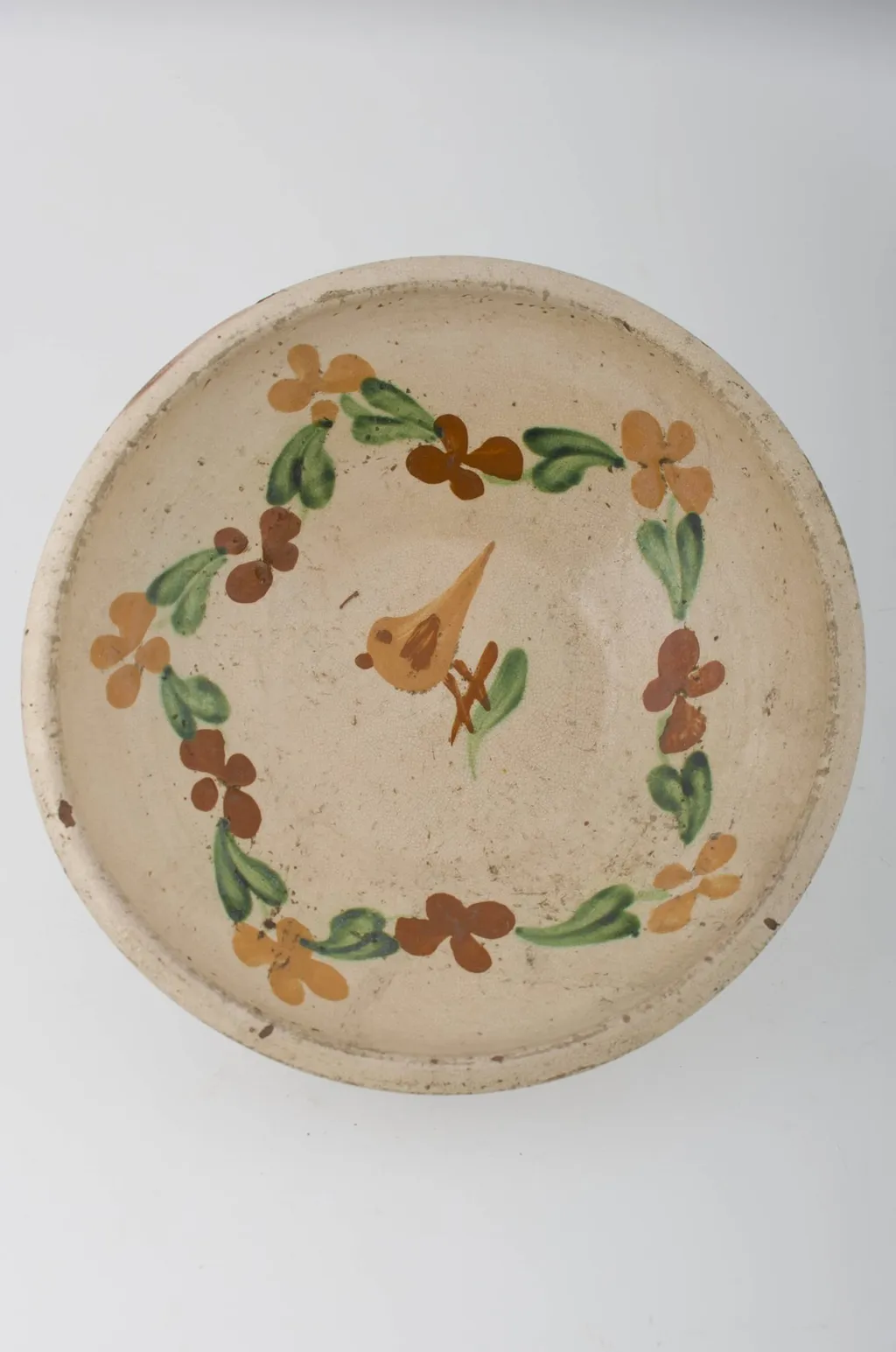
Strachina este lucrată la roată. Pereții vasului sunt supraînălțați, buza este ușor răsfântă fiind smălțuită ca și interiorul vasului. Exteriorul acestuia este nesmălțuit. Decorul este floral-vegetal stilizat și avimorf având pictat pe fundul vasului o pasăre. Cromatică: fond: alb; motive: portocaliu; maro; verde. is a photography by Unknown. It dates from 1850 and is held in the collection of the ASTRA National Museum Complex. This is a hand-thrown ceramic vessel, shaped on a potter’s wheel, with slightly flared lips and a raised wall.
About this work
Overview
This is a hand-thrown ceramic vessel, shaped on a potter’s wheel, with slightly flared lips and a raised wall. The interior and rim are coated in a smooth slip, while the exterior remains unglazed, preserving the natural texture of the clay. Its form is utilitarian yet carefully finished, suggesting everyday use rather than ceremonial display.
Subject & Meaning
The decoration centers on a single bird painted at the base, surrounded by stylized floral and vegetal motifs. The bird, rendered with minimal strokes, stands as the only figurative element amid abstract patterns. Its placement may signal a symbolic presence—perhaps representing fertility, migration, or a link between earth and sky—though no definitive ritual meaning is recorded.
Technique & Style
The vessel was formed on a wheel and painted with natural pigments in ochre, brown, and green on a pale, earth-toned ground. The motifs are simplified, non-naturalistic, with flowing lines that suggest leaves and blossoms without literal detail. Brushwork is loose and confident, emphasizing rhythm over precision, characteristic of regional folk pottery traditions.
History & Provenance
The piece originates from a rural ceramic tradition, likely produced in the 19th or early 20th century in Eastern Europe. Its unglazed exterior and modest scale point to domestic use, possibly in a household or small workshop. No specific maker or exact find site is documented, but similar examples are held in regional ethnographic collections.
Context
This vessel reflects a broader tradition of folk ceramics where functional ware was adorned with locally derived motifs. The use of limited pigments and repetitive patterns aligns with resource constraints and inherited design vocabularies. The bird, as a solitary figure, may echo folk beliefs or oral narratives, distinguishing it from purely ornamental wares.
Legacy
Though not signed or dated, the piece exemplifies the quiet craftsmanship of non-elite ceramic production. Its survival in museum collections underscores its value as a record of everyday aesthetics and material culture. Similar vessels continue to inform contemporary interpretations of regional pottery heritage.
Artist & collection

 Domestic Scene
 Giacomo and Cardinal Marco, investing Andrea, Abbot of San Zeno, with his Benefice
 The Nymph of Fontainebleau
 Portrait of a Woman
 Madonna and Child with Saints in the Enclosed Garden
 Venus and Minerva
 Family Group of Four on Sofa
 Wall painting from Room H of the Villa of P. Fannius Synistor at Boscoreale
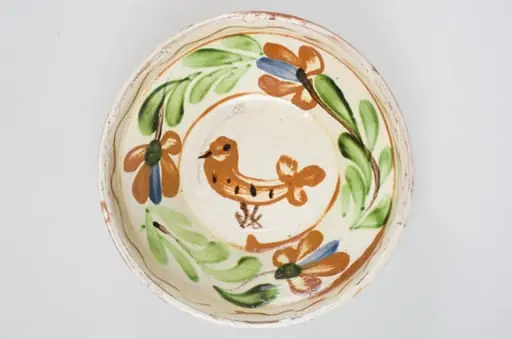 Blid de formă tronconică cu buza înaltă, smălțuit pe interior. Acesta este ornamentat cu motive florale, avimorfe, liniare și curbilinii, realizate prin pictare cu pensula. Pe buza interioară a vasului se identifică motivul geometric al liniei vălurite succedat de motive curbilinii care încadrează un registru floral-vegetal continuu dispus pe zona mediană a vasului. De asemenea, se identifică un motiv avimorf pictat pe fundul vasului și încadrat de un cerc. Obiectul este smălțuit la exterior doar pe buză, pe exteriorul buzei fiind incizate două linii. Fundul este inelar, prevăzut cu două orificii pentru agățare. Se identifică scurgeri insulare de smalț pe exteriorul buzei. Pe exterior se profilează, în zona diametrului maxim, un brâu continuu obținut prin lucrarea la roată. Cromatică: fond: alb (la interior); cărămiziu (exterior); motive: cărămiziu; verde; maro; albastru.
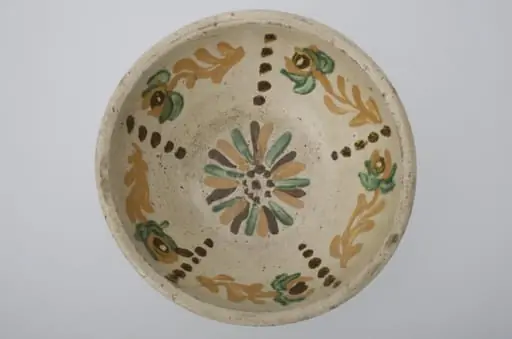 Strachină de formă tronconică, cu pereții oblici puțin curbați, smălțuită numai în interior. Decor central floarea soarelui, iar pe pereții laterali avem un chenar floral. Cromatică: fond: alb; motive: brun; galben; verde.
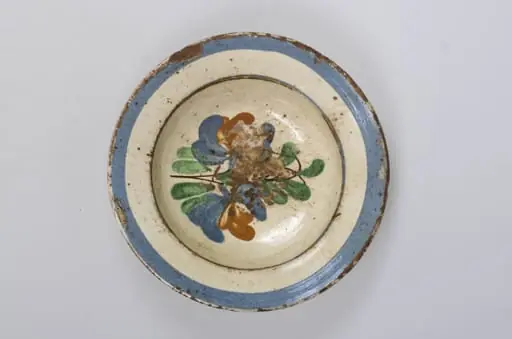 Vasul are formă tronconică, adâncit. Este smălțuit în interior și decorat cu motive floral-vegetale pe fundul vasului și pe margine cu motive geometrice realizate sub forma a trei cercuri concentrice, unul dintre cercuri mai îngroșat și dispus pe buza vasului. Cromatică: fond cărămiziu (exterior); fond alb (interior); albastru; verde; maro.
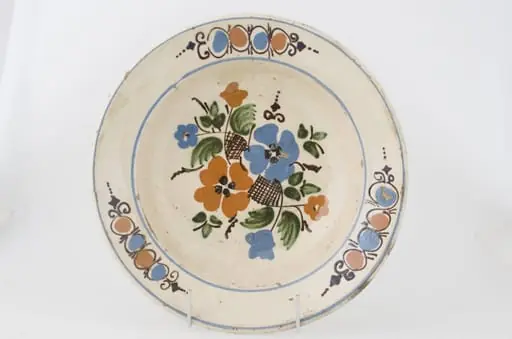 Farfuria este lucrată la roată, prezintă marginea evazată în plan orizontal fiind smălțuit în interior. Pe suprafața interioară a vasului se identifică registre decorative floral-vegetale dispuse pe fundul vasului și pe marginea interioară. Registrele sunt delimitate de două cercuri realizate prin pictare și dispuse pe buza vasului și spre interiorul acestuia. Cromatică: fond: alb; motive: roșu; albastru; verde; brun; maro.
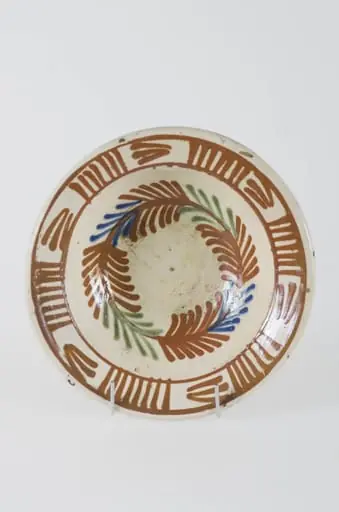 Blid de formă tronconică, lucrat la roată fiind smălțuit la interior cu smalț alb. Prezintă la exterior scurgeri de smalț și de vopsea. Buza este puternic profilată, îngroșată. Motivele decorative sunt vegetale, motivul brăduțului, pe fundul vasului, dispuse într-un registru circular, iar pe buza interioară se identifică un alt registru circular în interiorul căruia sunt pictate linii verticale paralele. Cromatică: fond: alb-gălbui; motive: cărămiziu; albastru; verde.
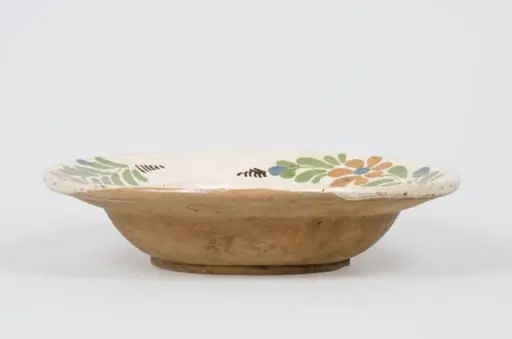 Vas de formă tronconică, adâncit smălțuit în interior. Acesta este decorat pe margine cu motive vegetale și florale pe un registru dispus în zona diametrului maxim. Cromatică: fond cărămiziu (exterior); fond alb (interior); verde; maro; albastru.