Artwork
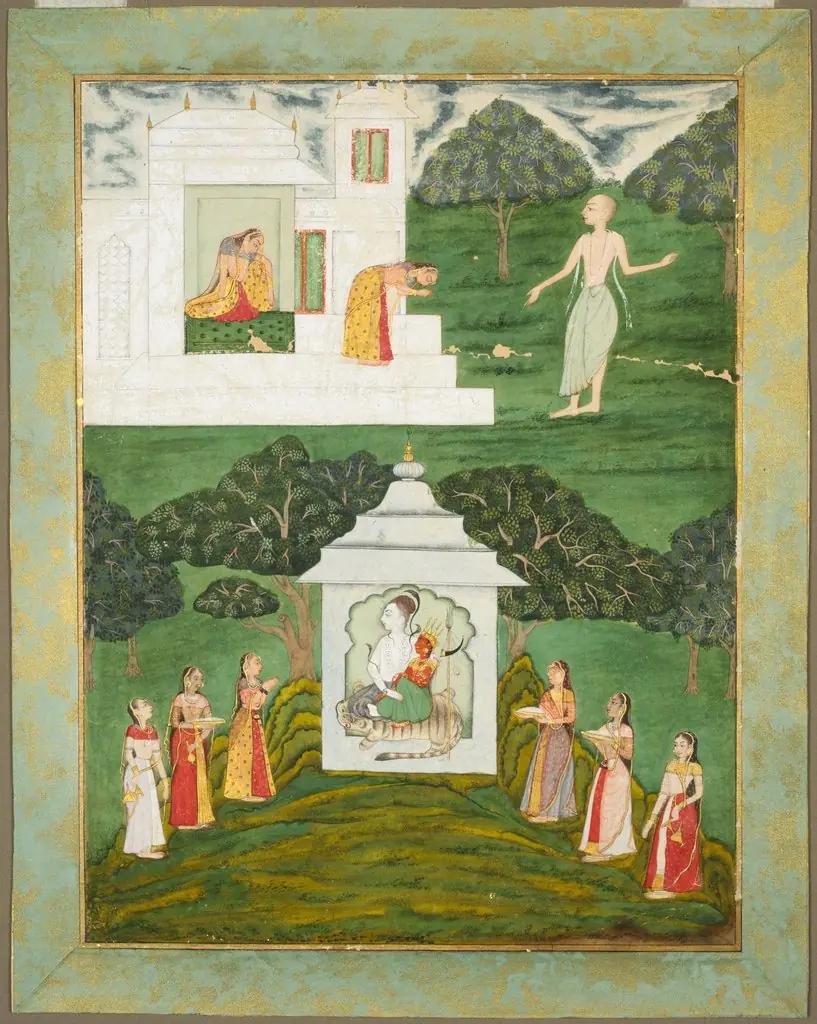
Worship of Shiva and Devi
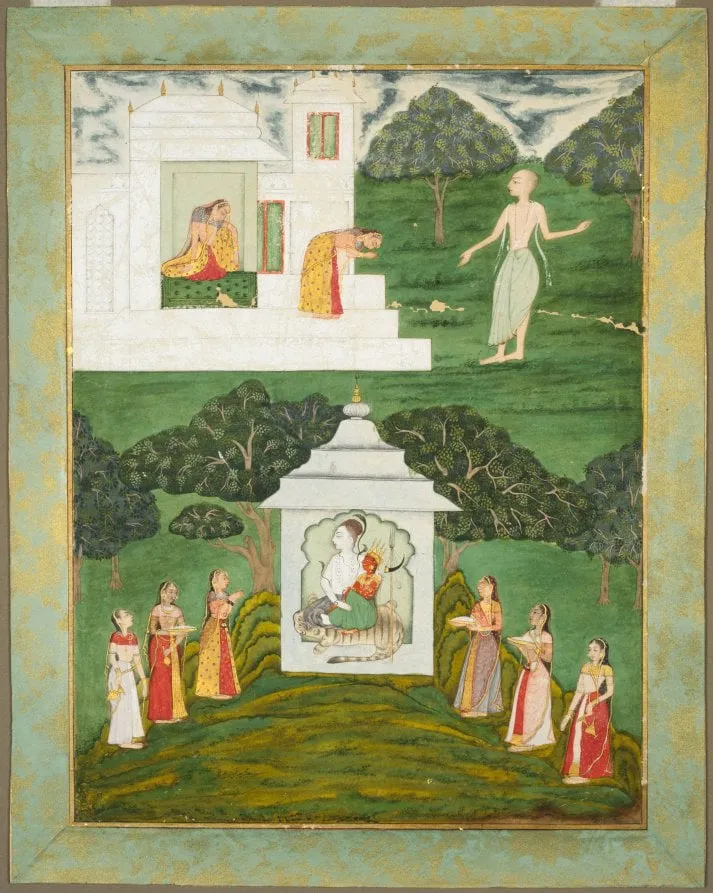
Worship of Shiva and Devi is an unspecified painting by the Baroque artist Unknown. It dates from 1704 and is held in the collection of the Cleveland Museum of Art. The canvas portrays a devotional tableau in which the Hindu deity Shiva and his consort are seated within an intimate shrine.
About this work
Overview
The canvas portrays a devotional tableau in which the Hindu deity Shiva and his consort are seated within an intimate shrine. Shiva is shown in ascetic attire, his skin pallid from ash, while a crescent moon crowns his forehead. Around them, six women carry brass vessels, suggesting the offering of ritual sustenance.
Subject & Meaning
The composition emphasizes a moment of worship, with the divine pair receiving offerings from the attendants. Shiva’s yogic attributes—matted hair, a garland of skulls, and coiled serpents—signal his role as a destroyer and ascetic. The presence of the red‑clad goddess and the brass bowls underscores themes of fertility, purity and the sacred nourishment of the faithful.
Technique & Style
Executed in the vibrant palette characteristic of Rajput court painting, the work combines bold pigments with gilt detailing that highlights jewelry and decorative elements. Fine brushwork delineates the intricate patterns of the skull necklace and the texture of the ash‑covered skin, while the luminous gold accents convey the opulence of the royal workshop that produced it.
History & Provenance
The piece originates from a 17th‑century atelier serving the rulers of Rajasthan, likely the Bikaner court. Such workshops employed specialist painters who catered to aristocratic patrons, creating devotional images for private chapels as well as for display in palatial settings.
Context
Within the broader tradition of Hindu iconography, the scene reflects ritual practices in which brass vessels are employed for offering food and drink to deities. The quiet, interior setting contrasts with more elaborate public processions, suggesting a personal act of reverence rather than a communal festival.
Artist & collection

 Domestic Scene
 Giacomo and Cardinal Marco, investing Andrea, Abbot of San Zeno, with his Benefice
 The Nymph of Fontainebleau
 Portrait of a Woman
 Madonna and Child with Saints in the Enclosed Garden
 Venus and Minerva
 Family Group of Four on Sofa
 Wall painting from Room H of the Villa of P. Fannius Synistor at Boscoreale
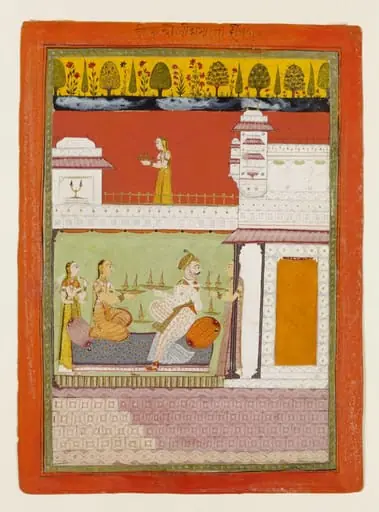 Dipak ragini
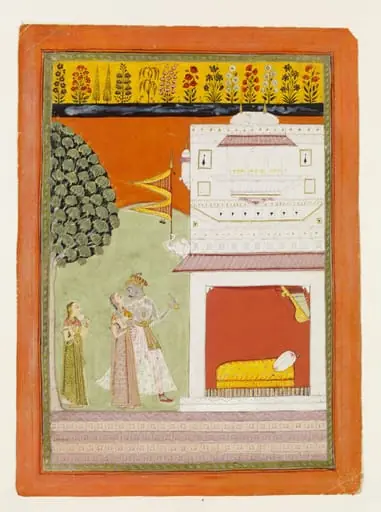 Malavi Ragini
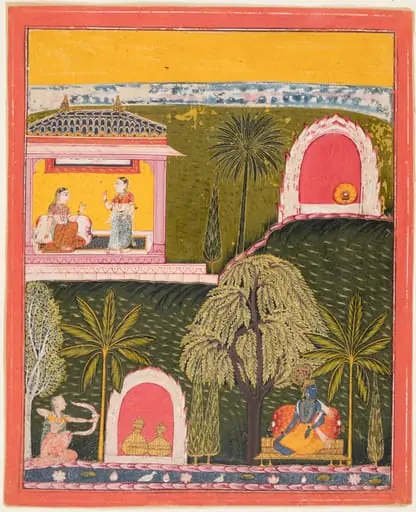 Rati, the Goddess of Erotic Love, Takes Aim at Krishna, from a Rasikapriya
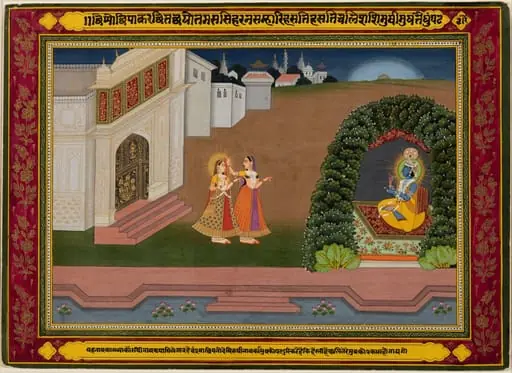 Radha’s Confidante Brings Her to Krishna, based on poetry of Bihari (Indian, 1595–1663)
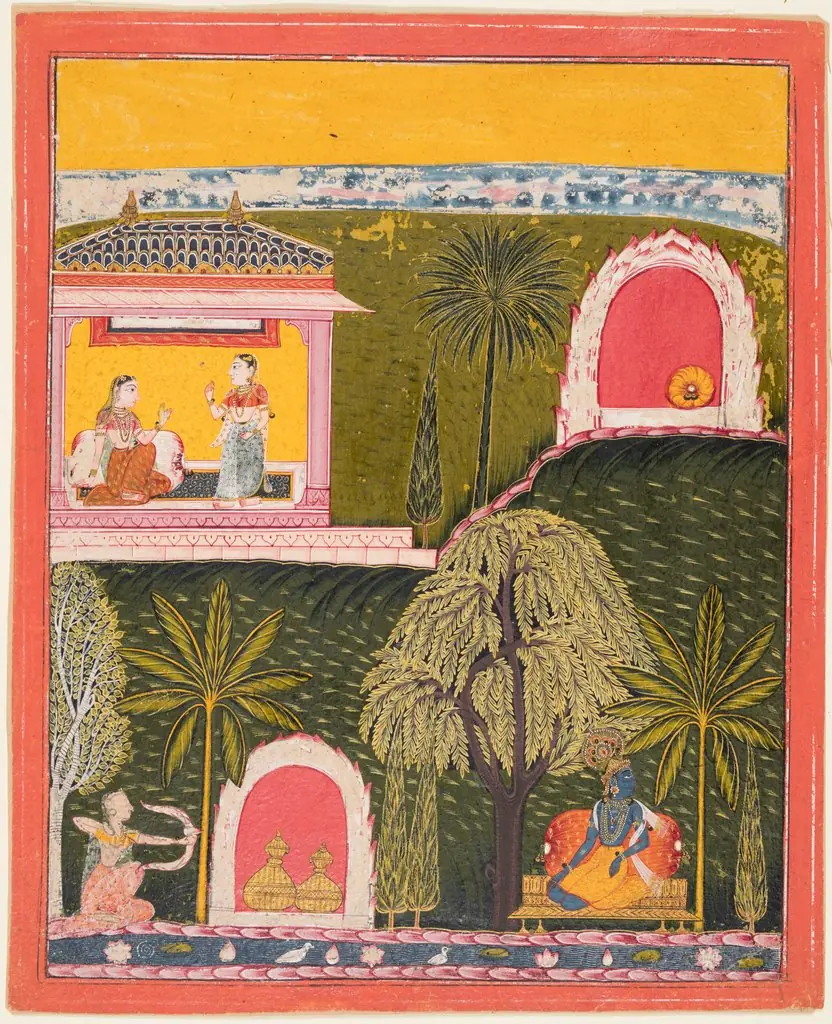 Rati, the Goddess of Erotic Love, Takes Aim at Krishna, from a Rasikapriya
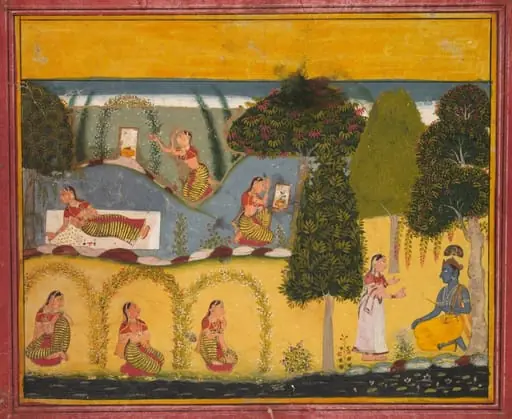 Radha Awaiting Reconciliation with Krishna, from a Gita Govinda of Jayadeva
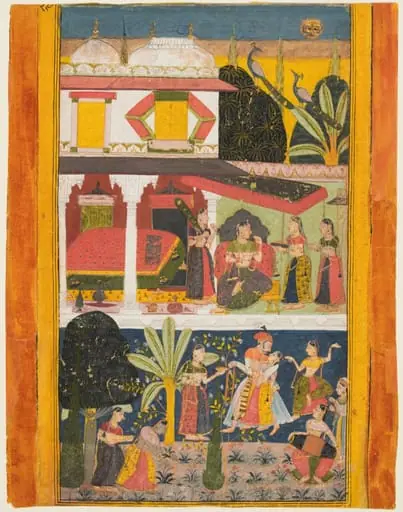 A Heroine and Her Paramour: Malavi Ragini, from a Ragamala
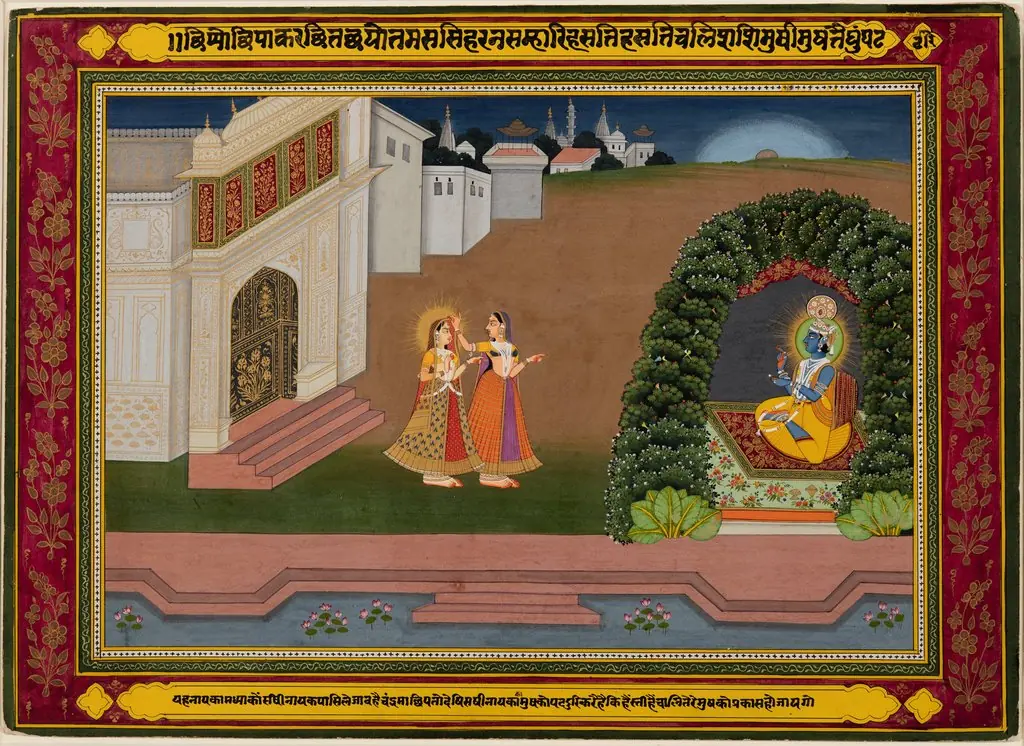 Radha’s Confidante Brings Her to Krishna, based on poetry of Bihari (Indian, 1595–1663)
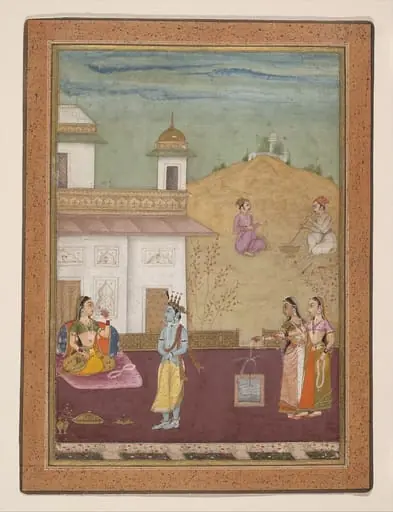 Untitled
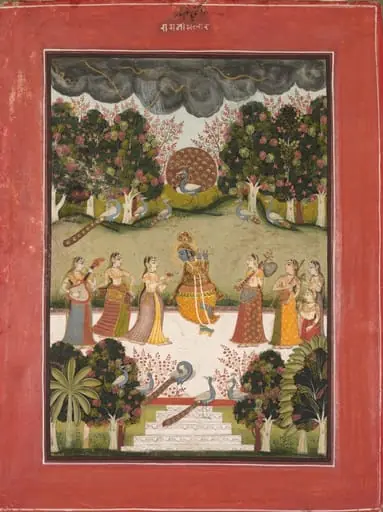 Malar Ragini: Krishna Playing the Flute to Seven Gopis Holding Musical Instruments, from the Ragamala Series
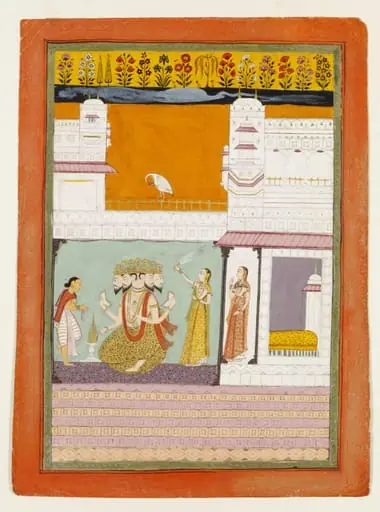 Brahma
 Worship of Shiva and Devi