Artwork
Suramananda Raga
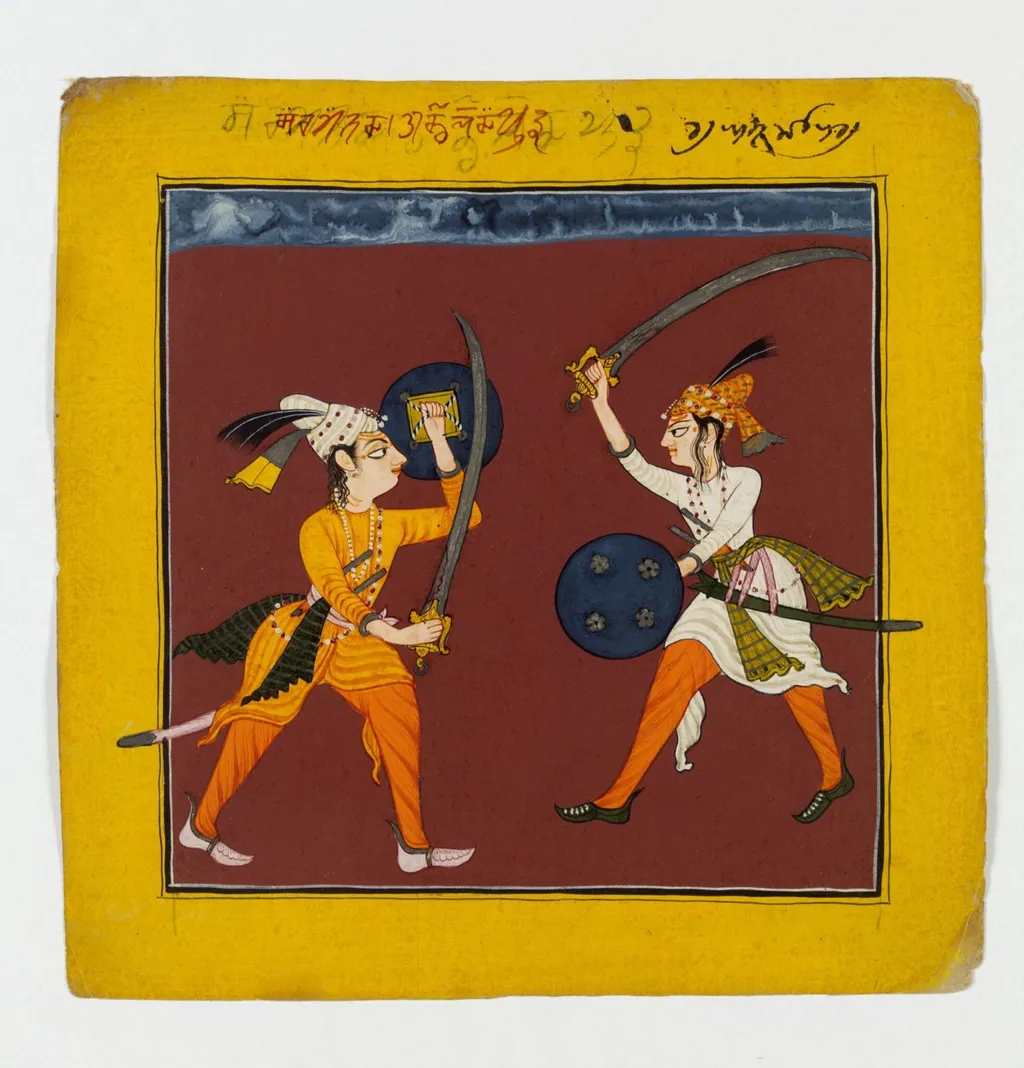
Suramananda Raga is a paint painting by the Baroque artist Unknown. It dates from 1700 and is held in the collection of the Victoria and Albert Museum.
About this work
Overview
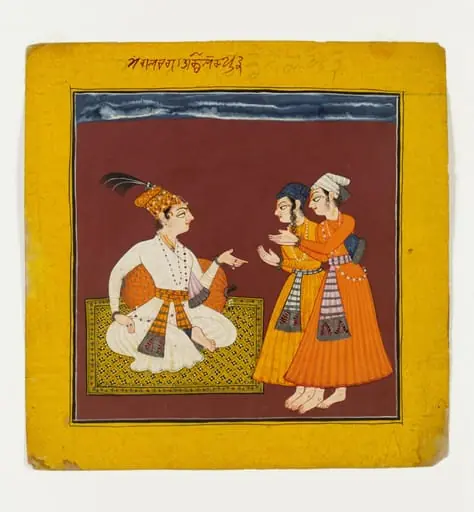
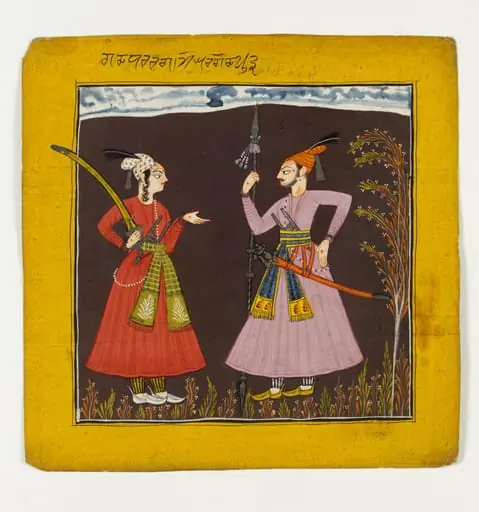
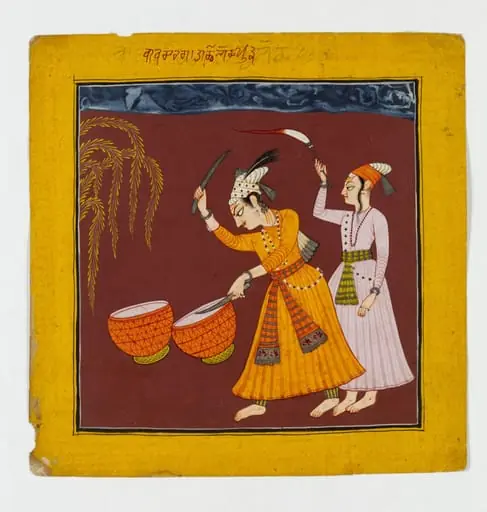
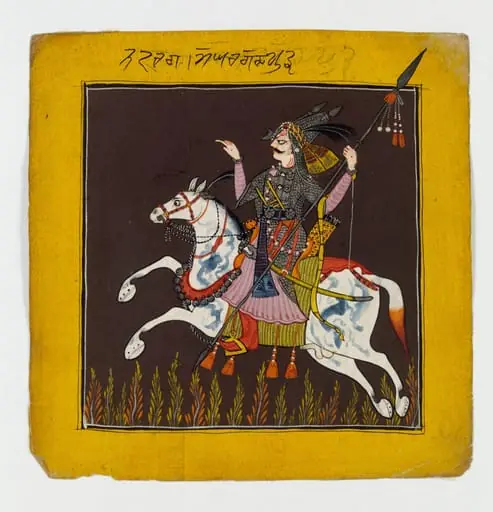
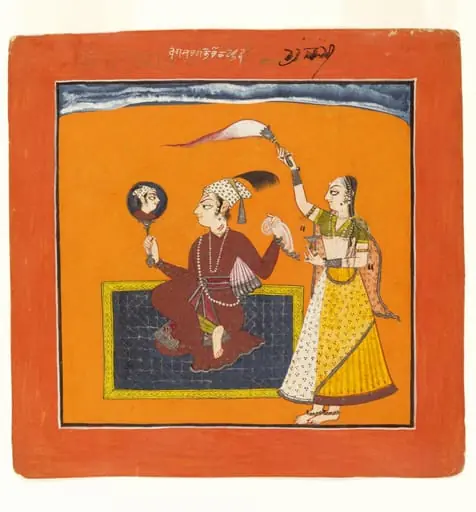
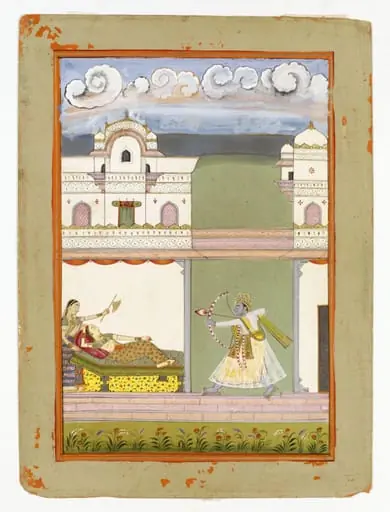
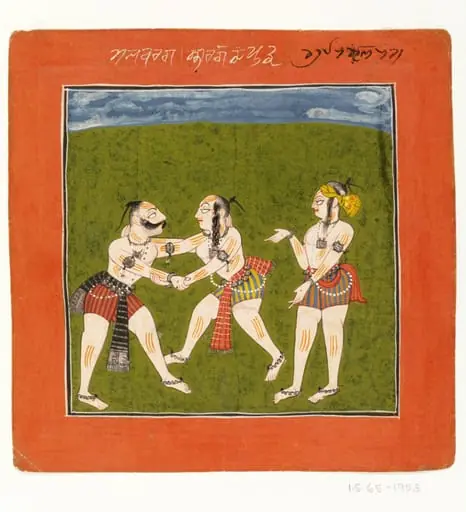
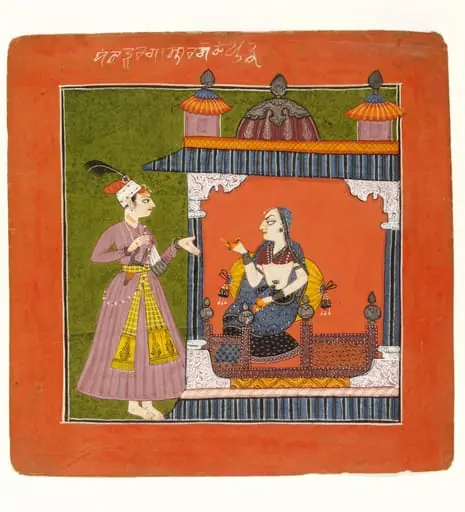
This early‑18th‑century Ragamala painting, executed in opaque watercolour on paper, visualises the Suramananda raga. The composition centers on two princely figures locked in combat, each equipped with a sword and a shield, set against a plain red field that recedes into a dark horizon.
Subject & Meaning
The scene illustrates the musical mode Suramananda by portraying a duel between two warriors, a common allegorical device in Ragamala iconography. The opposing postures—one figure thrusting a curved sword, the other bracing with a raised blade—symbolise the dynamic tension and resolution inherent in the raga’s melodic structure.
Technique & Style
Rendered with opaque watercolours, the work employs vivid pigments—bright orange, yellow, and deep red—contrasting with the simplified bodily forms. Detailed facial features and intricate jewelry are rendered with fine brushwork, while the figures’ garments and feathered headdresses are stylised, reflecting the decorative conventions of Mughal‑influenced court painting.
History & Provenance
Created circa 1700 by an unidentified artist, the piece belongs to the broader corpus of Indian Ragamala series that linked visual art with classical music. Its provenance traces to the collection of the Victoria and Albert Museum, where it is catalogued among other South Asian paintings of the period.
Context
Ragamala paintings served as visual guides to musical modes, often commissioned for aristocratic patrons. The Suramananda raga, associated with heroic or martial themes, is here depicted through the narrative of a princely duel, aligning the auditory qualities of the raga with the visual drama of combat.
Artist & collection

 Domestic Scene
 Giacomo and Cardinal Marco, investing Andrea, Abbot of San Zeno, with his Benefice
 The Nymph of Fontainebleau
 Portrait of a Woman
 Madonna and Child with Saints in the Enclosed Garden
 Venus and Minerva
 Family Group of Four on Sofa
 Wall painting from Room H of the Villa of P. Fannius Synistor at Boscoreale