Artwork
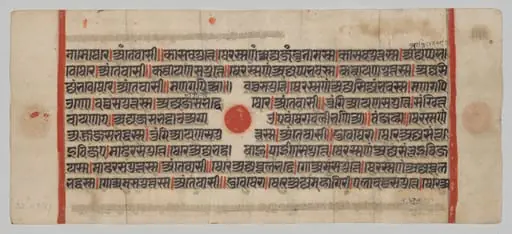
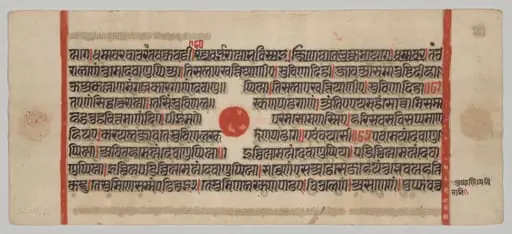
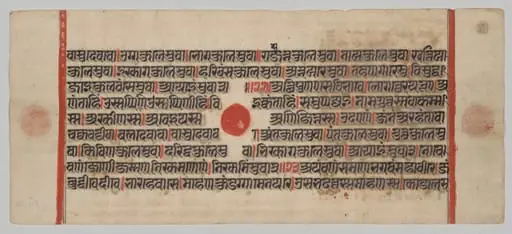
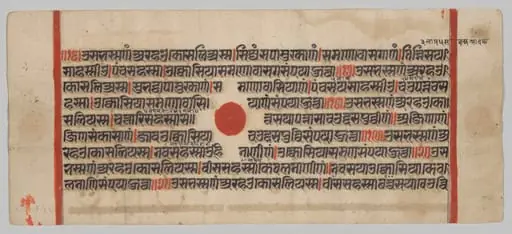
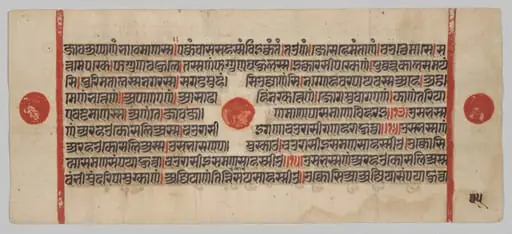
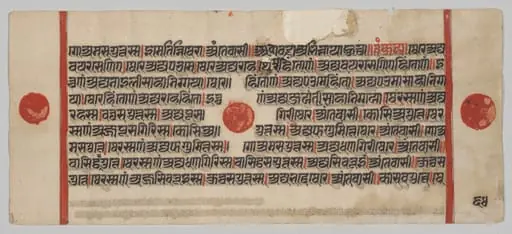
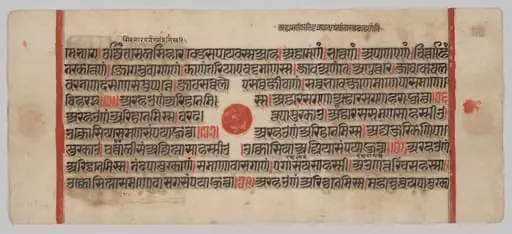
Text, Folio 65 (recto), from a Kalpa-sutra
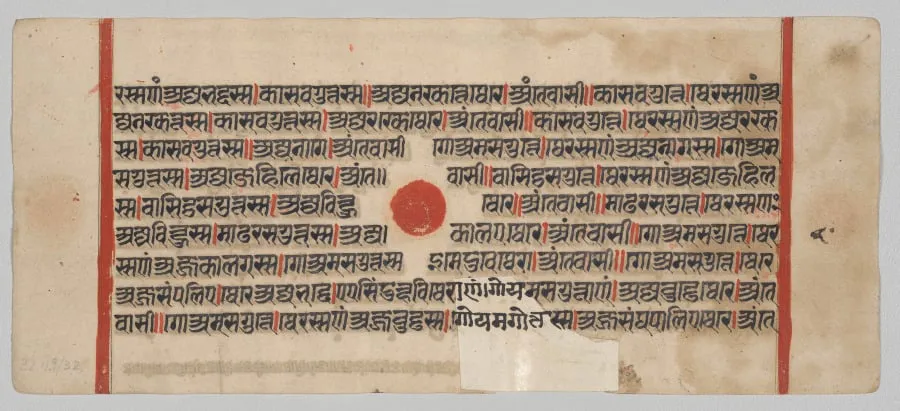
Text, Folio 65 (recto), from a Kalpa-sutra is an unspecified painting by the Mughal Painting artist Unknown. It dates from 1488 and is held in the collection of the Cleveland Museum of Art. The work is a painted folio, the recto of page 65 from a Kalpa‑sutra manuscript.
About this work
Overview
The work is a painted folio, the recto of page 65 from a Kalpa‑sutra manuscript. Executed as a single sheet, it presents a dense block of script framed by red borders on both vertical edges. The piece functions as a textual document rather than an illustrative image, emphasizing the visual qualities of the calligraphy itself.
Subject & Meaning
The folio contains passages from the Kalpa‑sutra, a Buddhist text outlining monastic discipline and ritual. The content is rendered in a foreign script, likely Sanskrit or a regional variant, serving a religious and instructional purpose within the monastic community.
Technique & Style
The scribe employed black ink for the main body of text, interspersed with red highlights that accentuate particular words or sections. A flowing, cursive hand dominates the page, and select letters are embellished with intricate ornamental motifs, adding a decorative dimension to the otherwise utilitarian script.
History & Provenance
Created as part of a larger manuscript, the folio reflects the manuscript culture of South‑Asian Buddhist traditions, where painted pages were common. The specific origin, workshop, and date remain uncertain, but the stylistic elements align with medieval manuscript production practices.
Context
Kalpa‑sutras were central to monastic curricula, and their manuscripts often combined textual precision with aesthetic refinement. The use of red borders and decorative lettering aligns with broader South‑Asian manuscript conventions that sought to enhance readability and reverence for the sacred text.
Legacy
While the folio itself is not illustrated, its emphasis on calligraphic elegance illustrates the intersection of textual transmission and visual artistry in Buddhist manuscript traditions, influencing later scriptoria that continued to value ornamental script as a form of devotional expression.
Artist & collection

 Domestic Scene
 Giacomo and Cardinal Marco, investing Andrea, Abbot of San Zeno, with his Benefice
 The Nymph of Fontainebleau
 Portrait of a Woman
 Madonna and Child with Saints in the Enclosed Garden
 Venus and Minerva
 Family Group of Four on Sofa
 Wall painting from Room H of the Villa of P. Fannius Synistor at Boscoreale