Artwork
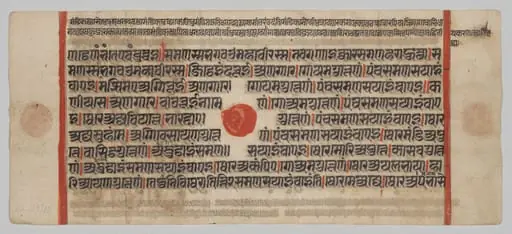
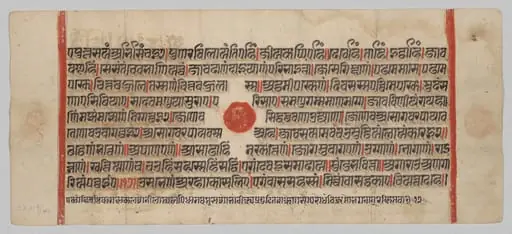
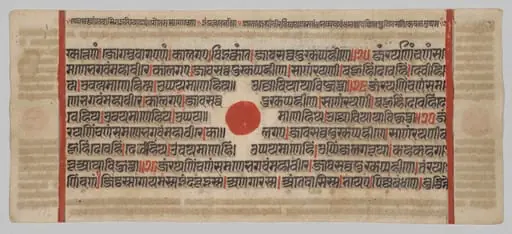
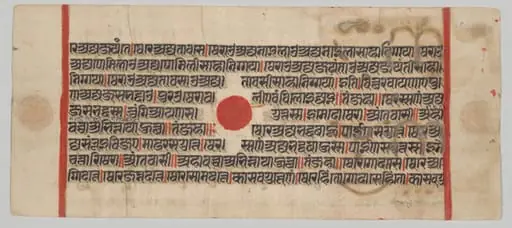
Text, Folio 59 (recto), from a Kalpa-sutra
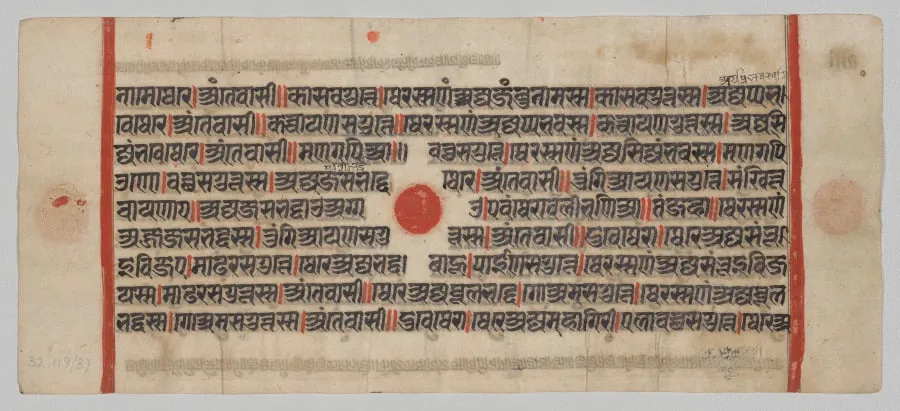
Text, Folio 59 (recto), from a Kalpa-sutra is an unspecified painting by the Mughal Painting artist Unknown. It dates from 1488 and is held in the collection of the Cleveland Museum of Art. This folio, numbered 59 on its recto side, presents a densely written passage from a Kalpa‑sutra, a Hindu religious text.
About this work
Overview
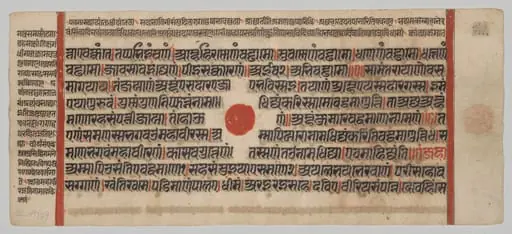
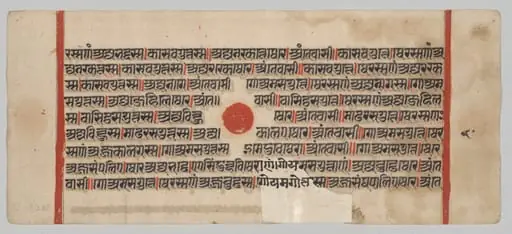
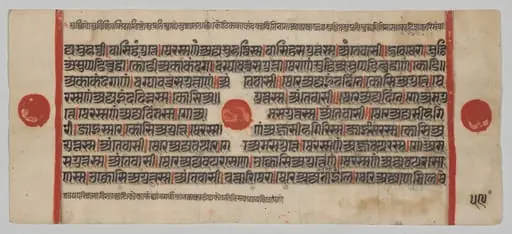
This folio, numbered 59 on its recto side, presents a densely written passage from a Kalpa‑sutra, a Hindu religious text. The page is filled with compact black script arranged in orderly rows, each line marked by a small red dot and guiding line. Marginal red circles are faintly visible, and the paper’s edges show signs of wear, indicating extensive handling.
Subject & Meaning
The content of the folio belongs to the Kalpa‑sutra tradition, which records ritual prescriptions, ceremonial rules, and doctrinal instructions within Hindu practice. While the specific verses are not transcribed here, the text would have served as a reference for priests and scholars, guiding the performance of sacred rites and the maintenance of religious order.
Technique & Style
The manuscript employs a fine black ink applied with a narrow brush, producing uniformly sized characters that reflect a disciplined calligraphic hand. Red pigments, likely derived from vermilion, are used to punctuate the beginning of each line and to add marginal markers, facilitating reading and navigation. The paper, thin and slightly textured, bears the characteristic patina of age.
History & Provenance
Originating in the Indian subcontinent, the folio was created for devotional or instructional use within a monastic or temple setting. Over time it entered a private collection before being acquired by the Cleveland Museum of Art, where it now forms part of the museum’s holdings of South Asian manuscripts, contributing to the broader representation of Hindu textual traditions.
Context
Kalpa‑sutras form a subset of the larger corpus of Hindu scriptures, complementing the Vedas and Puranas by focusing on procedural aspects of worship. Produced during a period when manuscript production was a labor‑intensive craft, such pages were essential tools for preserving ritual knowledge before the advent of printed editions.
Artist & collection

 Domestic Scene
 Giacomo and Cardinal Marco, investing Andrea, Abbot of San Zeno, with his Benefice
 The Nymph of Fontainebleau
 Portrait of a Woman
 Madonna and Child with Saints in the Enclosed Garden
 Venus and Minerva
 Family Group of Four on Sofa
 Wall painting from Room H of the Villa of P. Fannius Synistor at Boscoreale