Artwork
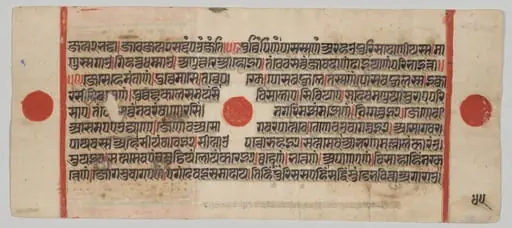
Text, Folio 65 (verso), from a Kalpa-sutra
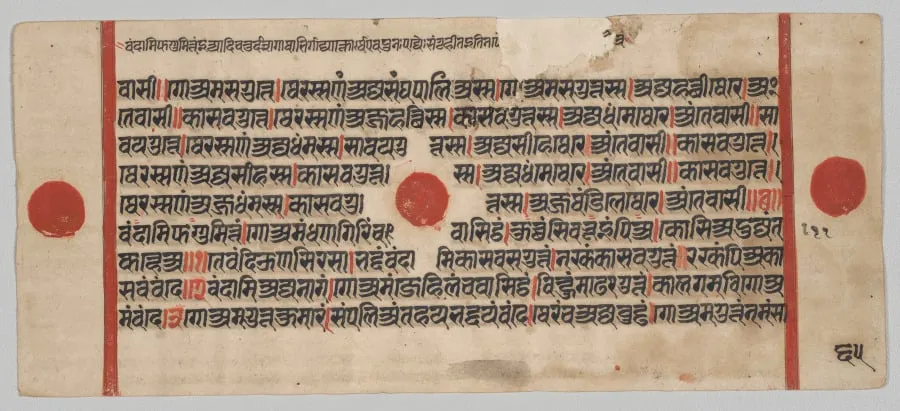
Text, Folio 65 (verso), from a Kalpa-sutra is an unspecified painting by the Mughal Painting artist Unknown. It dates from 1488 and is held in the collection of the Cleveland Museum of Art. This painting depicts a single folio from a manuscript, rendered with precise attention to its physical form.
About this work
Overview
The page is framed by red borders on either side, and its surface is covered in dense black script with occasional red markings.
This painting depicts a single folio from a manuscript, rendered with precise attention to its physical form. The page is framed by red borders on either side, and its surface is covered in dense black script with occasional red markings. No imagery is present—only text, arranged in tightly spaced lines. The surface shows signs of age, including fading and wear, suggesting the original artifact was handled over time.
Subject & Meaning
The content of the script remains unidentified, and the language has not been deciphered. The work does not convey narrative or symbolic meaning through imagery, but rather emphasizes the aesthetic value of written language itself. Its purpose may have been liturgical, scholarly, or ceremonial, though without linguistic context, its specific function remains speculative.
Technique & Style
The artist rendered the manuscript page in meticulous detail, replicating ink lines, paper texture, and discoloration with accuracy. The use of red accents mimics traditional editorial or liturgical markings, while the uniformity of the script suggests careful calligraphic training. The absence of illustration aligns with certain textual traditions that prioritize script as sacred or authoritative form.
History & Provenance
The original manuscript from which this page was copied is unlocated, and the painting’s creator and date are undocumented. The style suggests a later reproduction, possibly made to preserve or honor the appearance of a lost or damaged text. Its existence implies a tradition of documenting textual artifacts, though its exact origin within that tradition remains unclear.
Context
Though the visual form resembles South Asian or Central Asian manuscript traditions, the script does not correspond to any known system from those regions. The reference to the Renaissance is misleading; this work belongs to a different cultural and temporal sphere, likely rooted in an understudied scribal practice outside the European canon.
Legacy
The painting serves as a record of a lost textual culture, preserving the visual rhythm of an unread language. It stands as a testament to the reverence for written form, even when meaning is no longer accessible. Scholars continue to study such works in hopes of identifying linguistic patterns or cultural connections that might one day illuminate their origins.
Artist & collection

 Domestic Scene
 Giacomo and Cardinal Marco, investing Andrea, Abbot of San Zeno, with his Benefice
 The Nymph of Fontainebleau
 Portrait of a Woman
 Madonna and Child with Saints in the Enclosed Garden
 Venus and Minerva
 Family Group of Four on Sofa
 Wall painting from Room H of the Villa of P. Fannius Synistor at Boscoreale
 Text, Folio 55 (verso), from a Kalpa-sutra
 Text, Folio 64 (verso), from a Kalpa-sutra
 Text, Folio 74 (verso), from a Kalpa-sutra
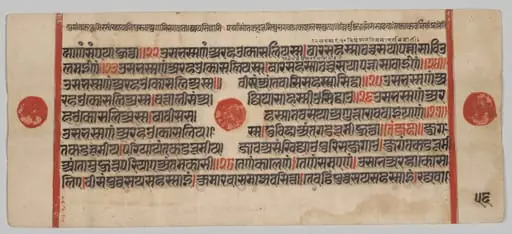 Text, Folio 56 (verso), from a Kalpa-sutra
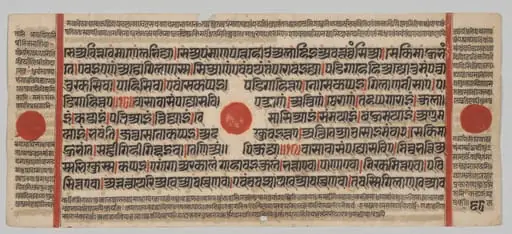 Text, Folio 68 (verso), from a Kalpa-sutra
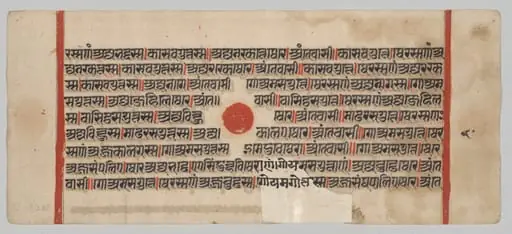 Text, Folio 65 (recto), from a Kalpa-sutra
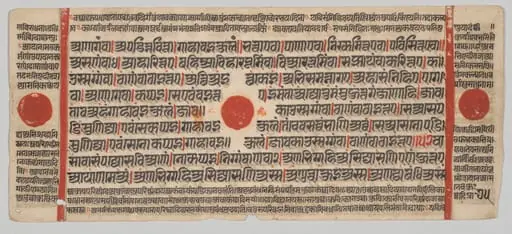 Text, Folio 75 (verso), from a Kalpa-sutra
 Text, Folio 45 (verso), from a Kalpa-sutra