Artwork
Text, Folio 66 (verso), from a Kalpa-sutra
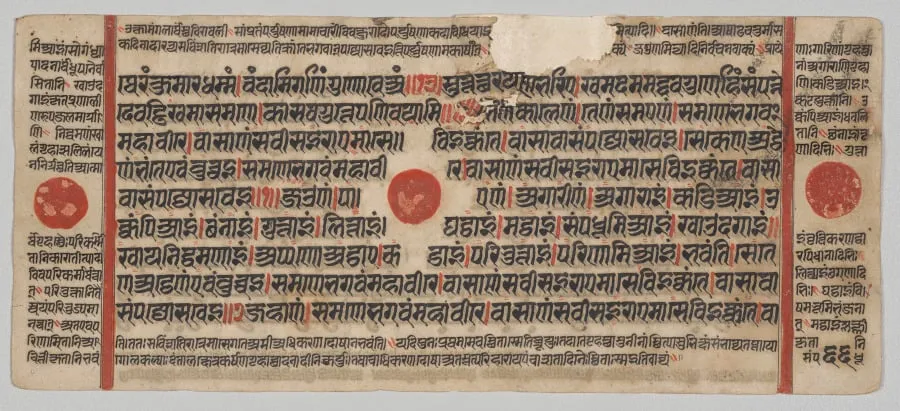
Text, Folio 66 (verso), from a Kalpa-sutra is an unspecified painting by the Mughal Painting artist Unknown. It dates from 1488 and is held in the collection of the Cleveland Museum of Art.
About this work
Overview
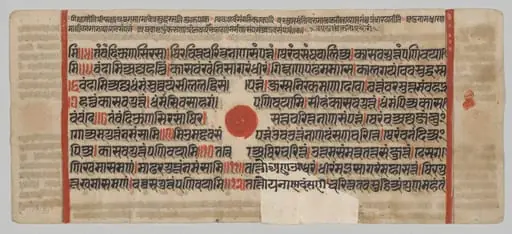
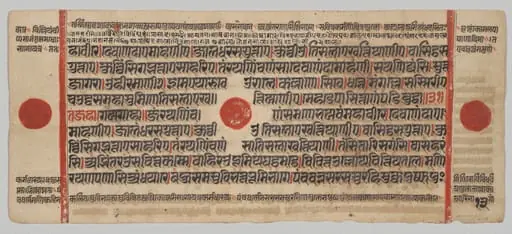
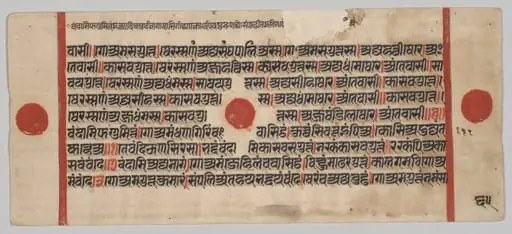
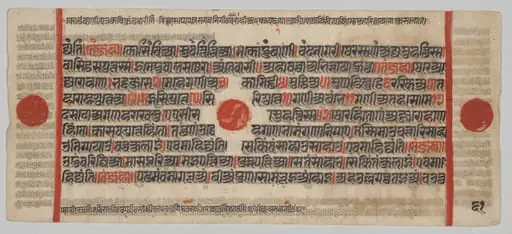
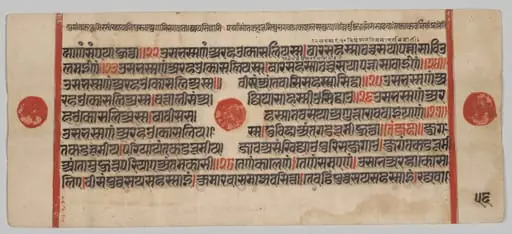
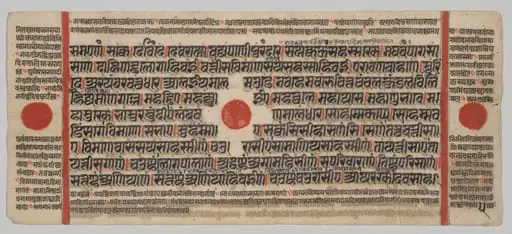
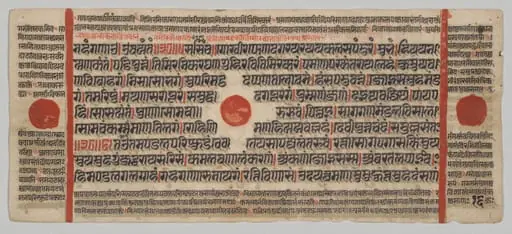
This folio is part of a handwritten manuscript in the Kalpa-sutra tradition, featuring densely arranged black script on a softly textured, pale background.
This folio is part of a handwritten manuscript in the Kalpa-sutra tradition, featuring densely arranged black script on a softly textured, pale background. The layout is methodical, with thin red borders framing the page and a numbered corner indicating its position. Two red-and-white circular marks appear near the center and right edge, likely serving as visual markers within the textual sequence.
Subject & Meaning
The text contains passages from the Kalpa-sutra, a Jain religious compendium outlining monastic rules and biographies of spiritual teachers. Its careful penmanship suggests liturgical or instructional use, possibly for recitation or study. The red circles may denote section divisions, doctrinal emphasis, or ritual pauses, guiding the reader through structured spiritual content.
Technique & Style
The script is executed in fine, uniform strokes using ink, reflecting disciplined calligraphic training. The background mimics aged paper with subtle irregularities, enhancing its tactile authenticity. Red lines and circular symbols are applied with precision, using mineral pigments that have retained their intensity over time, contrasting subtly against the muted ground.
History & Provenance
This folio originates from a larger manuscript produced in western India, likely between the 15th and 17th centuries, during a period of active Jain manuscript production. Its survival indicates preservation within monastic or scholarly circles. Similar folios are held in institutional collections, including the Cleveland Museum of Art, suggesting a shared regional tradition of textual craftsmanship.
Context
Jain manuscripts like this were created for devotional use, often commissioned by lay patrons or monastic communities. The emphasis on legibility and symbolic markers reflects a culture that valued precise transmission of sacred teachings. The absence of figural imagery aligns with Jain ascetic principles, prioritizing textual purity over visual representation.
Legacy
Folios such as this exemplify the enduring Jain commitment to textual preservation through meticulous hand-copying. They remain vital sources for understanding medieval religious practice and scribal culture in India. Their survival in museum collections allows ongoing scholarly engagement with pre-modern forms of knowledge transmission.
Artist & collection

 Domestic Scene
 Giacomo and Cardinal Marco, investing Andrea, Abbot of San Zeno, with his Benefice
 The Nymph of Fontainebleau
 Portrait of a Woman
 Madonna and Child with Saints in the Enclosed Garden
 Venus and Minerva
 Family Group of Four on Sofa
 Wall painting from Room H of the Villa of P. Fannius Synistor at Boscoreale