Artwork
Text, Folio 7 (verso), from a Kalpa-sutra
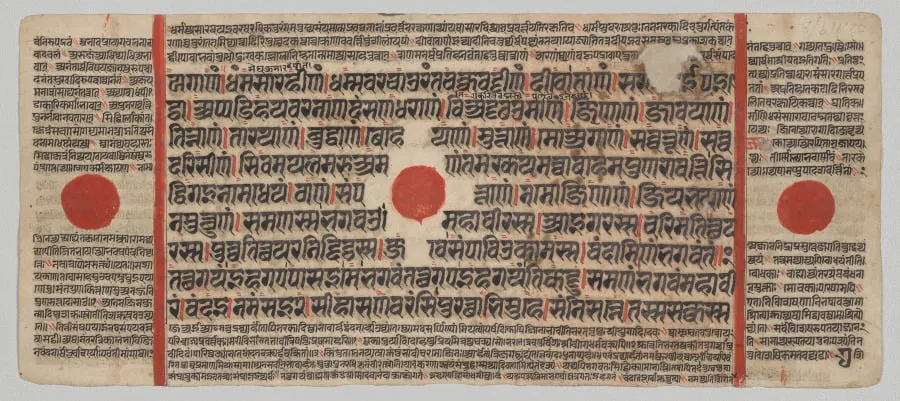
Text, Folio 7 (verso), from a Kalpa-sutra is an unspecified painting by the Mughal Painting artist Unknown. It dates from 1488 and is held in the collection of the Cleveland Museum of Art. This folio comes from a manuscript of the Kalpa-sutra, a Jain sacred text.
About this work
Overview
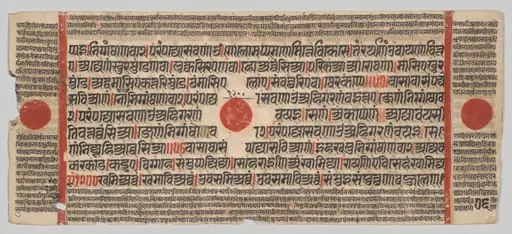
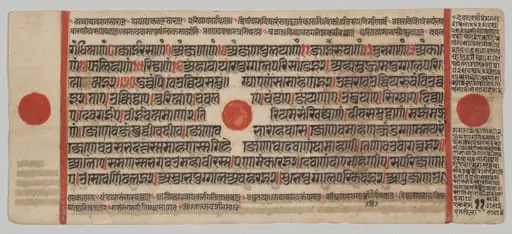
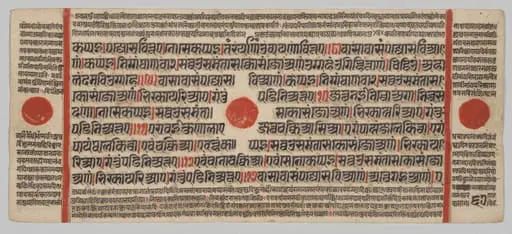
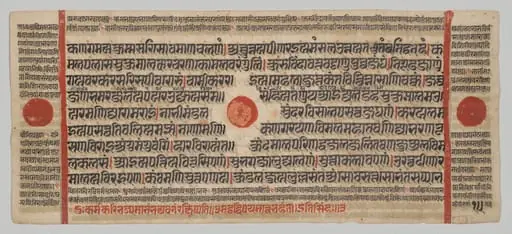
This folio comes from a manuscript of the Kalpa-sutra, a Jain sacred text. The page features carefully rendered script in dark ink, arranged in segmented sections marked by small red circles. The handwriting exhibits fluidity and precision, suggesting skilled calligraphic practice. The design prioritizes clarity and rhythm over decorative excess, reflecting the devotional purpose of the text.
Subject & Meaning
The content is part of the Kalpa-sutra, which outlines monastic rituals and the lives of Jain Tirthankaras. Each red circle signals the start of a new passage, aiding oral recitation and liturgical use. The script’s structure supports memorization and ritual performance, reinforcing the text’s role in religious practice rather than aesthetic display.
Technique & Style
The script is executed in a fine, flowing hand with subtle tonal variations, likely achieved through controlled ink flow and multiple brush strokes. Red dots, applied with precision, serve as visual dividers. The absence of illustration focuses attention on the written word, emphasizing textual authority and the sanctity of the written Jain tradition.
History & Provenance
The folio originates from a medieval Jain manuscript tradition, likely produced in western India between the 14th and 16th centuries. It was preserved within monastic or scholarly circles before entering the Cleveland Museum of Art’s collection. Its survival reflects the enduring reverence for Jain scriptures and the care taken in their transmission.
Context
Manuscripts like this were created in scriptoria under monastic patronage, often commissioned by wealthy lay followers. The Kalpa-sutra was central to Jain ritual life, especially during the Paryushana festival. Such texts were handled with ritual purity, read aloud in temples, and revered as embodiments of spiritual truth.
Legacy
This folio exemplifies the enduring Jain commitment to textual preservation through elegant calligraphy. Its survival offers insight into medieval scribal practices and the material culture of religious devotion. Today, it stands as a testament to the quiet discipline of manuscript production and the continuity of Jain liturgical traditions.
Artist & collection

 Domestic Scene
 Giacomo and Cardinal Marco, investing Andrea, Abbot of San Zeno, with his Benefice
 The Nymph of Fontainebleau
 Portrait of a Woman
 Madonna and Child with Saints in the Enclosed Garden
 Venus and Minerva
 Family Group of Four on Sofa
 Wall painting from Room H of the Villa of P. Fannius Synistor at Boscoreale
 Text, Folio 3 (verso), from a Kalpa-sutra
 Text, Folio 36 (verso), from a Kalpa-sutra
 Text, Folio 21 (verso), from a Kalpa-sutra
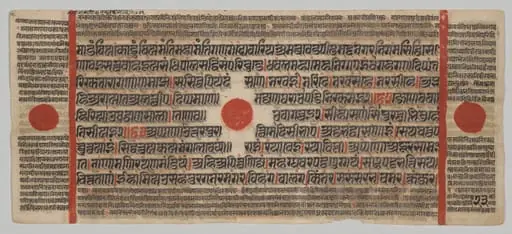 Text, Folio 23 (verso), from a Kalpa-sutra
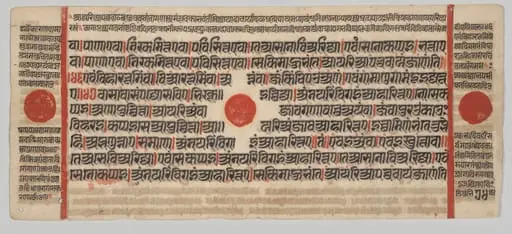 Text, Folio 74 (verso), from a Kalpa-sutra
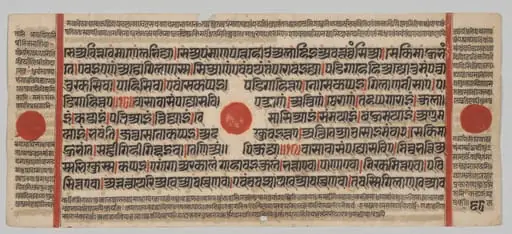 Text, Folio 68 (verso), from a Kalpa-sutra
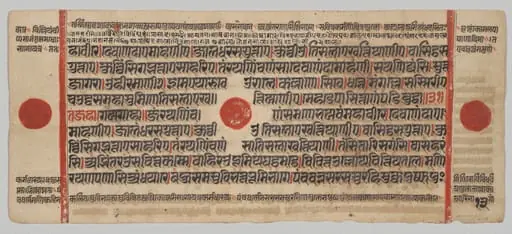 Text, Folio 13 (verso), from a Kalpa-sutra
 Text, Folio 76 (verso), from a Kalpa-sutra
 Text, Folio 11 (verso), from a Kalpa-sutra
 Text, Folio 67 (verso), from a Kalpa-sutra
 Text, Folio 15 (verso), from a Kalpa-sutra