Artwork
Text, Folio 76 (verso), from a Kalpa-sutra
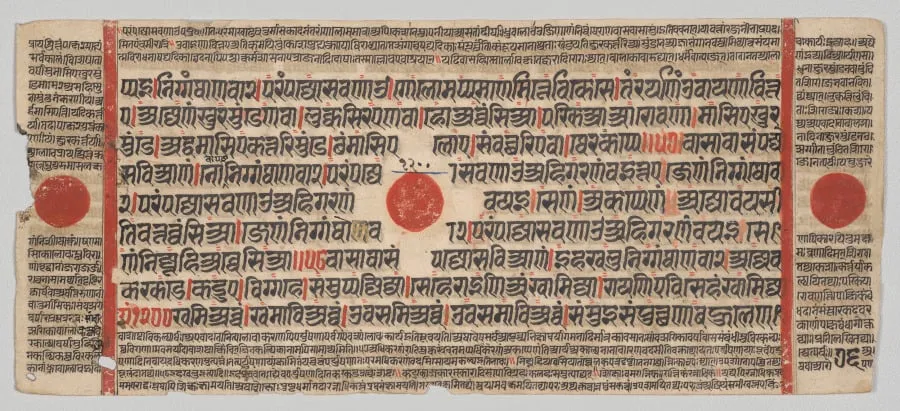
Text, Folio 76 (verso), from a Kalpa-sutra is an unspecified painting by the Mughal Painting artist Unknown. It dates from 1488 and is held in the collection of the Cleveland Museum of Art. This folio is part of a Kalpa-sutra manuscript, a Jain religious text written in Prakrit.
About this work
Overview
The page features densely arranged black script in a sharp, angular script style, organized with vertical red lines framing the text.
This folio is part of a Kalpa-sutra manuscript, a Jain religious text written in Prakrit. The page features densely arranged black script in a sharp, angular script style, organized with vertical red lines framing the text. Three small red circles with white centers are placed prominently, likely serving as visual markers. The composition emphasizes clarity and order, reflecting the devotional purpose of the manuscript.
Subject & Meaning
The text contains passages from the Kalpa-sutra, detailing the lives and teachings of Jain Tirthankaras. The red circles may symbolize sacred elements such as the sun, the eye of wisdom, or spiritual centers, common in Jain iconography. Their placement draws attention to key sections of the text, guiding the reader through sacred narrative. The design reinforces the text’s ritual function, blending instruction with contemplative focus.
Technique & Style
The script is executed with precise, uniform strokes, suggesting careful calligraphic training. Red pigment, possibly vermilion, outlines the margins and marks symbolic points, contrasting sharply with the dark ink. The use of minimal color and geometric alignment reflects a restrained aesthetic rooted in Jain ascetic values. The layout avoids ornamentation, prioritizing legibility and spiritual discipline over decorative flourish.
History & Provenance
This folio originates from a 15th-century Jain manuscript tradition in western India, likely produced in Gujarat or Rajasthan. Such manuscripts were commissioned by wealthy patrons or monastic communities for liturgical use. The preservation of its original format—text with symbolic markers—indicates it was handled with reverence. Its current location is not specified, but similar folios are held in institutional collections like the Cleveland Museum of Art.
Context
Jain manuscripts of this period were produced in specialized scriptoria, often by monks or lay scribes under monastic supervision. The Kalpa-sutra was recited during important religious festivals, particularly Paryushana. The visual structure of this folio—clear text, symbolic red marks, and strict margins—mirrors the Jain emphasis on order, purity, and disciplined observation, aligning form with spiritual practice.
Legacy
This folio exemplifies the enduring Jain tradition of textual devotion through visual discipline. Its minimalist design influenced later manuscript production across western India. While later works incorporated more illustration, this style remained valued for its austerity and clarity. Surviving folios like this one continue to inform studies of Indian scribal culture and the intersection of writing and sacred space.
Artist & collection

 Domestic Scene
 Giacomo and Cardinal Marco, investing Andrea, Abbot of San Zeno, with his Benefice
 The Nymph of Fontainebleau
 Portrait of a Woman
 Madonna and Child with Saints in the Enclosed Garden
 Venus and Minerva
 Family Group of Four on Sofa
 Wall painting from Room H of the Villa of P. Fannius Synistor at Boscoreale
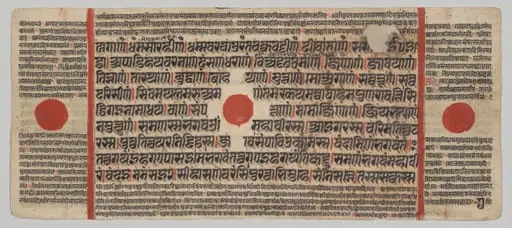 Text, Folio 7 (verso), from a Kalpa-sutra
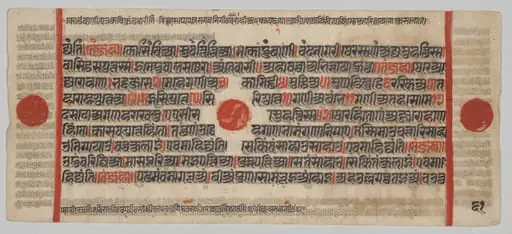 Text, Folio 61 (verso), from a Kalpa-sutra
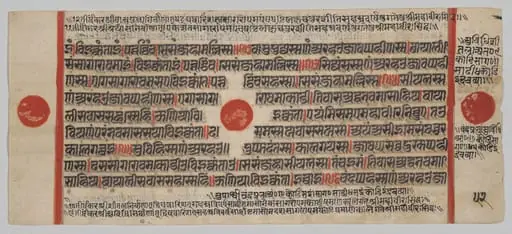 Text, Folio 52 (verso), from a Kalpa-sutra
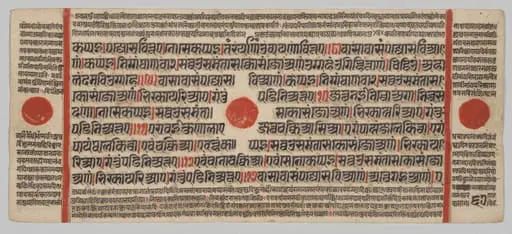 Text, Folio 67 (verso), from a Kalpa-sutra
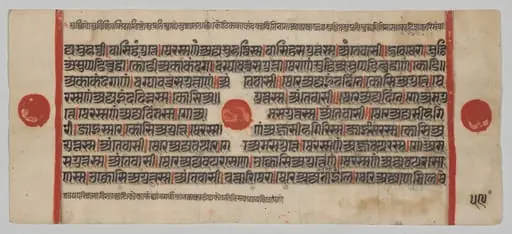 Text, Folio 59 (verso), from a Kalpa-sutra
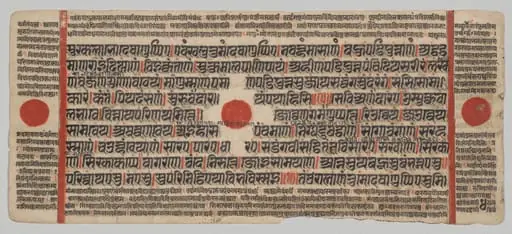 Text, Folio 4 (verso), from a Kalpa-sutra
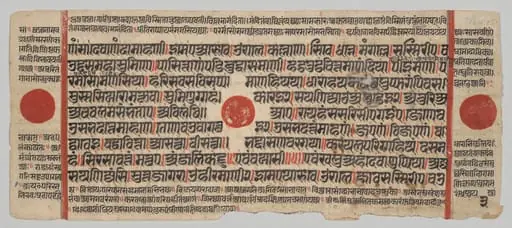 Text, Folio 3 (verso), from a Kalpa-sutra
 Text, Folio 13 (verso), from a Kalpa-sutra
 Text, Folio 76 (recto), from a Kalpa-sutra