Artwork
Théâtre Feydeau
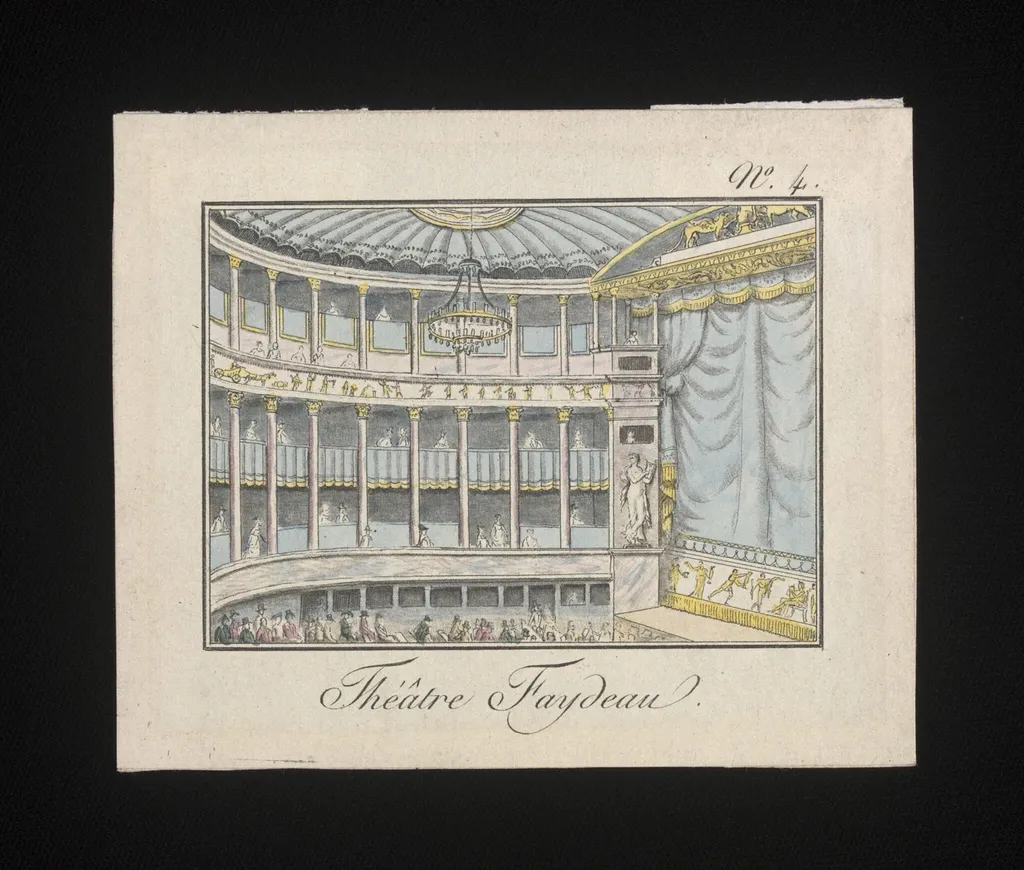
Théâtre Feydeau is a print by Unknown. It dates from 1750 and is held in the collection of the Victoria and Albert Museum.
About this work
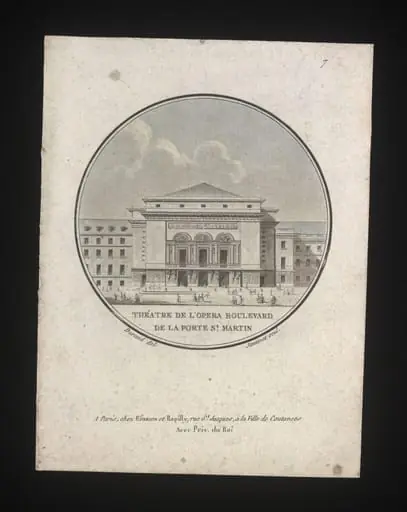
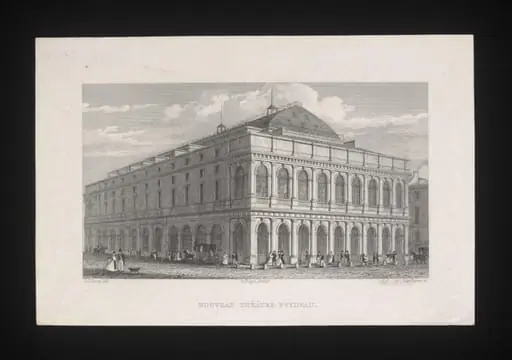
You can spot the boxy shape, the rows of big windows, and the sign above the door.
This print shows the outside of a Paris theater called the Théâtre Feydeau.
Built in 1789, it hosted comedies and operas until 1829.
You can spot the boxy shape, the rows of big windows, and the sign above the door.
The artist left no name, so we only know this image comes from a numbered series.
The print is part of a collection given to the Victoria and Albert Museum.
Look up the Victoria and Albert Museum to see this print in their online gallery.
Overview
This print, part of a numbered series in the Harry Beard Collection, captures the exterior of the Théâtre Feydeau in Paris. Created in the late 18th or early 19th century, it is an anonymous work, its maker unidentified. The image is one of several documenting Parisian theaters, preserved as part of a broader historical record. It was later acquired by the Victoria and Albert Museum, where it remains in their print holdings.
Subject & Meaning
The print presents the theater’s façade as a functional architectural form: a rectangular structure with evenly spaced windows and a prominent sign above the entrance. No figures or activity are depicted, emphasizing the building as a static landmark. Its purpose was likely documentary—to record the appearance of a cultural venue during its operational years, before its demolition in 1829.
Technique & Style
Executed as a line-based print, likely an etching or engraving, the image relies on precise contours and minimal shading. The composition is frontal and symmetrical, prioritizing clarity over ornamentation. The lack of atmospheric detail or perspective depth suggests a utilitarian approach, consistent with architectural records of the period rather than artistic expression.
History & Provenance
The Théâtre Feydeau opened in 1789 and closed in 1829, hosting comedic and operatic performances during its brief existence. This print was produced during or shortly after its active years. It entered the Harry Beard Collection, a 19th-century assembly of theater-related materials, and was later donated to the Victoria and Albert Museum, where it is cataloged as part of their print archive.
Context
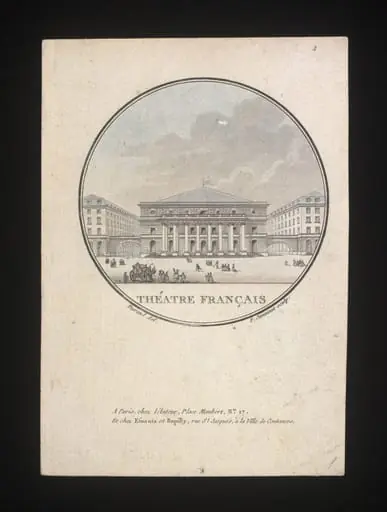
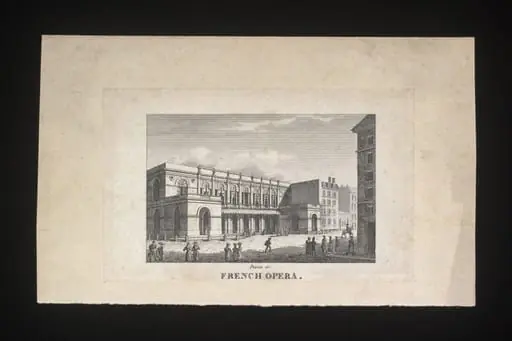
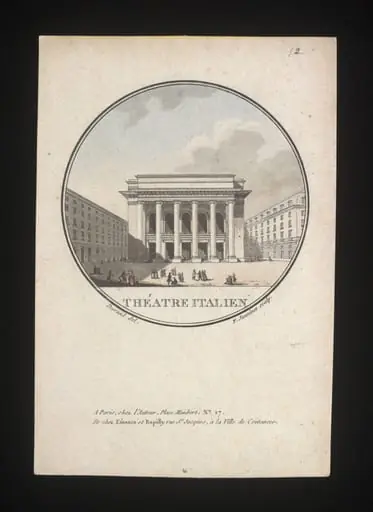
The print belongs to a genre of urban documentation common in post-Revolutionary France, where theaters were symbols of civic culture. Multiple prints of similar theaters were made, often in series, to catalog Paris’s changing architectural landscape. The anonymity of the artist reflects the commercial or institutional nature of such work, produced for collectors or archives rather than individual acclaim.
Legacy
Though the theater itself no longer stands, this print preserves a visual record of its form and placement within the urban fabric. As part of the V&A’s collection, it contributes to scholarly study of 18th-century French performance spaces and the material culture of theater-going. Its value lies in its evidentiary role, not artistic innovation.
Artist & collection

 Domestic Scene
 Giacomo and Cardinal Marco, investing Andrea, Abbot of San Zeno, with his Benefice
 The Nymph of Fontainebleau
 Portrait of a Woman
 Madonna and Child with Saints in the Enclosed Garden
 Venus and Minerva
 Family Group of Four on Sofa
 Wall painting from Room H of the Villa of P. Fannius Synistor at Boscoreale