Artwork
Saint Blasius
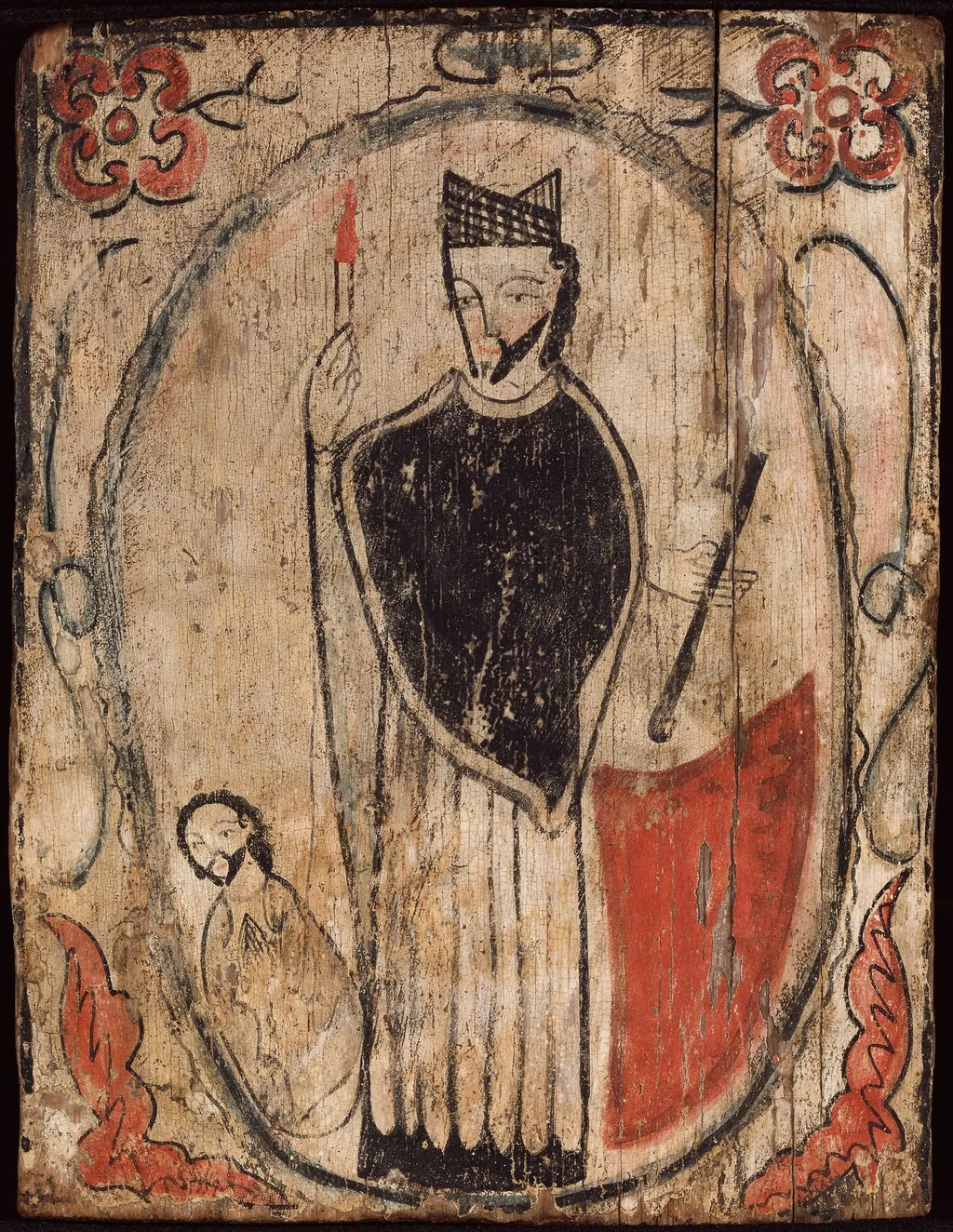
Saint Blasius is an unspecified painting by the Realist artist Antonio Molleno. It dates from 1830 and is held in the collection of the Art Institute of Chicago.
About this work
Overview
Antonio Molleno’s 1830 canvas titled Saint Blasius presents a solitary, upright figure cloaked in dark garments and crowned, clutching a staff. The composition is anchored by a kneeling attendant in the background, while the periphery is animated by swirling red‑gold motifs that evoke the suggestion of flame.
Subject & Meaning
The central character is identified as Saint Blasius, a 7th‑century bishop venerated for his miracles and patronage of ailments of the throat. The solemn expression and regal attire underscore his ecclesiastical authority, while the kneeling figure conveys devotion and intercession.
Technique & Style
Molleno employs a limited palette of muted reds, deep blacks, and metallic gold, allowing occasional bright highlights to punctuate the scene. The painting favors flat, delineated forms and crisp outlines, giving the figures a sculptural, almost carved quality, and the decorative border contrasts with the restrained central space.
History & Provenance
Created in 1830, the work entered the collection of the Art Institute of Chicago, where it remains on display. Its acquisition reflects the museum’s interest in 19th‑century religious genre painting and the broader European tradition of saintly portraiture.
Context
Molleno worked during a period when academic painting emphasized clear narrative and precise draftsmanship. Saint Blasius aligns with contemporary devotional images intended for private contemplation, echoing the era’s revival of medieval saint iconography within a modern, academic framework.
Artist & collection
Artist
Antonio Molleno painted wooden church panels in early 1800s Mexico. In this collection you’ll see two altar screens mounted in modern frames and a panel that shows Saint Blasius. His work belongs to the same tradition…

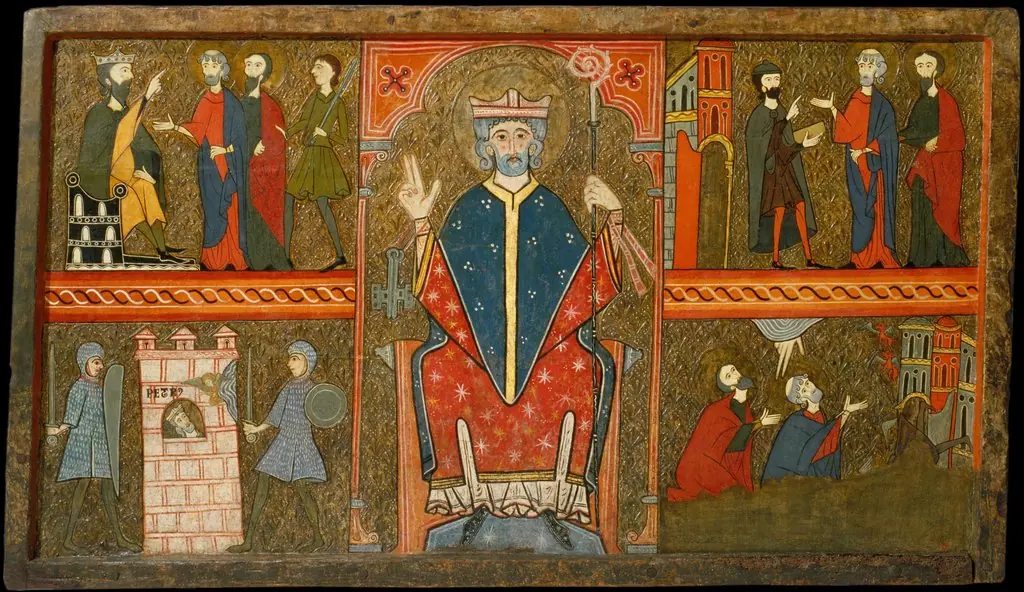 Altar frontal of Sant Pere de Boí
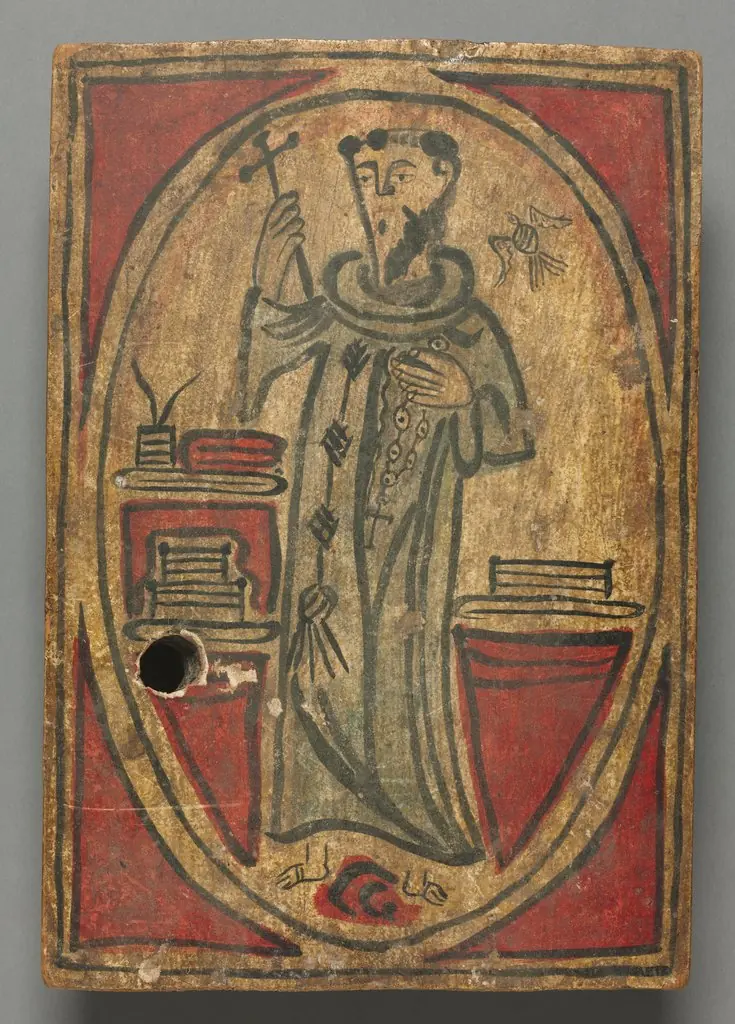 San Francisco de Assisi: santo de retablo
![Christ in Majesty [recto], by French 12th Century](https://artifactworldgallery.com/img/french-12th-century--christ-in-majesty-recto--312aa8dd5634bdac-w320.webp) Christ in Majesty [recto]
Christ in Majesty [recto]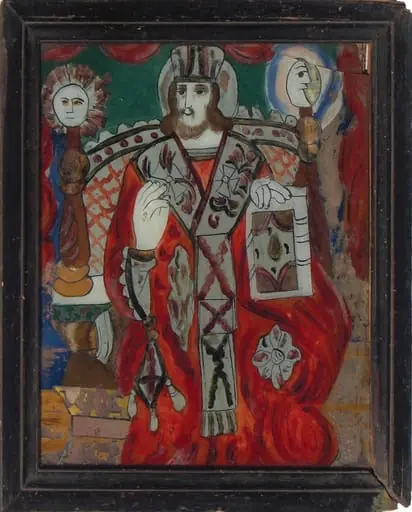 Iisus Hristos Mare Arhiereu și Învățător
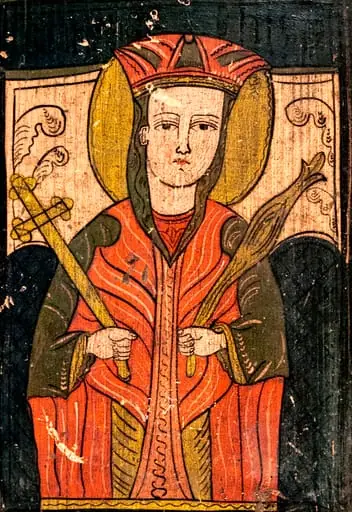 Cuvioasa Paraschiva este redată 3/4, frontal, într-o tehnică inspirată de xilogravură. Sfânta are o coroană deschisă pe cap, încadrată de aureola pictată cu galben. Fața este pătrată, încadrată de părul stilizat(sau maforion), fruntea înaltă, ochii prelungi, cu spâncene subțiri, nasul și gura mici, expresia sobră, carnația roz. În mâna dreaptă(ambele mâini redate neanatomic) ține o cruce treflată, în cealaltă un sceptru floral. Veșmintele au mânecile verzi, restul fiind roșii, încheiate în față cu o bandă mai deschisă, poale verzi. Faldurile redate prin linii ondulate albe. Sfânta este plasată pe fondul unui tron cu spătar bleumarin, culoare care se regăsește pe banda orizontală de sus unde este scrisă inscripția și datarea.Porțiunea dintre aceste elemente este albicioasă, cu câte două elemente fitomorfe redate prin desen. Cromatica este sobră, desenul simplu, naiv.
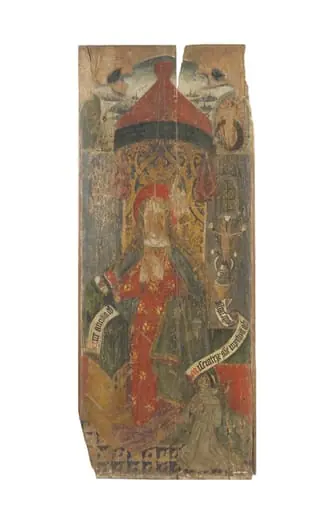 The Annunciation
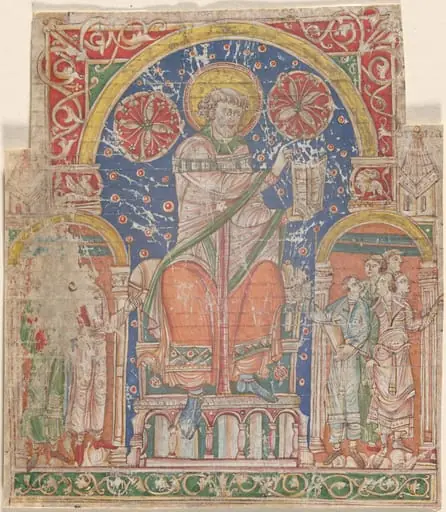 Saint Augustine
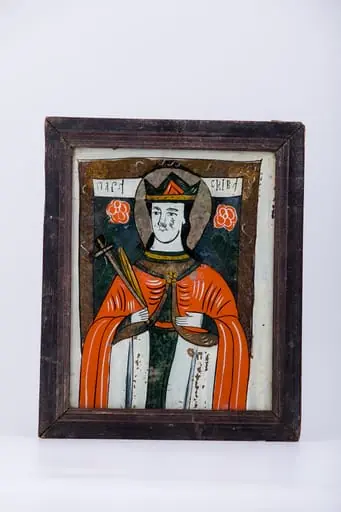 Sfânta Mare Cuvioasă Parascheva de la Iași are crucea brun-bronzie și o ramură de finic galbenă în mâna dreaptă. Este îmbrăcată în veșmânt roșu vermillon, cu interiorul căptușit cu albastru-gri-antracit și brun-bronziu. Sacosul este alb-zinc cu danteluță și guleraș verde-galben. Sfânta Cuvioasă are părul negru lung, lăsat pe umeri, coroană roșie cu verde-brad și aureolă. Fondul icoanei este cerul albastru ultramarin bleu-marin întunecat. Întreaga compoziție iconografică este încadrată de un chenar decorativ geomatrizant brun-bronziu, cu linia șerpuitoare, specifică centrului de la Nicula. Fondul de ansamblu al icoanei este alb-zinc. Inscripția din româno-chirilică se traduce Paraschiva. Cromatica este armonioasă: roșu vermillon, albastru ultramarin bleumarin, verde forest, bej-crem, bronziu, negru, alb zinc. Icoana este din Nordul Transilvaniei, Nicula.
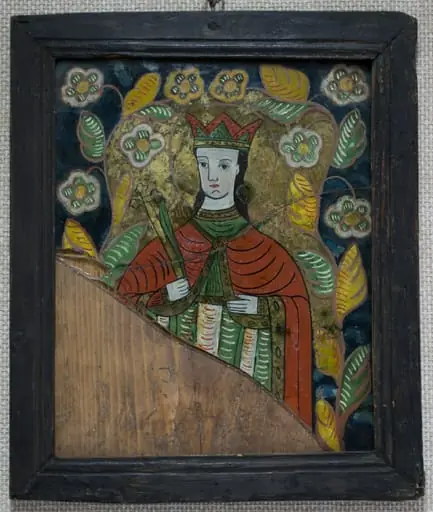 Icoana este pictată "în oglindă", pe un suport de glajă de formă dreptunghiulară în ax vertical.Cuvioasa Parascheva, redată din ușor semiprofil, ține în mâna dreaptă o ramură verde și o cruce. Fața pătrățoasă, expresivă, ochii mari, negri, gura mică, strânsă, părul , lung, negru, lăsat pe spate..Pe cap coroană împărătească. Este înveșmîntată cu o mantie roșie cu galon aurit cu decor geometric. Câmpul este realizat din foiță aurie în interiorul unei arcade formate din două tulpini sinuase de floare. În afara arcadei albastrul oliv creează un contrast surprinzător.Accentul cade pe chipul sfintei, pus în valoare de contrastul alb/negru/auriu. Desenul este simplu, linia fină, precisă, paleta cromatică bogată , culorile vii. Contrastele cromatice creează perspectivă Rama subțire profilată, din lemn de brad, pictată cu cafeniu, Dos din scândură de brad. Aproximativ un sfert din icoană lipsește. Țăranii considerau că sfânta Parascheva păzește de grindină și de dureri de cap.
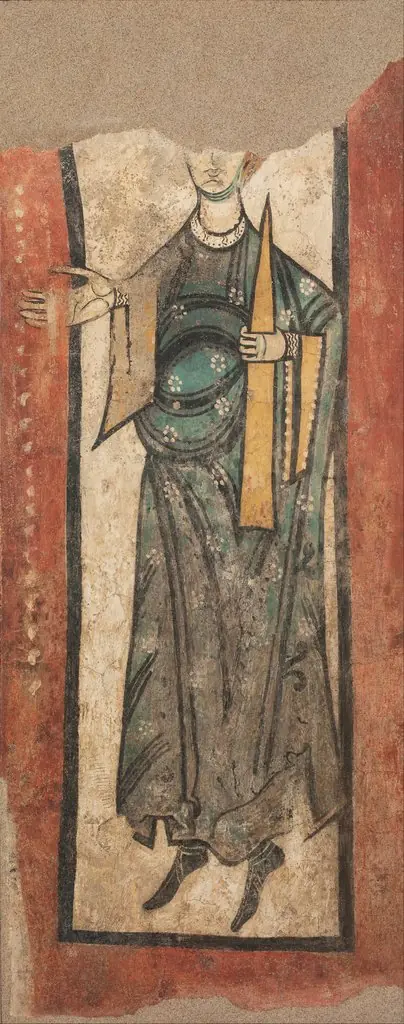 Woman Donor from Esterri d'Àneu
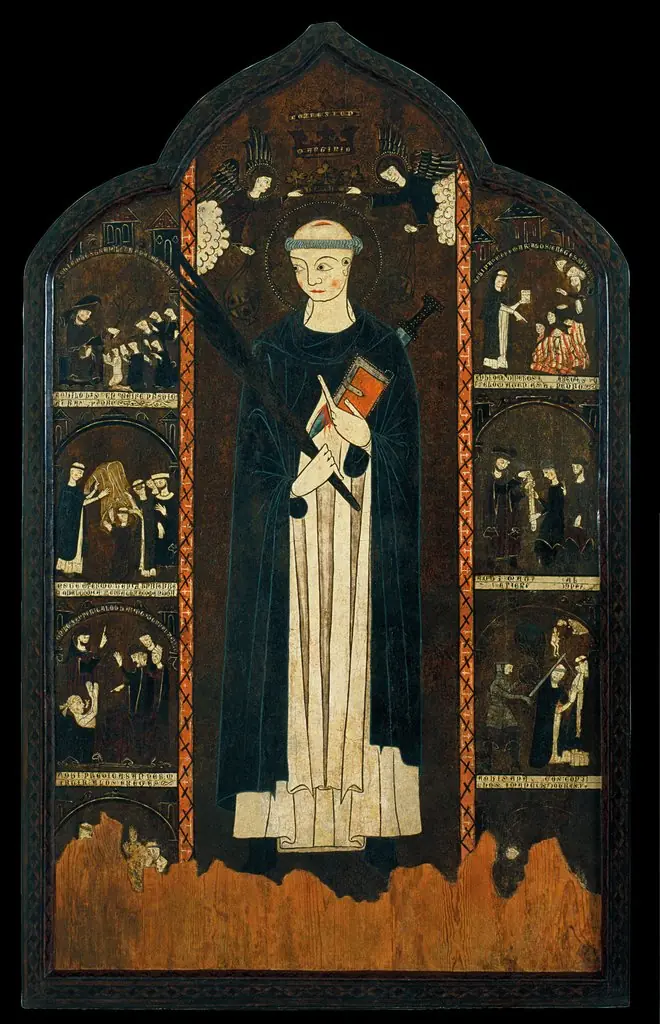 Altarpiece of Saint Peter Martyr
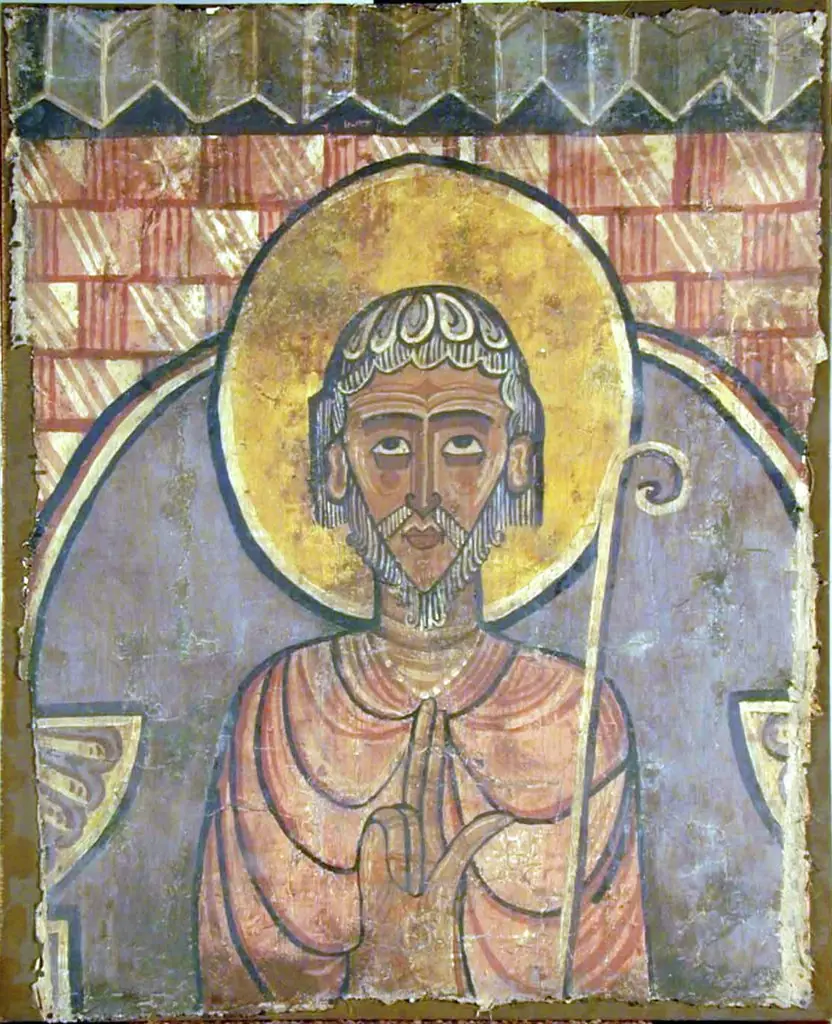 A Bishop Saint