Artwork
The Bishop and the Demon (recto)
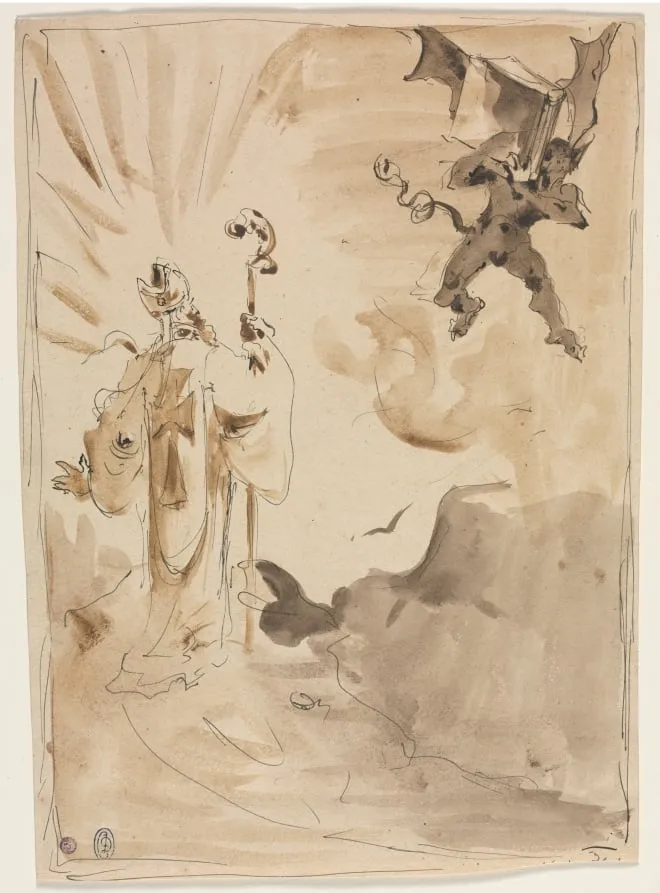
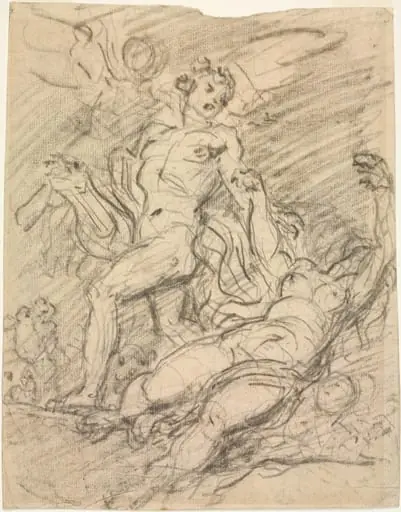
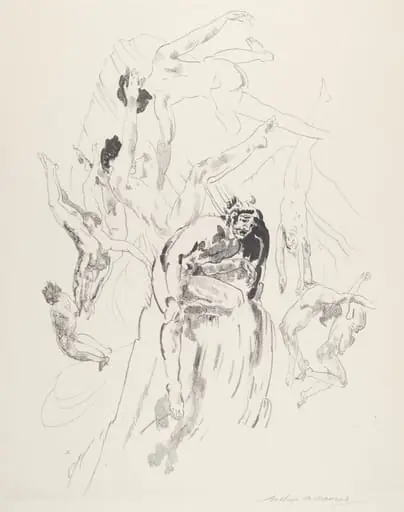
The Bishop and the Demon (recto) is a drawing by Unknown. It dates from 1904 and is held in the collection of the Cleveland Museum of Art. This ink and wash drawing depicts a robed figure confronting a hovering, winged demon on a rugged terrain.
About this work
Overview
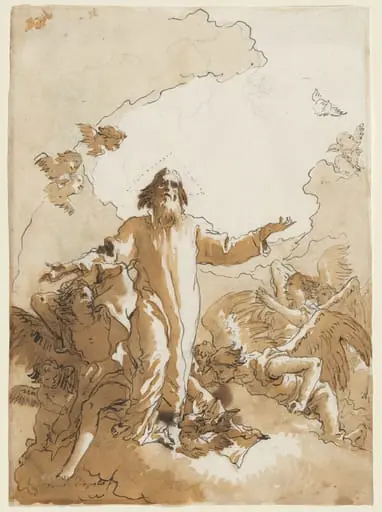
This ink and wash drawing depicts a robed figure confronting a hovering, winged demon on a rugged terrain. Executed with rapid, expressive brushwork, the piece lacks finish, suggesting it was a spontaneous study rather than a completed composition. The emphasis lies in dynamic contrasts of light and shadow, with loose background strokes evoking atmosphere rather than detail.
Subject & Meaning
The figure, likely a bishop, holds a staff as a symbol of spiritual authority, facing a menacing demon that hovers above him. The scene implies a struggle between sacred power and supernatural threat, possibly reflecting medieval or Renaissance themes of divine protection against evil. The lack of narrative detail invites interpretation, focusing attention on the tension between the two figures.
Technique & Style
The artist employed chiaroscuro through bold washes and abrupt tonal shifts to define form and depth. Quick, fluid brushstrokes suggest movement and energy, particularly in the demon’s wings and the rocky ground. The unfinished quality reveals the artist’s process, prioritizing expressive gesture and dramatic contrast over refined detail or polished finish.
History & Provenance
The drawing’s origins are undocumented, with no known record of its creation date or early ownership. It survives as a single sheet, likely part of a larger sketchbook or preparatory collection. Its preservation suggests it was valued for its compositional energy, even if not intended as a finished work.
Context
Created in an era when religious imagery often depicted spiritual battles, this drawing aligns with contemporary visual traditions that portrayed clerical figures confronting demonic forces. Its sketch-like nature reflects a broader practice among artists of using rapid studies to explore dramatic compositions before committing to larger works.
Legacy
Though unsigned and unattributed, the drawing exemplifies how informal studies could capture powerful visual ideas with minimal means. Its emphasis on emotional intensity through light and form influenced later artists who valued expressive draftsmanship over polished finish, preserving its relevance in the study of artistic process.
Artist & collection

 Domestic Scene
 Giacomo and Cardinal Marco, investing Andrea, Abbot of San Zeno, with his Benefice
 The Nymph of Fontainebleau
 Portrait of a Woman
 Madonna and Child with Saints in the Enclosed Garden
 Venus and Minerva
 Family Group of Four on Sofa
 Wall painting from Room H of the Villa of P. Fannius Synistor at Boscoreale
![The Ecstasy of Saint Francis [recto], by Sebastiano Ricci](https://artifactworldgallery.com/img/sebastiano-ricci--the-ecstasy-of-saint-francis-recto--5f53f9b59775e5dd-w320.webp)