Artwork
The dream of Zulaykha, from the Amber Album
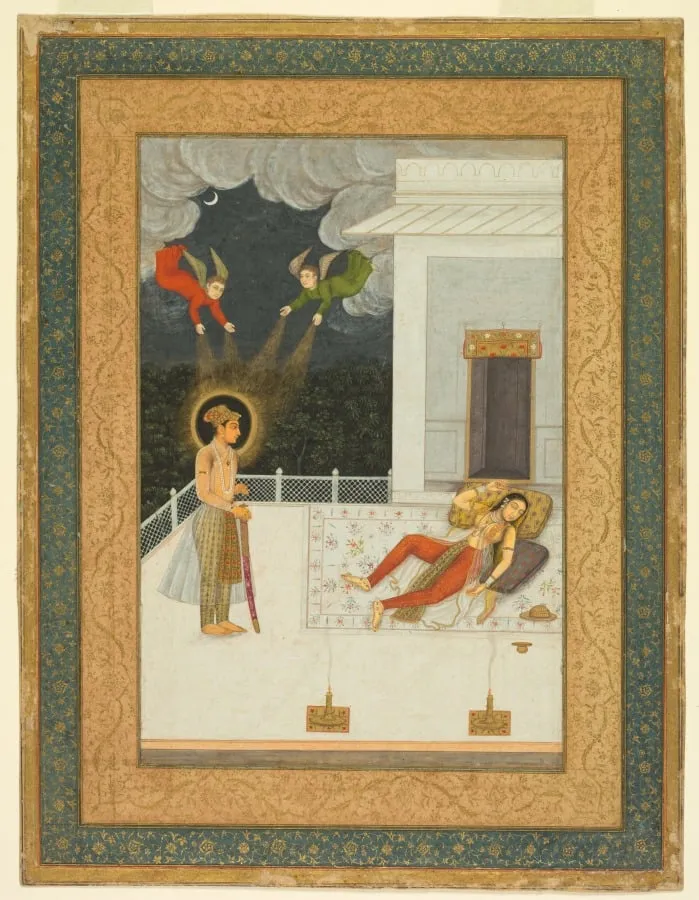
The dream of Zulaykha, from the Amber Album is an unspecified painting by the Baroque artist Unknown. It dates from 1670 and is held in the collection of the Cleveland Museum of Art.
About this work
Overview
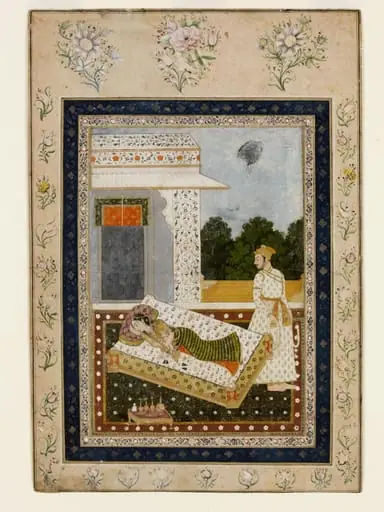
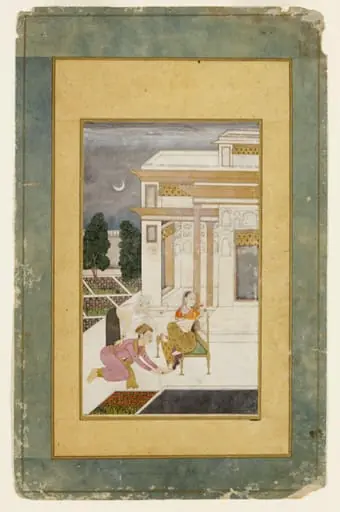
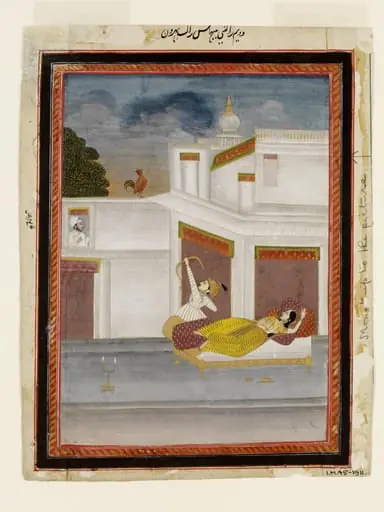
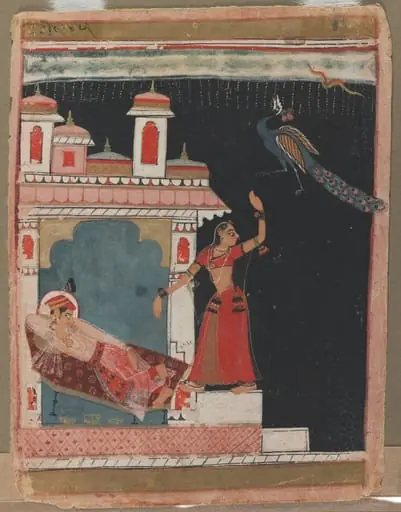
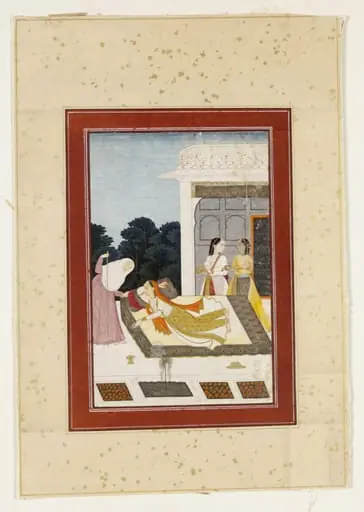
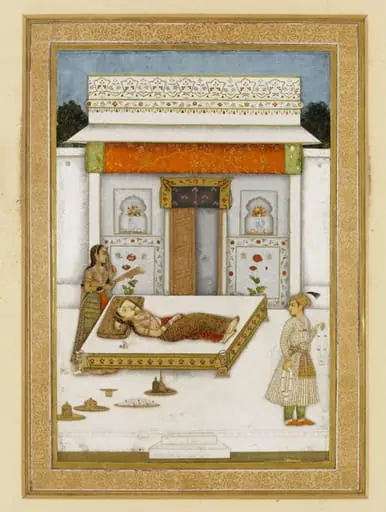
The work, titled “The Dream of Zulaykha, from the Amber Album,” depicts a nocturnal scene in which a richly attired woman lies asleep on a terrace, her head supported by an ornate pillow. Above her, a luminous figure representing Joseph hovers, surrounded by a radiant aura that suggests divine illumination.
Subject & Meaning
The painting draws on a Persian poetic retelling of the biblical Joseph narrative, focusing on Zulaykha—traditionally identified as Potiphar’s wife—who experiences a visionary dream of her lover. The juxtaposition of the sleeping figure and the glowing apparition conveys a mystical romance, emphasizing the inner longing and spiritual yearning that the poem attributes to Zulaykha.
Technique & Style
Executed in a manner characteristic of Persian miniature traditions, the composition employs intricate gold embroidery on the woman's garments and delicate detailing of the terrace architecture. The artist renders the celestial light with subtle gradations, allowing the figure of Joseph to emerge from a darkened sky, creating a contrast between earthly luxury and ethereal illumination.
History & Provenance
The painting originates from the Amber Album, a manuscript collection assembled for a Mughal patron in the early modern period. Though the precise date and artist remain unidentified, the work reflects the cross‑cultural exchange between Persian literary motifs and Mughal courtly aesthetics, typical of album paintings commissioned for elite audiences.
Context
Within Islamic and broader Abrahamic traditions, the story of Joseph and Zulaykha has been reinterpreted as an allegory of divine love and spiritual insight. This visual rendition aligns with the Sufi‑inspired trend of portraying prophetic figures in dreamlike settings, where the physical realm merges with symbolic light to suggest inner revelation.
Artist & collection

 Domestic Scene
 Giacomo and Cardinal Marco, investing Andrea, Abbot of San Zeno, with his Benefice
 The Nymph of Fontainebleau
 Portrait of a Woman
 Madonna and Child with Saints in the Enclosed Garden
 Venus and Minerva
 Family Group of Four on Sofa
 Wall painting from Room H of the Villa of P. Fannius Synistor at Boscoreale