Artwork
Emperor Shah 'Alam
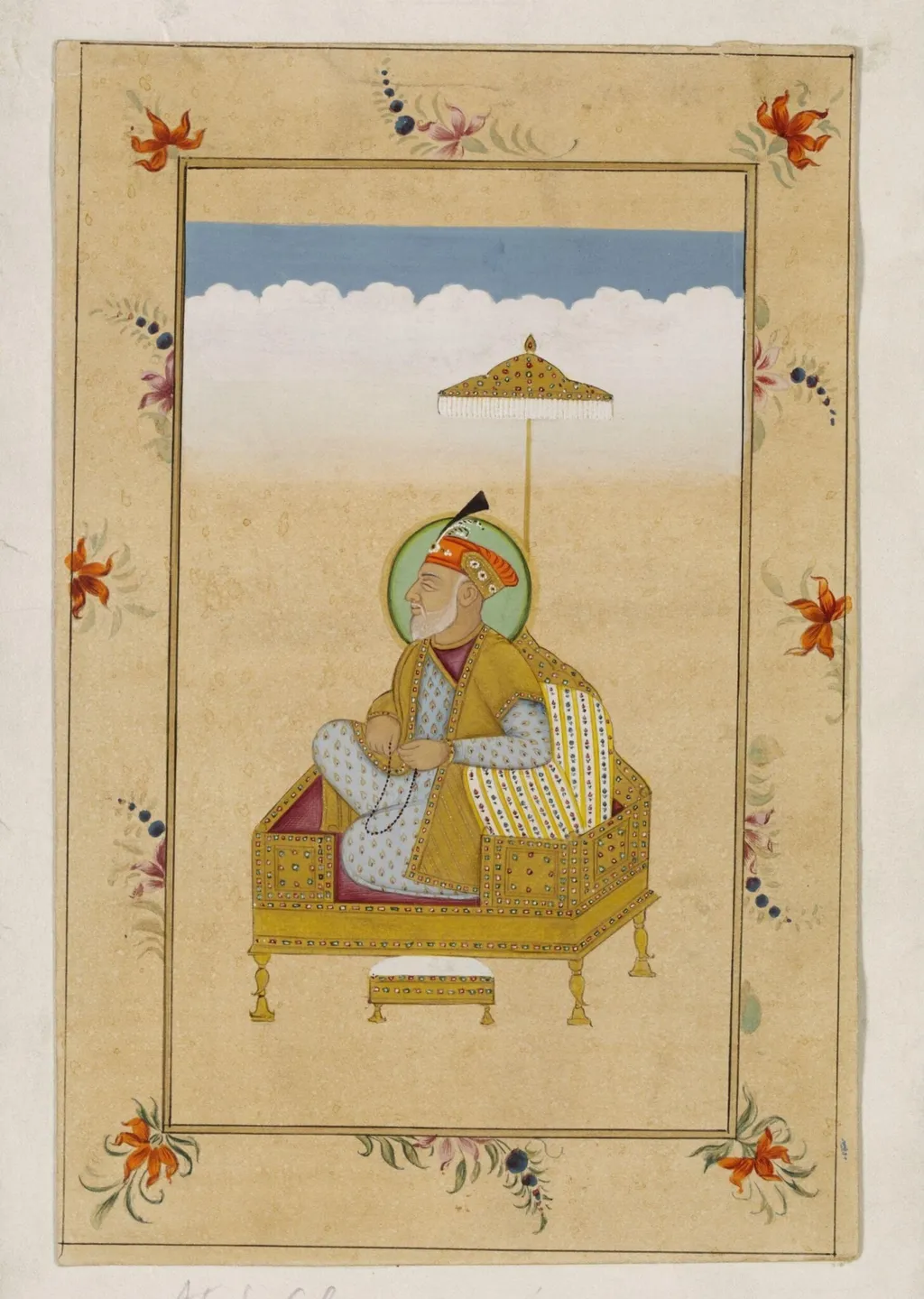
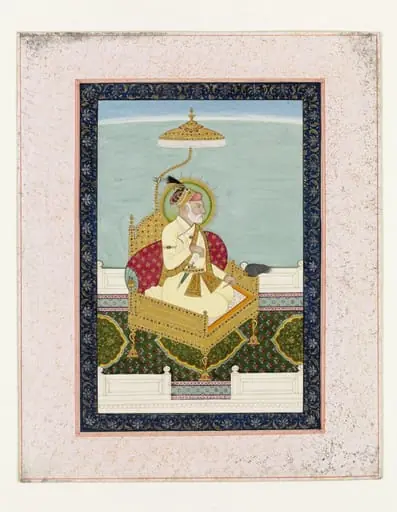
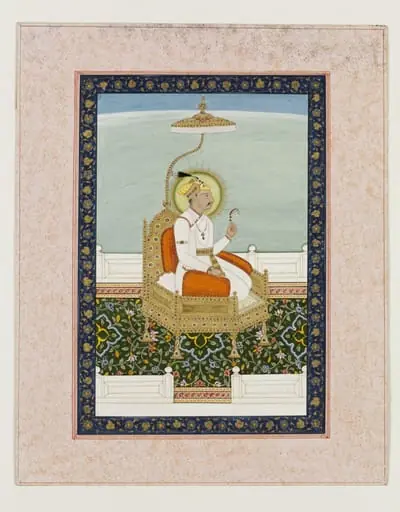
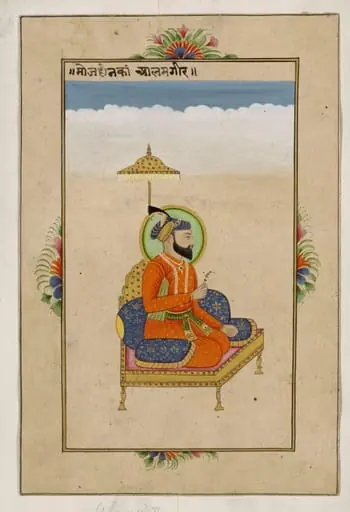
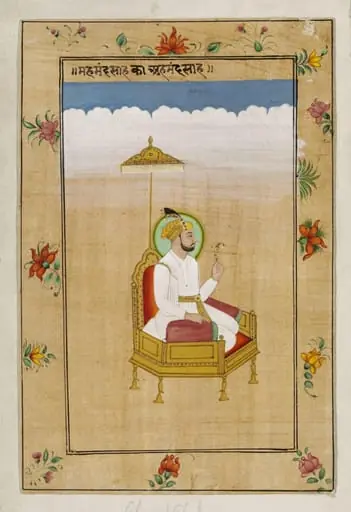
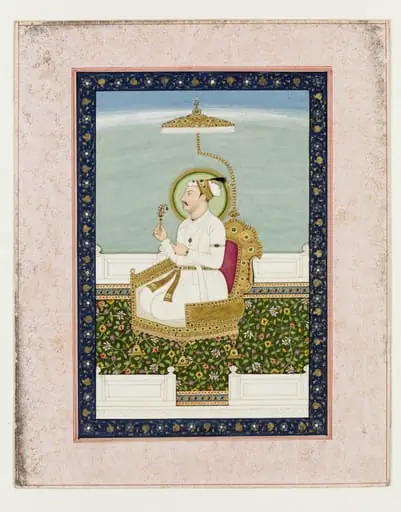
Emperor Shah 'Alam is a paint painting by the Impressionist artist Unknown. It dates from 1890 and is held in the collection of the Victoria and Albert Museum. The work portrays Emperor Shah ’Alam seated on an elaborately gilded throne, turned toward the left.
About this work
Overview
The work portrays Emperor Shah ’Alam seated on an elaborately gilded throne, turned toward the left. He holds a string of prayer beads in one hand, his posture dignified yet intimate. The composition is rendered in opaque watercolour combined with gold leaf on paper, a medium typical of South Asian court portraiture.
Subject & Meaning
Shah ’Alam is depicted in regal attire, emphasizing both his political authority and personal piety. The prayer beads suggest devotion, while the golden throne and sumptuous garments underline his imperial status. The serene sky and minimal background focus attention on the figure, reinforcing his central role in the visual narrative.
Technique & Style
The painting employs opaque watercolour pigments layered with gold leaf, creating a luminous surface that catches ambient light. Gold is applied to the throne, waistcoat, and decorative borders, enhancing the sense of opulence. The flat, decorative treatment of forms and the bright, saturated palette are characteristic of South Asian court art of the period.
Context
Such portraiture was common in the Indian subcontinent during Shah ’Alam’s reign, serving both as a record of royal presence and as a devotional image. The use of gold and vivid colours reflects courtly tastes and the patronage of the arts, while the inclusion of prayer beads aligns the sovereign with religious legitimacy.
Artist & collection

 Domestic Scene
 Giacomo and Cardinal Marco, investing Andrea, Abbot of San Zeno, with his Benefice
 The Nymph of Fontainebleau
 Portrait of a Woman
 Madonna and Child with Saints in the Enclosed Garden
 Venus and Minerva
 Family Group of Four on Sofa
 Wall painting from Room H of the Villa of P. Fannius Synistor at Boscoreale