Artwork
The goddess Rajamatangi
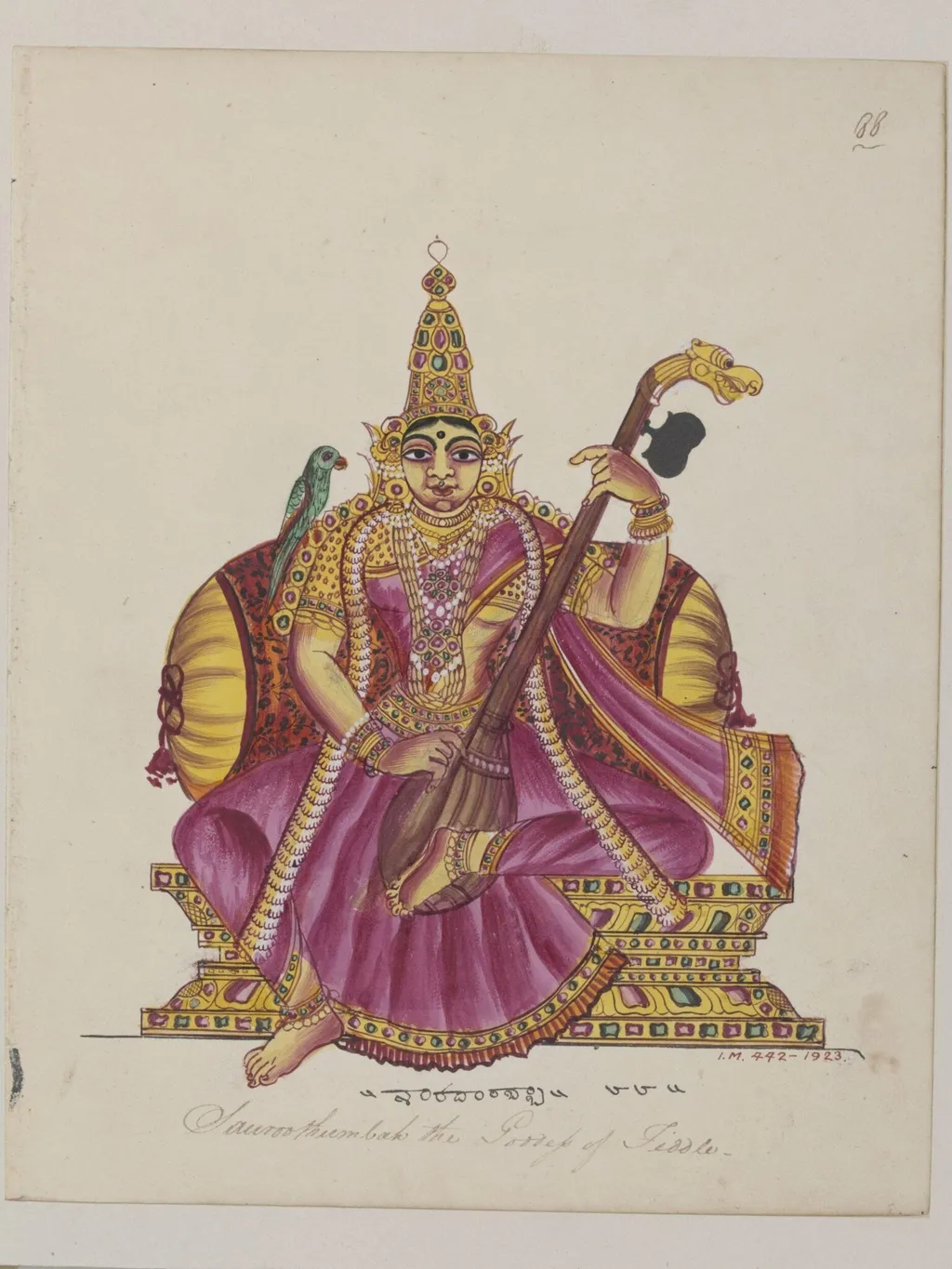
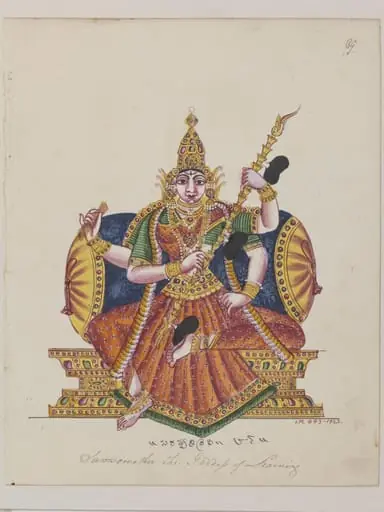
The goddess Rajamatangi is a paint painting by the Mughal Painting artist Unknown. It dates from 1820 and is held in the collection of the Victoria and Albert Museum. The work portrays the Hindu deity Rajamatangi seated on an elaborately carved throne.
About this work
The peacock’s green feathers stand out against the figure’s rich clothing, adding a touch of nature to the scene.
This painting shows a seated figure with a tall, ornate crown and a peacock perched on one shoulder. They’re dressed in bright purple robes with gold and red patterns, holding a curved instrument like a bow. The throne they sit on is decorated with intricate designs, and their jewelry sparkles with dots of color.
The peacock’s green feathers stand out against the figure’s rich clothing, adding a touch of nature to the scene. The painting looks like it was made around 1820, based on the style and details.
If you like this style, check out the Victoria and Albert Museum to see more works like it.
Overview
The work portrays the Hindu deity Rajamatangi seated on an elaborately carved throne. She is shown in the mukhasana pose, a cross‑legged position with the feet tucked beneath the body, and holds a sarasvativina, a stringed instrument associated with the goddess Saraswati. A small parrot rests on her right shoulder, adding a lively element to the composition.
Subject & Meaning
Rajamatangi, a goddess linked to music and learning, is presented with attributes that emphasize her artistic domain. The sarasvativina underscores her role as a patron of the arts, while the perched bird, a traditional symbol of eloquence, reinforces themes of communication and creative expression within Hindu iconography.
Technique & Style
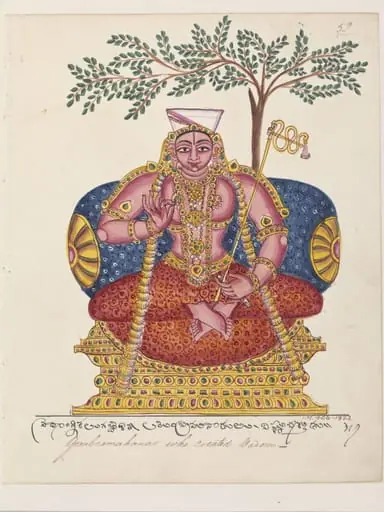
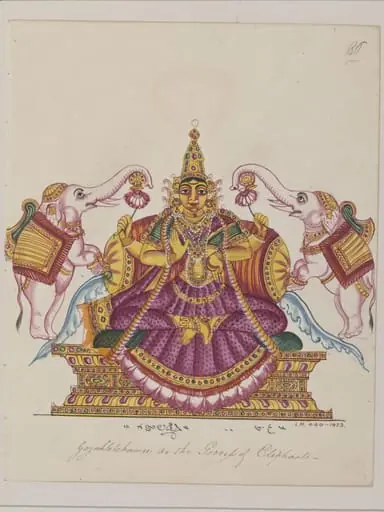
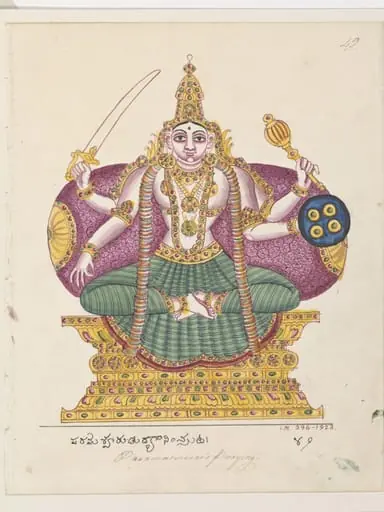
Executed in paint on canvas, the image reflects early‑19th‑century South Indian devotional art. The figure is adorned in vivid purple robes patterned with gold and red motifs, and a tall, ornate crown crowns her head. Intricate detailing on the throne and jewelry demonstrates a meticulous brushwork style characteristic of regional manuscript and panel painting of the period.
History & Provenance
This painting belongs to a larger series of one hundred illustrations of Hindu deities commissioned in South India around 1820. The series was likely produced for a devotional or educational purpose, documenting the pantheon for worshippers and scholars. The work’s provenance traces back to its creation in the early nineteenth century, though its subsequent ownership history remains undocumented.
Artist & collection

 Domestic Scene
 Giacomo and Cardinal Marco, investing Andrea, Abbot of San Zeno, with his Benefice
 The Nymph of Fontainebleau
 Portrait of a Woman
 Madonna and Child with Saints in the Enclosed Garden
 Venus and Minerva
 Family Group of Four on Sofa
 Wall painting from Room H of the Villa of P. Fannius Synistor at Boscoreale