Artwork
The goddess Rajarajeshvari
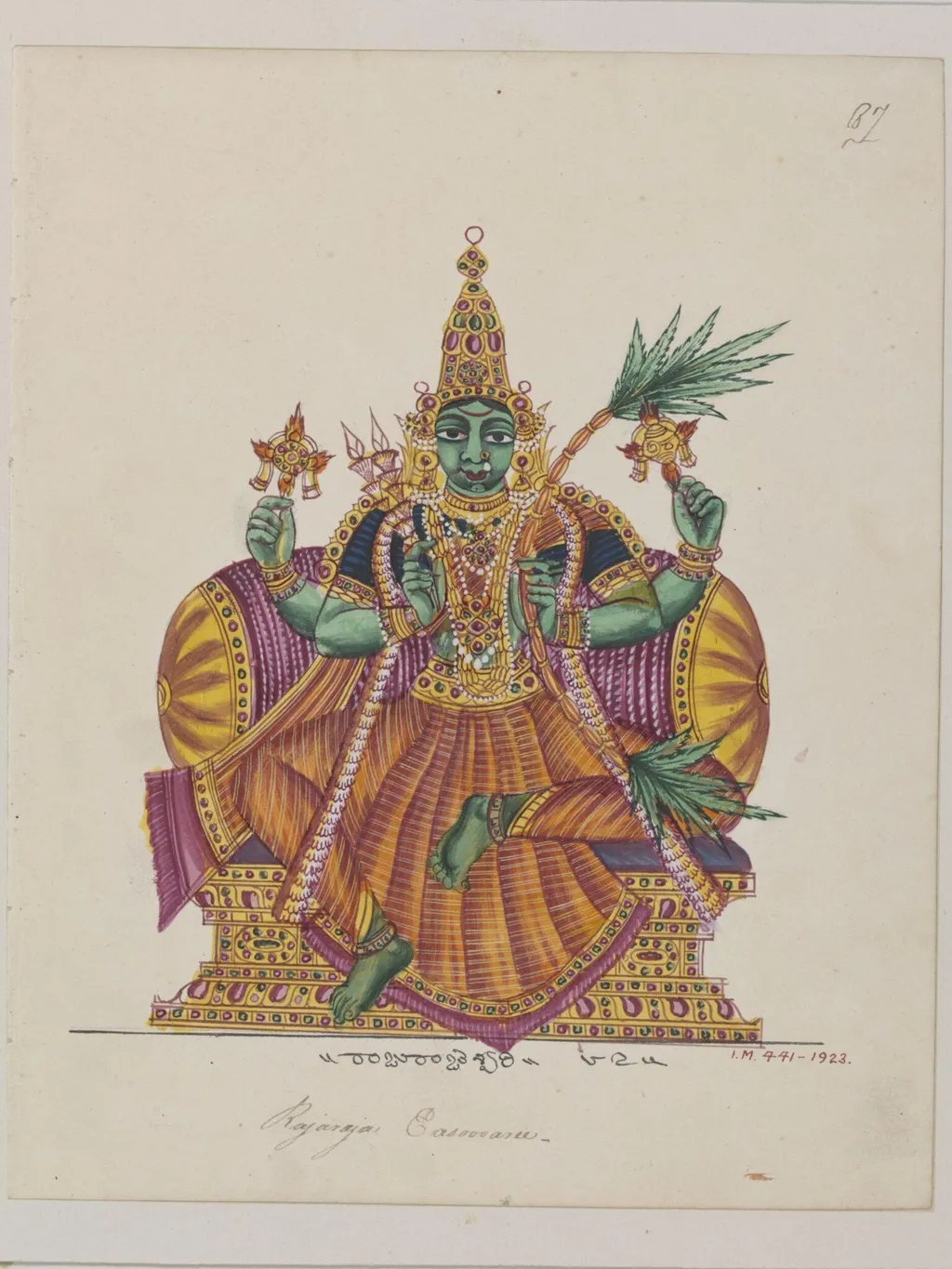
The goddess Rajarajeshvari is a paint painting by the Romanticist artist Unknown. It dates from 1825 and is held in the collection of the Victoria and Albert Museum.
About this work
Overview
This 19th-century Indian painting depicts the goddess Rajarajeshvari in a seated pose, characterized by her four arms and vibrant, intricately patterned attire. The work is distinguished by its bold lines, flat colors, and a plain background that emphasizes the deity's presence.
Subject & Meaning
Rajarajeshvari is shown holding symbolic objects: a disc (chakra) and conch shell (associated with Vishnu), and a flame-tipped object, conveying her multifaceted divine attributes. Her powerful expression and posture underscore her significance in Hindu mythology.
Technique & Style
The painting features bold, dark outlines, flat color application, and elaborate details on the goddess's crown, throne, and clothing, reflective of early 19th-century South Indian artistic traditions.
History & Provenance
Created in 1825 as part of a series of 100 illustrations of Hindu deities, this work originates from a prolific period of religious art production in South India.
Context
Similar works can be found in collections like the Victoria and Albert Museum, highlighting the piece's place within a broader tradition of Indian devotional art from the same era.
Artist & collection

 Domestic Scene
 Giacomo and Cardinal Marco, investing Andrea, Abbot of San Zeno, with his Benefice
 The Nymph of Fontainebleau
 Portrait of a Woman
 Madonna and Child with Saints in the Enclosed Garden
 Venus and Minerva
 Family Group of Four on Sofa
 Wall painting from Room H of the Villa of P. Fannius Synistor at Boscoreale
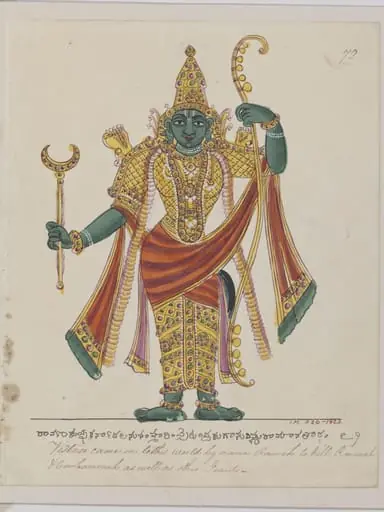 Rama holding a bow and a crescent tipped arrow
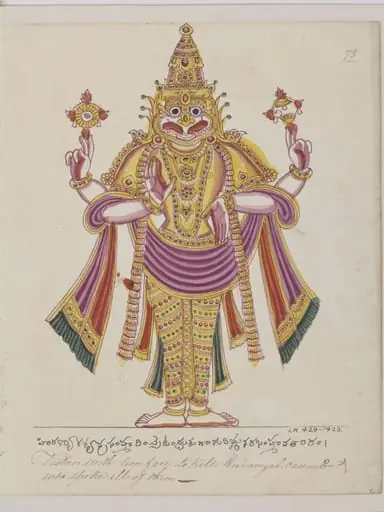 Narasimha, the man-lion, the fourth avatar (incarnation) of Vishnu
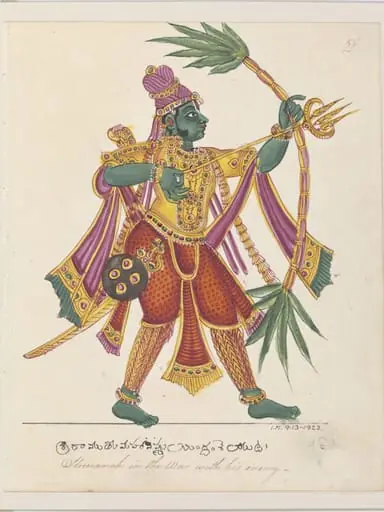 A green-skinned warrior
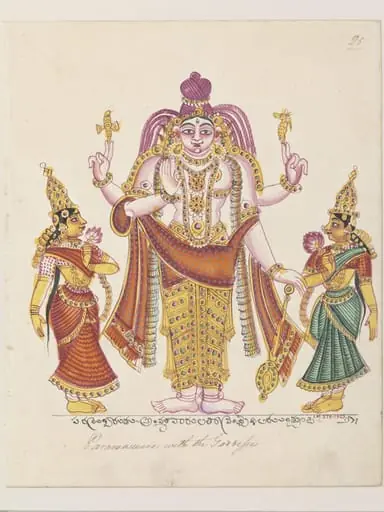 Harihara attended by Parvati and Lakshmi
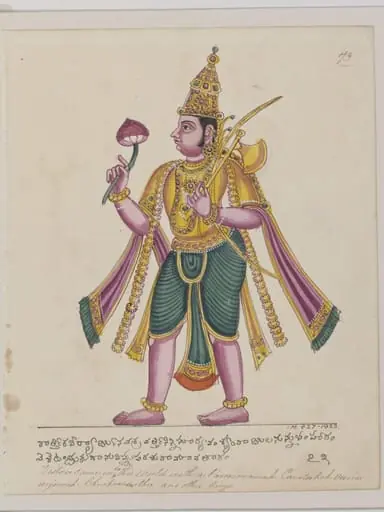 Parasurama Holding an axe and a Lotus Bud
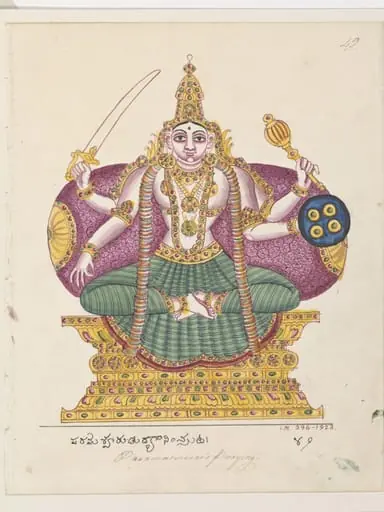 Shiva holding a sword, mace and shield.
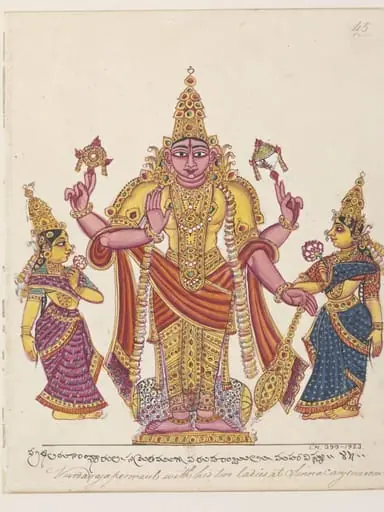 Vishnu as Varadarajaswami with his two 'shaktis', Shri Devi and Bhumi Devi.