Artwork
Harihara attended by Parvati and Lakshmi
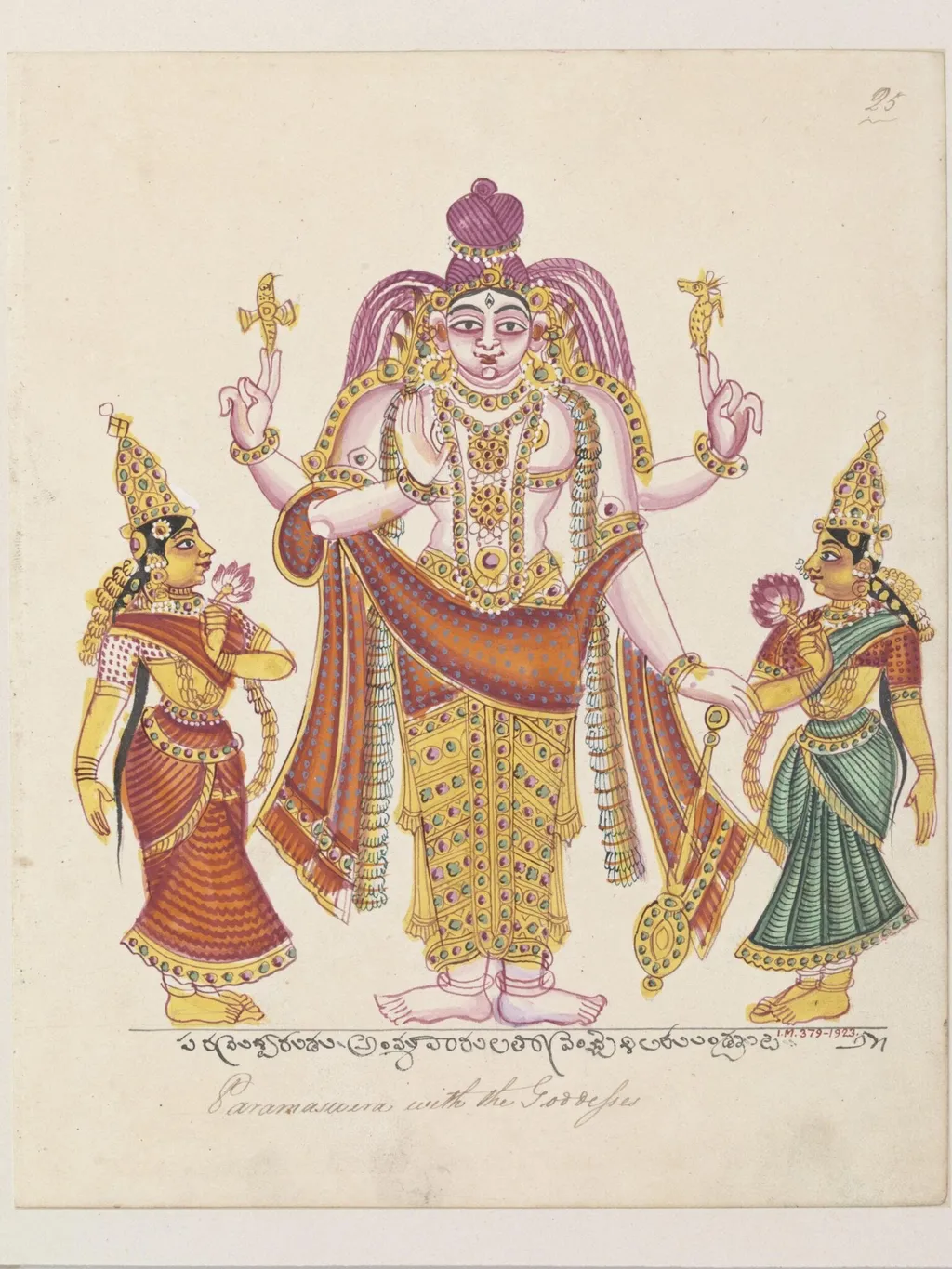
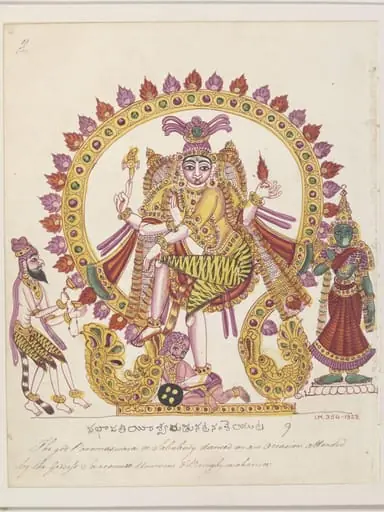
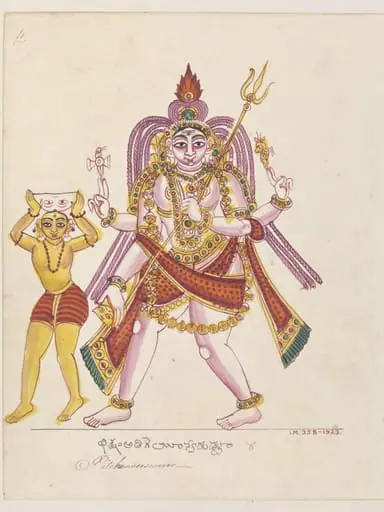
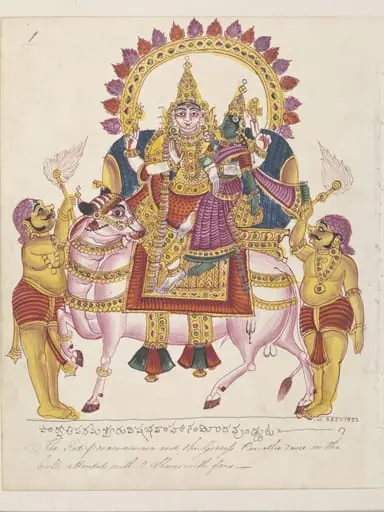
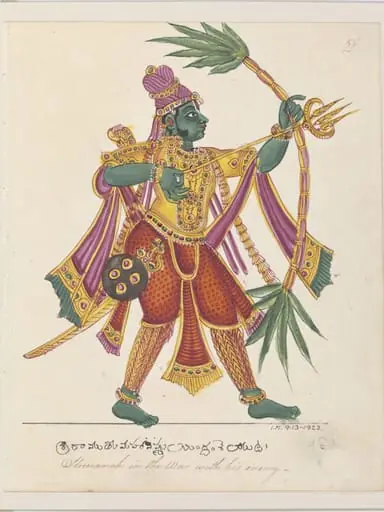
Harihara attended by Parvati and Lakshmi is a paint painting by the Patna School of Painting artist Unknown. It dates from 1820 and is held in the collection of the Victoria and Albert Museum. The work is a painted panel portraying a four‑armed deity at its centre, adorned with elaborate jewellery and a purple headdress.
About this work
Overview
The work is a painted panel portraying a four‑armed deity at its centre, adorned with elaborate jewellery and a purple headdress. On either side stand two female figures, each holding a flower and a musical instrument. The central figure displays a serene expression while clutching a fan in one hand and a lotus bud in another, set against an unadorned background.
Subject & Meaning
The central deity is identified as Harihara, a syncretic form that merges aspects of the Hindu gods Vishnu and Shiva. Accompanying him are the goddesses Parvati and Lakshmi, traditionally associated with fertility and wealth respectively, suggesting a visual representation of divine harmony and the union of complementary powers.
Technique & Style
The painting employs vivid pigments and intricate patterning, particularly in the jewellery and garments, which contrast sharply with the plain backdrop. The composition blends iconographic conventions from different regional traditions, resulting in a hybrid visual language that emphasizes both decorative richness and narrative clarity.
History & Provenance
While the exact date and origin of the panel are not recorded in the supplied data, its subject matter and stylistic synthesis point to a period when devotional art frequently combined multiple deities to appeal to diverse worshippers. The work is currently catalogued under the title "Harihara attended by Parvati and Lakshmi."
Context
Depictions of Harihara emerged in Indian art as a theological statement of unity between Shaivism and Vaishnavism. The inclusion of Parvati and Lakshmi reinforces the theme of balance among the principal divine families, reflecting a broader cultural emphasis on syncretism during the era of its creation.
Artist & collection

 Domestic Scene
 Giacomo and Cardinal Marco, investing Andrea, Abbot of San Zeno, with his Benefice
 The Nymph of Fontainebleau
 Portrait of a Woman
 Madonna and Child with Saints in the Enclosed Garden
 Venus and Minerva
 Family Group of Four on Sofa
 Wall painting from Room H of the Villa of P. Fannius Synistor at Boscoreale