Artwork
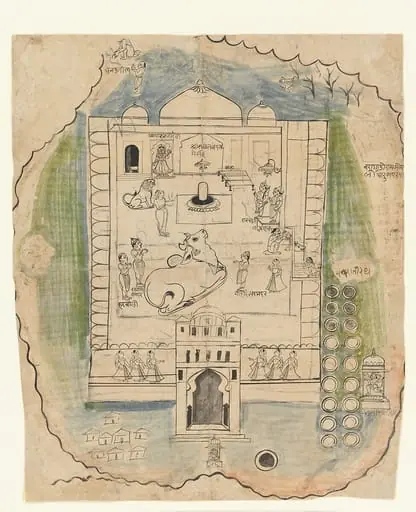
The Great temple at Madura with the shrines of Minakshi Devi and Shiva as Sundareshwara.
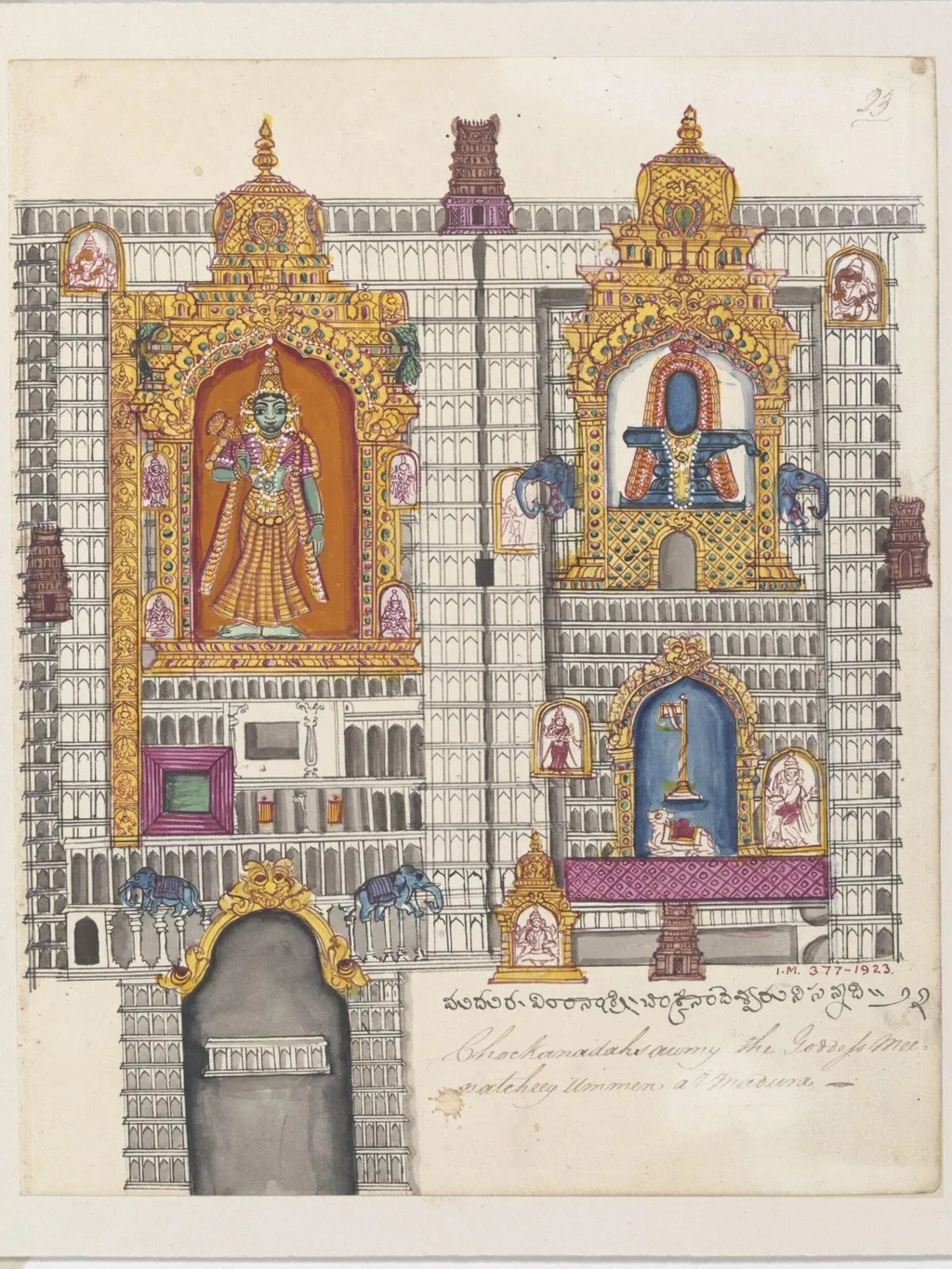
The Great temple at Madura with the shrines of Minakshi Devi and Shiva as Sundareshwara. is a paint painting by the Patna School of Painting artist Unknown. It dates from 1820 and is held in the collection of the Victoria and Albert Museum. This painting depicts the Meenakshi Temple complex in Madurai, Tamil Nadu, with its two principal shrines side by side.
About this work
Overview
This painting depicts the Meenakshi Temple complex in Madurai, Tamil Nadu, with its two principal shrines side by side.
This painting depicts the Meenakshi Temple complex in Madurai, Tamil Nadu, with its two principal shrines side by side. Rendered in vivid pigments and intricate detail, it captures the architectural grandeur of a site that has been a center of Hindu devotion since the 17th century. The composition emphasizes symmetry and ornamentation, reflecting the temple’s spiritual and cultural significance through visual richness rather than naturalism.
Subject & Meaning
The twin shrines honor the goddess Minakshi Devi and her consort Shiva as Sundareshwara, representing the union of divine feminine and masculine principles in Shaiva tradition. The figures within each shrine—standing and seated respectively—symbolize their presence and accessibility to devotees. The surrounding architectural frames and ceremonial elements reinforce the sacredness of the space, transforming the structure into a microcosm of cosmic order.
Technique & Style
The artist employed bold, saturated colors—gold, crimson, cobalt, and emerald—to convey sacredness and opulence. Fine linear patterns outline architectural features, while repetitive decorative motifs frame the shrines, creating rhythmic visual harmony. The flattened perspective and stylized forms align with South Indian devotional painting traditions, prioritizing symbolic representation over spatial realism to elevate the divine subject.
History & Provenance
The painting likely originates from a South Indian atelier active during the late 17th or early 18th century, possibly commissioned by a temple patron or royal supporter. Its detailed depiction of the Madurai temple suggests direct observation or reliance on established visual templates used in religious art. The inscription at the base confirms its intended identification with the physical site, anchoring its purpose as a devotional or documentary object.
Context
During this period, temple complexes in Tamil Nadu were not only religious centers but also hubs of artistic production. Paintings like this served as portable representations of sacred spaces, used in rituals, teaching, or personal contemplation. The emphasis on architectural detail and divine figures reflects a broader cultural practice of visually affirming the sanctity of pilgrimage sites through art.
Legacy
This work contributes to a sustained tradition of South Indian temple painting that preserved architectural forms and religious iconography across generations. Though not widely known outside specialized collections, it remains a valuable record of how sacred spaces were visually interpreted and transmitted, offering insight into devotional aesthetics and regional artistic practices of the early modern period.
Artist & collection

 Domestic Scene
 Giacomo and Cardinal Marco, investing Andrea, Abbot of San Zeno, with his Benefice
 The Nymph of Fontainebleau
 Portrait of a Woman
 Madonna and Child with Saints in the Enclosed Garden
 Venus and Minerva
 Family Group of Four on Sofa
 Wall painting from Room H of the Villa of P. Fannius Synistor at Boscoreale
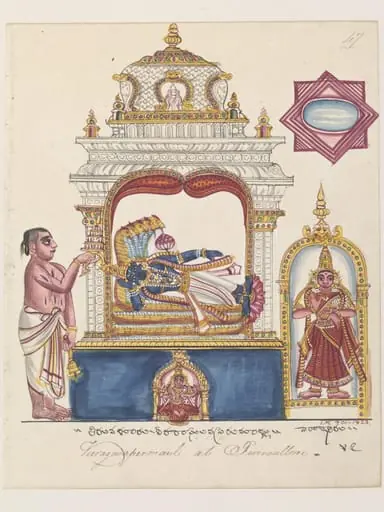 The shrine of Vishnu in the form of Viraraghavaswami, reclining on the serpent of eternity.
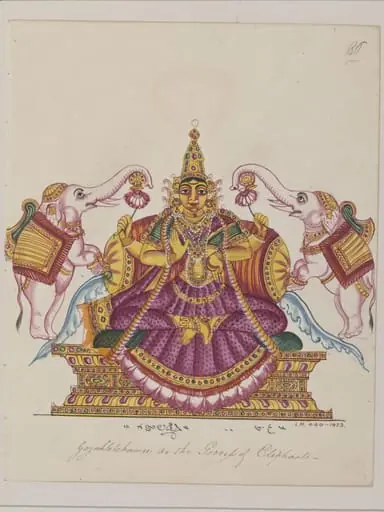 Lakshmi
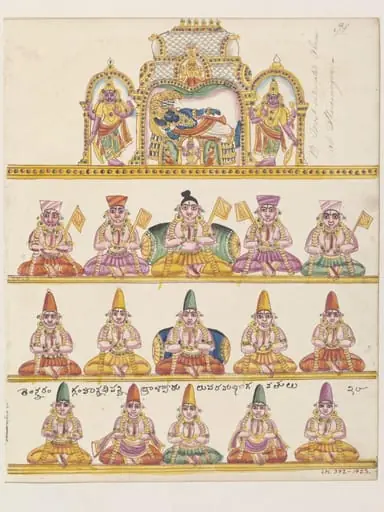 The shrine of Vishnu and the fifteen alvars and bhaktas of the Vaishnava cult.
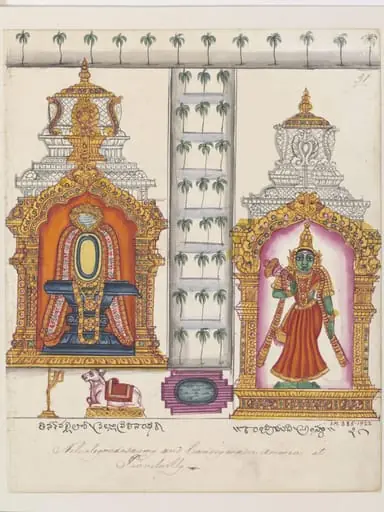 The two courts of the Nelliapparasvami.
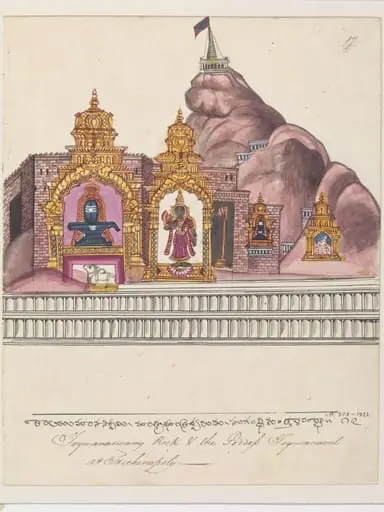 The Rock at Trichinopoly (Tiruchchirappalli), with a lingam shrine and the shrines of the Devi, Ganesha and Shiva.
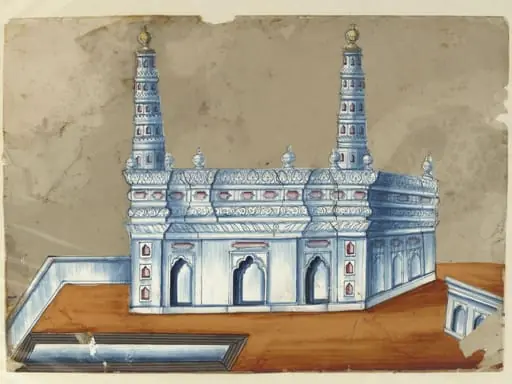 One of seven paintings of unidentified Muslim buildings in South India.
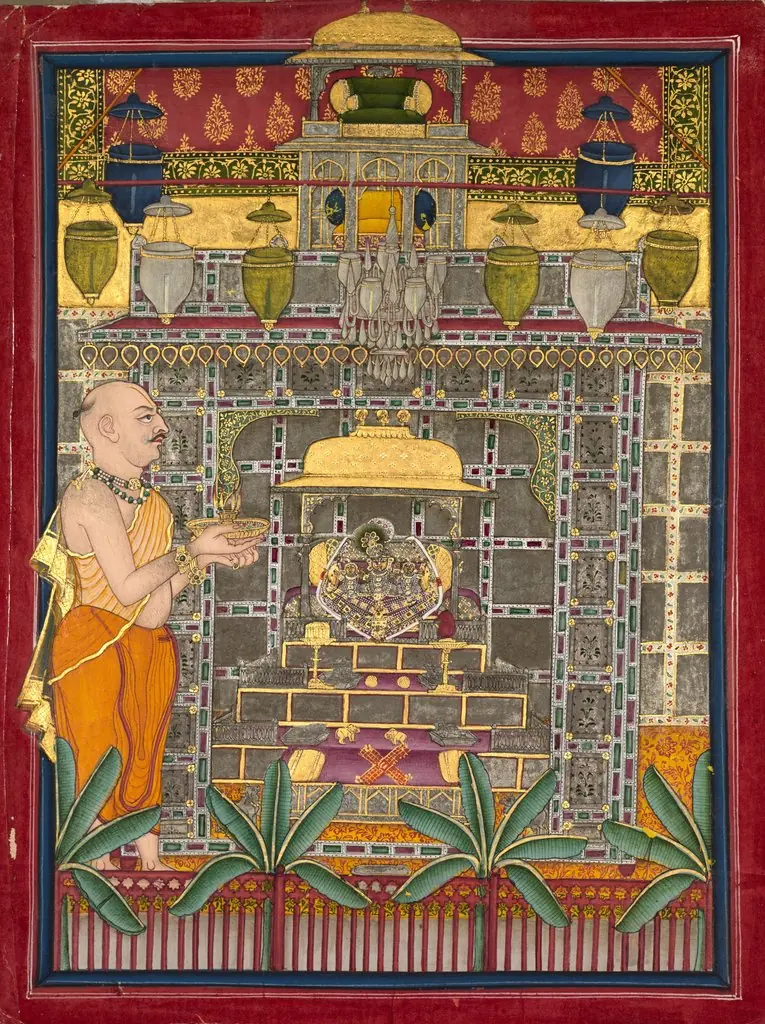 Maharao Kishor Singh II of Kota (r. 1819–28) Worshiping Krishna as Brij Rajji
 Untitled