Artwork
The shrine of Vishnu in the form of Viraraghavaswami, reclining on the serpent of eternity.
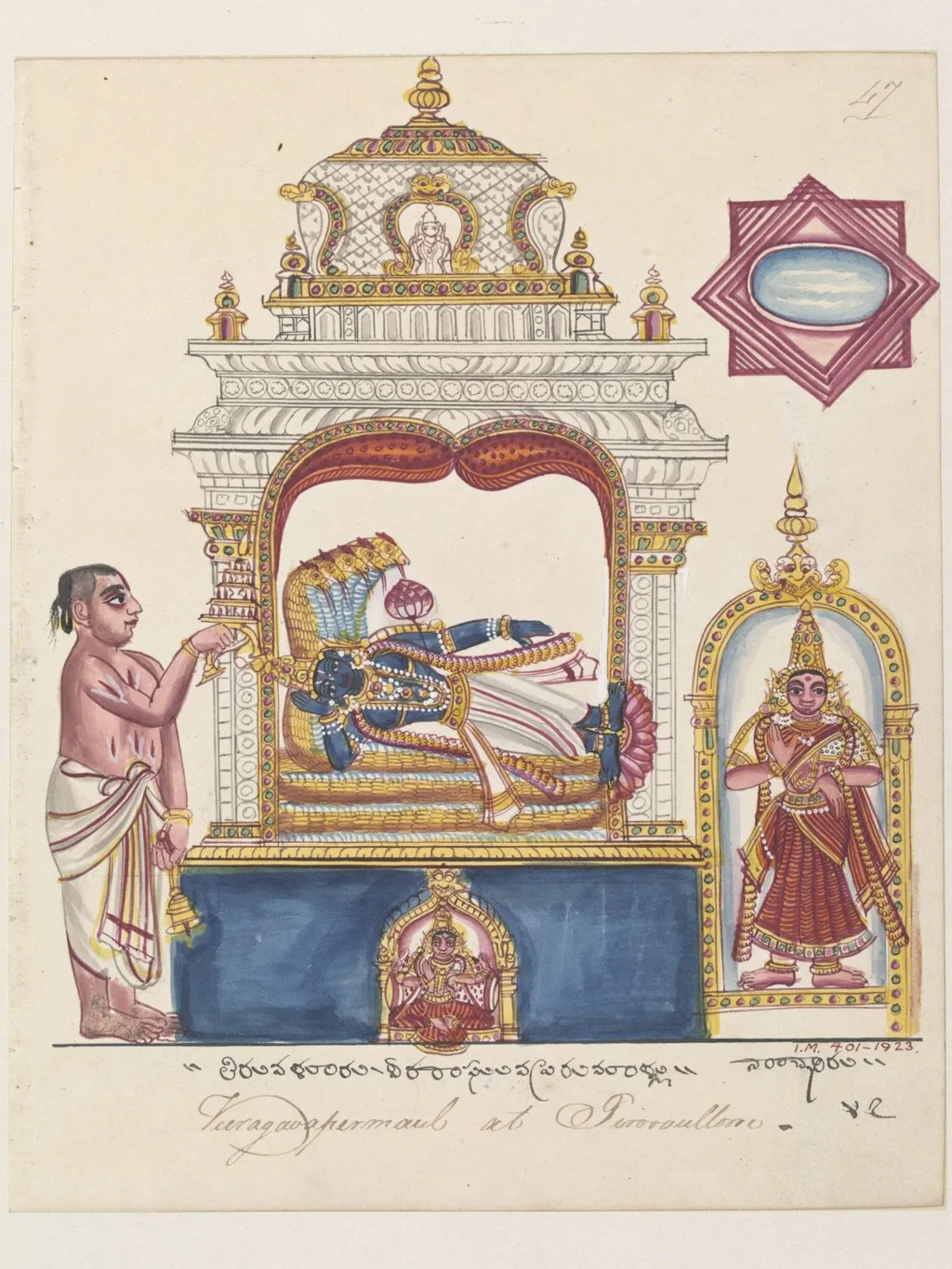
The shrine of Vishnu in the form of Viraraghavaswami, reclining on the serpent of eternity. is a paint painting by the Patna School of Painting artist Unknown. It dates from 1820 and is held in the collection of the Victoria and Albert Museum. This painting depicts a Hindu temple scene centered on Vishnu in his Viraraghavaswami form, reclining on the serpent Shesha.
About this work
Overview
Bright pigments and gold accents highlight sacred elements, reflecting devotional aesthetics common in South Indian temple art.
This painting depicts a Hindu temple scene centered on Vishnu in his Viraraghavaswami form, reclining on the serpent Shesha. The composition frames the deity within a shrine, surrounded by floral motifs and rich textiles. Figures of Lakshmi and a priest are positioned on either side, each in separate architectural niches. Bright pigments and gold accents highlight sacred elements, reflecting devotional aesthetics common in South Indian temple art.
Subject & Meaning
The central image of Vishnu reclining on Shesha symbolizes cosmic rest between cycles of creation and dissolution. Lakshmi, his consort, stands to his right, representing abundance and devotion, while the priest on the left embodies ritual service. The enclosed shrine and framed figures suggest a sacred space where divine presence is both witnessed and honored, reinforcing the temple as a bridge between earthly worship and transcendental reality.
Technique & Style
The painting employs vibrant mineral pigments and gold leaf to accentuate divine forms and architectural details. Figures are rendered with linear precision, set against flat, colorful backgrounds that emphasize symbolic space over naturalism. The shrine’s ornamental walls and layered textiles create depth through pattern rather than perspective, aligning with traditional South Indian devotional painting conventions that prioritize spiritual resonance over illusionistic space.
History & Provenance
The subject corresponds to a stone sculpture at the Viraraghavaswami temple in Tiruvallur, Tamil Nadu, a site of longstanding Vaishnava worship. This painting likely originated as a devotional object or temple record, produced in a regional atelier during the 18th or early 19th century. Its style suggests influence from Tamil Nadu’s temple mural traditions, possibly created for private worship or ritual use within a priestly household.
Context
In South Indian religious culture, depictions of Vishnu on Shesha are central to temple iconography and liturgical practice. This painting reflects the integration of visual art into daily worship, where images serve as focal points for meditation and ritual. The inclusion of specific figures and architectural details aligns with regional temple layouts, reinforcing local theological narratives distinct from broader North Indian traditions.
Legacy
This work preserves a visual lineage of temple-based devotional art that continues in South Indian communities. While not part of the colonial-era artistic movements that reinterpreted Indian themes for Western audiences, it exemplifies an enduring local practice: the faithful reproduction of sacred forms for spiritual continuity. Its survival offers insight into pre-modern methods of transmitting religious imagery beyond textual sources.
Artist & collection

 Domestic Scene
 Giacomo and Cardinal Marco, investing Andrea, Abbot of San Zeno, with his Benefice
 The Nymph of Fontainebleau
 Portrait of a Woman
 Madonna and Child with Saints in the Enclosed Garden
 Venus and Minerva
 Family Group of Four on Sofa
 Wall painting from Room H of the Villa of P. Fannius Synistor at Boscoreale
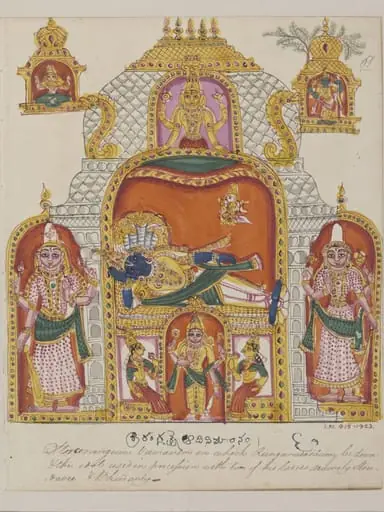 The temple of Shri Ranganatha
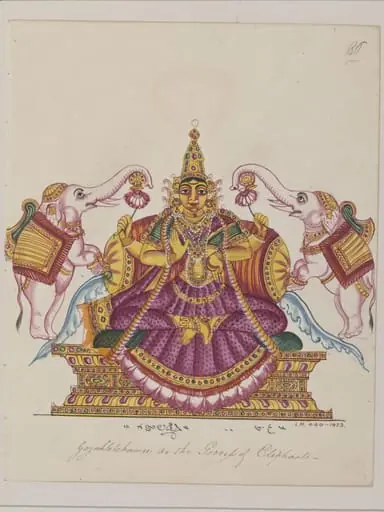 Lakshmi
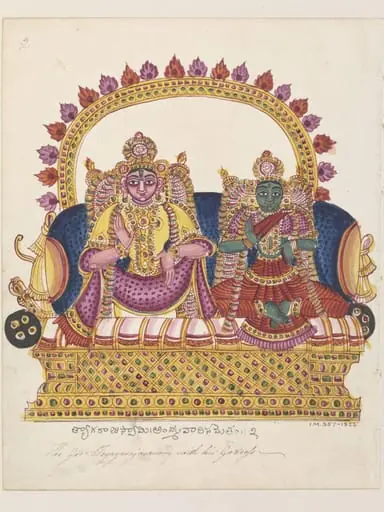 Shiva in his local form of Tyagarajaswamy (Somaskanda) worshipped at Tiruvarur
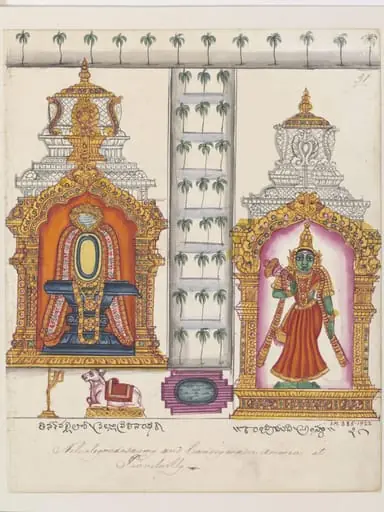 The two courts of the Nelliapparasvami.
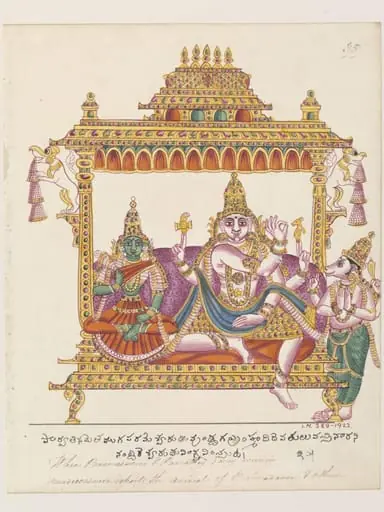 Shiva and Parvati seated on a canopied throne.
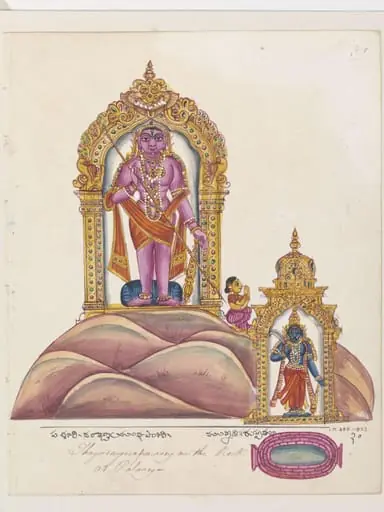 The god Subrahmanya as Velayudha-Subrahmanya or Palani-andavar
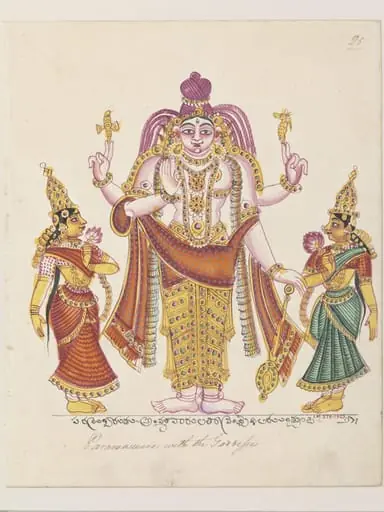 Harihara attended by Parvati and Lakshmi