Artwork
The Indian Emperor or The Conquest of Mexico
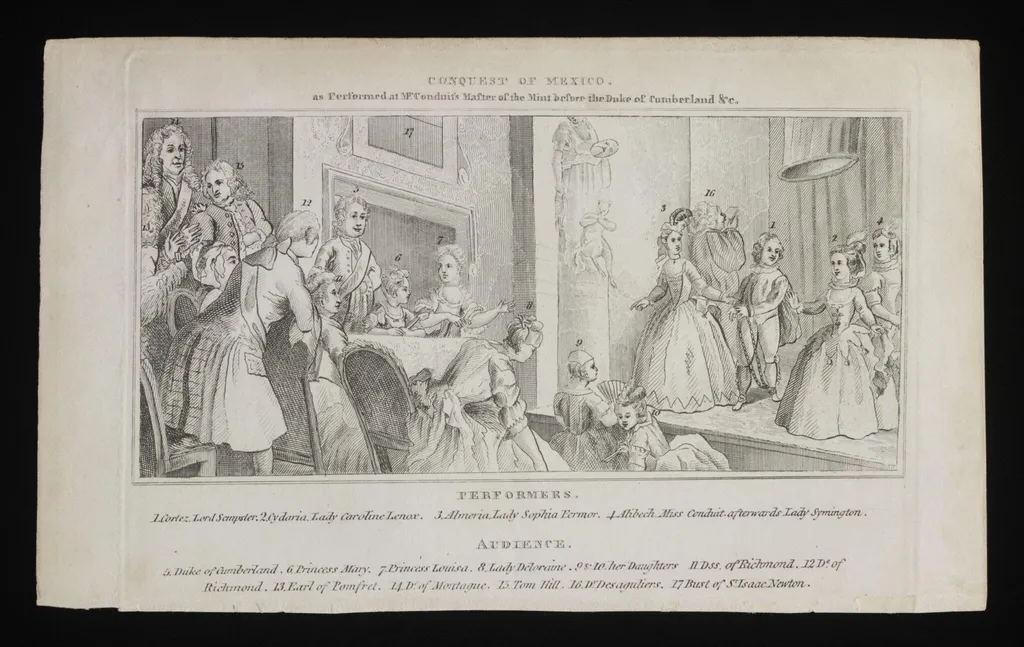
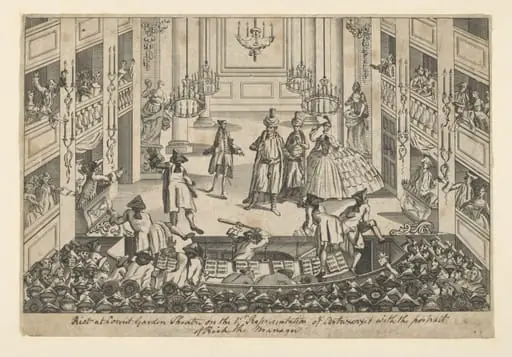
The Indian Emperor or The Conquest of Mexico is a print by Unknown. It dates from 1750 and is held in the collection of the Victoria and Albert Museum. The 1731 print, produced under the direction of Mr.
About this work
Overview
The work was created as a visual accompaniment to the theatrical production *The Indian Emperor*, which dramatized Hernán Cortés’s campaign.
The 1731 print, produced under the direction of Mr. Conduit's Master of the Mint, illustrates a violent encounter between Spanish troops and Indigenous fighters in Mexico. Rendered in a dramatic composition, the scene is filled with smoke and movement, emphasizing the chaos of the clash. The work was created as a visual accompaniment to the theatrical production *The Indian Emperor*, which dramatized Hernán Cortés’s campaign.
Subject & Meaning
The image portrays a battlefield where European soldiers in period armor confront native warriors wielding spears and shields. By emphasizing the clash of arms and the surrounding smoke, the print conveys a narrative of conquest and resistance, reflecting contemporary European attitudes that framed the colonisation of the Americas as a heroic, albeit turbulent, endeavour.
Technique & Style
Executed as a print, the work employs line engraving to delineate figures and intricate details of armor and weaponry. The composition relies on strong contrasts of light and shadow to heighten drama, while the crowded arrangement of combatants creates a sense of immediacy. The style aligns with early‑18th‑century theatrical illustration, favoring clear storytelling over naturalistic representation.
History & Provenance
Commissioned for the stage production of *The Indian Emperor*, the print was likely produced by a workshop rather than a single artist, a common practice for commercial prints of the period. It bears the imprint of Mr. Conduit's Master of the Mint, indicating official oversight. Copies of the print have been documented in several European collections, including the Victoria and Albert Museum.
Context
The print emerged during a period when European audiences were fascinated by exotic narratives of New World conquest. Theatrical depictions such as this one served both entertainment and propaganda, reinforcing prevailing notions of European superiority and the civilising mission. Its visual language mirrors other contemporary works that dramatise colonial encounters for a domestic audience.
Artist & collection

 Domestic Scene
 Giacomo and Cardinal Marco, investing Andrea, Abbot of San Zeno, with his Benefice
 The Nymph of Fontainebleau
 Portrait of a Woman
 Madonna and Child with Saints in the Enclosed Garden
 Venus and Minerva
 Family Group of Four on Sofa
 Wall painting from Room H of the Villa of P. Fannius Synistor at Boscoreale
 H Beard Print Collection
 Feast in the house of the Rich Man
 H Beard Print Collection
 Qu'en dit l'Abbé?
 H Beard Print Collection
 Le bal paré
 H Beard Print Collection
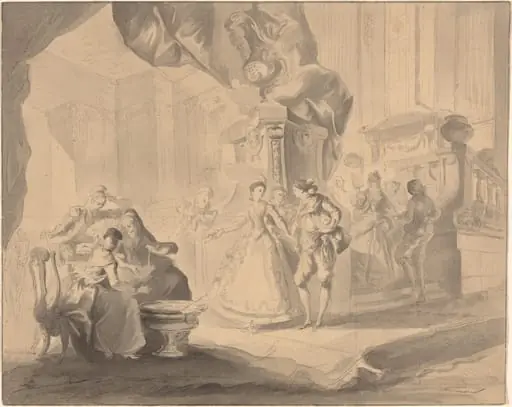 Dance in a Palace
 H Beard Print Collection
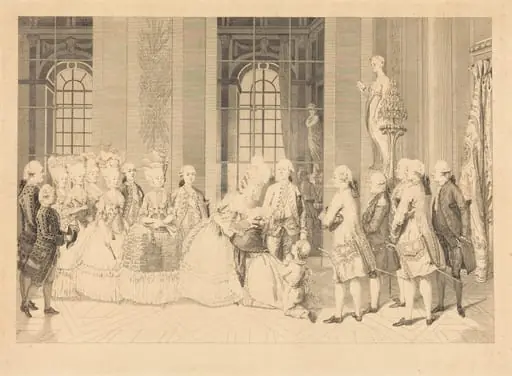 La Reine annonçant à Mme Bellegarde, des Juges, et la liberté de son mari en mai 1777
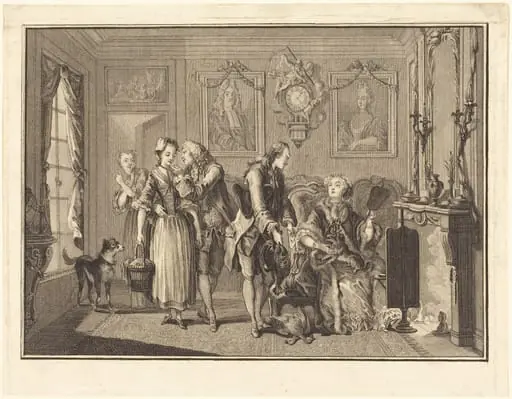 La jolie fermiere
 Hüssener, Auguste: Andruckbogen mit drei Gemäldereproduktionen