Artwork
The monkey, serving as the lion’s chamberlain, converses with the lynx and its mate who have arrived with their cubs to settle in the lion’s domain, from a Tuti-nama (Tales of a Parrot): Twenty-ninth Night
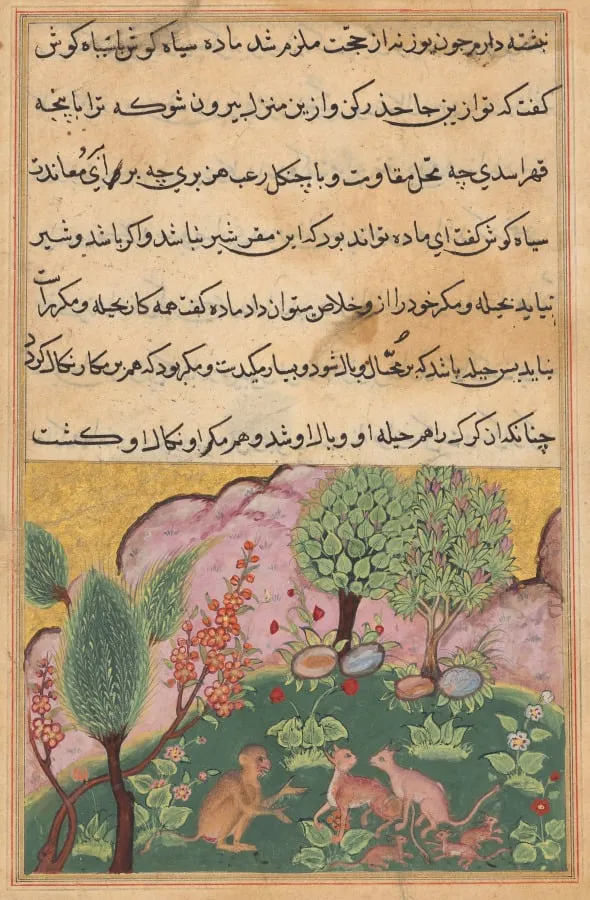
The monkey, serving as the lion’s chamberlain, converses with the lynx and its mate who have arrived with their cubs to settle in the lion’s domain, from a Tuti-nama (Tales of a Parrot): Twenty-ninth Night is an unspecified painting by the Mughal Painting artist Unknown. It dates from 1560 and is held in the collection of the Cleveland Museum of Art.
About this work
The story is about power and who really owns the land—funny, since the monkey is in charge but the lynxes are moving in anyway.
You see a monkey in a fancy robe talking to a lynx family outside a lion’s den, surrounded by bright tulips.
This painting comes from a book of parrot tales made for Emperor Akbar’s court. The story is about power and who really owns the land—funny, since the monkey is in charge but the lynxes are moving in anyway.
If you like this kind of storytelling art, look up *mughal india, court of akbar (reigned 1556–1605)*.
Overview
This painting illustrates a narrative from the Tuti-nama (Tales of a Parrot), depicting a scene where a monkey, acting as the lion’s chamberlain, interacts with a lynx family (including cubs) that has arrived to occupy the lion’s domain.
Subject & Meaning
The scene explores themes of power and legitimacy, as the lynx family claims rightful ownership of the lion’s territory while the monkey, in temporary charge, engages with them. The contrast highlights the complexities of authority and possession.
Technique & Style
Characterized by vibrant colors, notably in the tulip-filled meadow, the painting reflects the artistic traditions of Mughal India during the 16th century, with intricate details and a blend of Persian and Indian influences.
History & Provenance
Created for Emperor Akbar’s court (reigned 1556–1605), this work is part of a illustrated book (Tuti-nama) commissioned for the imperial collection, indicating its significance within the Mughal artistic patronage.
Context
Produced within the flourishing cultural and artistic environment of Akbar’s court, the painting embodies the era’s penchant for illustrated manuscripts and the adaptation of diverse storytelling traditions.
Artist & collection

 Domestic Scene
 Giacomo and Cardinal Marco, investing Andrea, Abbot of San Zeno, with his Benefice
 The Nymph of Fontainebleau
 Portrait of a Woman
 Madonna and Child with Saints in the Enclosed Garden
 Venus and Minerva
 Family Group of Four on Sofa
 Wall painting from Room H of the Villa of P. Fannius Synistor at Boscoreale
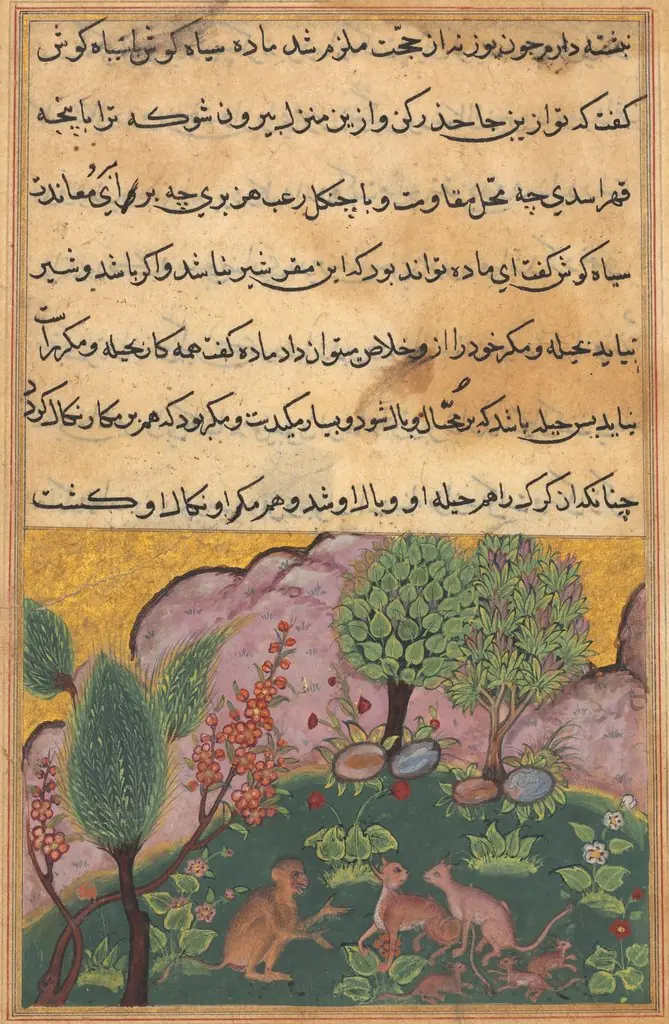 The monkey, serving as the lion’s chamberlain, converses with the lynx and its mate who have arrived with their cubs to settle in the lion’s domain, from a Tuti-nama (Tales of a Parrot): Twenty-ninth Night
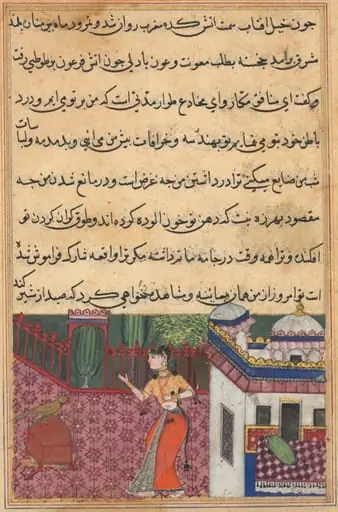 The parrot addresses Khujasta at the beginning of the thirty-third night, from a Tuti-nama (Tales of a Parrot)
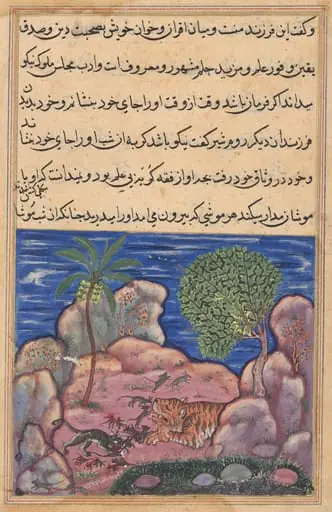 The cat attacks the mice which disturb the lion, from a Tuti-nama (Tales of a Parrot): Fifteenth Night
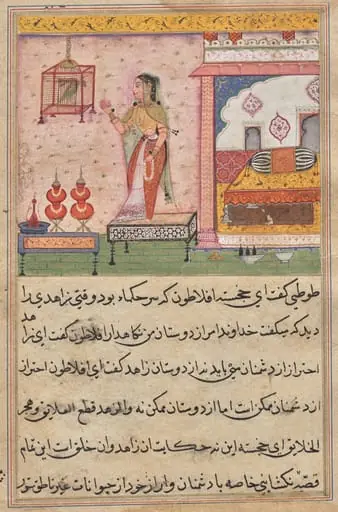 The Parrot Addresses Khujasta at the Beginning of the Twenty-third Night, from a Tuti-nama (Tales of a Parrot)
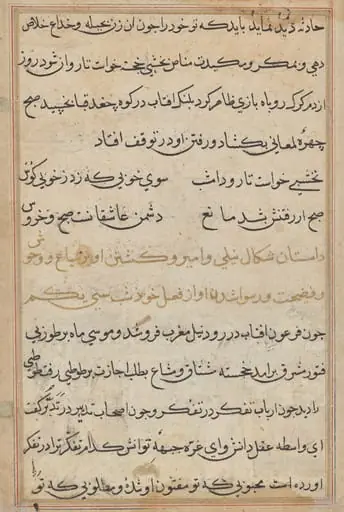 Page from Tales of a Parrot (Tuti-nama): text page
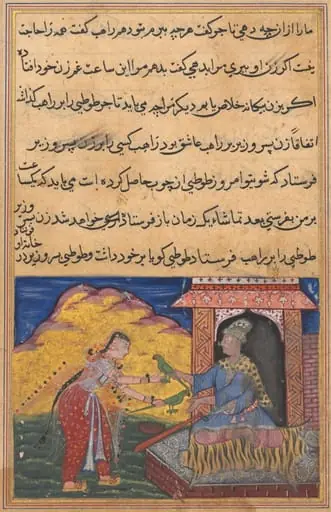 The wife of the son of the vizier brings the magic wooden parrot to her lover, the monk, who exchanges it for the replica, from a Tuti-nama (Tales of a Parrot): Tenth Night