Artwork
The parrot addresses Khujasta at the beginning of the thirty-third night, from a Tuti-nama (Tales of a Parrot)
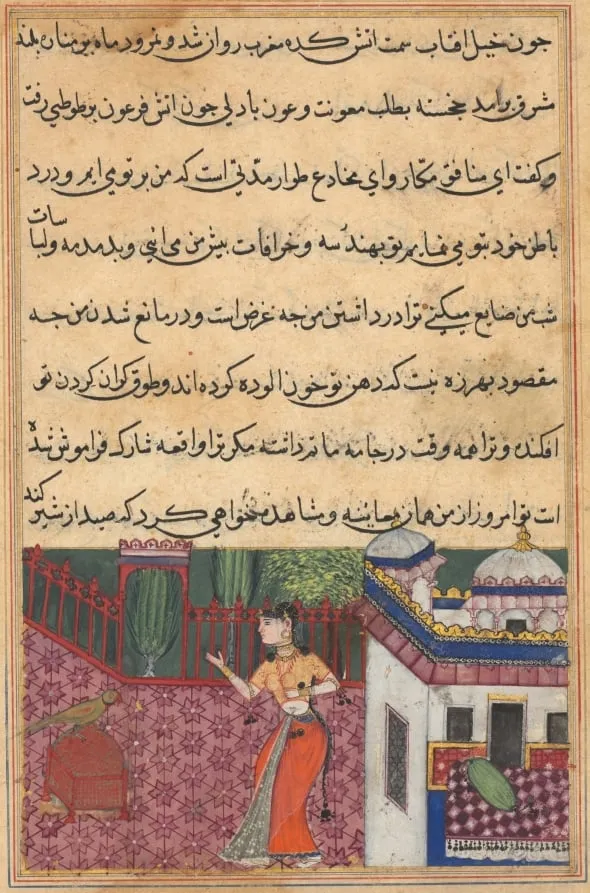
The parrot addresses Khujasta at the beginning of the thirty-third night, from a Tuti-nama (Tales of a Parrot) is an unspecified painting by the Mughal Painting artist Unknown. It dates from 1560 and is held in the collection of the Cleveland Museum of Art.
About this work
The tales were meant to entertain Emperor Akbar’s court, where artists blended Persian and Indian styles.
A woman in a pink robe stands in a garden, listening to a green parrot perched on a branch. The scene glows with tiny gold details—flowers, vines, even the parrot’s feathers.
This painting comes from a book of stories told by a clever parrot to delay his owner’s secret meetings. The tales were meant to entertain Emperor Akbar’s court, where artists blended Persian and Indian styles.
To see more art from this time, look up Mughal India, court of Akbar (reigned 1556–1605).
Overview
The work portrays a woman named Khujasta, dressed in a pink robe, standing in a garden courtyard while a green parrot, Tuti, perches on a nearby branch. The bird appears to be speaking, its feathers highlighted with fine gold accents that echo the gilded details of surrounding vines and blossoms. The scene captures the moment just before dawn, when the narrative being told reaches its conclusion.
Subject & Meaning
In the composition, Khujasta is shown consulting the clever parrot before she departs to meet her lover. Tuti the parrot narrates a double love story, using the tale to postpone Khujasta’s departure until sunrise. The painting thus visualizes the theme of storytelling as a means of delay, emphasizing the power of narrative to alter the course of personal affairs.
Technique & Style
Executed in the Mughal court tradition, the painting blends Persian miniature precision with Indian ornamental richness. Delicate brushwork renders the woman's flowing robe and the parrot's plumage, while minute gold leaf applications accentuate floral motifs and the bird’s feathers. The colour palette balances soft pinks and vivid greens, creating a luminous atmosphere that reflects the sophisticated aesthetic of Akbar’s atelier.
History & Provenance
The image originates from the Tuti‑nama, a manuscript of stories told by a talking parrot to stall his owner’s clandestine meetings. Produced for the court of Emperor Akbar (1556–1605), the manuscript was illustrated by artists employed by the imperial workshop. The painting survives as part of that illuminated volume, illustrating the narrative function of the text within the Mughal artistic program.
Context
During Akbar’s reign, the imperial workshop encouraged a synthesis of Persian artistic conventions and indigenous Indian motifs, resulting in a distinctive Mughal style. The Tuti‑nama exemplifies this cultural exchange, using courtly storytelling to entertain and instruct. The painting reflects the broader practice of embedding moral or practical lessons within lavishly illustrated manuscripts for elite audiences.
Artist & collection

 Domestic Scene
 Giacomo and Cardinal Marco, investing Andrea, Abbot of San Zeno, with his Benefice
 The Nymph of Fontainebleau
 Portrait of a Woman
 Madonna and Child with Saints in the Enclosed Garden
 Venus and Minerva
 Family Group of Four on Sofa
 Wall painting from Room H of the Villa of P. Fannius Synistor at Boscoreale
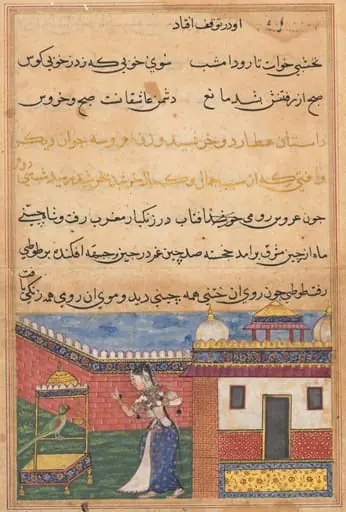 The parrot addresses Khujasta at the beginning of the thirty-second night, from a Tuti-nama (Tales of a Parrot)
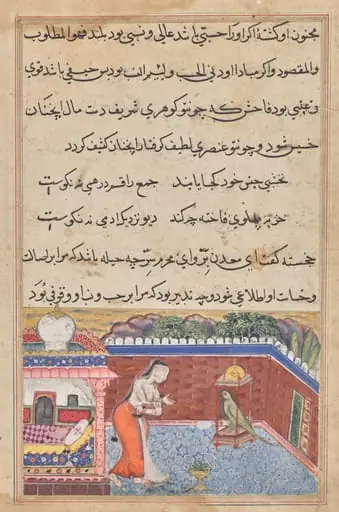 The parrot addresses Khujasta at the beginning of the thirty-first night, from a Tuti-nama (Tales of a Parrot)
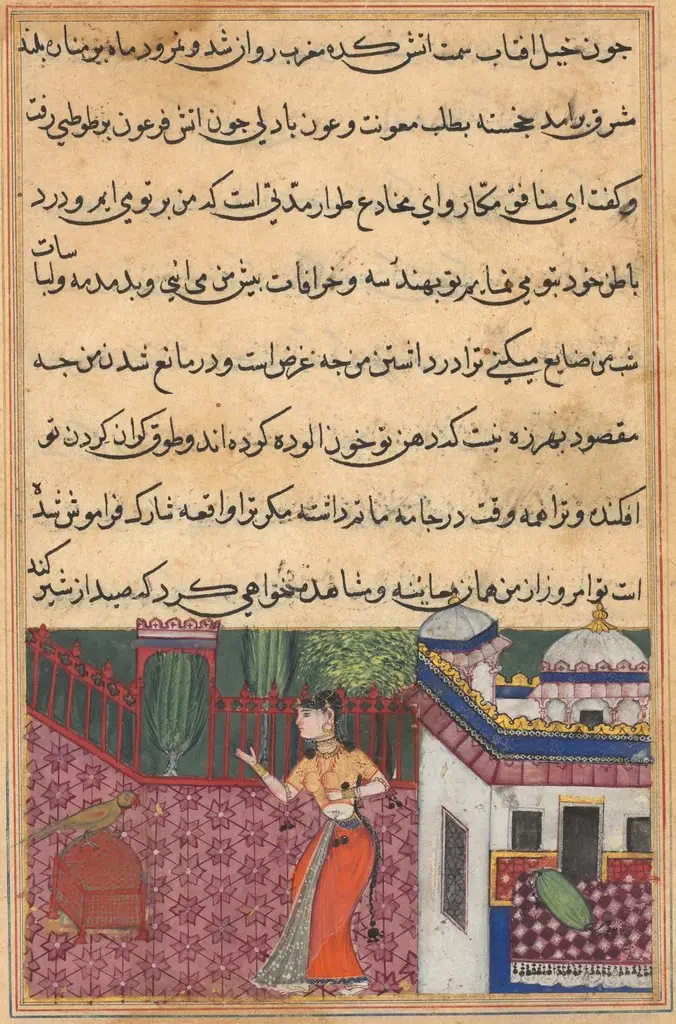 The parrot addresses Khujasta at the beginning of the thirty-third night, from a Tuti-nama (Tales of a Parrot)
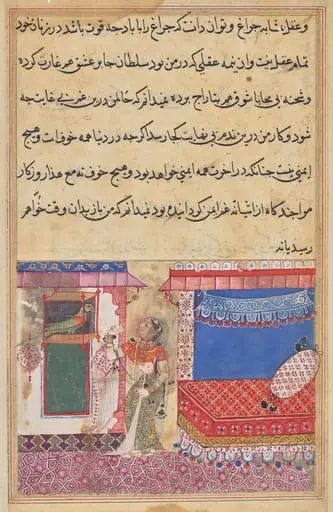 The Parrot Addresses Khujasta at the Beginning of the Eighteenth Night, from a Tuti-nama (Tales of a Parrot)
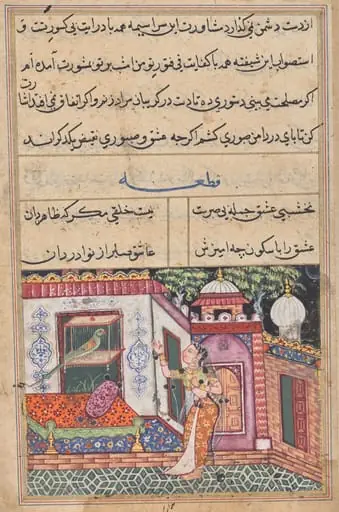 The Parrot Addresses Khujasta at the Beginning of the Eleventh Night, from a Tuti-nama (Tales of a Parrot)
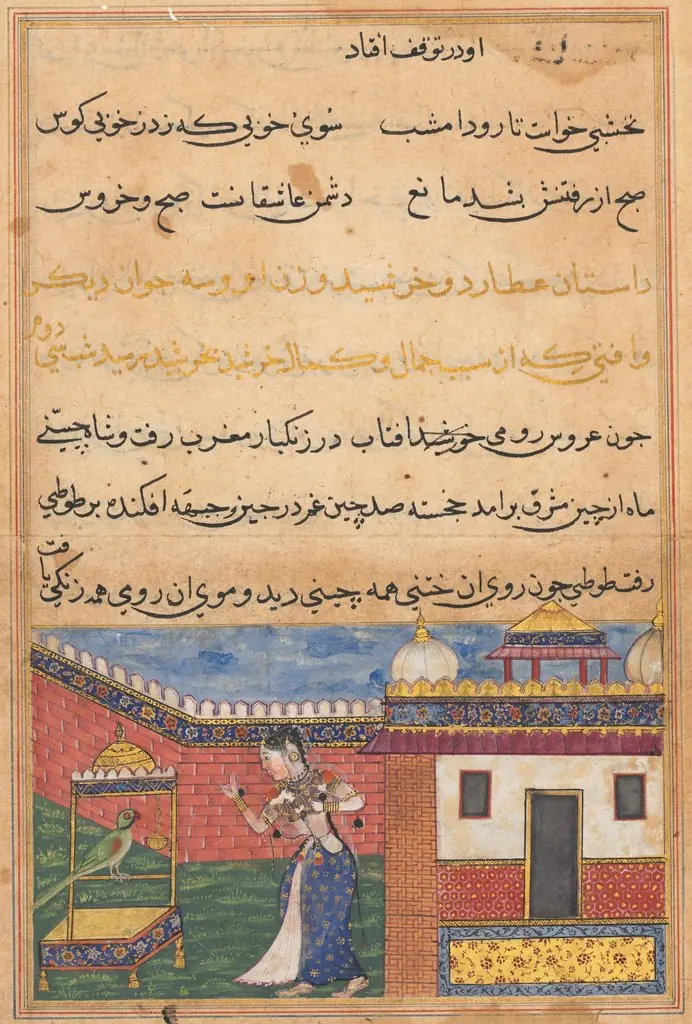 The parrot addresses Khujasta at the beginning of the thirty-second night, from a Tuti-nama (Tales of a Parrot)
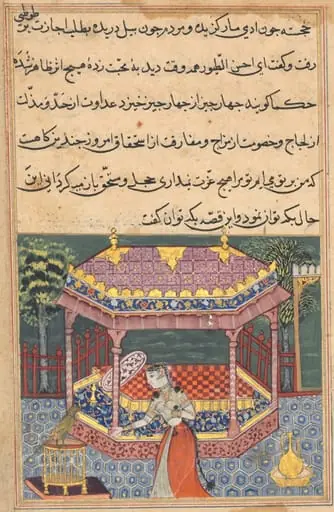 The parrot addresses Khujasta at the beginning of the thirty-seventh night, from a Tuti-nama (Tales of a Parrot)
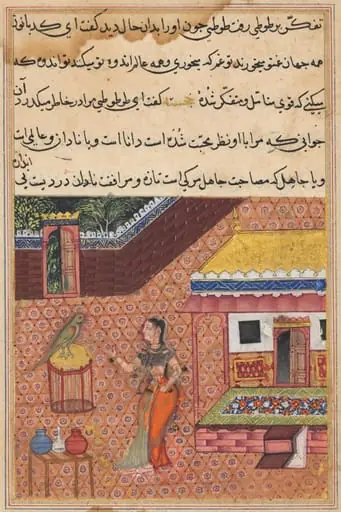 The parrot addresses Khujasta at the beginning of the thirty-fourth night, from a Tuti-nama (Tales of a Parrot)
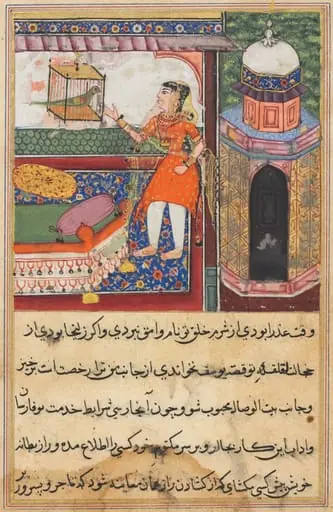 The Parrot Addresses Khujasta at the Beginning of the Tenth Night, from a Tuti-nama (Tales of a Parrot)
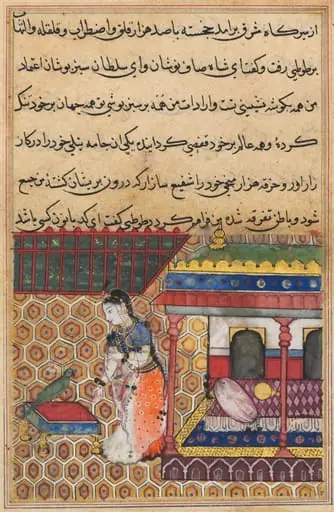 The parrot addresses Khujasta at the beginning of the thirty-eighth night, from a Tuti-nama (Tales of a Parrot)
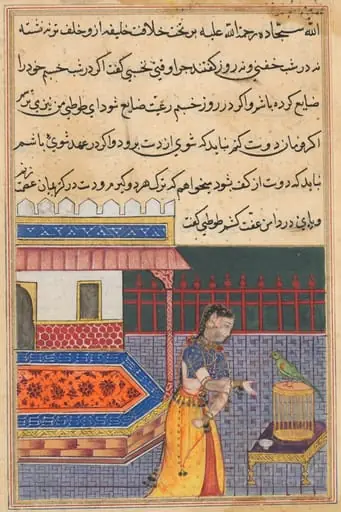 The parrot addresses Khujasta at the beginning of the forty-first night, from a Tuti-nama (Tales of a Parrot): Forty-first Night