Artwork
The cat attacks the mice which disturb the lion, from a Tuti-nama (Tales of a Parrot): Fifteenth Night
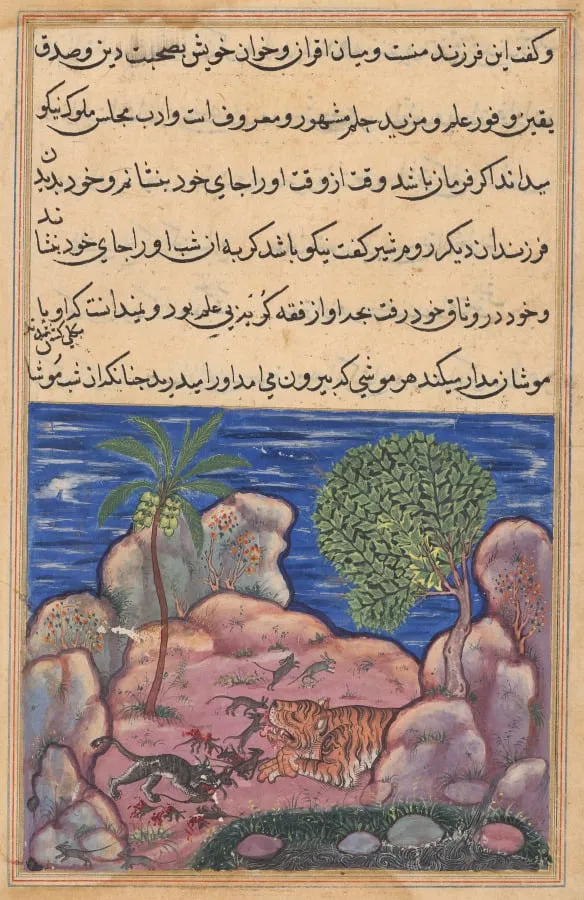
The cat attacks the mice which disturb the lion, from a Tuti-nama (Tales of a Parrot): Fifteenth Night is an unspecified painting by the Mughal Painting artist Unknown. It dates from 1560 and is held in the collection of the Cleveland Museum of Art. The miniature illustrates a cat leaping amid a horde of fleeing mice while a lion, seated on a throne, observes the chaos.
About this work
Overview
The miniature illustrates a cat leaping amid a horde of fleeing mice while a lion, seated on a throne, observes the chaos. The composition captures the moment when the young cat, acting as substitute guardian, exterminates the rodents, prompting the lion to dismiss his feline overseer. The scene is taken from a fifteenth‑night episode of a Tuti‑nama, a collection of parrot‑told fables.
Subject & Meaning
The narrative conveys a moral about overzealous duty. The father cat entrusts his son with protecting the lion’s sleep from mice; the son’s excessive violence eradicates the pests but also removes the lion’s need for a protector, leading to his dismissal. The cat’s lament—blaming himself for the lion’s loss of grief—underscores the unintended consequences of extreme actions.
Technique & Style
Figures are rendered with delicate detailing; the lion’s regal posture and the cat’s dynamic leap are emphasized through exaggerated gestures.
Executed in the Mughal miniature tradition, the work employs fine ink lines and vivid mineral pigments on paper. Figures are rendered with delicate detailing; the lion’s regal posture and the cat’s dynamic leap are emphasized through exaggerated gestures. The crowded space, intricate patterns on the throne, and the swift, scattered forms of the mice create a lively, densely populated tableau typical of courtly storytelling art.
History & Provenance
The painting originates from a fifteenth‑night illustration in a Tuti‑nama, a manuscript of parrot narratives compiled for the Mughal court. Such books were circulated among elite patrons in the early modern period, serving both entertainment and didactic purposes. The miniature has survived in a private collection before being acquired by a museum specializing in South Asian art.
Context
Mughal courtly manuscripts frequently blended animal allegories with ethical instruction, reflecting the empire’s synthesis of Persian literary forms and Indian visual aesthetics. The fable’s emphasis on hierarchical relationships—lion, cat, mouse—mirrors contemporary concerns about loyalty, service, and the limits of authority within the imperial bureaucracy.
Artist & collection

 Domestic Scene
 Giacomo and Cardinal Marco, investing Andrea, Abbot of San Zeno, with his Benefice
 The Nymph of Fontainebleau
 Portrait of a Woman
 Madonna and Child with Saints in the Enclosed Garden
 Venus and Minerva
 Family Group of Four on Sofa
 Wall painting from Room H of the Villa of P. Fannius Synistor at Boscoreale
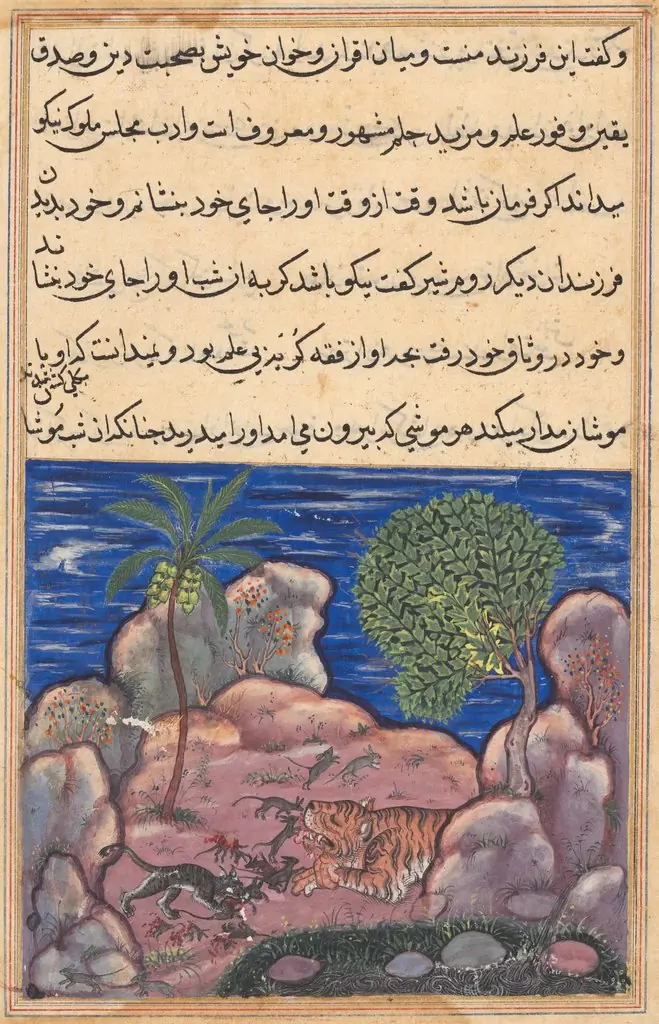 The cat attacks the mice which disturb the lion, from a Tuti-nama (Tales of a Parrot): Fifteenth Night
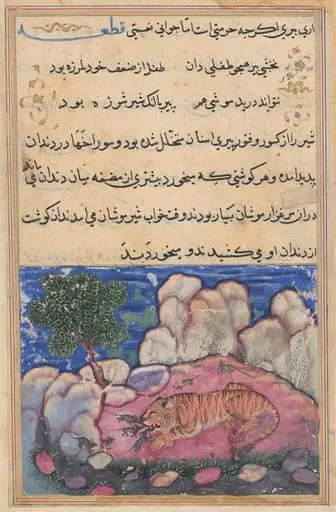 The lion disturbed by mice who eat the food trapped in his aging teeth, from a Tuti-nama (Tales of a Parrot): Fifteenth Night
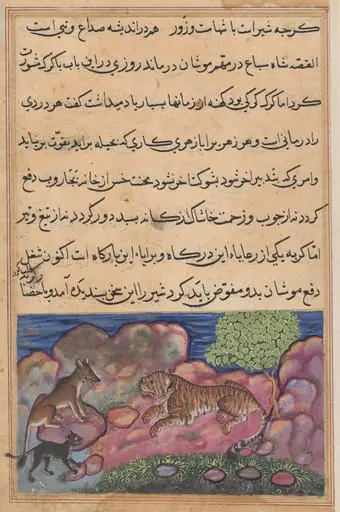 The wolf advises the lion to consult the cat, from a Tuti-nama (Tales of a Parrot): Fifteenth Night
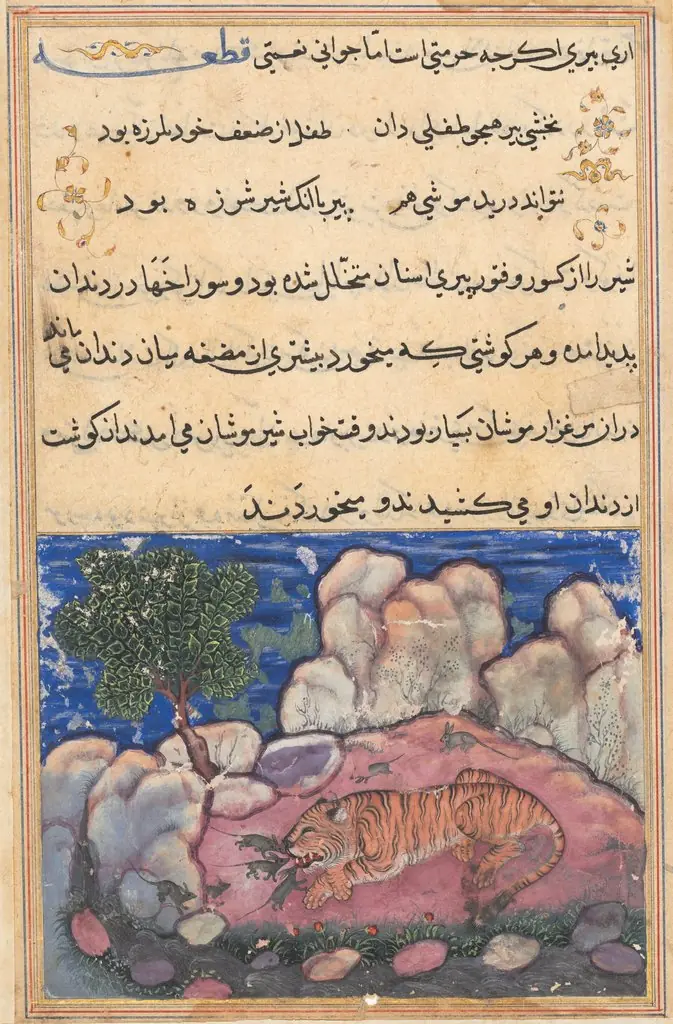 The lion disturbed by mice who eat the food trapped in his aging teeth, from a Tuti-nama (Tales of a Parrot): Fifteenth Night
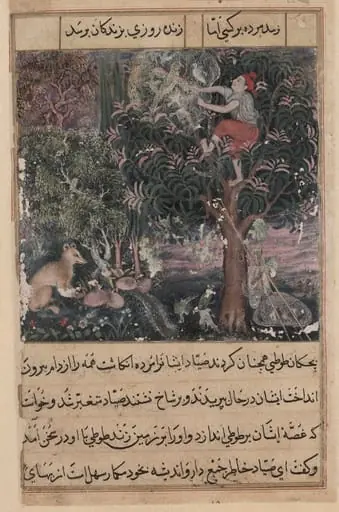 The hunter throws away the baby parrots, who pretend to be dead, and captures the mother, from a Tuti-nama (Tales of a Parrot): Fifth Night
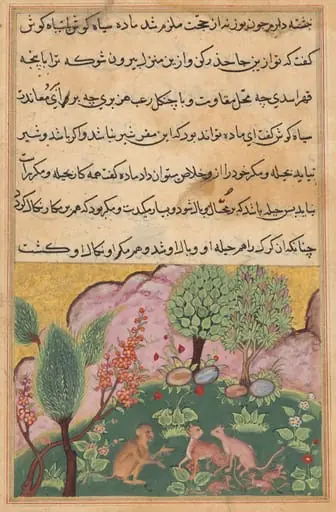 The monkey, serving as the lion’s chamberlain, converses with the lynx and its mate who have arrived with their cubs to settle in the lion’s domain, from a Tuti-nama (Tales of a Parrot): Twenty-ninth Night
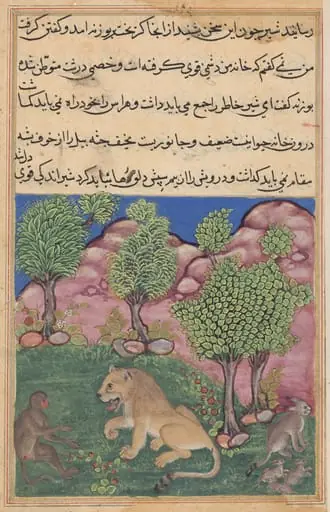 The monkey advises the suspicious lion to cast off fear and take possession of his territory, from a Tuti-nama (Tales of a Parrot): Twenty-ninth Night
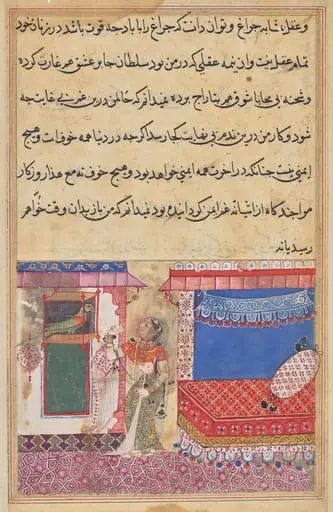 The Parrot Addresses Khujasta at the Beginning of the Eighteenth Night, from a Tuti-nama (Tales of a Parrot)
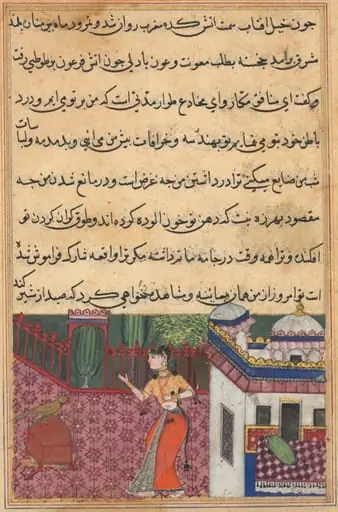 The parrot addresses Khujasta at the beginning of the thirty-third night, from a Tuti-nama (Tales of a Parrot)
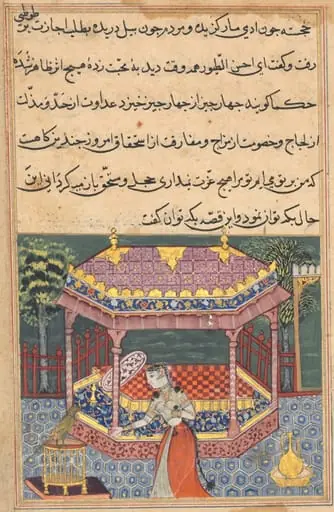 The parrot addresses Khujasta at the beginning of the thirty-seventh night, from a Tuti-nama (Tales of a Parrot)