Artwork
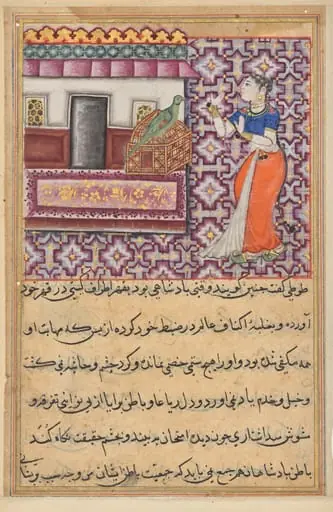
The Parrot Addresses Khujasta at the Beginning of the Twenty-third Night, from a Tuti-nama (Tales of a Parrot)
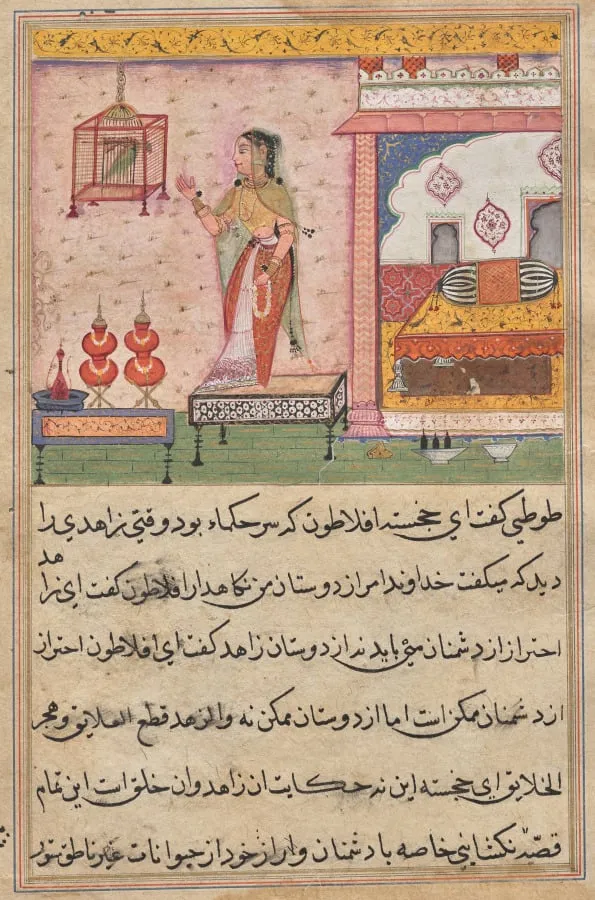
The Parrot Addresses Khujasta at the Beginning of the Twenty-third Night, from a Tuti-nama (Tales of a Parrot) is an unspecified painting by the Mughal Painting artist Unknown. It dates from 1560 and is held in the collection of the Cleveland Museum of Art.
About this work
You see a woman in a red dress sitting on the floor, listening to a green parrot perched on a stand.
You see a woman in a red dress sitting on the floor, listening to a green parrot perched on a stand. The room is simple—just a rug and a painted stool under her feet.
This painting comes from a book of parrot stories told over fifty-two nights. The parrot is the narrator, keeping the woman from sneaking out to meet her lover. The tiny stool was added to make her look grounded, not floating.
If you like this, look up *Mughal India, court of Akbar (reigned 1556–1605)*.
Overview
This painting is one of fifty-two illustrations from a Tuti-nama manuscript, a series of moral tales narrated by a talking parrot to delay a woman’s nocturnal escapades. Created during the Mughal court of Akbar, it depicts the twenty-third night’s story, where the parrot recounts a tale of magical fish, a fatherless child, and a royal wife. The composition emphasizes stillness and focus, with minimal furnishings to isolate the narrative moment.
Subject & Meaning
The parrot, as narrator, serves as both storyteller and guardian, using fables to dissuade Khujasta from pursuing an illicit rendezvous. The tale it recounts—featuring a wife, laughing fish, and a miraculous birth—functions as allegory, hinting at fate, divine intervention, and the consequences of desire. The woman’s attentive posture suggests she is being persuaded, not merely entertained.
Technique & Style
Rendered in fine brushwork typical of Mughal miniature painting, the figures are delicately detailed against a plain background. The parrot’s green plumage and Khujasta’s red garment contrast sharply, drawing attention to their interaction. A small painted stool beneath her feet, added to anchor her form, reveals an attention to spatial realism uncommon in earlier traditions.
History & Provenance
Commissioned under Emperor Akbar’s patronage in the late 16th century, the Tuti-nama manuscript was produced in the imperial atelier by teams of artists and calligraphers. This folio likely originated from a larger illustrated cycle, now dispersed across collections. Its survival reflects the Mughal court’s investment in literary illustration as a tool of cultural refinement.
Context
The Tuti-nama tradition drew from Persian and Indian storytelling, adapted to suit Mughal tastes for moral allegory and visual elegance. In Akbar’s court, such manuscripts served not only as entertainment but also as instruments of ethical instruction, blending Islamic, Hindu, and folk motifs. The parrot’s role as a mediator between desire and restraint mirrored contemporary courtly concerns about control and discipline.
Legacy
The Tuti-nama illustrations influenced later Mughal manuscript painting through their narrative precision and psychological nuance. The inclusion of subtle spatial devices, like the stool, signaled a shift toward naturalism. Though the original manuscript is fragmented, surviving folios remain key references for understanding how storytelling and visual art converged in early modern South Asia.
Artist & collection

 Domestic Scene
 Giacomo and Cardinal Marco, investing Andrea, Abbot of San Zeno, with his Benefice
 The Nymph of Fontainebleau
 Portrait of a Woman
 Madonna and Child with Saints in the Enclosed Garden
 Venus and Minerva
 Family Group of Four on Sofa
 Wall painting from Room H of the Villa of P. Fannius Synistor at Boscoreale
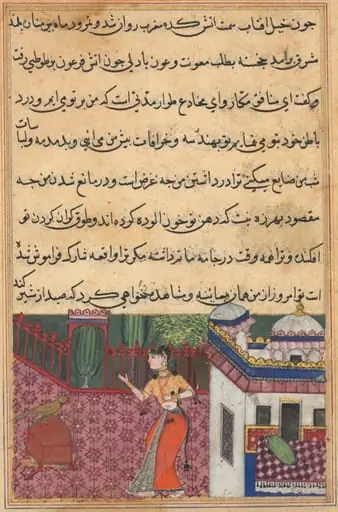 The parrot addresses Khujasta at the beginning of the thirty-third night, from a Tuti-nama (Tales of a Parrot)
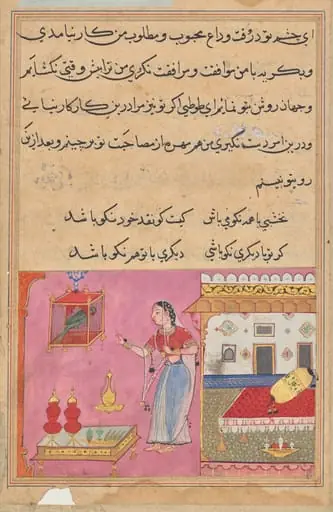 The Parrot Addresses Khujasta at the Beginning of the Twentieth Night, from a Tuti-nama (Tales of a Parrot)
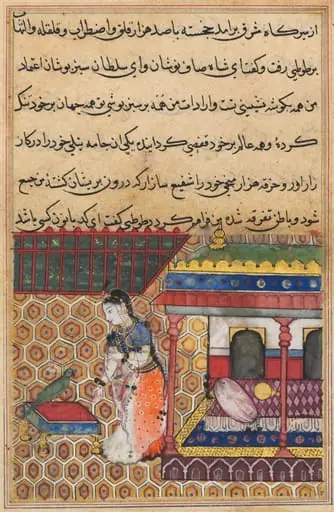 The parrot addresses Khujasta at the beginning of the thirty-eighth night, from a Tuti-nama (Tales of a Parrot)
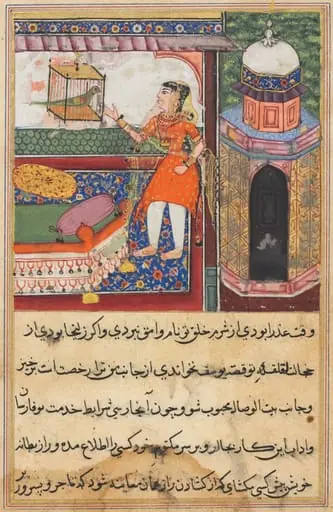 The Parrot Addresses Khujasta at the Beginning of the Tenth Night, from a Tuti-nama (Tales of a Parrot)
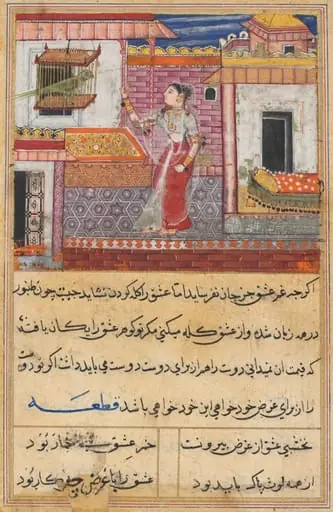 The Parrot Addresses Khujasta at the Beginning of the Thirteenth Night, from a Tuti-nama (Tales of a Parrot)
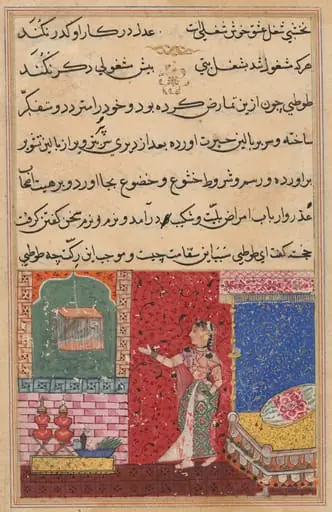 The Parrot Addresses Khujasta at the Beginning of the Fifteenth Night, from a Tuti-nama (Tales of a Parrot)
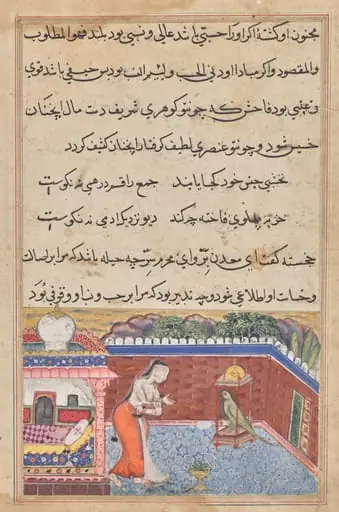 The parrot addresses Khujasta at the beginning of the thirty-first night, from a Tuti-nama (Tales of a Parrot)
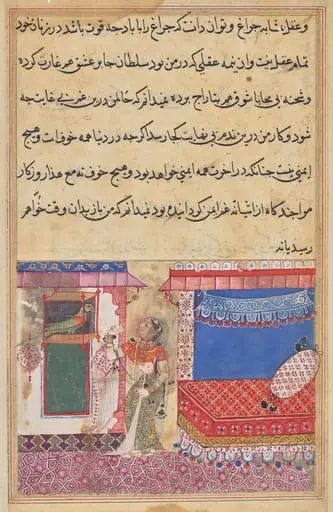 The Parrot Addresses Khujasta at the Beginning of the Eighteenth Night, from a Tuti-nama (Tales of a Parrot)
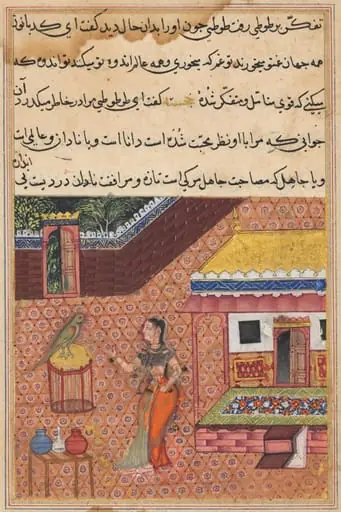 The parrot addresses Khujasta at the beginning of the thirty-fourth night, from a Tuti-nama (Tales of a Parrot)
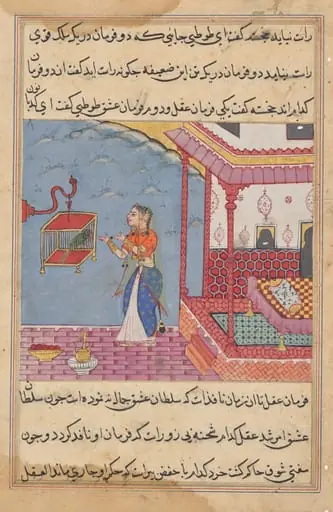 The Parrot Addresses Khujasta at the Beginning of the Twenty-Fourth Night, from a Tuti-nama (Tales of a Parrot)
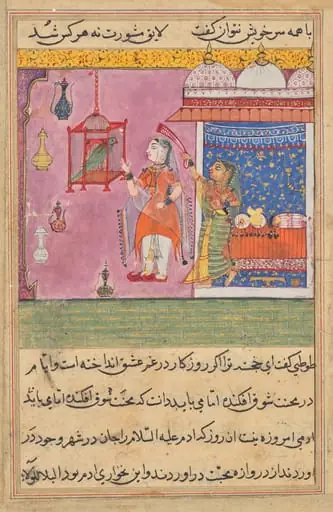 The Parrot Addresses Khujasta at the Beginning of the Nineteenth Night, from a Tuti-nama (Tales of a Parrot)
 The parrot addresses Khujasta at the beginning of the fiftieth night, from a Tuti-nama (Tales of a Parrot): Fiftieth Night