Artwork
住吉物語絵巻 詞書断簡|The Tale of Sumiyoshi
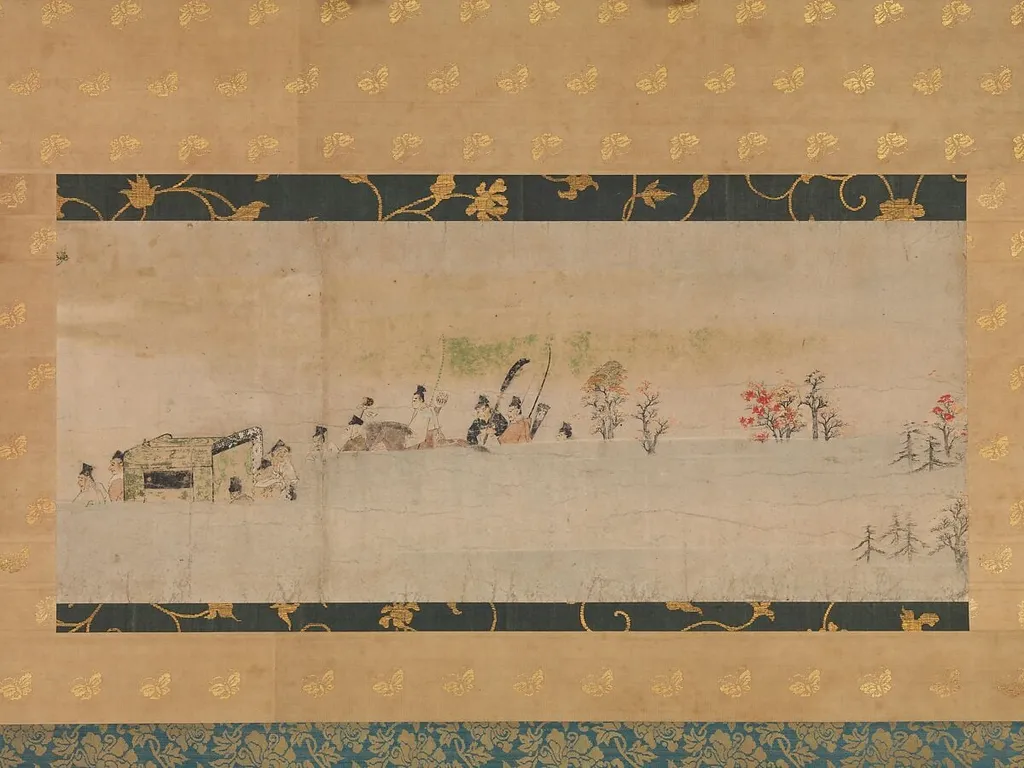
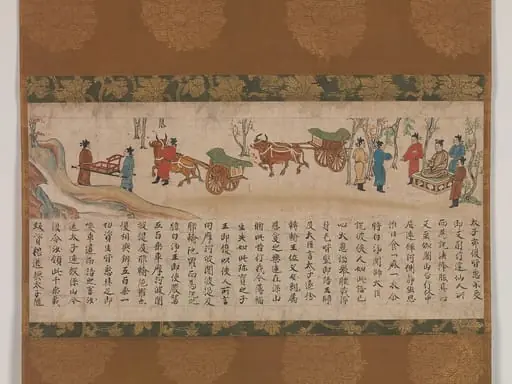
住吉物語絵巻 詞書断簡|The Tale of Sumiyoshi is an ink painting. It dates from 1283 and is held in the collection of the Metropolitan Museum of Art. The work consists of a fragment from a hand‑scroll originally part of *The Tale of Sumiyoshi*, a narrative dating to the 14th‑century.
About this work
Overview
The work consists of a fragment from a hand‑scroll originally part of *The Tale of Sumiyoshi*, a narrative dating to the 14th‑century. The fragment has been remounted as a hanging scroll and presents a single scene in ink and color on paper, accompanied by a separate calligraphic section in ink.
Subject & Meaning
The image depicts a man dressed in a vivid red robe astride a white horse, proceeding along a grassy lane. Two attendants accompany the rider on foot, suggesting a formal procession or a moment from the literary tale, though the exact narrative moment is not identified in the fragment.
Technique & Style
The horse is rendered with swift, confident brushwork; the legs are suggested by a few decisive strokes rather than detailed shading, creating a sense of motion. The overall composition relies on line and limited color, characteristic of Japanese narrative scroll painting where the story unfolds sequentially.
History & Provenance
The original scroll was intended to be read sequentially, unrolled scene by scene, a common format for private storytelling in medieval Japan. The surviving fragment has been separated from the rest of the scroll and mounted for display, preserving both the painted image and the accompanying calligraphic text.
Context
*The Tale of Sumiyoshi* belongs to a corpus of medieval Japanese illustrated narratives that combined literary text with visual accompaniment. Such scrolls served as both literary entertainment and visual art, reflecting the aesthetic conventions of the period.
Artist & collection