Artwork
The Road to Fairlop Fair
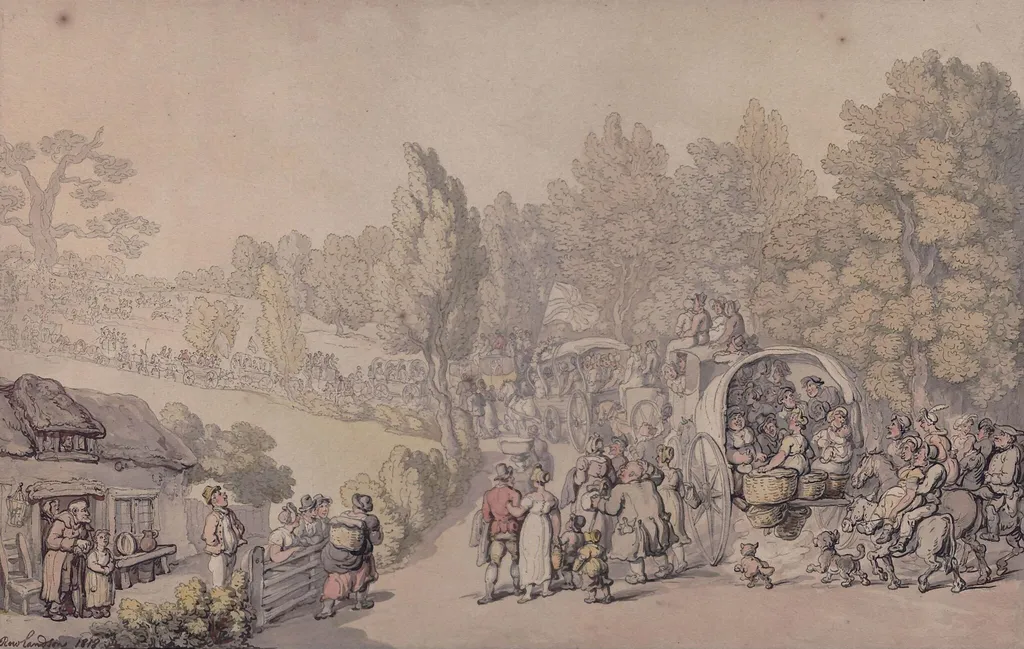
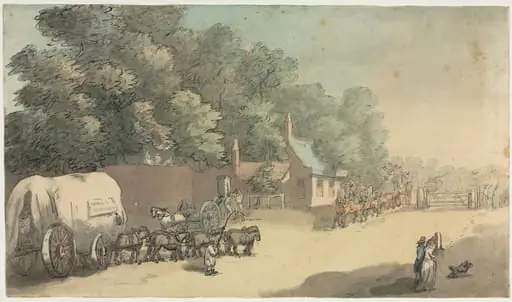
The Road to Fairlop Fair is a watercolor work on paper by the Romanticist artist Thomas Rowlandson. It dates from 1818 and is held in the collection of the Victoria and Albert Museum.
About this work
Overview
Rowlandson’s loose brushwork and layered washes convey the spontaneity of the occasion, emphasizing motion and social interaction over formal composition.
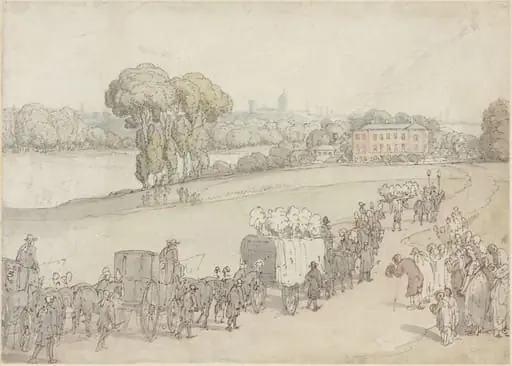
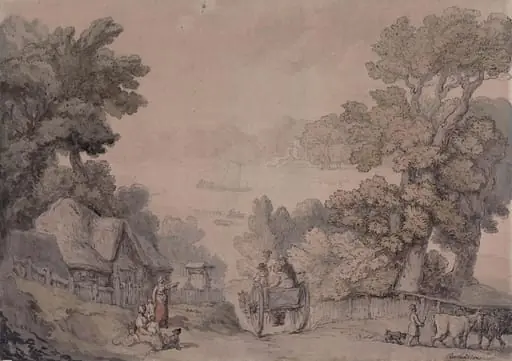
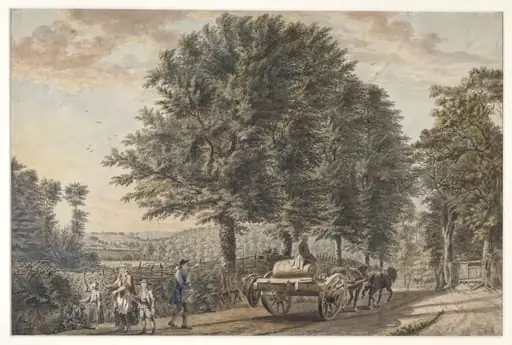
Created in 1818, Thomas Rowlandson’s watercolour depicts a bustling path leading to Fairlop Fair, an annual summer gathering near Barking in Essex. The scene captures a moment of public transit and communal movement, with a horse-drawn carriage carrying passengers and a dog darting beside it. Rowlandson’s loose brushwork and layered washes convey the spontaneity of the occasion, emphasizing motion and social interaction over formal composition.
Subject & Meaning
The painting portrays the annual Fairlop Fair, a popular rural event drawing crowds from London and surrounding areas. The carriage, packed with travelers, and the scattered pedestrians suggest a cross-section of society converging for leisure. The dog’s energetic path and the varied postures of figures imply spontaneity and informal social exchange, reflecting the fair’s role as a temporary escape from routine life.
Technique & Style
Rowlandson employed transparent watercolour washes to build atmosphere, layering pale blues for the sky and warm ochres for sunlit foliage. His rapid, sketch-like strokes define figures and movement without fine detail, prioritizing rhythm over precision. The composition guides the eye along the road toward a distant thatched building, using atmospheric perspective to suggest depth without heavy modeling.
History & Provenance
The work is signed and dated by Rowlandson in 1818, placing it within his later period of topographical and genre scenes. It likely originated as a personal record or commission tied to the fair’s popularity among Londoners. Its survival in good condition suggests it was preserved within private collections, possibly by patrons familiar with Rowlandson’s satirical and observational work.
Context
Fairlop Fair, active from the 17th to mid-19th century, was one of England’s most visited seasonal fairs, drawing thousands. Rowlandson’s depiction aligns with a broader interest in everyday life during the Romantic era, though his approach is more documentary than idealized. Unlike grand Romantic landscapes, this work finds significance in ordinary movement and public gathering.
Legacy
The painting endures as a record of early 19th-century leisure and transport in rural England. Rowlandson’s ability to capture fleeting social moments influenced later genre painters and illustrators. While not widely exhibited, it remains a valuable example of how watercolour could document social life with both immediacy and nuance.
Artist & collection
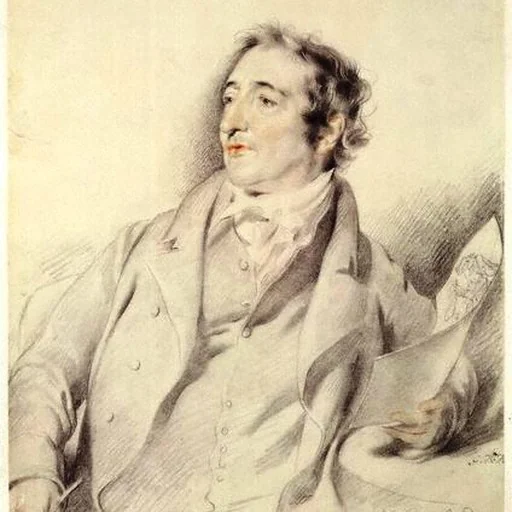
Artist
Thomas Rowlandson (; 13 July 1757 – 21 April 1827) was an English artist and caricaturist of the Georgian Era, noted for his political satire and social observation.