Artwork
Three Scenes from the Passion of Christ (recto)
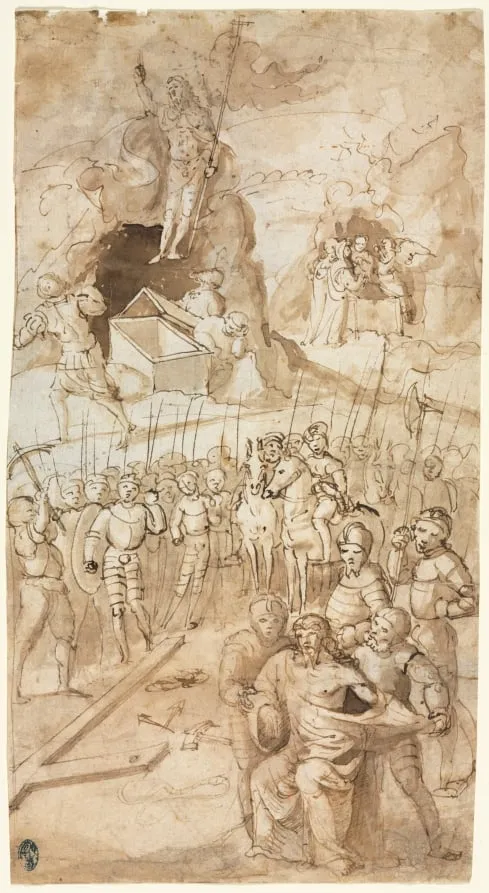
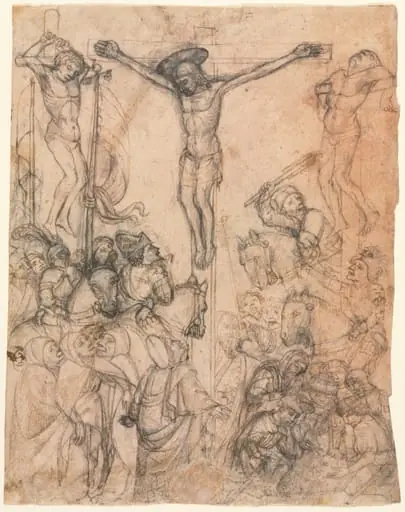
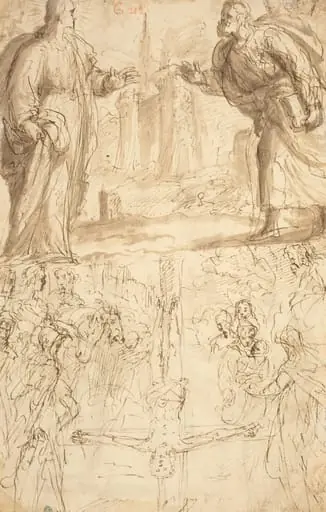
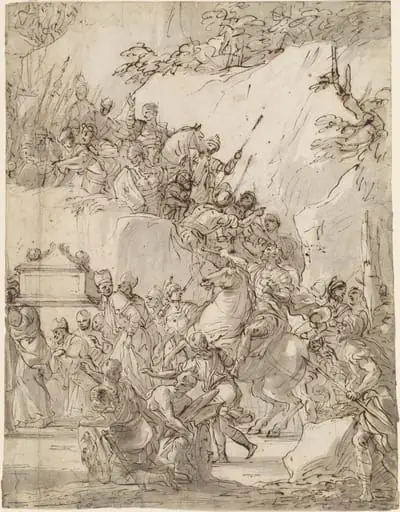
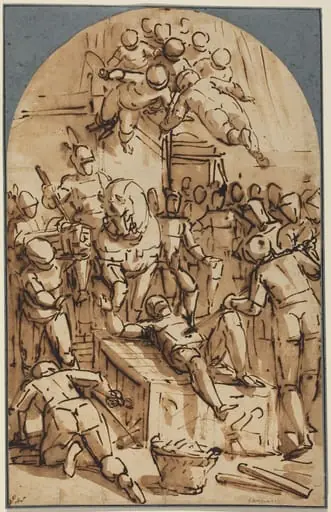
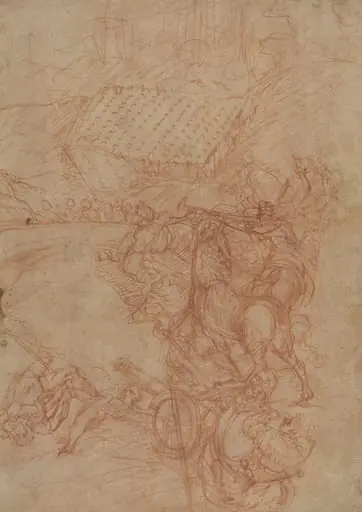
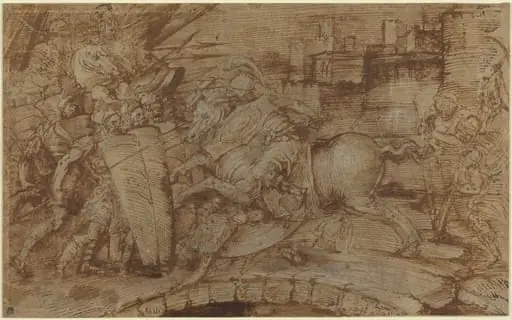
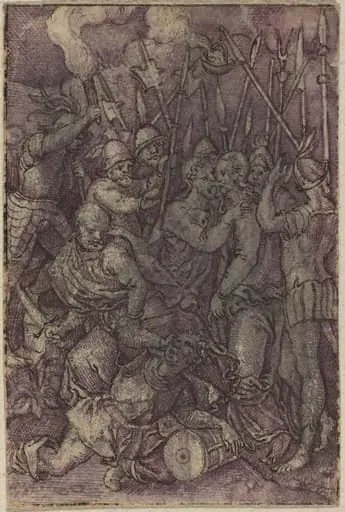
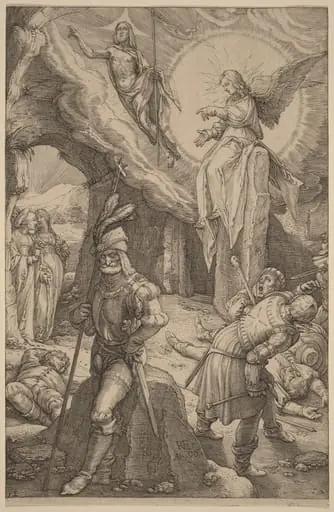
Three Scenes from the Passion of Christ (recto) is a drawing by the Renaissance artist Unknown. It dates from 1504 and is held in the collection of the Cleveland Museum of Art. This pen-and-ink drawing on paper presents three distinct moments from the Passion of Christ in a single composition.
About this work
Overview
The lack of elaborate detail suggests it was a preparatory study, likely intended to organize compositional ideas rather than serve as a finished work.
This pen-and-ink drawing on paper presents three distinct moments from the Passion of Christ in a single composition. Executed with swift, economical lines and subtle tonal contrasts, it reflects the Renaissance practice of rapid sketching to capture narrative motion. The lack of elaborate detail suggests it was a preparatory study, likely intended to organize compositional ideas rather than serve as a finished work.
Subject & Meaning
The upper scene depicts Christ in prayer on the Mount of Olives, his raised arms and the looming cloud signaling divine tension. Below, Roman soldiers advance in formation, emphasizing their role as enforcers of authority. At the lower right, mourners gather around a fallen figure, possibly Christ after his arrest or the moment of his collapse under the cross. Together, the scenes trace the emotional arc from solitude to violence to communal grief.
Technique & Style
The artist employed minimal linework and hatched shading to suggest volume and spatial depth without heavy modeling. Figures are rendered with loose, confident strokes, omitting fine details like facial features or intricate armor. This rapid, gestural approach reflects the Renaissance emphasis on capturing movement and psychological weight through economy of form, characteristic of studies made for larger compositions.
History & Provenance
The drawing’s origin is unattributed, but its style aligns with Italian Renaissance draftsmen active in the late 15th or early 16th century. It likely belonged to a larger album of religious studies, possibly used by an artist preparing for a fresco or altarpiece. Its survival suggests it was valued as a working document, though its specific creator and early ownership remain undocumented.
Context
During the Renaissance, artists increasingly turned to preparatory drawings to explore biblical narratives with psychological nuance. This sketch exemplifies the shift from rigid medieval iconography toward dynamic, emotionally charged compositions. Such studies were common in workshops, where masters and assistants collaborated to refine storytelling through visual rhythm and spatial arrangement.
Legacy
Though unsigned and unrecorded in major collections until modern times, this drawing contributes to the broader understanding of how Renaissance artists conceptualized sacred stories. Its immediacy and restraint reveal the value placed on process over polish, offering insight into the quiet labor behind more finished religious artworks of the period.
Artist & collection

 Domestic Scene
 Giacomo and Cardinal Marco, investing Andrea, Abbot of San Zeno, with his Benefice
 The Nymph of Fontainebleau
 Portrait of a Woman
 Madonna and Child with Saints in the Enclosed Garden
 Venus and Minerva
 Family Group of Four on Sofa
 Wall painting from Room H of the Villa of P. Fannius Synistor at Boscoreale