Artwork
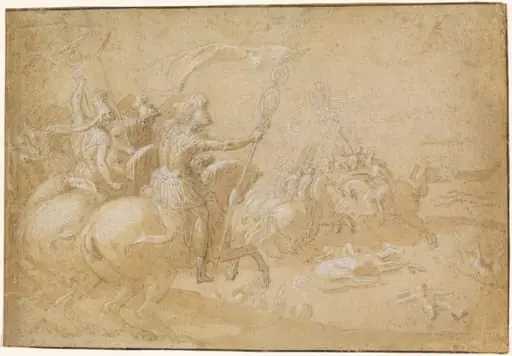
Horatius Cocles Defending Rome
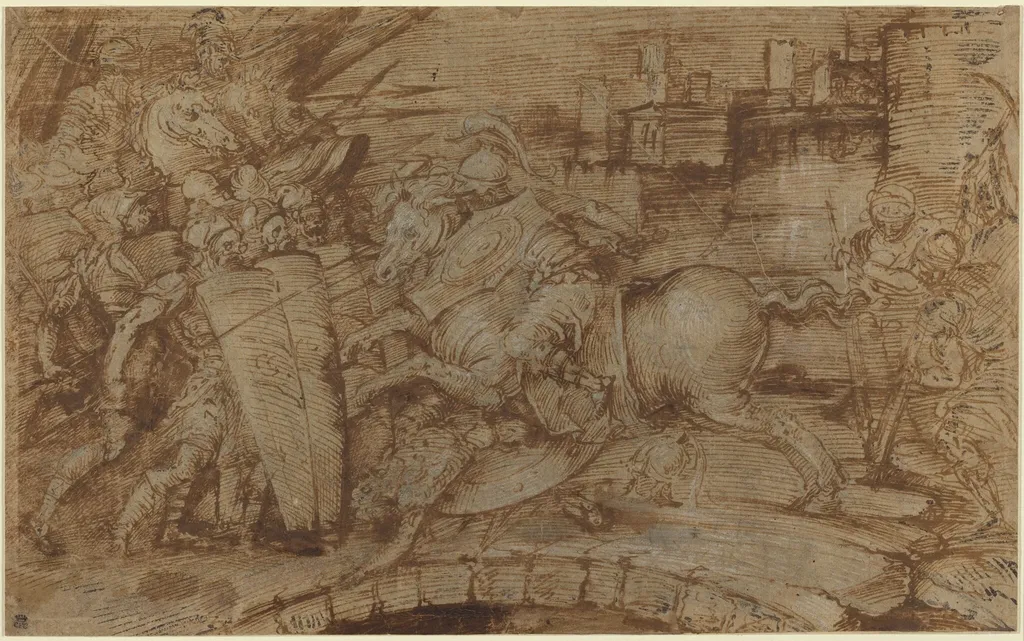
Horatius Cocles Defending Rome is a chalk drawing by the Renaissance artist Italian 16th Century. It dates from 1501 and is held in the collection of the National Gallery of Art.
About this work
Overview
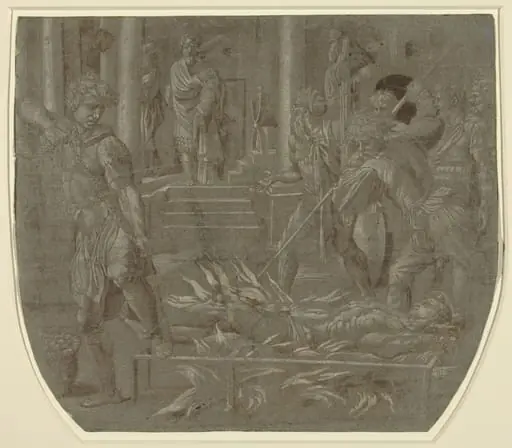
This ink and chalk drawing depicts a moment from Roman legend: Horatius Cocles standing alone to defend the Sublician Bridge against invading forces. Executed with rapid, expressive strokes, the composition captures a fleeting moment of resistance. The use of brown ink, white heightening, and black chalk creates contrast and dynamism, emphasizing the solitary figure amid chaos.
Subject & Meaning
The scene illustrates Horatius Cocles, a Roman soldier who, according to tradition, held off the Etruscan army to allow his comrades to destroy the bridge. His isolated stance symbolizes duty and sacrifice. The surrounding figures, rendered in hurried lines, suggest advancing enemies and fleeing Romans, reinforcing the tension between individual courage and collective survival.
Technique & Style
The artist employs quick, sketchy lines and dense cross-hatching to convey motion and depth. Heavy shading around the central figure’s shield heightens its presence, while white highlights accentuate edges and reflections. The loose handling of architecture and troops suggests urgency, as if the scene were captured in real time rather than composed with deliberation.
History & Provenance
The drawing is attributed to a 16th-century Italian artist, likely influenced by classical historiography and Renaissance interest in heroic antiquity. Its intimate scale and preparatory quality suggest it was a study for a larger work, possibly a fresco or print. No definitive provenance is recorded before the 19th century, though its style aligns with Mannerist draftsmanship of the period.
Context
Created during a time when Roman virtues were widely studied in humanist circles, the image reflects a broader cultural revival of republican ideals. Artists often turned to ancient stories to explore themes of civic duty and personal sacrifice. This drawing fits within a tradition of historical sketches used to rehearse narrative composition before final execution.
Legacy
Though not widely exhibited, the drawing exemplifies how Renaissance draftsmen engaged with classical myth through immediate, expressive means. Its emphasis on gesture and emotional intensity influenced later historical illustrators. The work remains a testament to the power of line and shadow to convey narrative without color or finish.
Artist & collection

Artist
A 16th-century Italian sculptor left us small bronze works in dark brown and gold.

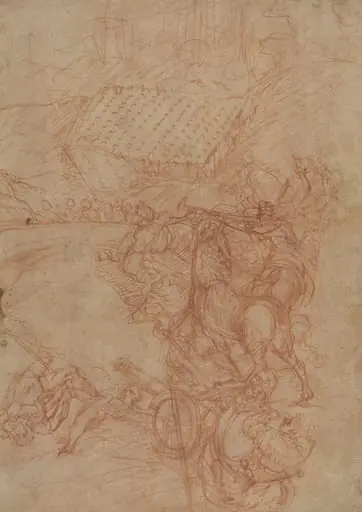 The Battle of Spoleto
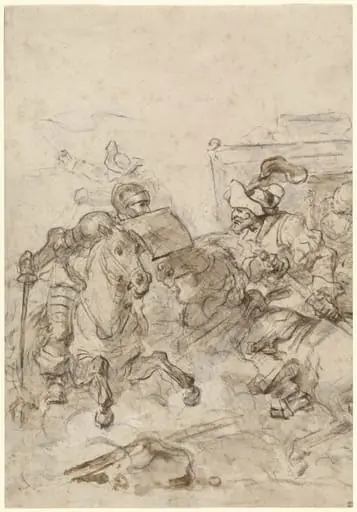 Don Quixote Attacking the Biscayan
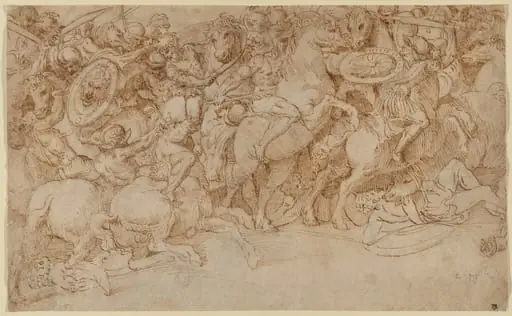 A Battle on Horseback
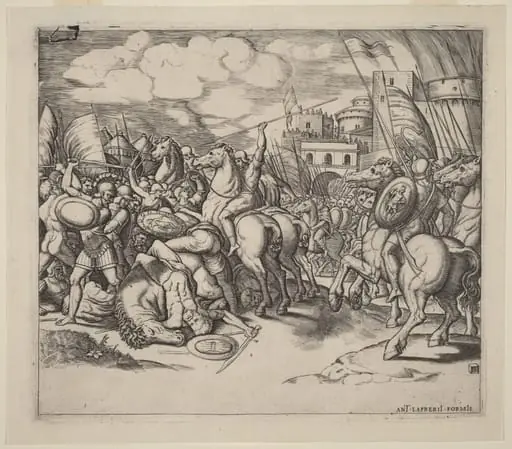 The Victory of Scipio over Syphax
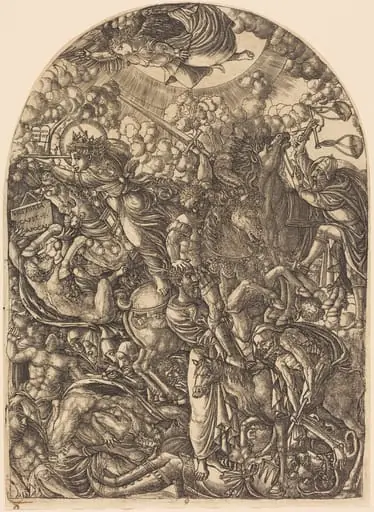 Saint John Sees the Four Horsemen
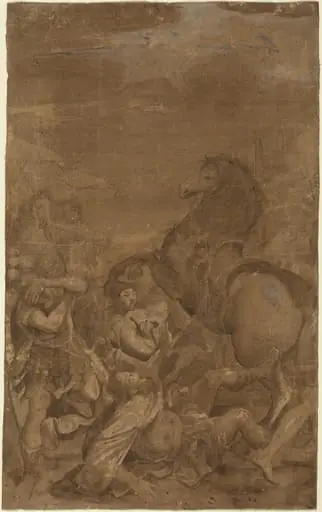 The Conversion of Saint Paul
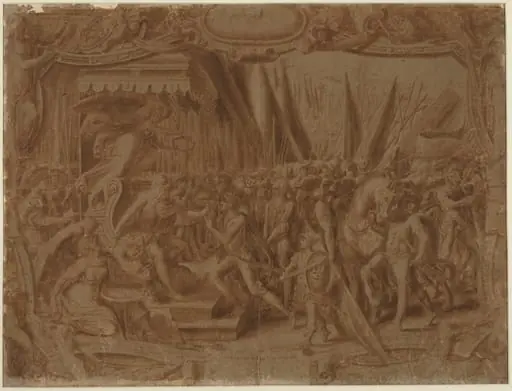 Historical Scene
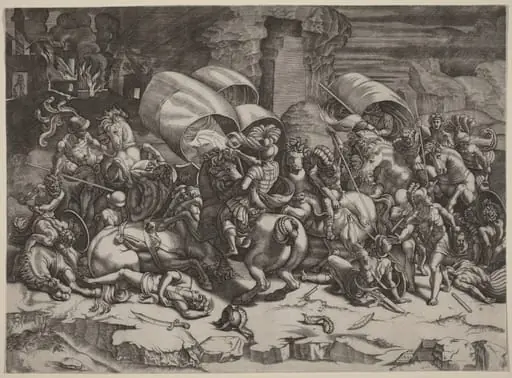 The Battle with the Cutlass
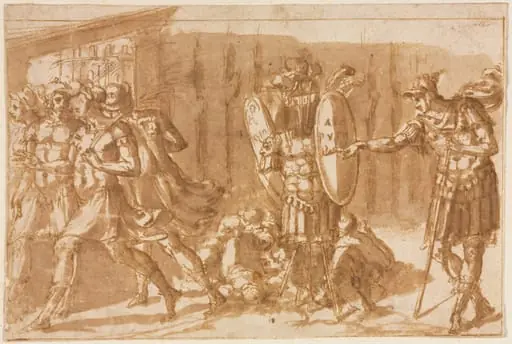 Victorious Soldiers with Trophy
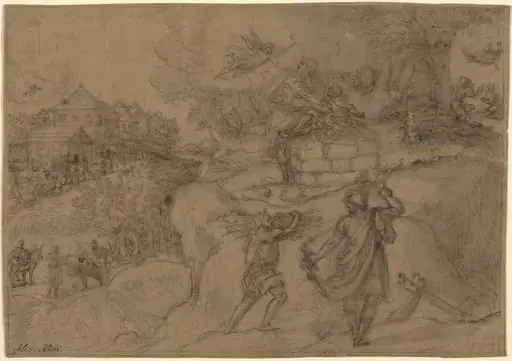 Sacrifice of Abraham
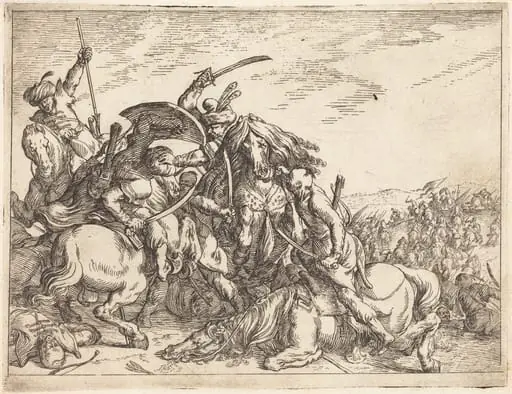 Capricci di varie battaglie
 Ancient Roman Warriors Riding into Battle