Artwork
Timur distributes gifts from his grandson, the Prince of Multan, from a Zafar-nama (Book of Victories)
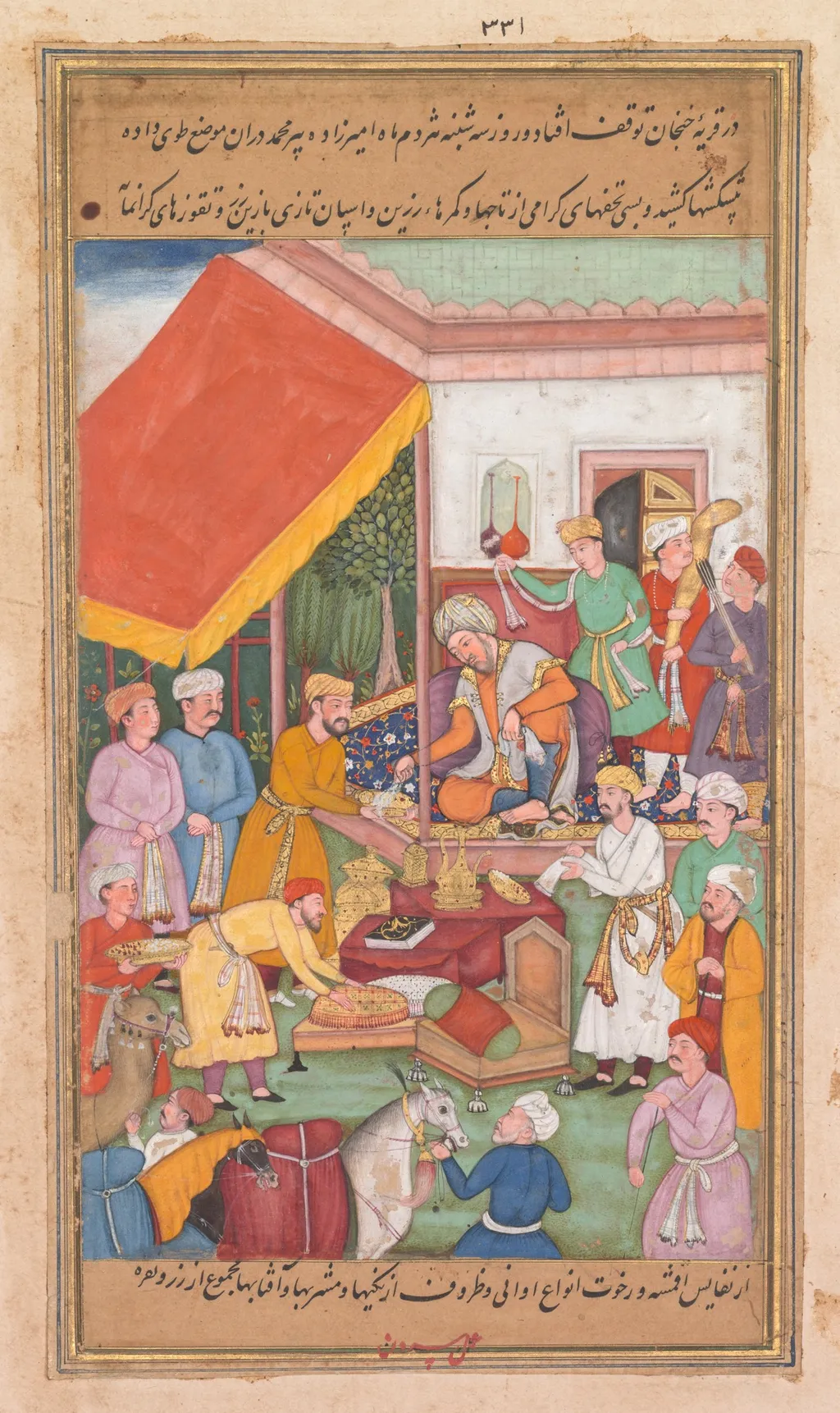
Timur distributes gifts from his grandson, the Prince of Multan, from a Zafar-nama (Book of Victories) is an unspecified painting. It dates from 1600 and is held in the collection of the Cleveland Museum of Art. This painting illustrates a scene from a Zafar-nama, or "Book of Victories," depicting the Central Asian conqueror Timur.
About this work
Overview
The artwork captures a moment where Timur presides over the distribution of gifts sent by his grandson, the Prince of Multan.
This painting illustrates a scene from a Zafar-nama, or "Book of Victories," depicting the Central Asian conqueror Timur. The artwork captures a moment where Timur presides over the distribution of gifts sent by his grandson, the Prince of Multan. The composition features numerous figures in vibrant attire, gathered within an elaborately decorated interior, offering a glimpse into courtly life and ceremonial practices of the period.
Subject & Meaning
The central figure, identified as Timur, is shown seated on a raised platform, receiving tribute. Before him, a kneeling figure presents an offering, while others in the assembly hold various ornate objects. This specific episode highlights the hierarchical structure of Timur's empire and the practice of diplomatic gift-giving among his descendants and vassals, reinforcing the ruler's authority and the prosperity of his domain as celebrated in the Zafar-nama.
Technique & Style
The painting exhibits meticulous detail, characteristic of Persianate manuscript illumination. Figures are rendered in colorful garments and distinctive turbans, populating a rich architectural setting. The artist employs a vibrant palette, with a striking red canopy, green walls, and a glimpse of blue sky through a doorway, creating a sense of depth and opulence. The careful depiction of various objects, including a large, decorated box, further emphasizes the scene's ceremonial importance.
Context
This miniature originates from a Zafar-nama, a historical chronicle commissioned to glorify the military campaigns and reign of Timur (Tamerlane). Such illustrated manuscripts served not only as records of historical events but also as expressions of imperial power and cultural sophistication. The inclusion of detailed court scenes like this one provided visual narratives that complemented the written text, bringing the historical accounts to life for their aristocratic patrons.
Artist & collection

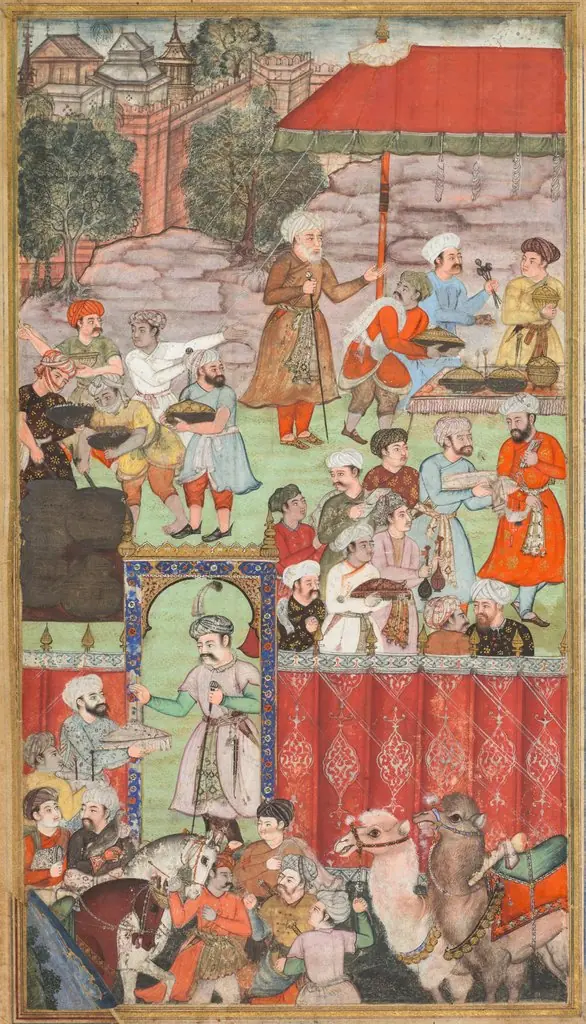 A feast for Babur hosted by his half-brother Jahangir Mirza in Ghazni in May 1505, from a Babur-nama (Memoirs of Babur)
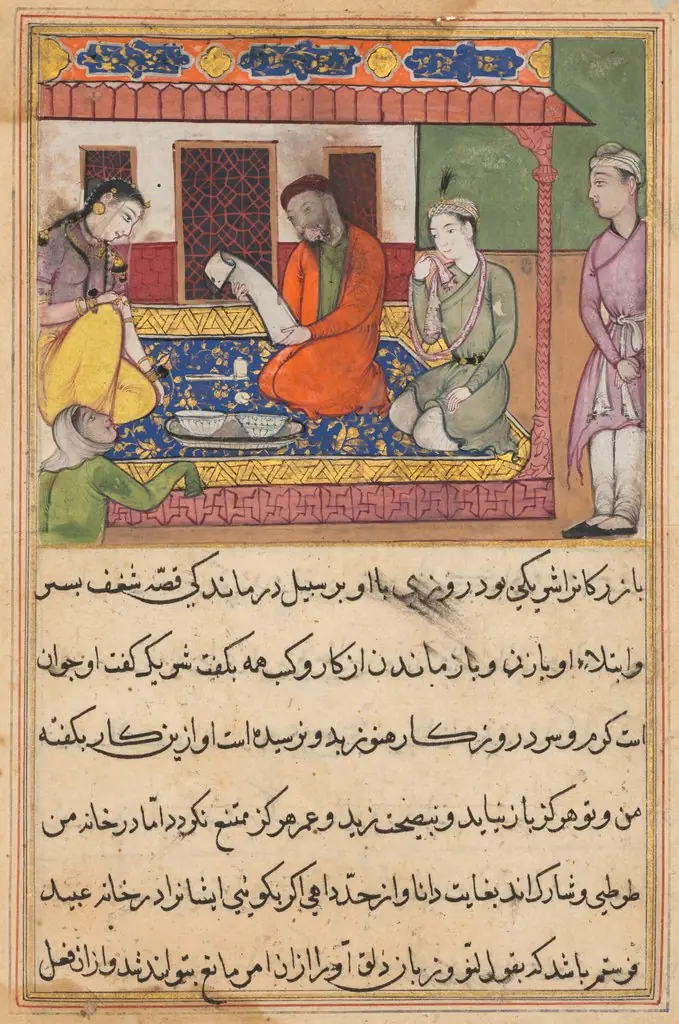 The marriage of ‘Ubaid, son of a merchant of Tirmiz, from a Tuti-nama (Tales of a Parrot): Forty-second Night
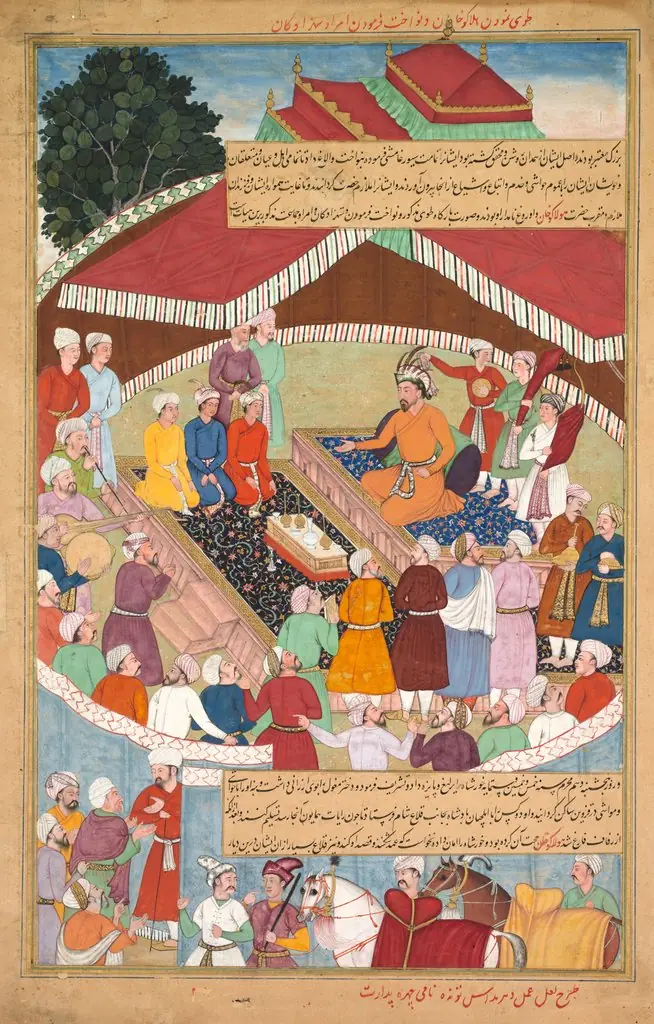 Hulagu Khan giving a feast and dispensing favor upon the amirs and princes, from a Chingiz-nama (Book of Chingiz Khan) of the Jami al-tavarikh (Compendium of Chronicles)