Artwork
The old man eats of the fruit of the Tree of Life, but drops dead, from a Tuti-nama (Tales of a Parrot): Ninth Night
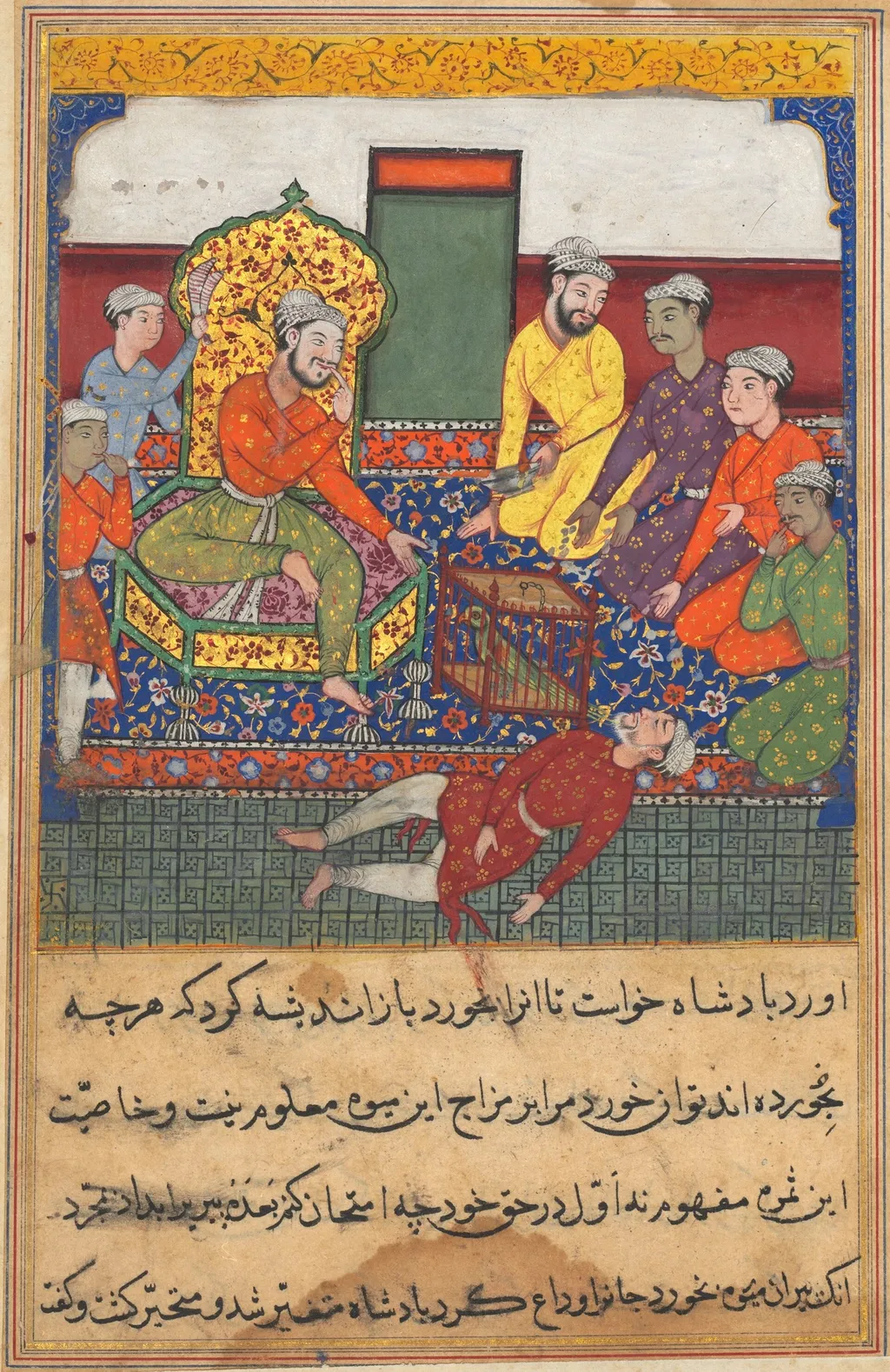
The old man eats of the fruit of the Tree of Life, but drops dead, from a Tuti-nama (Tales of a Parrot): Ninth Night is an unspecified painting. It dates from 1560 and is held in the collection of the Cleveland Museum of Art. The work is a miniature painting illustrating a moment from the ninth night of the *Tuti‑nama* (Tales of a Parrot).
About this work
Overview
The work is a miniature painting illustrating a moment from the ninth night of the *Tuti‑nama* (Tales of a Parrot). Rendered on paper, it portrays a richly appointed interior where a man in vivid orange and green garments sits upon a throne, clutching a golden fruit, while another figure in red collapses at his feet. Arabic legend text runs along the lower border, framing the scene.
Subject & Meaning
The composition visualizes the episode in which an elder consumes the fruit of the Tree of Life and immediately dies, a moral episode common in Persian didactic literature. The juxtaposition of the triumphant figure holding the fruit and the fallen companion underscores the paradoxical danger of seeking divine knowledge without proper preparation.
Technique & Style
The interior architecture is rendered with bold red and gold wall surfaces, intricate geometric floor patterns, and a gilded canopy over the throne.
Executed in the Persian miniature tradition, the painting employs opaque water‑based pigments and gold leaf on a paper support. The interior architecture is rendered with bold red and gold wall surfaces, intricate geometric floor patterns, and a gilded canopy over the throne. Figures are stylized with elongated limbs, flat color fields, and decorative detailing characteristic of 16th‑century Safavid court art.
History & Provenance
The miniature originates from a manuscript of the *Tuti‑nama* produced in Iran during the Safavid period, likely in the early 1500s. It entered the collection of the Cleveland Museum of Art in the mid‑20th century through a private acquisition, where it has been catalogued as part of the museum’s Islamic art holdings.
Context
The *Tuti‑nama* is a collection of moral tales that circulated widely in the Persianate world, often illustrated for elite patrons. This scene reflects the broader cultural emphasis on allegorical storytelling and the use of lavish visual programs to accompany literary texts in courtly manuscripts.
Legacy
As an example of Safavid miniature painting, the work contributes to scholarly understanding of narrative illustration, pigment use, and the transmission of moral literature across the Islamic world. It continues to be referenced in studies of Persian manuscript art and displayed in exhibitions exploring the interplay of text and image.
Artist & collection

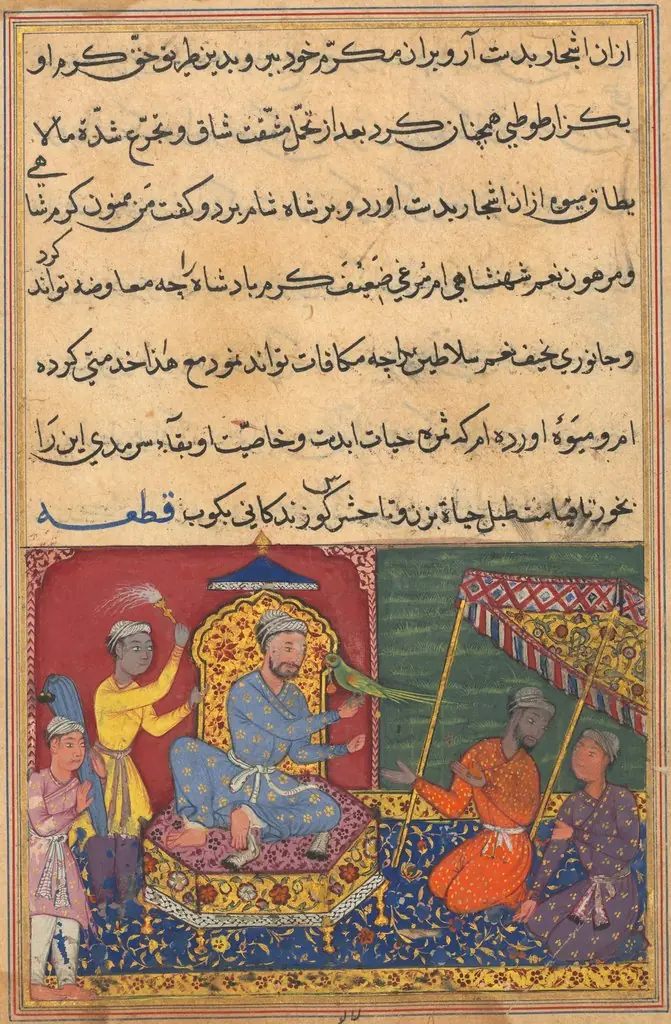 The parrot brings a fruit from the Tree of Life to the king of Syria, from a Tuti-nama (Tales of a Parrot): Ninth Night
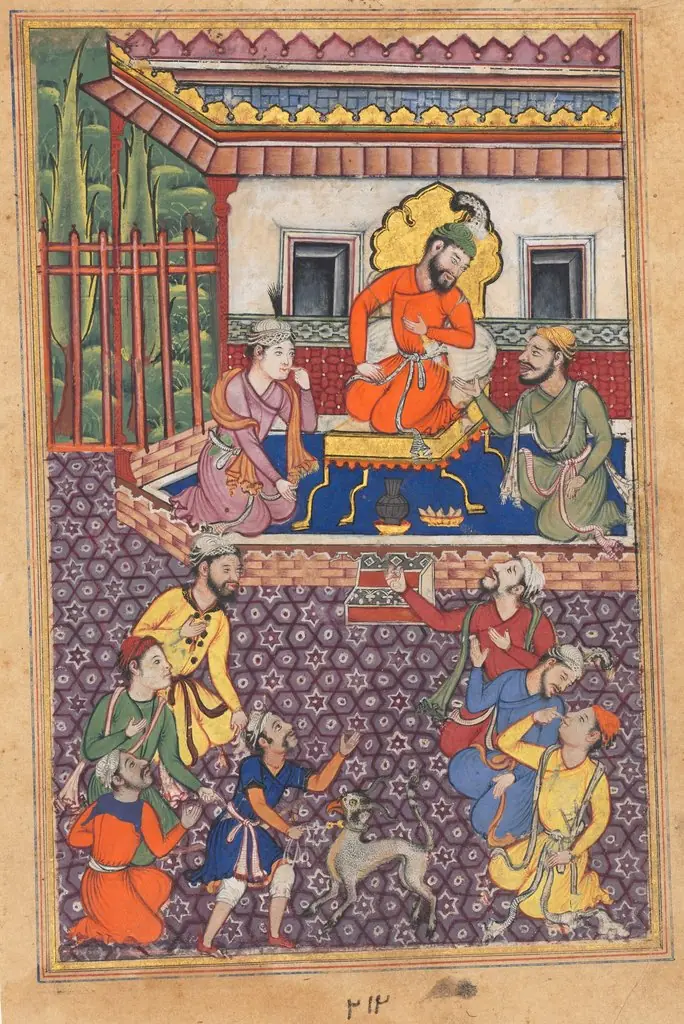 The court of the Raja of Ujjain, from a Tuti-nama (Tales of a Parrot): Forty-sixth Night
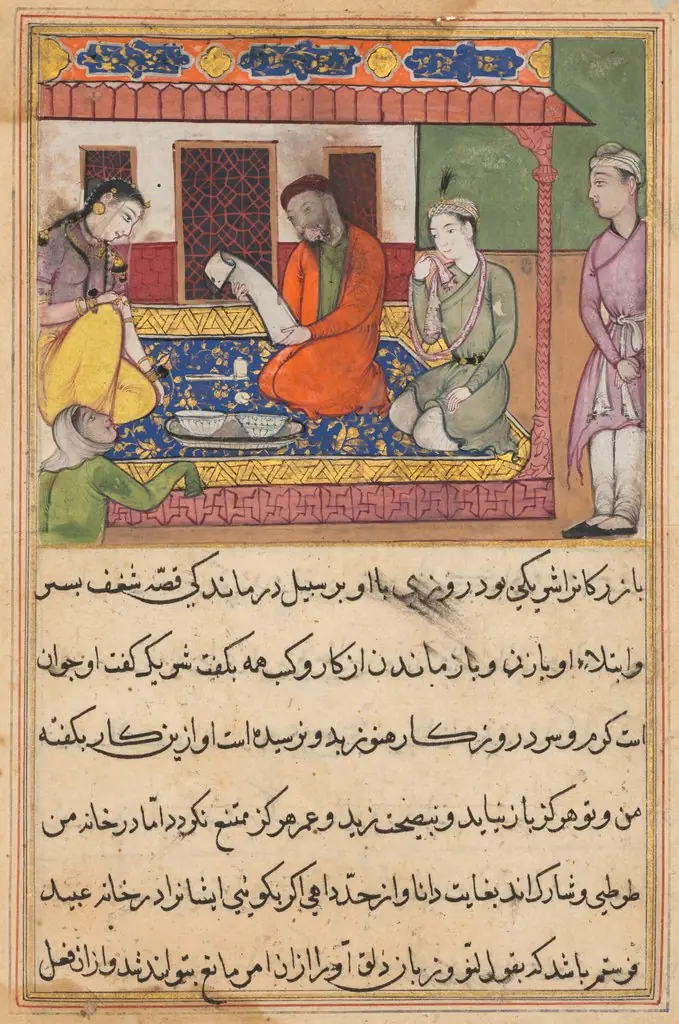 The marriage of ‘Ubaid, son of a merchant of Tirmiz, from a Tuti-nama (Tales of a Parrot): Forty-second Night
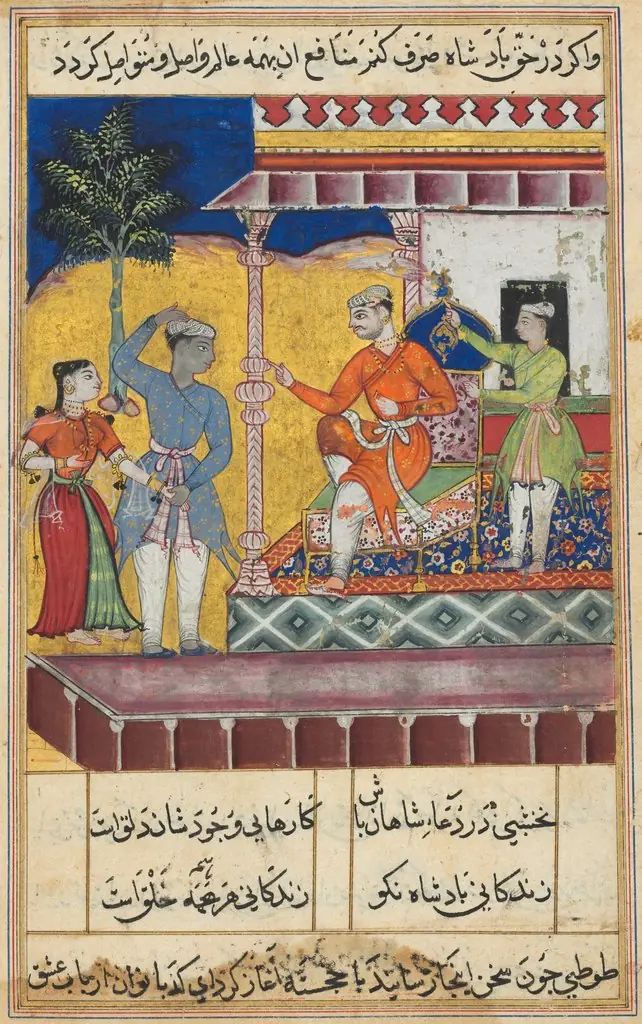 The rejuvenated old man and the daughter of the king of the jinns take leave of the King of Kings, from a Tuti-nama (Tales of a Parrot): Seventh Night
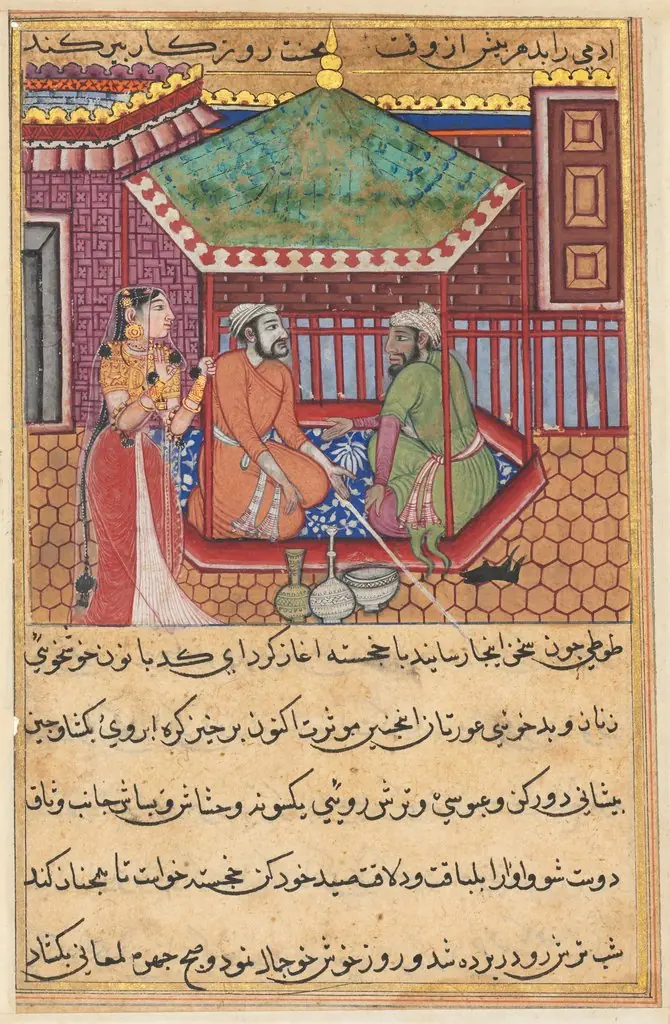 The eldest brother explains the reason for his youthful appearance, from a Tuti-nama (Tales of a Parrot): Forty-ninth Night
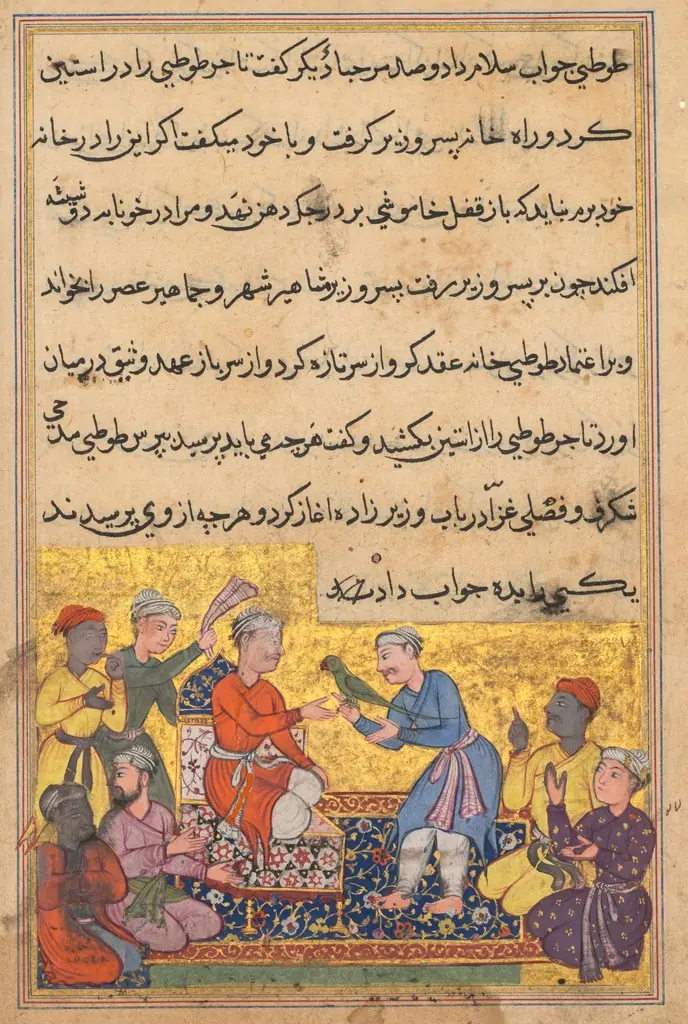 The magic parrot of the merchant talks to the vizier’s son, from a Tuti-nama (Tales of a Parrot): Tenth Night
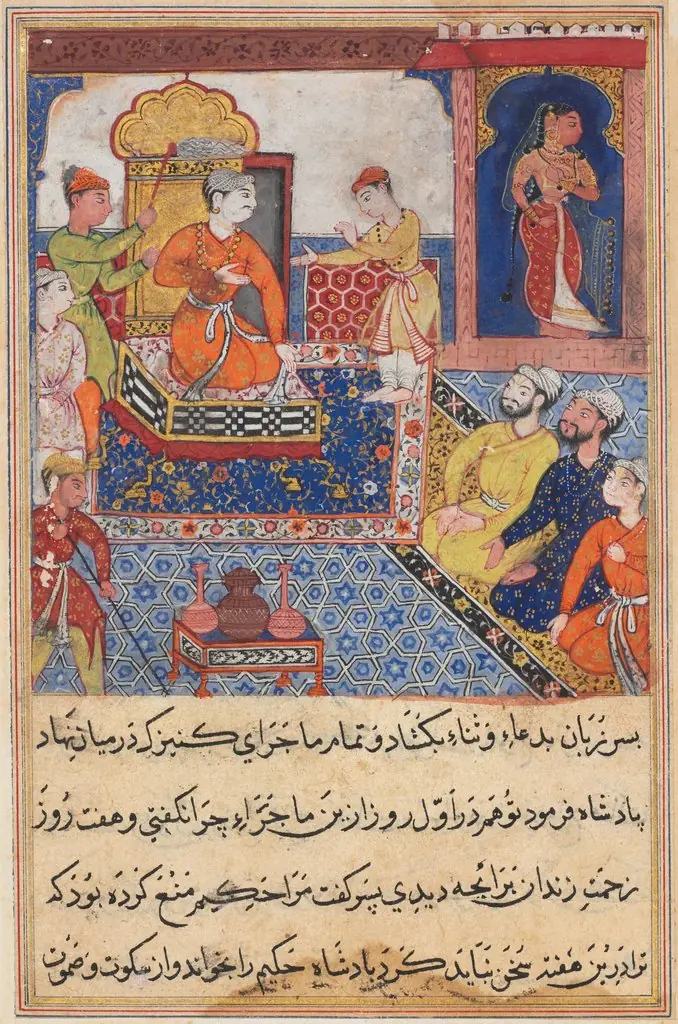 The young prince recounts his experiences to his father, the king, from a Tuti-nama (Tales of a Parrot): Eighth Night
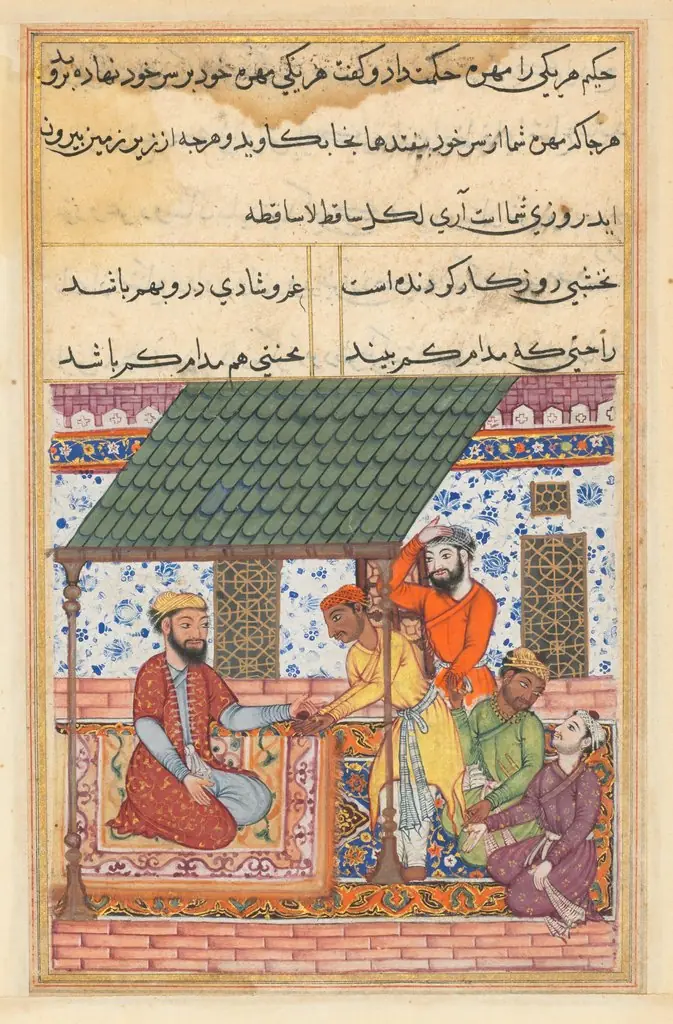 The four destitute friends go to a wise man who gives each one of them a magic shell to be placed on top of the turban, from a Tuti-nama (Tales of a Parrot): Forty-seventh Night
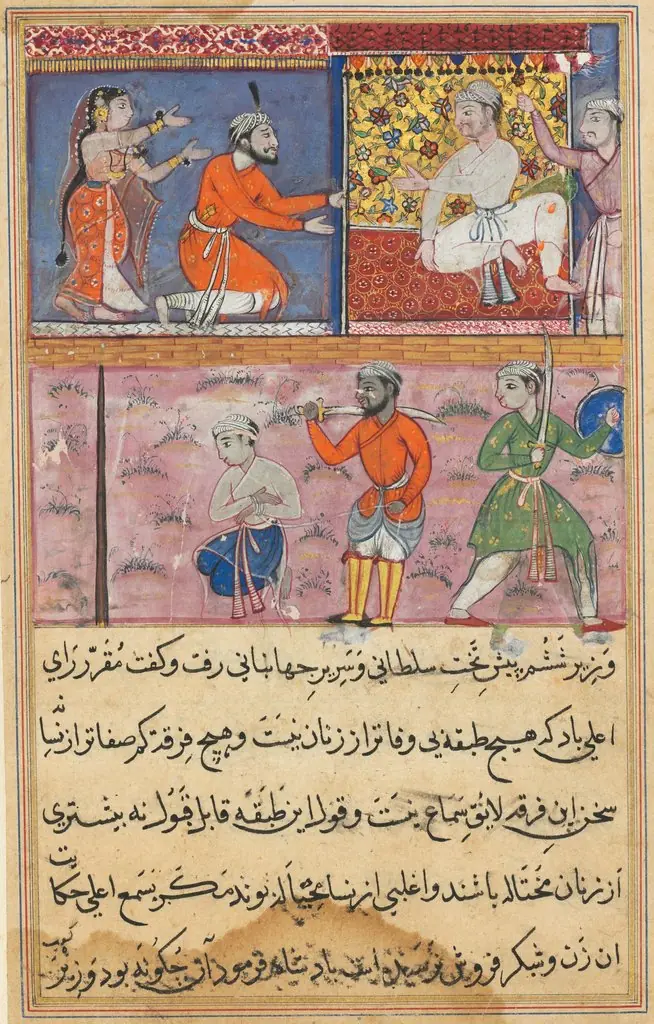 The prince sent back to the place of execution for the sixth time, from a Tuti-nama (Tales of a Parrot): Eighth Night