Artwork
The court of the Raja of Ujjain, from a Tuti-nama (Tales of a Parrot): Forty-sixth Night
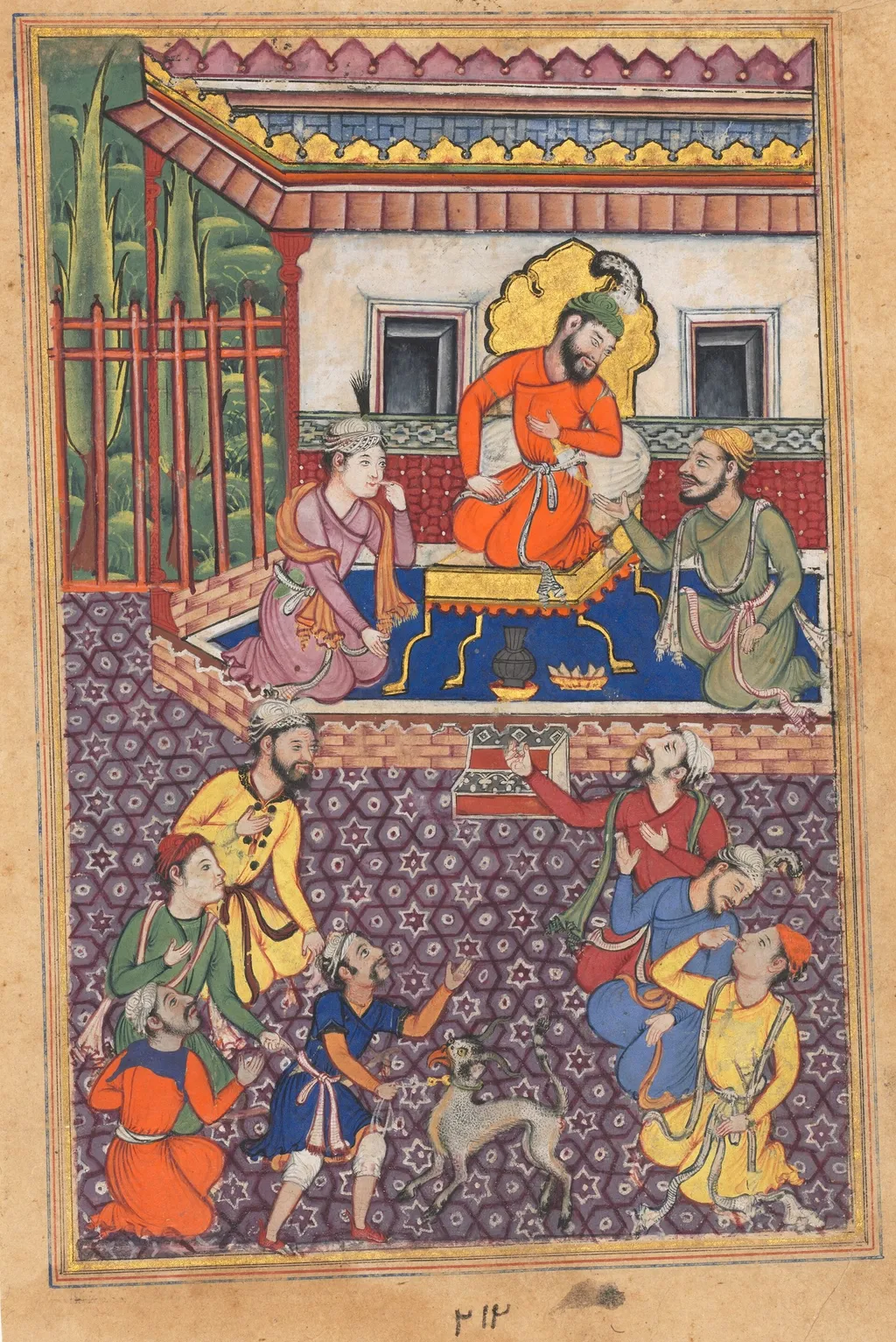
The court of the Raja of Ujjain, from a Tuti-nama (Tales of a Parrot): Forty-sixth Night is an unspecified painting. It dates from 1560 and is held in the collection of the Cleveland Museum of Art. The work is a miniature painting illustrating the forty‑sixth night of a Tuti‑nama, a collection of parrot‑told stories.
About this work
Overview
The work is a miniature painting illustrating the forty‑sixth night of a Tuti‑nama, a collection of parrot‑told stories. It depicts an interior court scene rendered in vivid pigments, with a central figure seated on a raised dais holding an infant, surrounded by attendants and onlookers.
Subject & Meaning
The central man, clothed in a red robe and crowned with a golden headdress, is presented as a ruler, likely the Raja of Ujjain, emphasizing his authority through the halo‑like light surrounding him. The infant he cradles suggests a dynastic or ceremonial moment, while the surrounding figures convey the pageantry of courtly life.
Technique & Style
Executed in the traditional Indian miniature tradition, the painting employs fine brushwork to delineate intricate costumes, patterned flooring and a lattice window. Bright, saturated colors—reds, purples, greens—contrast against a flat gold background, while delicate line work defines facial expressions and textile folds.
History & Provenance
The piece originates from a manuscript illustrating the Tuti‑nama, a Persian‑influenced narrative popular in Mughal India. Though the exact date is uncertain, its stylistic traits align with courtly productions of the 16th–17th centuries. The painting now forms part of a museum collection dedicated to South Asian art.
Context
Court scenes such as this were commonly used to visualize stories of royal virtue and moral instruction. The inclusion of a parrot narrator reflects the literary device of the Tuti‑nama, where a talking bird recounts tales that blend folklore with ethical lessons, situating the artwork within a broader tradition of didactic illustration.
Artist & collection

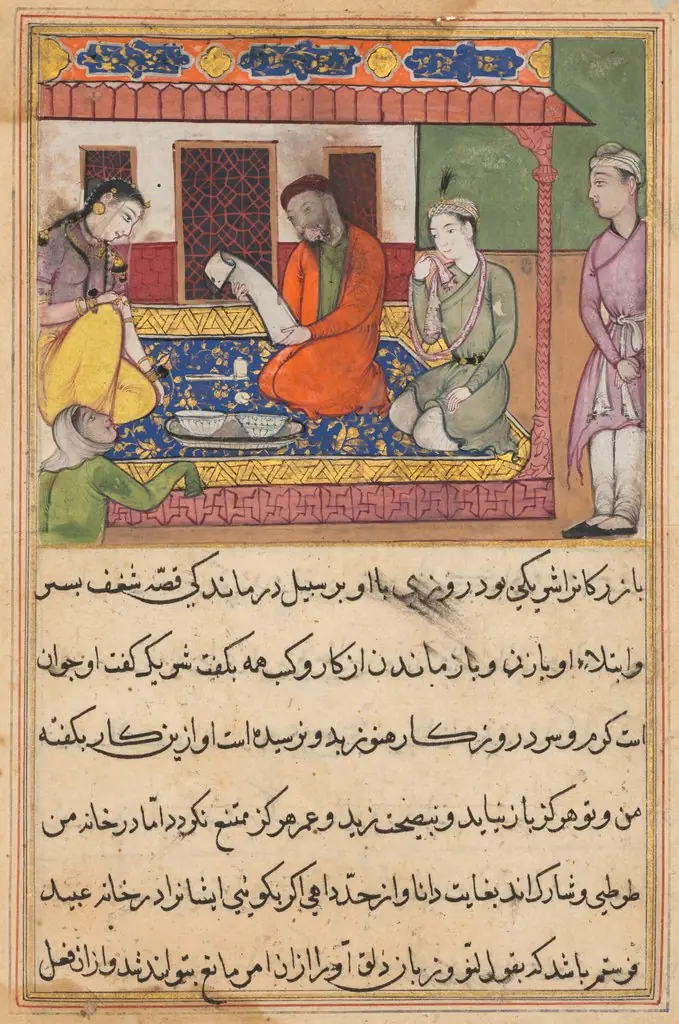 The marriage of ‘Ubaid, son of a merchant of Tirmiz, from a Tuti-nama (Tales of a Parrot): Forty-second Night
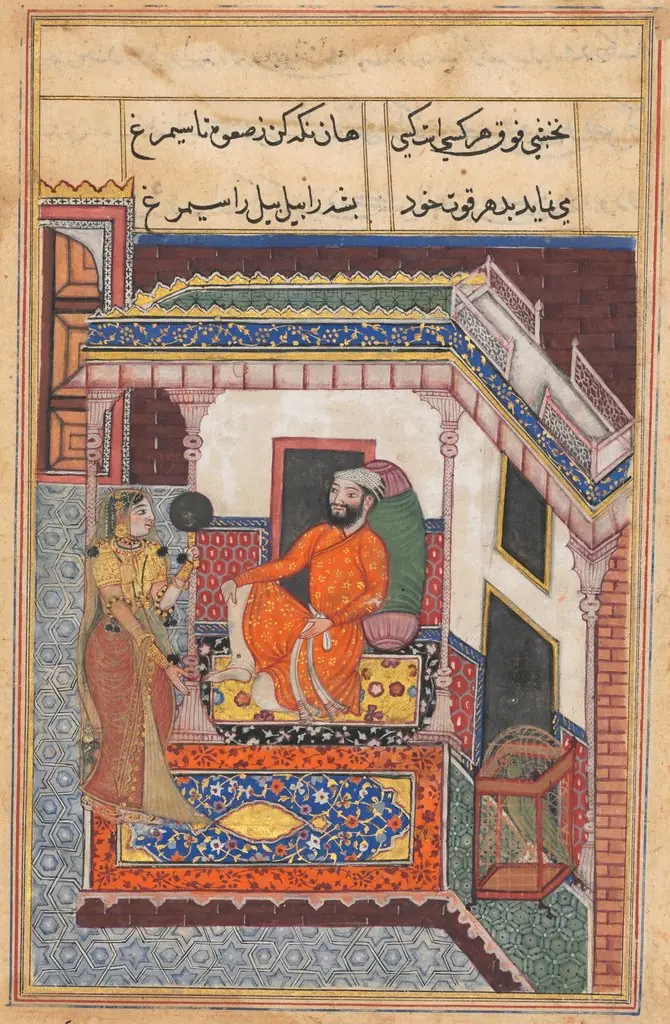 The parrot laughs on hearing the Raja of Ujjain’s wife admire her beauty in a mirror, from a Tuti-nama (Tales of a Parrot: Forty-sixth Night
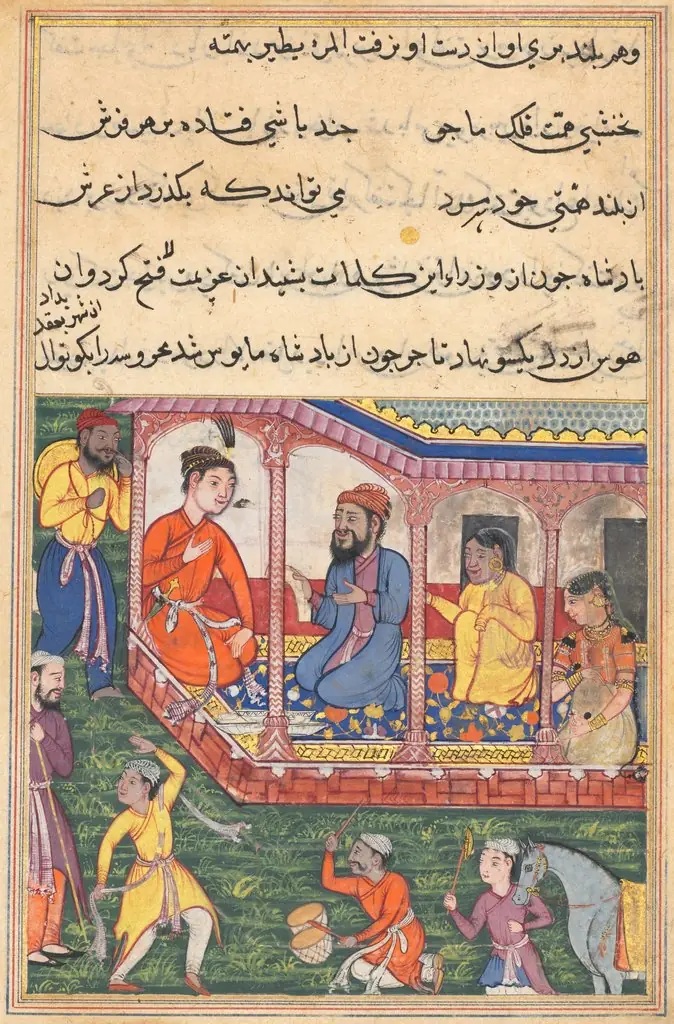 Mahrusa’s marriage to the prefect of the city, from a Tuti-nama (Tales of a Parrot): Thirty-sixth Night
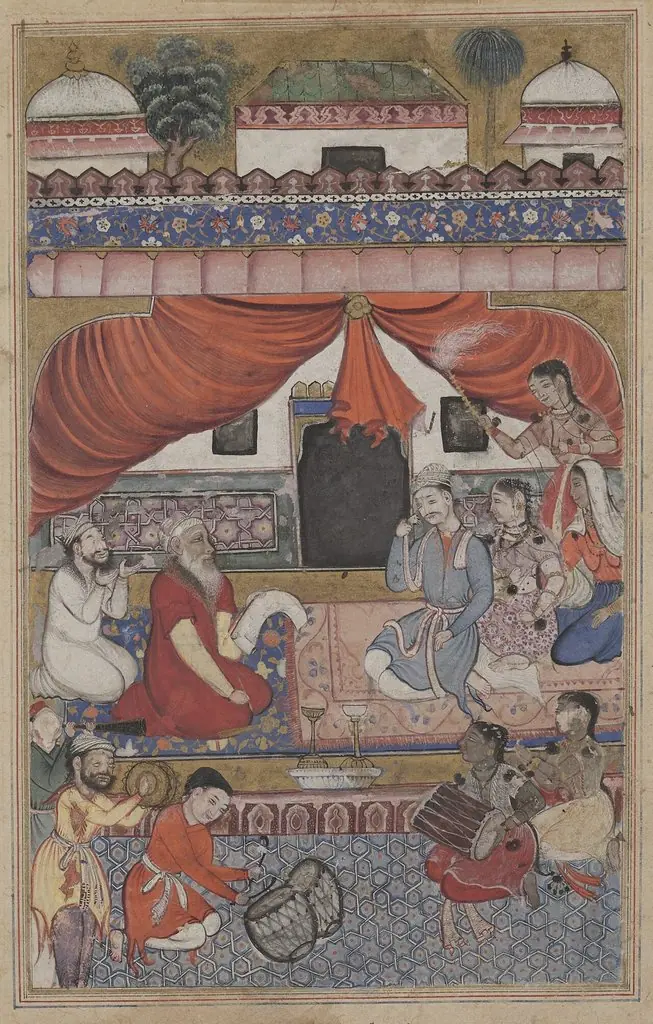 Preparation for the marriage of Mahmuda to the Young Vizier, from a Tuti-nama (Tales of a Parrot): Thirty-third Night
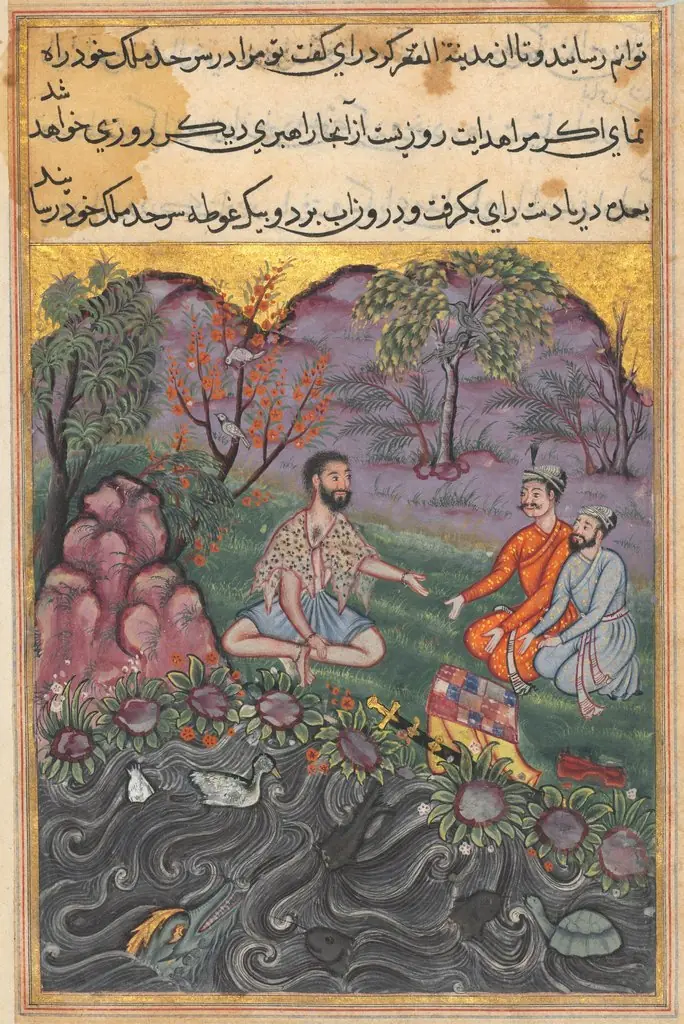 The Raja of Ujjain, who is traveling in the guise of a yogi, meets two brothers who ask him to equitably partition their father’s possession, from a Tuti-nama (Tales of a Parrot): Forty-sixth Night
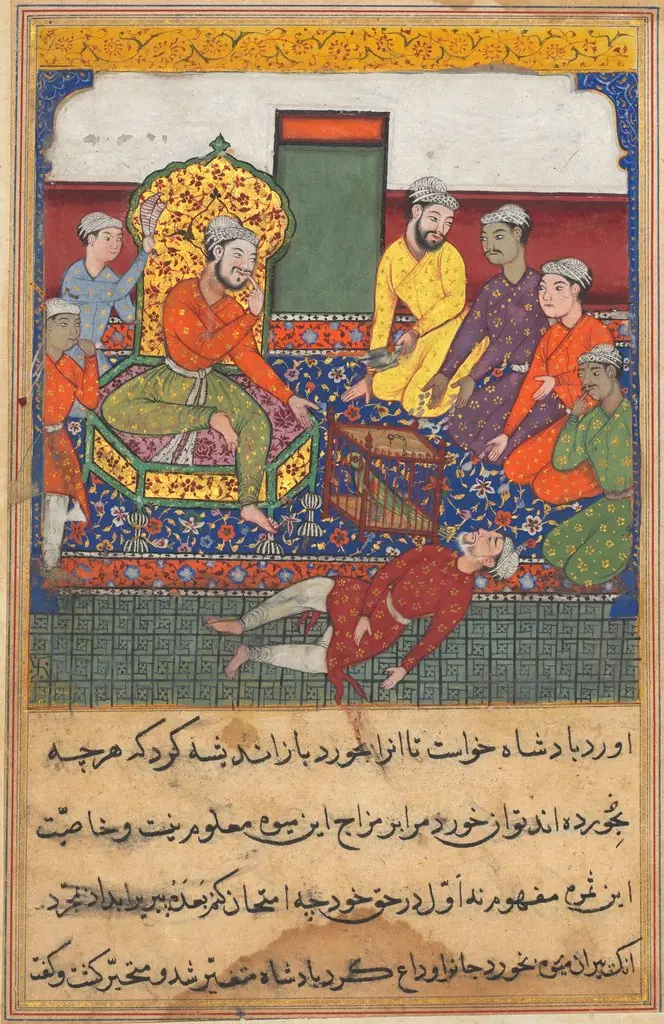 The old man eats of the fruit of the Tree of Life, but drops dead, from a Tuti-nama (Tales of a Parrot): Ninth Night
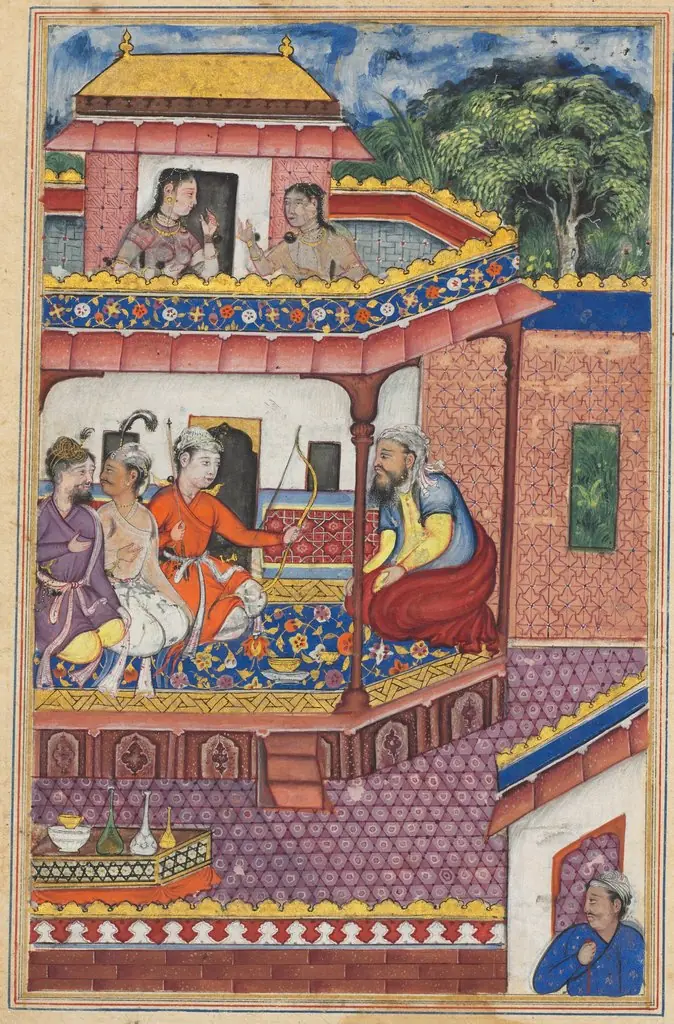 The three young men present themselves as suitors for the hand of Zuhra, the daughter of the merchant of Kabul, from a Tuti-nama (Tales of a Parrot): Thirty-fourth Night
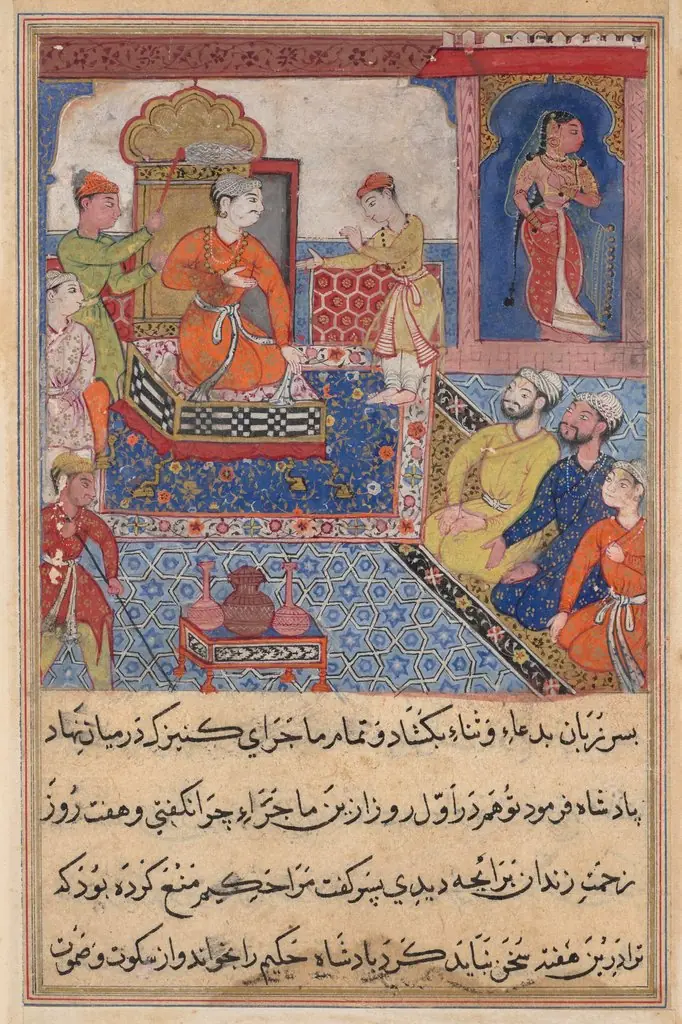 Page from Tales of a Parrot (Tuti-nama): text page
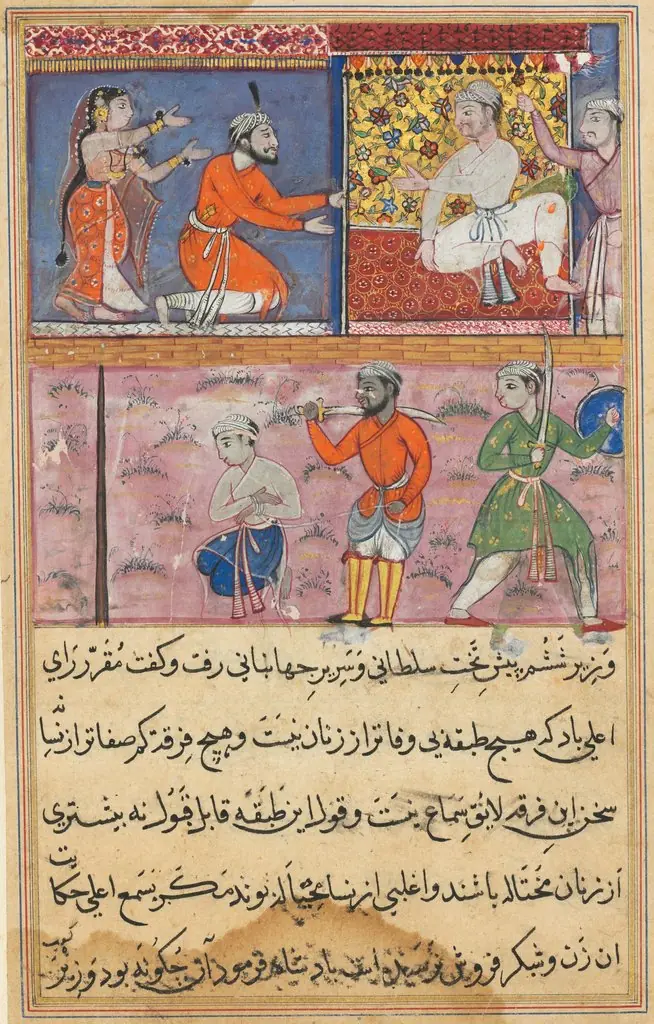 The prince sent back to the place of execution for the sixth time, from a Tuti-nama (Tales of a Parrot): Eighth Night
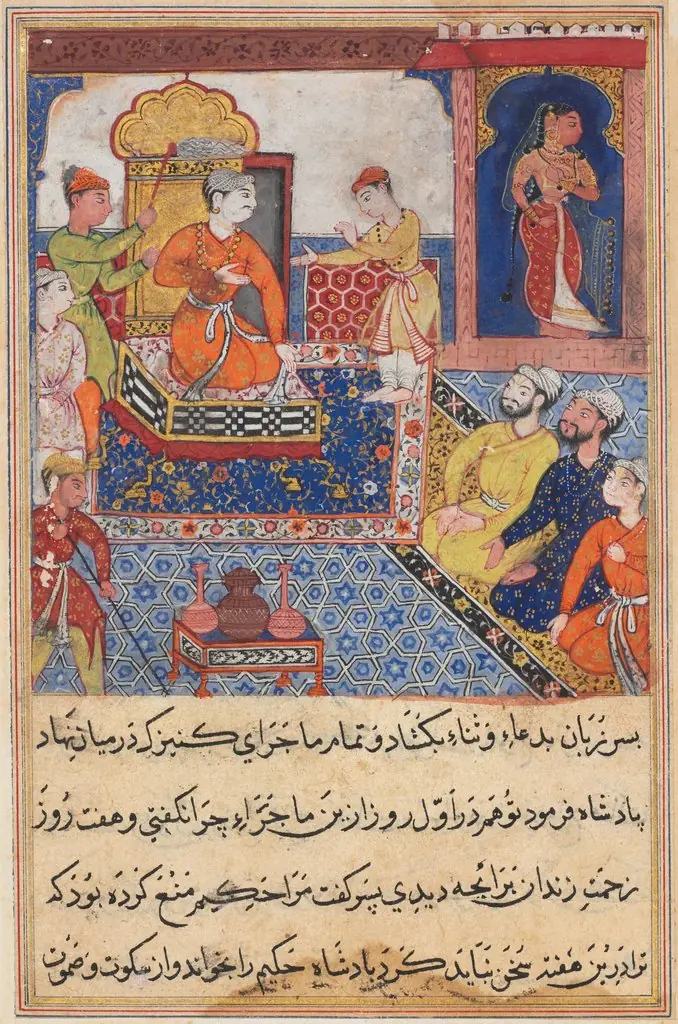 The young prince recounts his experiences to his father, the king, from a Tuti-nama (Tales of a Parrot): Eighth Night