Artwork
Hulagu Khan giving a feast and dispensing favor upon the amirs and princes, from a Chingiz-nama (Book of Chingiz Khan) of the Jami al-tavarikh (Compendium of Chronicles)
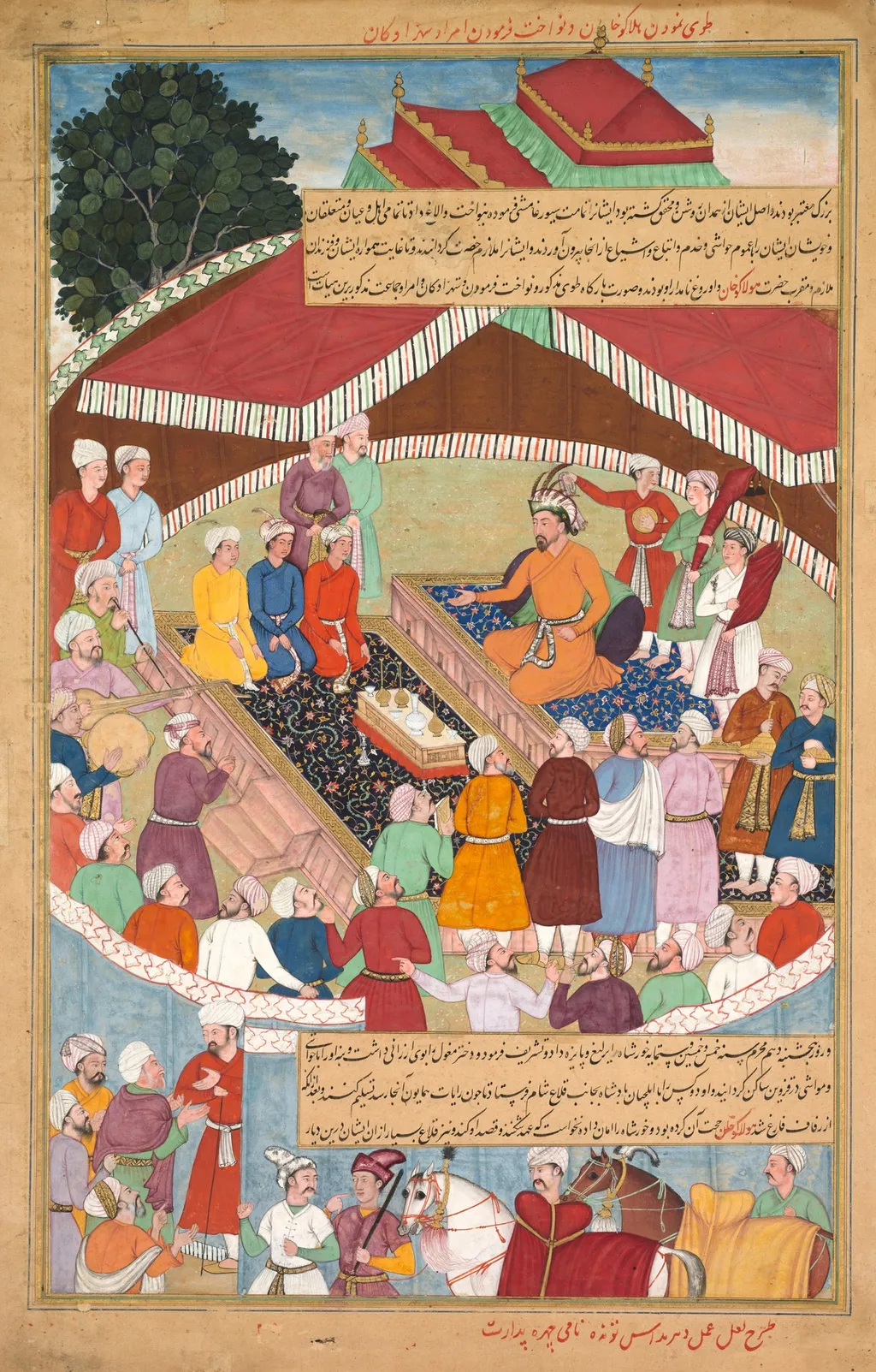
Hulagu Khan giving a feast and dispensing favor upon the amirs and princes, from a Chingiz-nama (Book of Chingiz Khan) of the Jami al-tavarikh (Compendium of Chronicles) is an unspecified painting. It dates from 1600 and is held in the collection of the Cleveland Museum of Art. The work portrays a bustling ceremonial gathering inside an elaborate tent.
About this work
Overview
The composition includes kneeling and standing figures, some bearing gifts or documents, while a horse and riders appear beyond the tent’s entrance.
The work portrays a bustling ceremonial gathering inside an elaborate tent. At its heart sits a figure in an orange robe on an elevated dais, surrounded by attendants in vivid reds, blues, greens and golds. The composition includes kneeling and standing figures, some bearing gifts or documents, while a horse and riders appear beyond the tent’s entrance. Persian calligraphic bands frame the scene along the top and sides.
Subject & Meaning
The central figure is identified as Hulagu Khan, the Mongol ruler, depicted bestowing favors upon amirs and princes. The act of presenting gifts or orders signifies the distribution of imperial patronage and the reinforcement of alliances within the Mongol hierarchy. The surrounding participants, dressed in luxurious court attire, emphasize the ceremony’s political and diplomatic significance.
Technique & Style
Executed in a richly colored palette, the painting combines detailed costume rendering with a flattened spatial arrangement typical of Persian court manuscripts. The use of gold highlights and intricate patterning on textiles reflects the luxury associated with Mongol imperial courts, while the stylized architecture and tree in the background provide a decorative framework rather than realistic depth.
History & Provenance
The image originates from a Chingiz-nama, a biographical chronicle of Genghis Khan, incorporated into the Jami al‑tavarikh, a compendium of histories. The manuscript was produced in the Persianate world, where Mongol and Islamic artistic traditions merged, and it has since been preserved in a museum collection specializing in medieval Islamic art.
Context
Created during a period when Mongol rulers commissioned Persian scribes and painters to record their conquests, the work reflects the cross‑cultural exchange between the nomadic empire and the settled Persian bureaucracy. The depiction of Hulagu Khan in a courtly setting illustrates how Mongol leaders adopted local ceremonial customs to legitimize their authority.
Legacy
As a visual record within a historical manuscript, the painting offers scholars insight into the ceremonial protocols and visual language of Mongol‑Persian courts. Its vivid portrayal of courtly dress and hierarchical interaction continues to inform studies of medieval Eurasian political culture.
Artist & collection

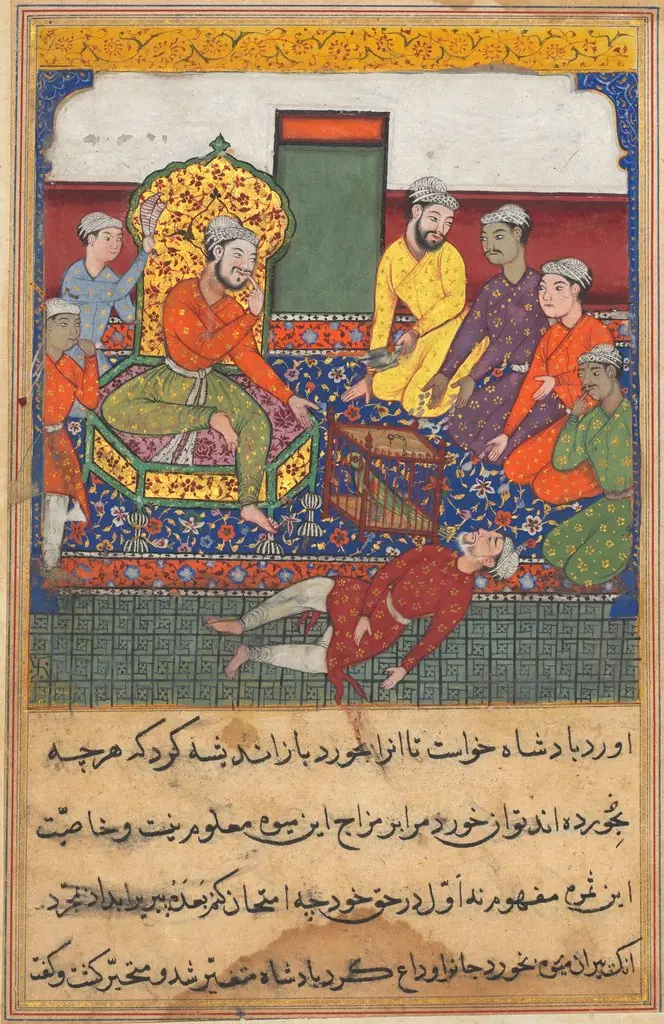 The old man eats of the fruit of the Tree of Life, but drops dead, from a Tuti-nama (Tales of a Parrot): Ninth Night
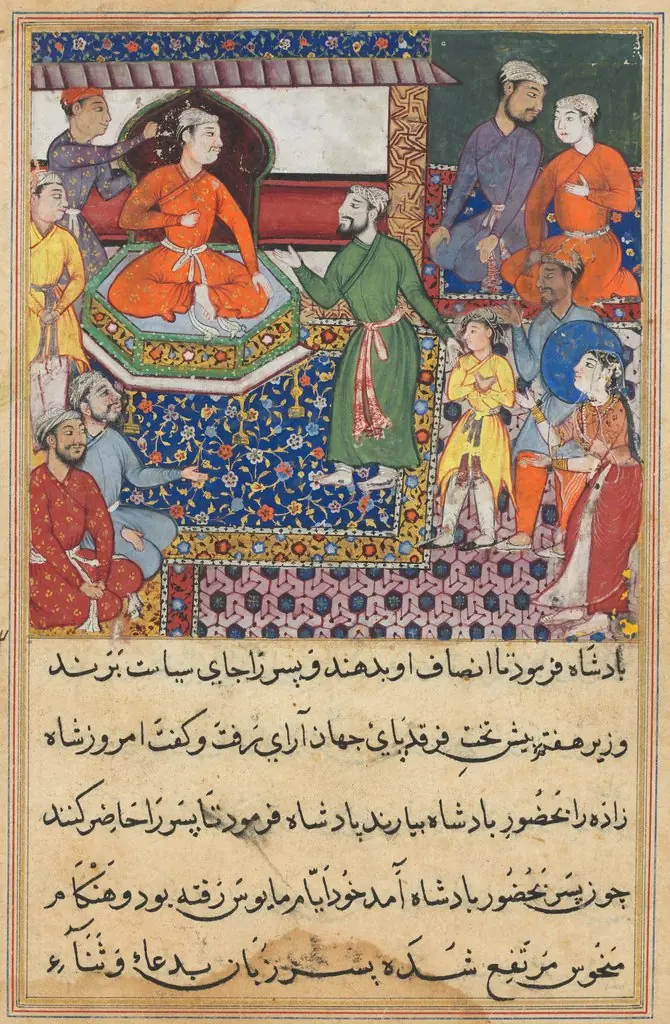 The handmaiden again pleads for the death of the prince, from a Tuti-nama (Tales of a Parrot): Eighth Night
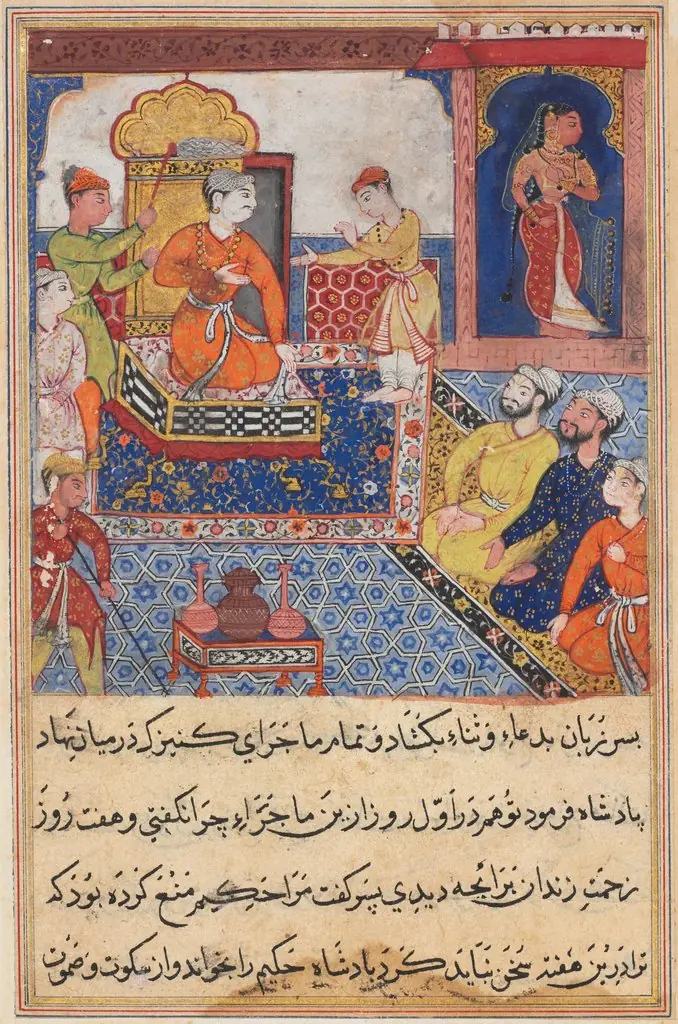 The young prince recounts his experiences to his father, the king, from a Tuti-nama (Tales of a Parrot): Eighth Night
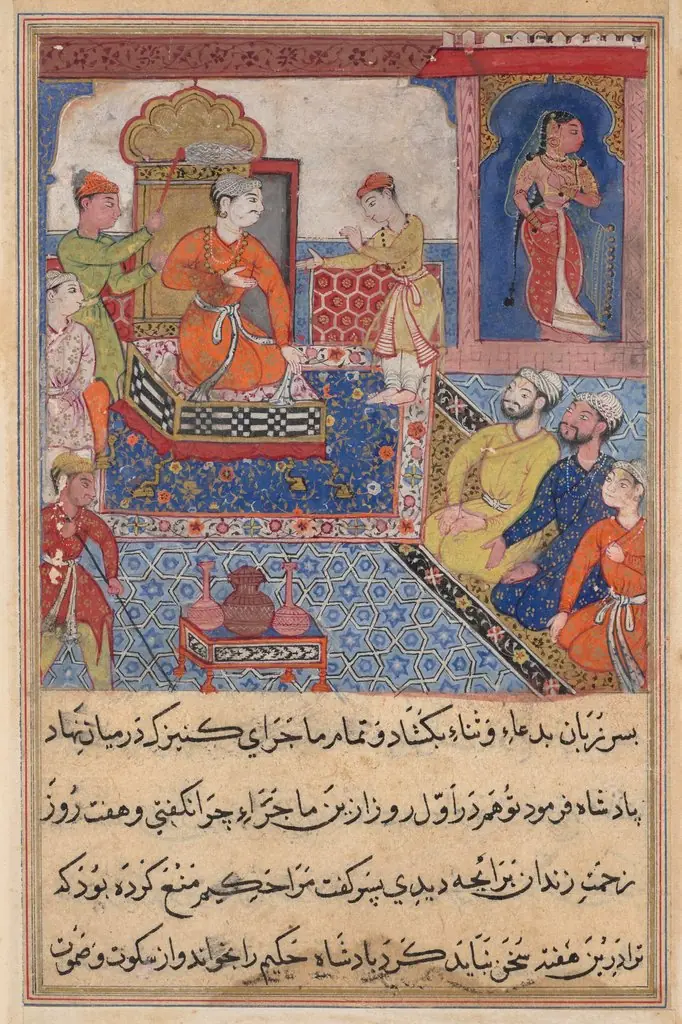 Page from Tales of a Parrot (Tuti-nama): text page
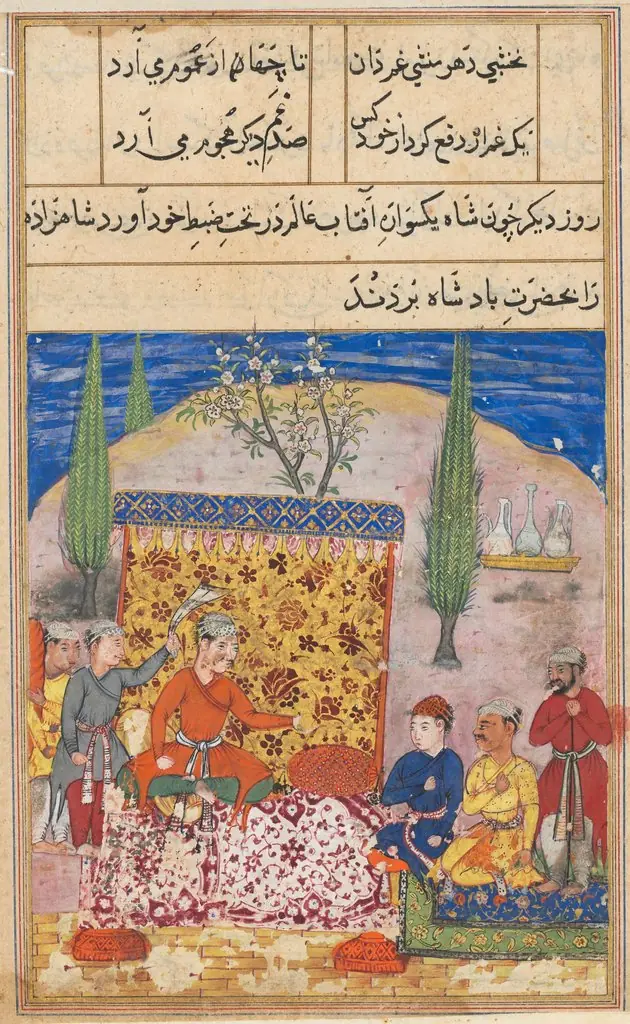 The young prince is presented to the king, his father, by his teacher, but refuses to speak, from a Tuti-nama (Tales of a Parrot): Eighth Night