Artwork
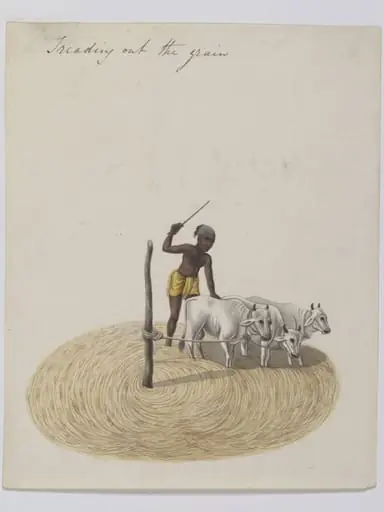
Treader out of grain
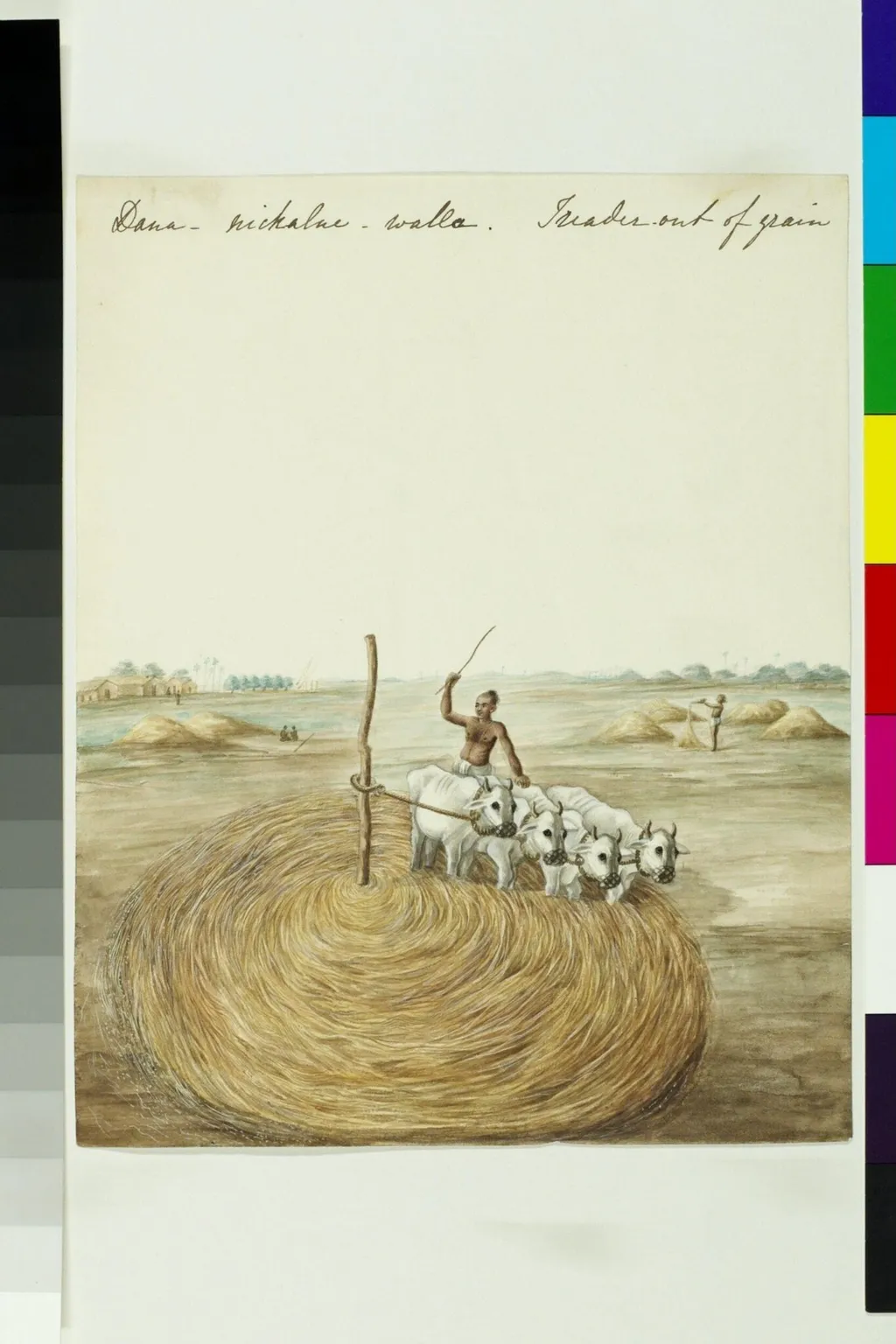
Treader out of grain is a paint painting by the Realist artist Unknown. It dates from 1826 and is held in the collection of the Victoria and Albert Museum.
About this work
Overview
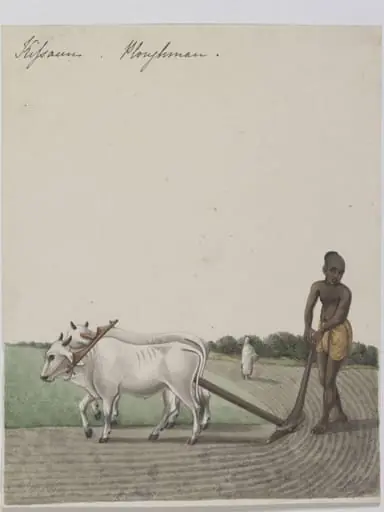
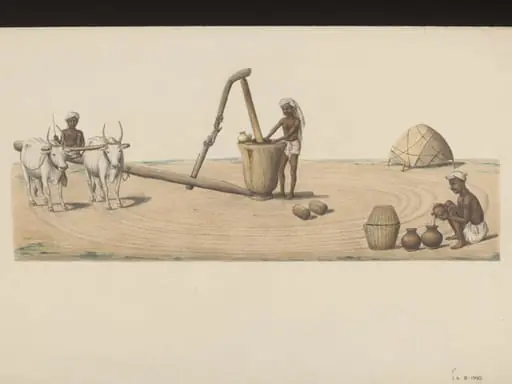
This watercolor portrays a rural labor scene in which a farmer directs four white oxen as they tread upon harvested grain to separate the kernels from husks.
This watercolor portrays a rural labor scene in which a farmer directs four white oxen as they tread upon harvested grain to separate the kernels from husks. Created as part of a series documenting traditional occupations, the work captures a moment of agricultural routine with quiet precision. Its composition centers on the circular motion of the animals and the solitary figure guiding them, set against a sparse, open landscape.
Subject & Meaning
The image illustrates a pre-industrial method of threshing, emphasizing the physical labor required to process staple crops. The shirtless farmer, wielding a stick, embodies the direct, unmediated relationship between human effort and sustenance. The absence of machinery underscores the endurance of manual techniques in agrarian life, presenting work not as spectacle but as an embedded rhythm of daily existence.
Technique & Style
Rendered in watercolor, the painting employs muted earth tones and soft washes to convey texture and light. The oxen’s fur and the dry ground are suggested through layered, delicate strokes rather than detailed rendering. The flat, unmodeled background and minimal spatial depth reflect a deliberate restraint, aligning with observational traditions rather than dramatic Romantic idealization, despite the pastoral setting.
History & Provenance
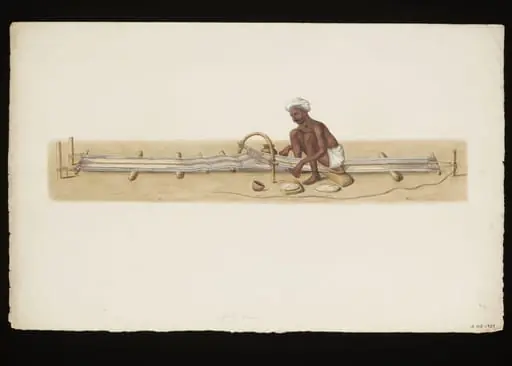
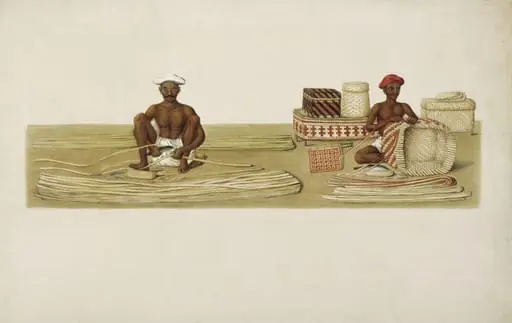
This work belongs to a set of thirty-five watercolors commissioned to document regional trades, likely produced in early 19th-century India under colonial patronage. Such series were often compiled for administrative or ethnographic purposes, preserving visual records of local practices. Its origin remains tied to British colonial documentation efforts, though the artist’s identity is unrecorded.
Context
In early 19th-century South Asia, threshing by animal traction remained widespread despite technological advances elsewhere. This image reflects a practice rooted in centuries-old agrarian systems, preserved even as colonial powers introduced new economic structures. The painting’s focus on labor without embellishment suggests an intent to catalog, not romanticize, indigenous methods of food production.
Legacy
As part of a broader ethnographic archive, this watercolor contributes to historical records of pre-modern labor in South Asia. Though not widely exhibited, such works inform contemporary studies of rural economies and material culture. Its quiet documentation offers a counterpoint to more stylized depictions of rural life, preserving the unadorned reality of subsistence work.
Artist & collection

 Domestic Scene
 Giacomo and Cardinal Marco, investing Andrea, Abbot of San Zeno, with his Benefice
 The Nymph of Fontainebleau
 Portrait of a Woman
 Madonna and Child with Saints in the Enclosed Garden
 Venus and Minerva
 Family Group of Four on Sofa
 Wall painting from Room H of the Villa of P. Fannius Synistor at Boscoreale