Artwork
The manner of treading out the Corn
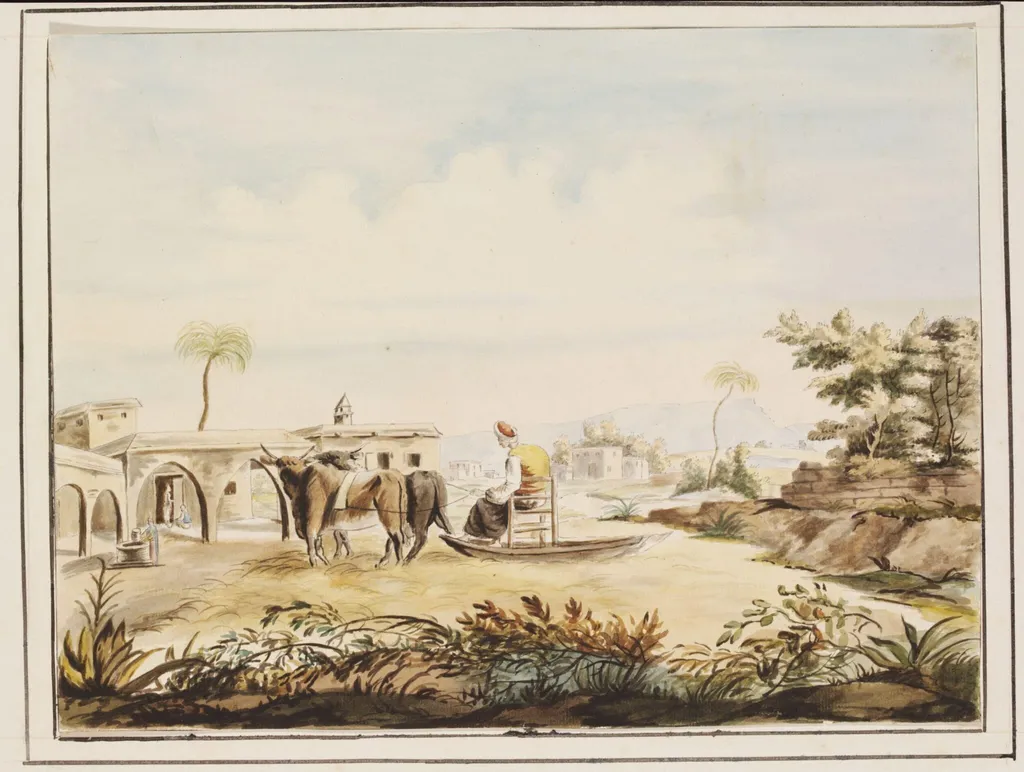
The manner of treading out the Corn is a watercolor work on paper by the Romanticist artist Unknown. It dates from 1825 and is held in the collection of the Victoria and Albert Museum.
About this work
Overview
This 1825 watercolour depicts a rural threshing scene in which oxen tread grain on a wooden platform, guided by a figure seated on a boat-like structure.
This 1825 watercolour depicts a rural threshing scene in which oxen tread grain on a wooden platform, guided by a figure seated on a boat-like structure. Executed in soft, translucent washes, the work captures a quiet moment of agricultural labor. Its attribution remains uncertain, though early suggestions linked it to civil engineer J. S. Perring, possibly reflecting his interest in practical mechanics and land use.
Subject & Meaning
The scene illustrates a traditional method of separating grain from husks, using animal power rather than mechanical tools. The presence of a turbaned figure and palm trees suggests a South Asian or Mediterranean setting, though the exact location is unconfirmed. The composition emphasizes harmony between human labor and natural rhythms, avoiding dramatic tension in favor of steady, repetitive motion.
Technique & Style
The artist employs delicate watercolor washes to create a hazy, atmospheric effect, with muted earth tones and soft outlines. Light is diffused evenly across the scene, enhancing the sense of stillness. The background village is rendered with minimal detail, allowing the central figures and machinery to dominate. The medium’s transparency lends the image a contemplative, almost ethereal quality.
History & Provenance
The work’s early ownership is undocumented, and its connection to J. S. Perring is speculative, based on thematic similarities to his documented interests in infrastructure and agriculture. It entered institutional collections in the 20th century, likely through private donations or estate sales. No exhibition history or contemporary reviews are known, leaving its reception largely unrecorded.
Context
Produced during the height of British Romanticism, the image aligns with a broader fascination with rural life and pre-industrial labor. While contemporaries like Constable and Turner focused on landscapes, this work narrows its lens to the mechanics of subsistence farming. Its quiet tone contrasts with the era’s industrializing narratives, offering a glimpse into enduring agrarian practices.
Legacy
The watercolour remains a modest but evocative record of pre-mechanized agriculture, valued for its observational clarity rather than artistic innovation. It contributes to the visual archive of 19th-century rural economies, particularly in regions where such methods persisted into the modern era. Its quiet dignity continues to inform studies of labor, material culture, and regional daily life.
Artist & collection

 Domestic Scene
 Giacomo and Cardinal Marco, investing Andrea, Abbot of San Zeno, with his Benefice
 The Nymph of Fontainebleau
 Portrait of a Woman
 Madonna and Child with Saints in the Enclosed Garden
 Venus and Minerva
 Family Group of Four on Sofa
 Wall painting from Room H of the Villa of P. Fannius Synistor at Boscoreale
 View of the Sea Castle (Sidon)
 `Sakia or Persian wheel Nubia'
 An Engine for raising Water from the Nile
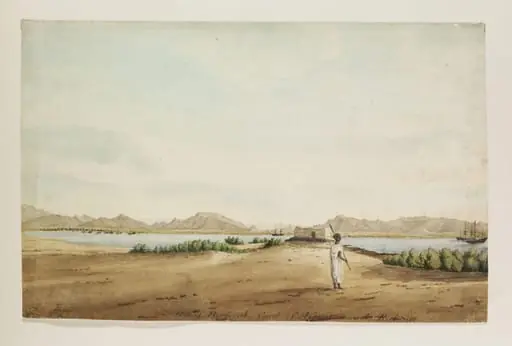 Port of Berberah. Coast of Africa near the Red Sea
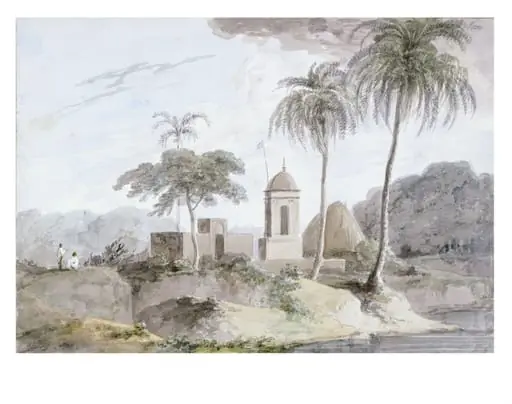 View near Bandell, India
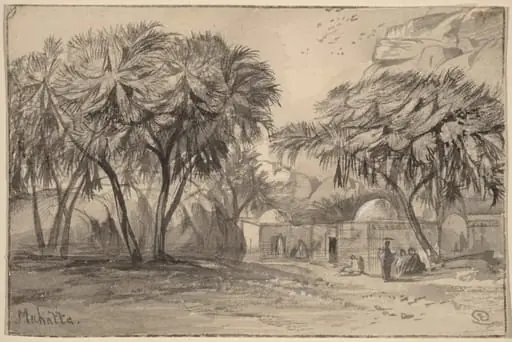 Mahatta
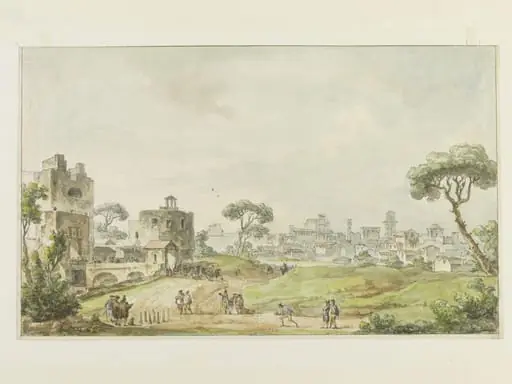 Untitled
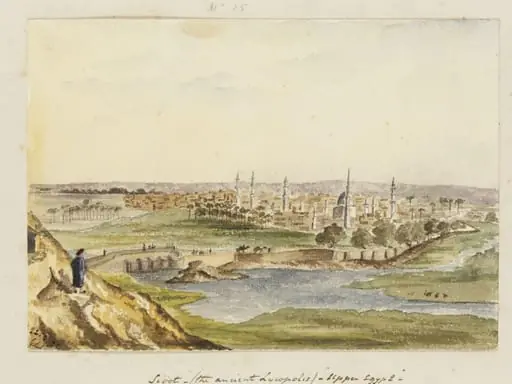 `Sioot - (the ancient Lycopolis.) - "Upper Egypt." from the Stabl-Antar Hill'
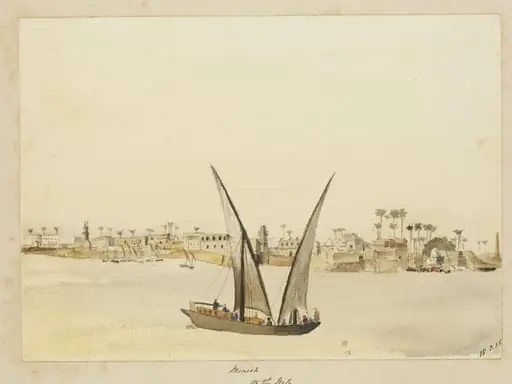 `Minieh On the Nile'
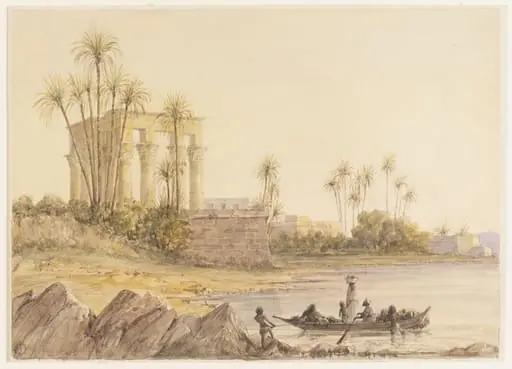 Landing Place. Philoe
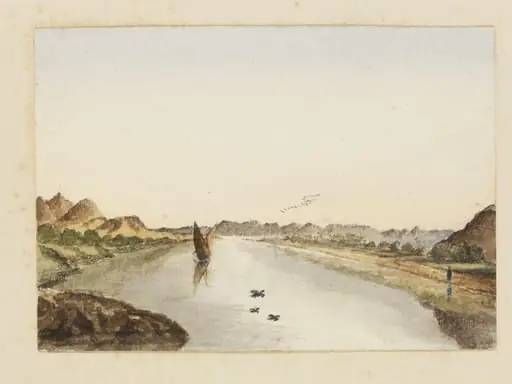 View of the Nile
 A Scene in the Desert Wady Gharendl