Artwork
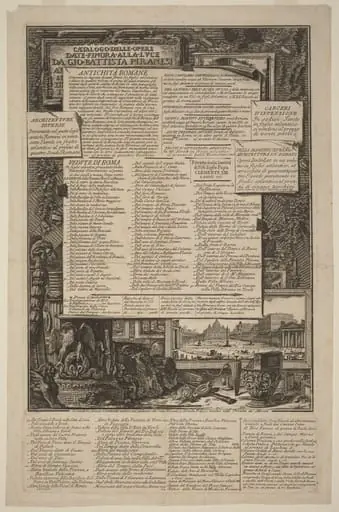
Tromp l'oeil composition showing overlapping drawings and engravings, a page from a calendar, some coins and a franked envelope addressed to Monsieur Antoine Sielli, Florence
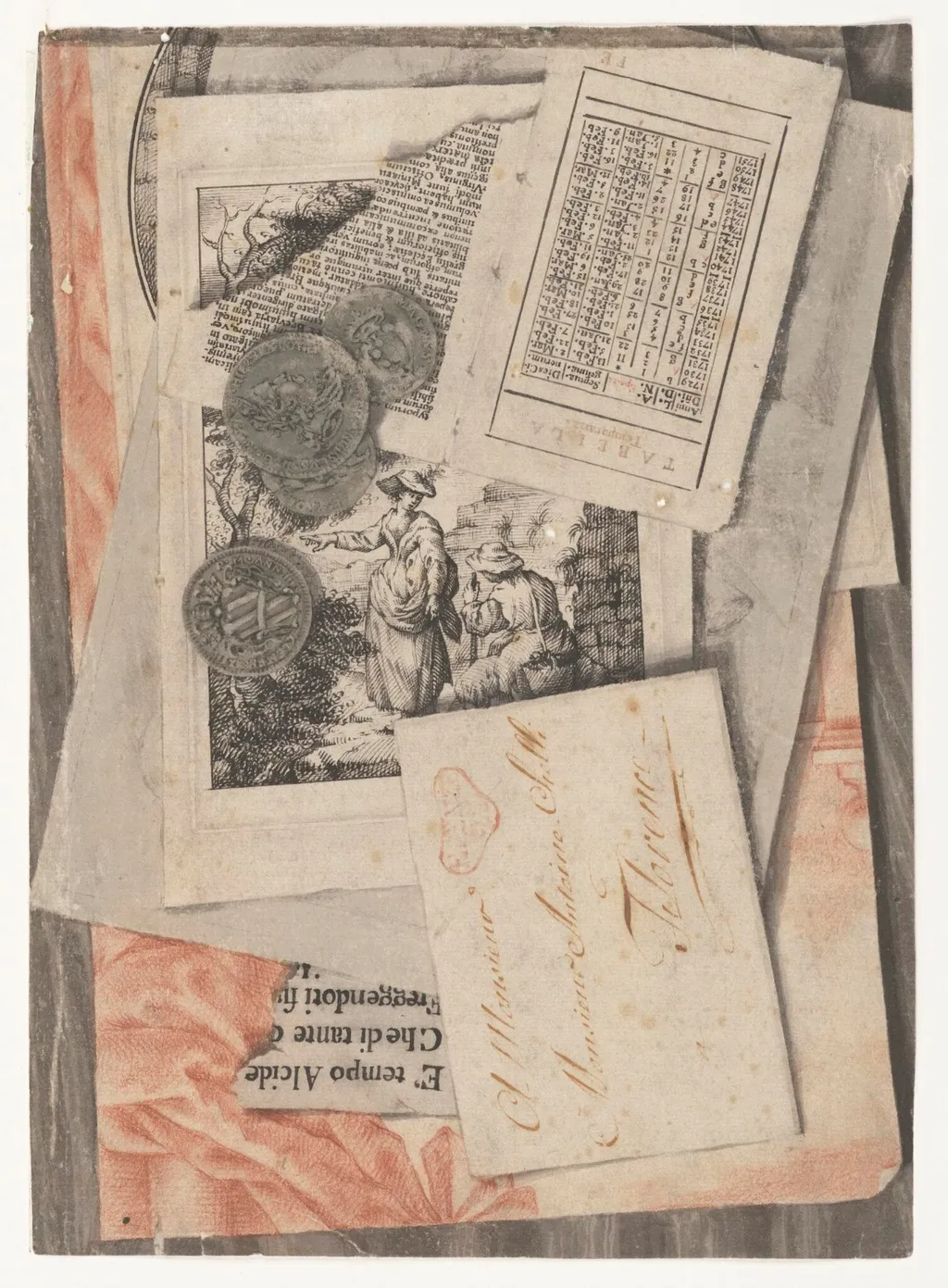
Tromp l'oeil composition showing overlapping drawings and engravings, a page from a calendar, some coins and a franked envelope addressed to Monsieur Antoine Sielli, Florence is a drawing by Unknown. It dates from 1750 and is held in the collection of the Victoria and Albert Museum. This drawing, created around 1750, presents a meticulously rendered illusion of a disordered desktop surface.
About this work
Overview
The effect mimics accumulated ephemera—overlapping, slightly crumpled, and worn—suggesting the quiet residue of daily life rather than a staged arrangement.
This drawing, created around 1750, presents a meticulously rendered illusion of a disordered desktop surface. Rendered in pen and ink, wash, and red chalk, it assembles fragments of paper, coins, and printed matter into a single compositional whole. The effect mimics accumulated ephemera—overlapping, slightly crumpled, and worn—suggesting the quiet residue of daily life rather than a staged arrangement.
Subject & Meaning
The composition includes a franked envelope addressed to Monsieur Antoine Sielli of Florence, a torn calendar page, coins, and two small black-and-white sketches. These elements, though mundane, are arranged to evoke the traces of correspondence, timekeeping, and personal economy. The specificity of the recipient’s name and location implies a real-world connection, grounding the illusion in lived experience rather than pure fantasy.
Technique & Style
The artist employed pen and ink with subtle washes to simulate tonal variations in paper and ink, while red chalk added warmth to the envelope’s seal and margins. Layering and partial obscuration of elements create depth, mimicking physical overlap. The restrained palette—faded browns, grays, and muted red—enhances the sense of aged materials, reinforcing the illusion of accumulated, discarded items.
History & Provenance
The drawing is documented as part of the Victoria and Albert Museum’s collection, though its origin prior to acquisition remains unclear. Its focus on a Florentine recipient suggests possible ties to Italy, but the artist’s identity has not been firmly established. The work’s survival implies it was valued as a curio or study, preserved for its technical ingenuity rather than its narrative content.
Context
In mid-18th-century Europe, trompe l’oeil drawings often served as demonstrations of skill, particularly in rendering texture and spatial illusion. This piece aligns with a tradition of collecting and arranging ephemera, reflecting contemporary fascination with the material culture of everyday life. Unlike grand historical scenes, it elevates the overlooked—letters, coins, calendars—as worthy of careful observation.
Legacy
The drawing endures as an example of quiet virtuosity, where technical precision serves not spectacle but intimacy. It anticipates later artistic interests in found objects and the aesthetics of decay, offering a precursor to modern assemblage practices. Its quiet realism continues to invite viewers to consider the significance embedded in ordinary, transient things.
Artist & collection

 Domestic Scene
 Giacomo and Cardinal Marco, investing Andrea, Abbot of San Zeno, with his Benefice
 The Nymph of Fontainebleau
 Portrait of a Woman
 Madonna and Child with Saints in the Enclosed Garden
 Venus and Minerva
 Family Group of Four on Sofa
 Wall painting from Room H of the Villa of P. Fannius Synistor at Boscoreale
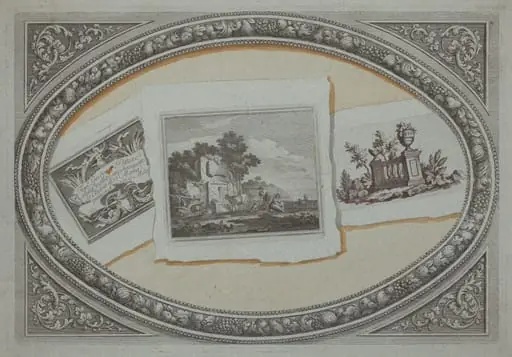 Trompe l'Oeil: Prints with Londonio's Calling Card, Using Original Copperplates
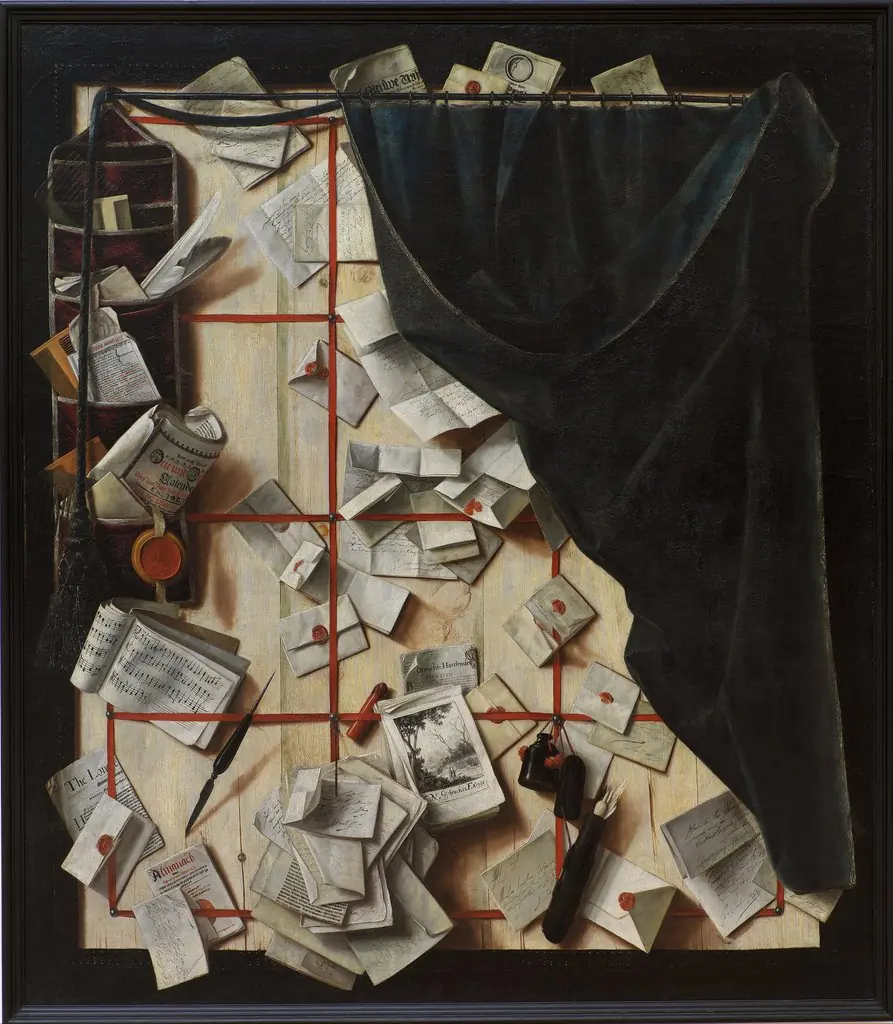 Trompe l'oeil. Board Partition with Letter Rack and Music Book
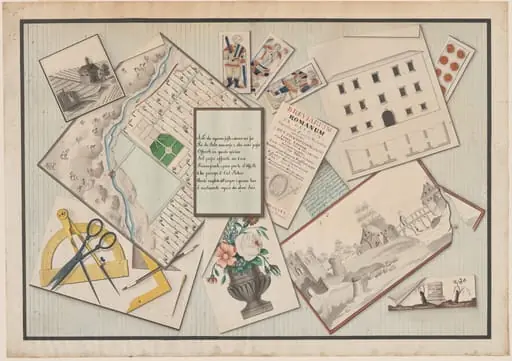 Trompe l'oeil
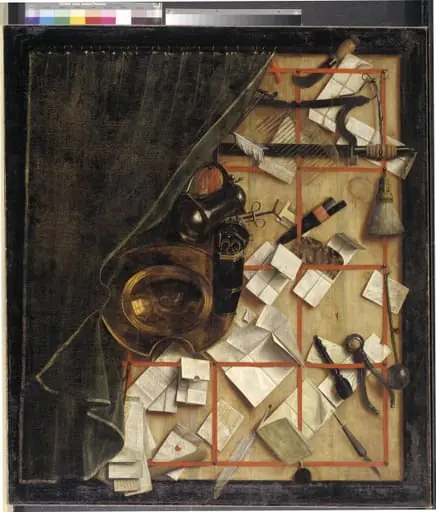 Trompe l'oeil. Letter Rack with a Barber-Surgeon's Instruments
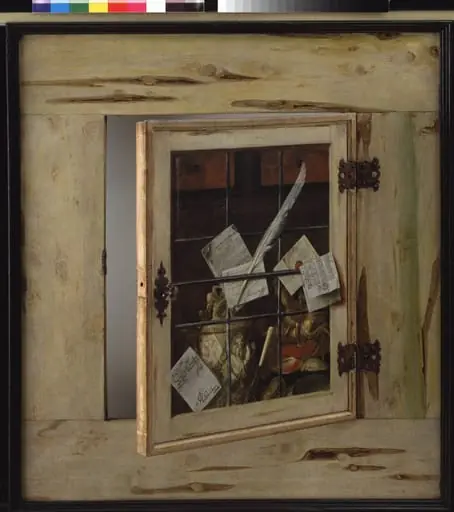 Trompe l'Oeil. A Cabinet of Curiosities with an Ivory Tankard
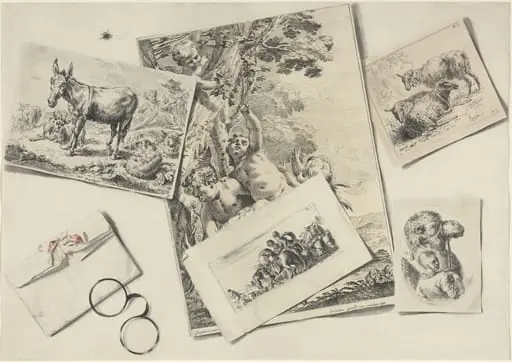 Trompe l'Oeil: Old Prints, a Torn Envelope with Horn-rimmed Glasses, and a Housefly
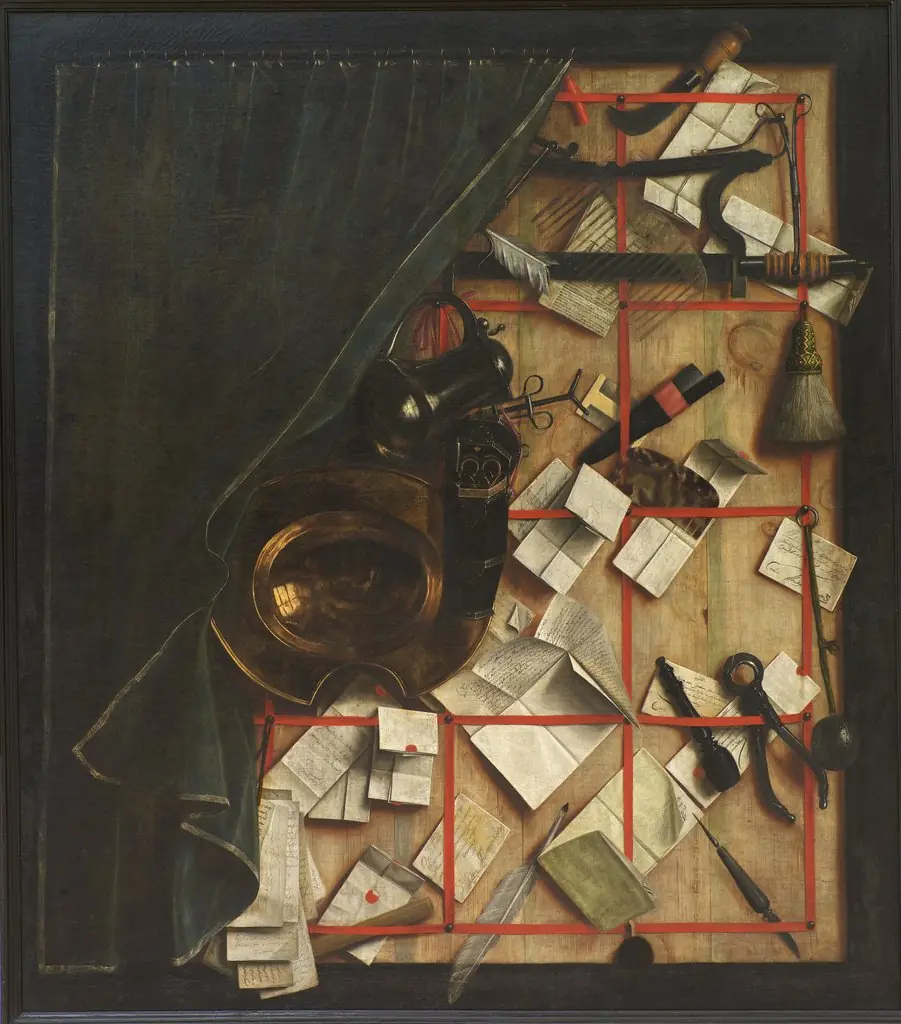 Trompe l'oeil. Letter Rack with a Barber-Surgeon's Instruments
 Catalogo delle Opere Date Finora Alla Lvce Da Gio Battista Piranesi