Artwork
Trompe l'oeil
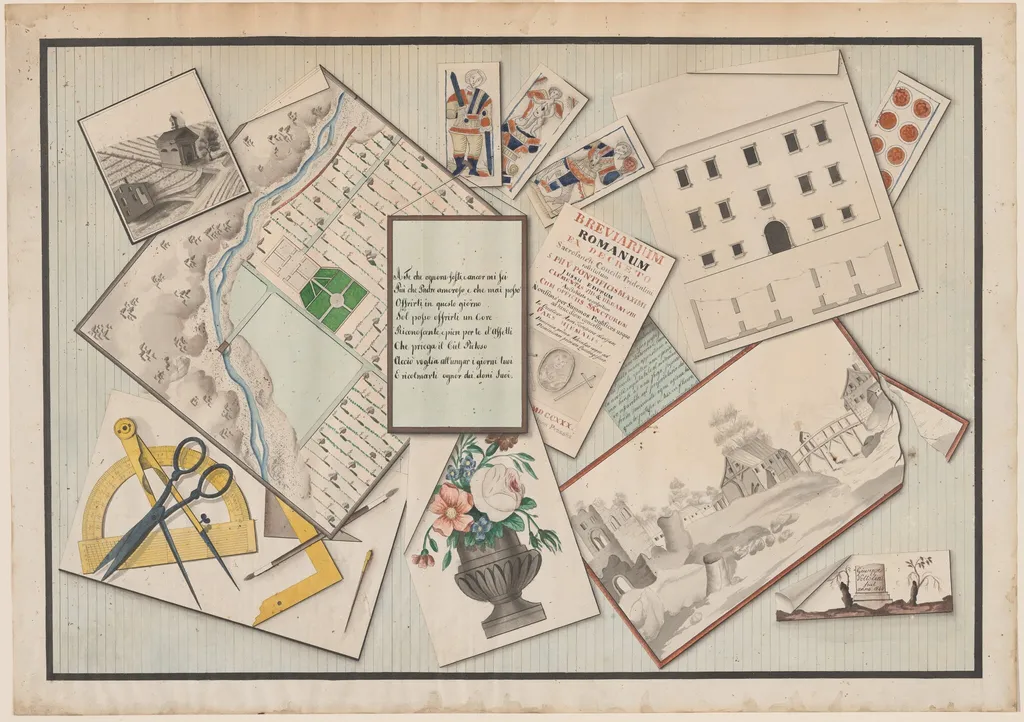
Trompe l'oeil is an ink drawing by the Romanticist artist Giuseppe Voltolini. It dates from 1846 and is held in the collection of the National Gallery of Art.
About this work
Overview
Giuseppe Voltolini’s 1846 work titled Trompe l’oeil is a watercolor drawing enhanced with pen and ink on laid paper. The piece presents a flat, seemingly two‑dimensional surface populated by a variety of cut‑out elements that mimic the appearance of a collage, inviting the viewer to question what is real and what is illusion.
Subject & Meaning
The composition assembles a town map, a pair of oversized yellow scissors, a handwritten page, a vase with a single flower, and miniature depictions of buildings and ships. The dominant scissors appear poised to sever the entire tableau, while the barely legible script at the centre suggests a fragment of poetry or a personal note, adding a narrative layer to the visual play.
Technique & Style
Voltolini employs watercolor glazing to achieve muted tones of gray, blue, and yellow, punctuated by occasional red and green accents. Pen and ink outlines define the cut‑out forms, reinforcing the illusion of pasted objects against a light background. The careful layering creates a trompe‑l’oeil effect that blurs the boundary between drawing and three‑dimensional assemblage.
History & Provenance
Created in 1846, the drawing reflects mid‑nineteenth‑century interest in optical deception and the decorative arts. While specific ownership records are scarce, the work has been referenced in studies of Italian watercolor practice and remains associated with Voltolini’s modest output of experimental drawings.
Context
During the 1840s, European artists explored the interplay of realism and illusion, often borrowing techniques from printmaking and decorative collage. Voltolini’s Trompe l’oeil aligns with this trend, echoing contemporary fascination with visual tricks and the burgeoning popularity of watercolor as a medium for quick, expressive studies.
Artist & collection


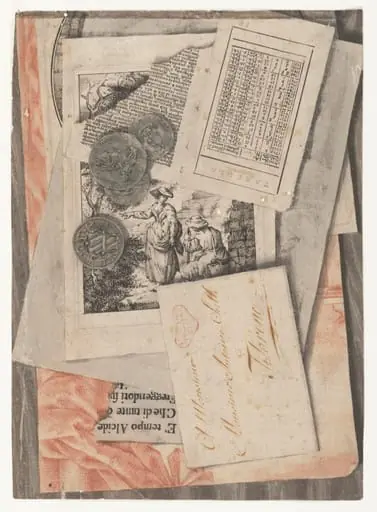 Tromp l'oeil composition showing overlapping drawings and engravings, a page from a calendar, some coins and a franked envelope addressed to Monsieur Antoine Sielli, Florence
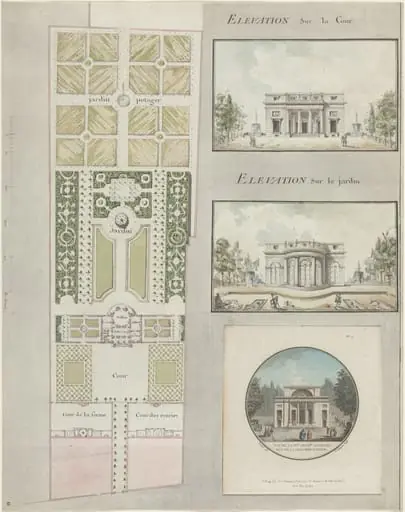 Project for the House and Gardens of Mlle. Guimard
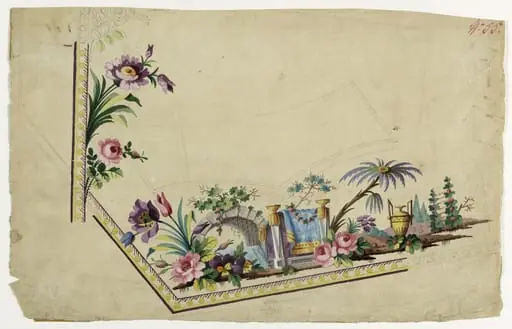 Paysage à pont en pierre, projets de broderies de gilet, XVIIIème siècle
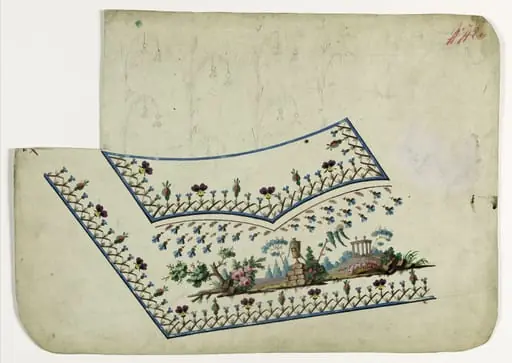 Paysage avec urne et ruine antique, projets de broderies de gilet, XVIIIème siècle
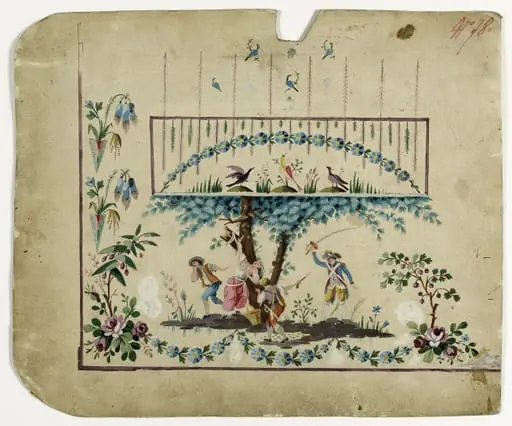 Gilet décor Louis Gillet délivrant une paysanne, projets de broderies de gilet, XVIIIème siècle
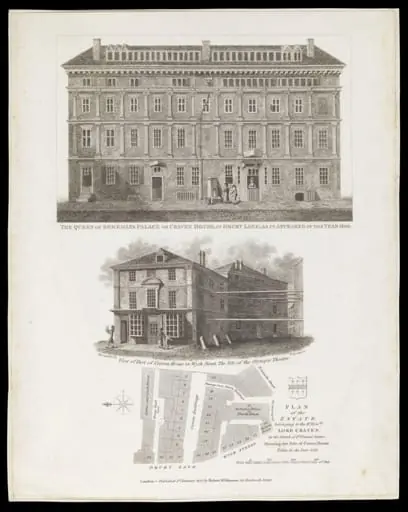 H Beard Print Collection
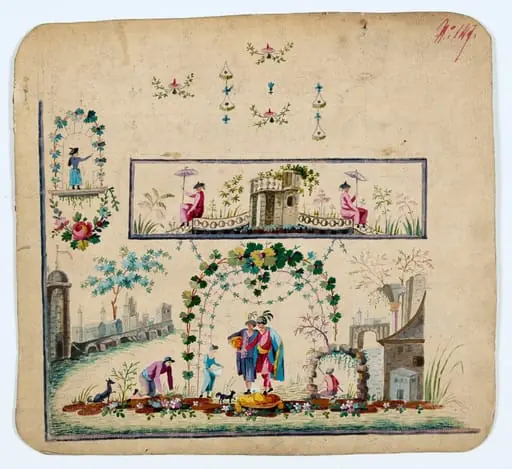 Gilet avec personnages traversant la rivière, projets de broderies de gilet, XVIIIème siècle
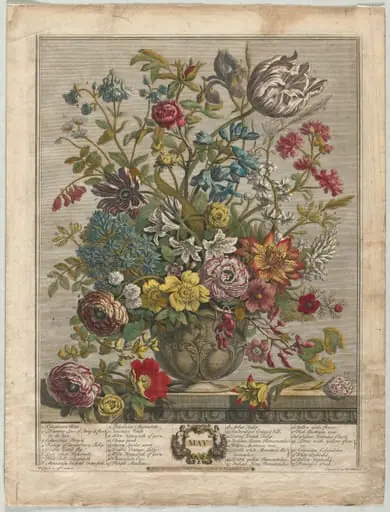 Twelve Months of Flowers: May
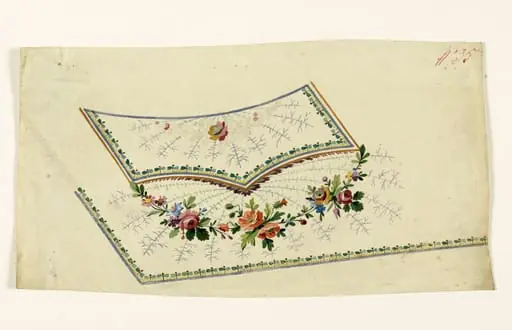 Composition avec guirlandes de fleurs multicolores, motifs rayonnants de branches et frises stylisées, projets de broderies de gilet, XVIIIème siècle
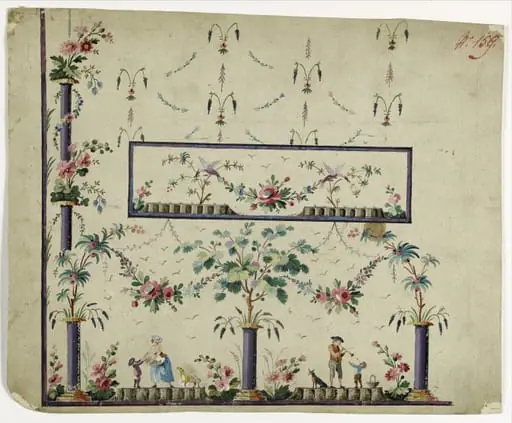 Gilet décor couple avec enfants, projets de broderies de gilet, XVIIIème siècle
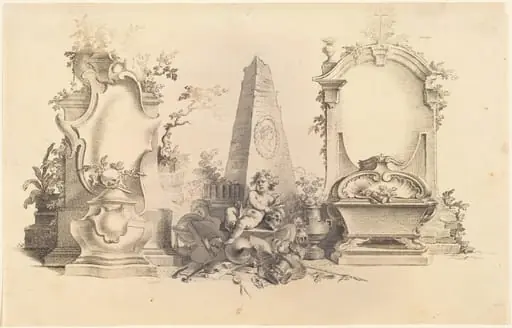 Cartouche Moderne with Emblems of Death
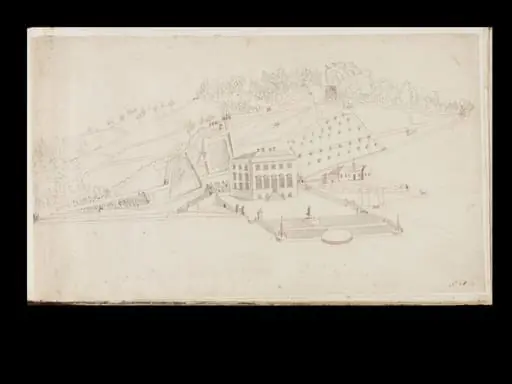 View of Painswick House and Gardens, Gloucestershire