Artwork
Tronende Maria en Christus, met Sint-Hiëronymus, Johannes de Doper en een kartuizer monnik
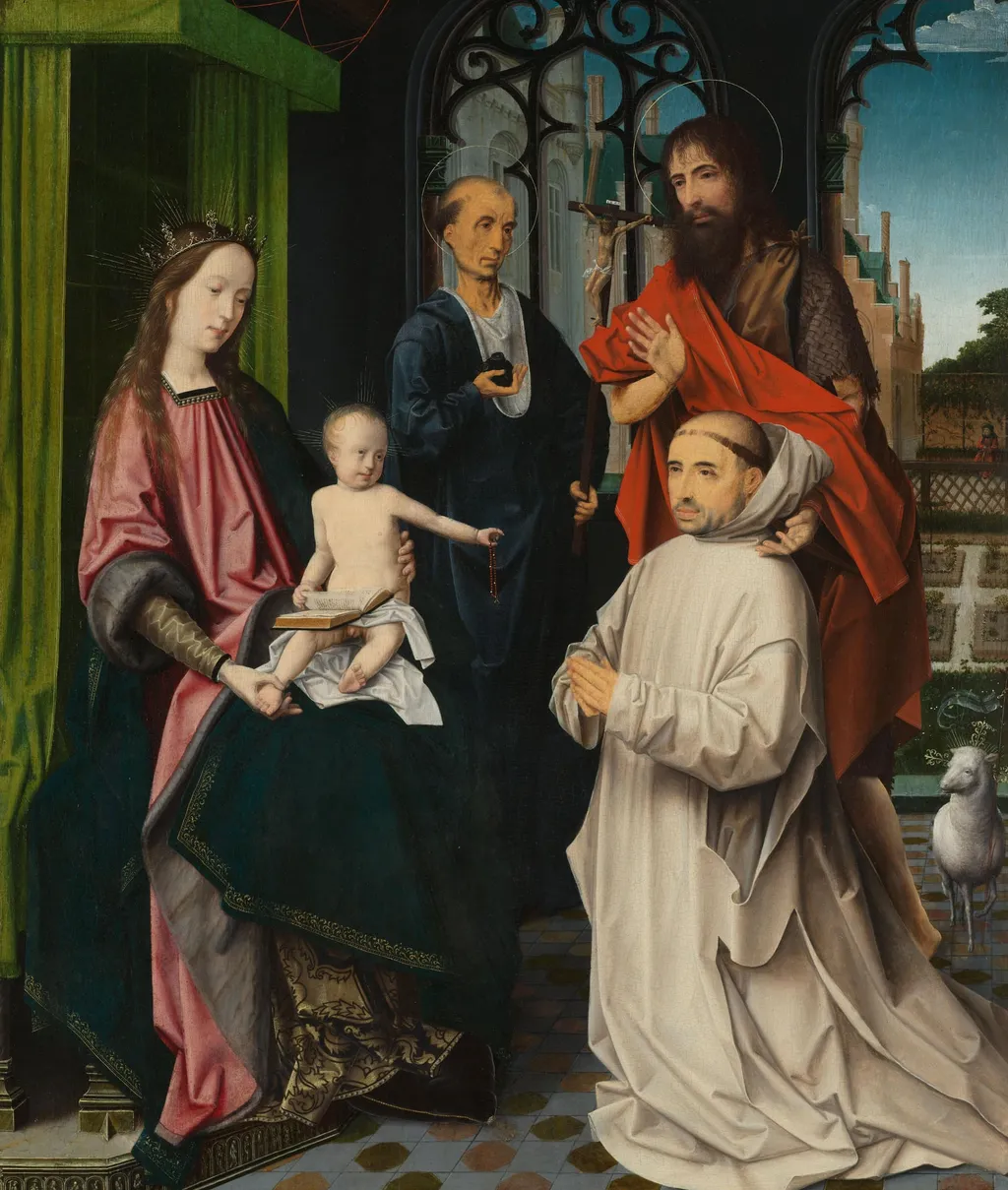
Tronende Maria en Christus, met Sint-Hiëronymus, Johannes de Doper en een kartuizer monnik is an unspecified painting by the Northern Renaissance artist Unknown. It dates from 1510 and is held in the collection of the Rijksmuseum. This devotional panel depicts the Virgin Mary seated on a gilded throne with the Christ Child beside her.
About this work
Overview
Flanking the central group are Saint John the Baptist and Saint Jerome, both figures associated with solitary contemplation.
This devotional panel depicts the Virgin Mary seated on a gilded throne with the Christ Child beside her. Before them, a Carthusian monk kneels in prayer, receiving a rosary from the infant Jesus. Flanking the central group are Saint John the Baptist and Saint Jerome, both figures associated with solitary contemplation. The composition is structured to guide the viewer’s focus toward the act of prayer and spiritual surrender.
Subject & Meaning
The scene centers on the monk’s intimate encounter with the divine, symbolizing the Carthusian ideal of personal devotion. Saint John the Baptist, as a herald of Christ, and Saint Jerome, a scholar and ascetic, serve as spiritual intermediaries. Their presence reinforces the monastic values of solitude, prayer, and scriptural study. The rosary, offered by Christ, signifies the repetitive, meditative prayer central to Carthusian spiritual practice.
Technique & Style
The painting employs fine brushwork and rich, luminous pigments to render textures of fabric, gold leaf, and skin with quiet precision. Figures are arranged in a hierarchical yet naturalistic manner, with soft modeling and delicate facial expressions. The background remains minimal, avoiding distraction, while the throne’s gilded surface reflects light to elevate the sacred figures above the earthly realm of the kneeling monk.
History & Provenance
Created for a Carthusian monastery, likely in the Low Countries during the late 15th century, the painting was intended for private devotion within the monks’ individual cells. Its small scale and intimate subject suggest it was used in personal prayer rather than public liturgy. The work remained within monastic contexts for centuries before entering a public collection, preserving its original devotional purpose.
Context
The Carthusian Order emphasized extreme solitude, with monks spending most of their days in silence and prayer within individual cells. This painting reflects their spiritual priorities: contemplation, scriptural engagement, and Marian devotion. The inclusion of Jerome, who translated the Bible in isolation, and John the Baptist, who lived in the desert, directly mirrors the monks’ own ascetic lifestyle and religious ideals.
Legacy
As a representative of Northern Renaissance devotional art, the painting exemplifies how religious communities commissioned works to reinforce their specific spiritual disciplines. Its quiet intensity and focus on inner piety influenced later monastic imagery. Today, it stands as a testament to the enduring power of personal prayer in medieval religious life, preserved as a cultural artifact of contemplative tradition.
Artist & collection

 Domestic Scene
 Giacomo and Cardinal Marco, investing Andrea, Abbot of San Zeno, with his Benefice
 The Nymph of Fontainebleau
 Portrait of a Woman
 Madonna and Child with Saints in the Enclosed Garden
 Venus and Minerva
 Family Group of Four on Sofa
 Wall painting from Room H of the Villa of P. Fannius Synistor at Boscoreale
 The Adoration of the Magi
 Saint Anne with the Christ Child, the Virgin, and Saint John the Baptist
 The Nativity
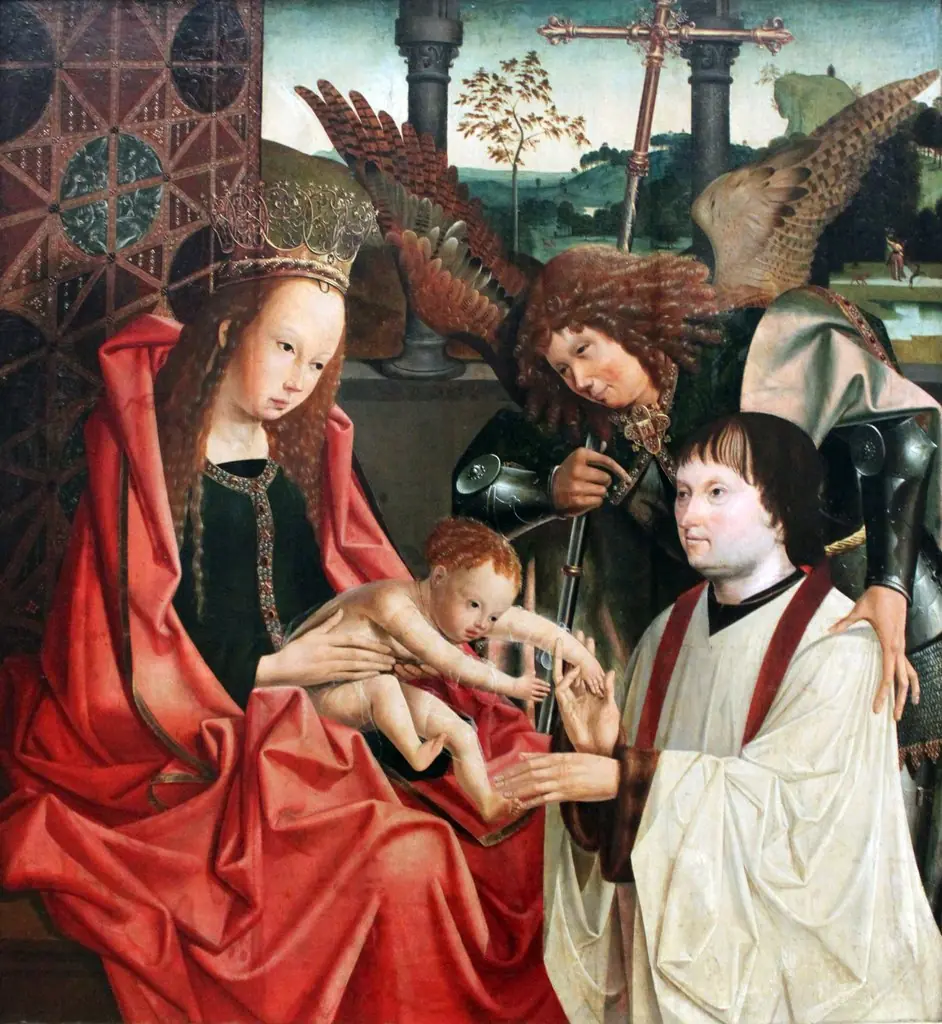 Maria with the child, the Archangel Michael and a donor
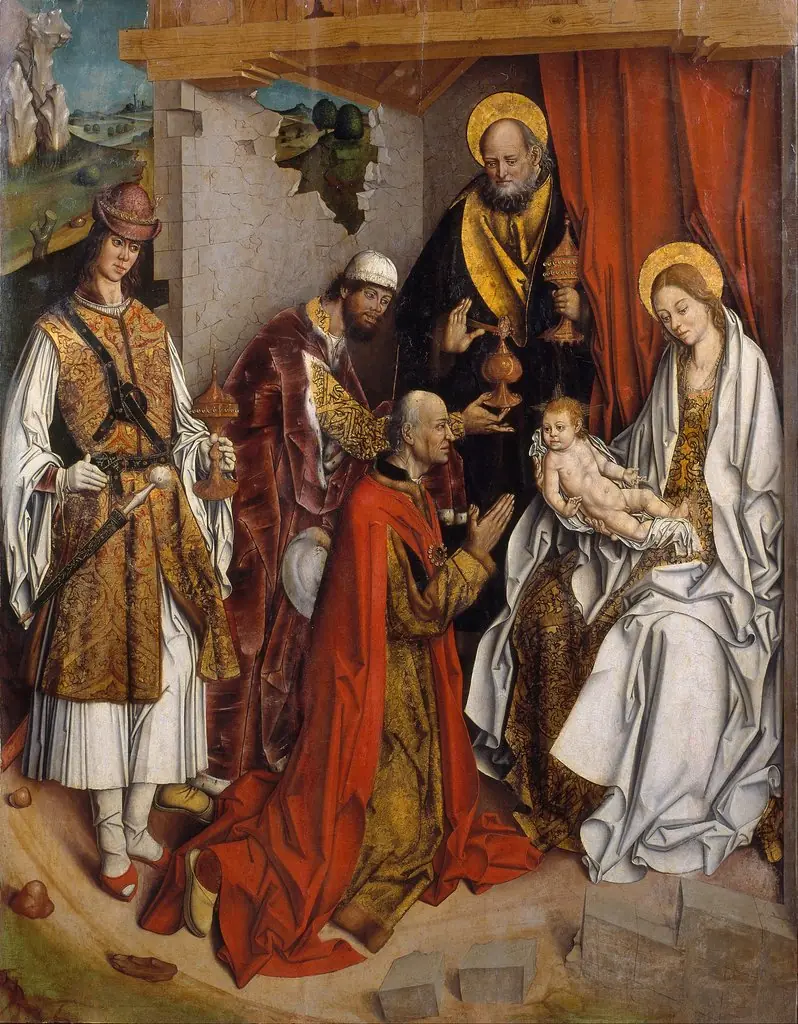 Epiphany
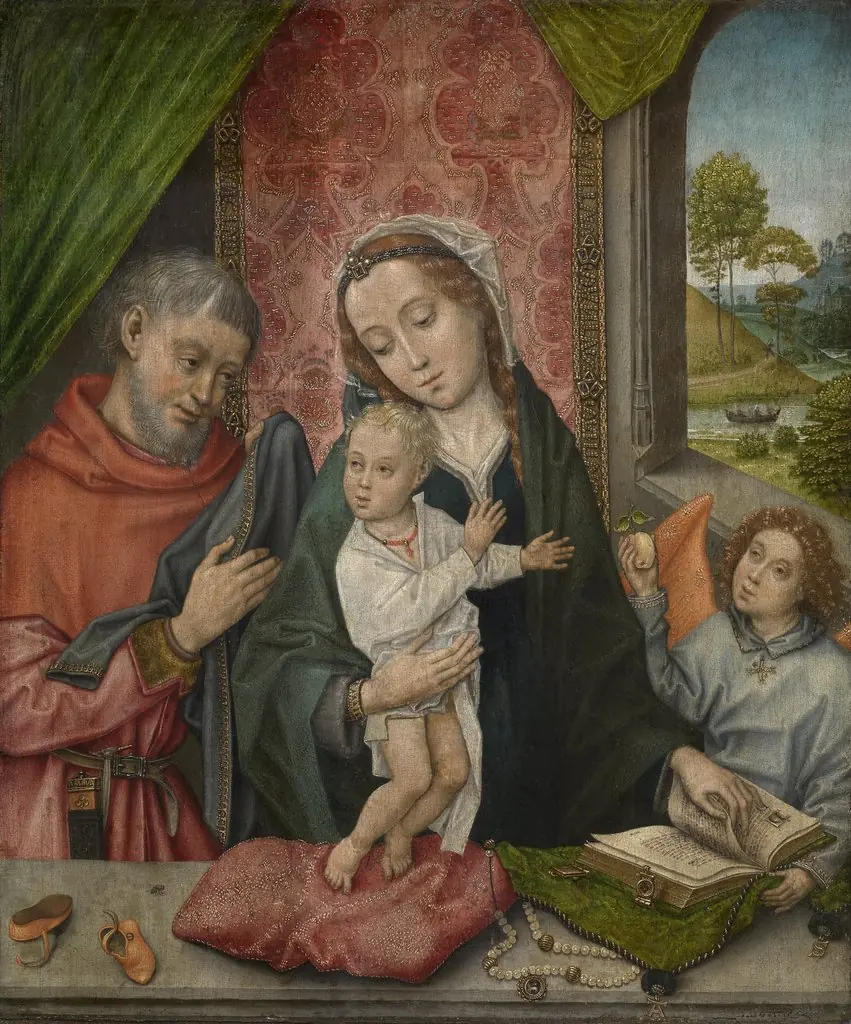 The Holy Family with an Angel
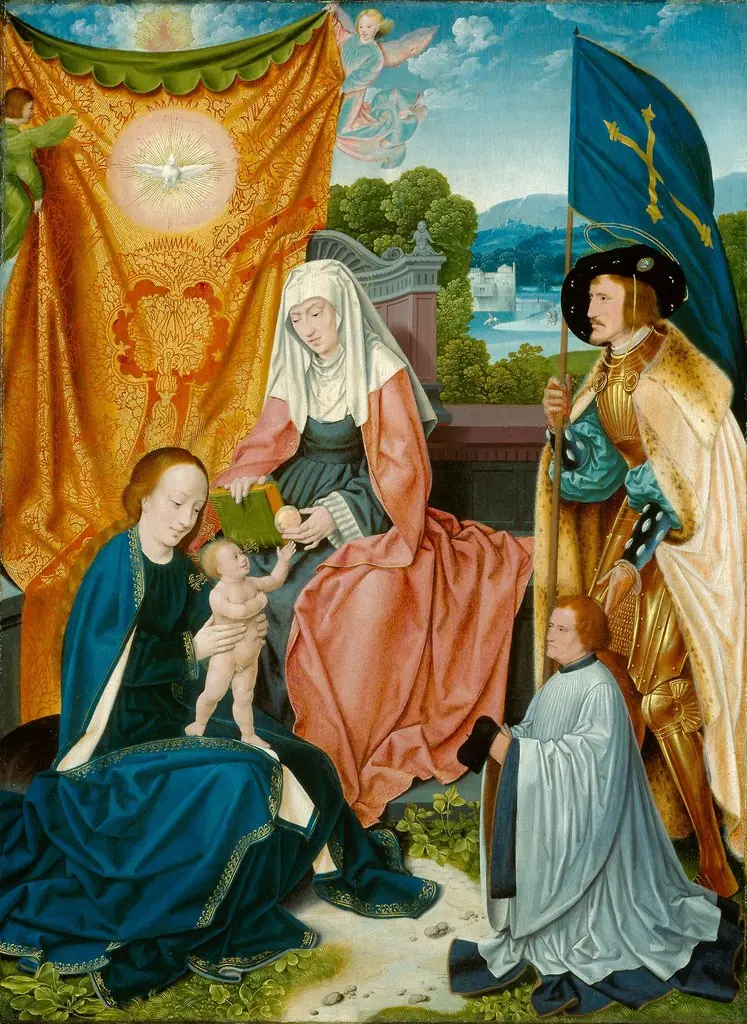 Virgin and Child with Saint Anne, Saint Gereon, and a Donor
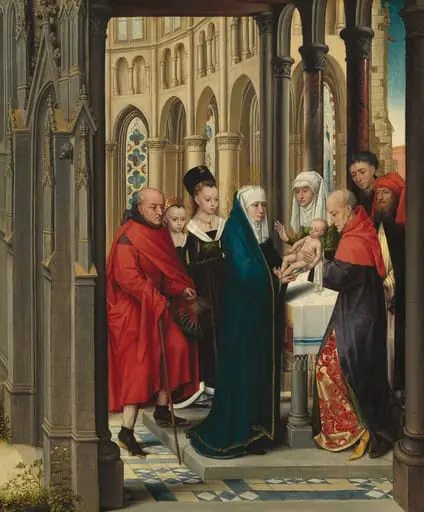 The Presentation in the Temple
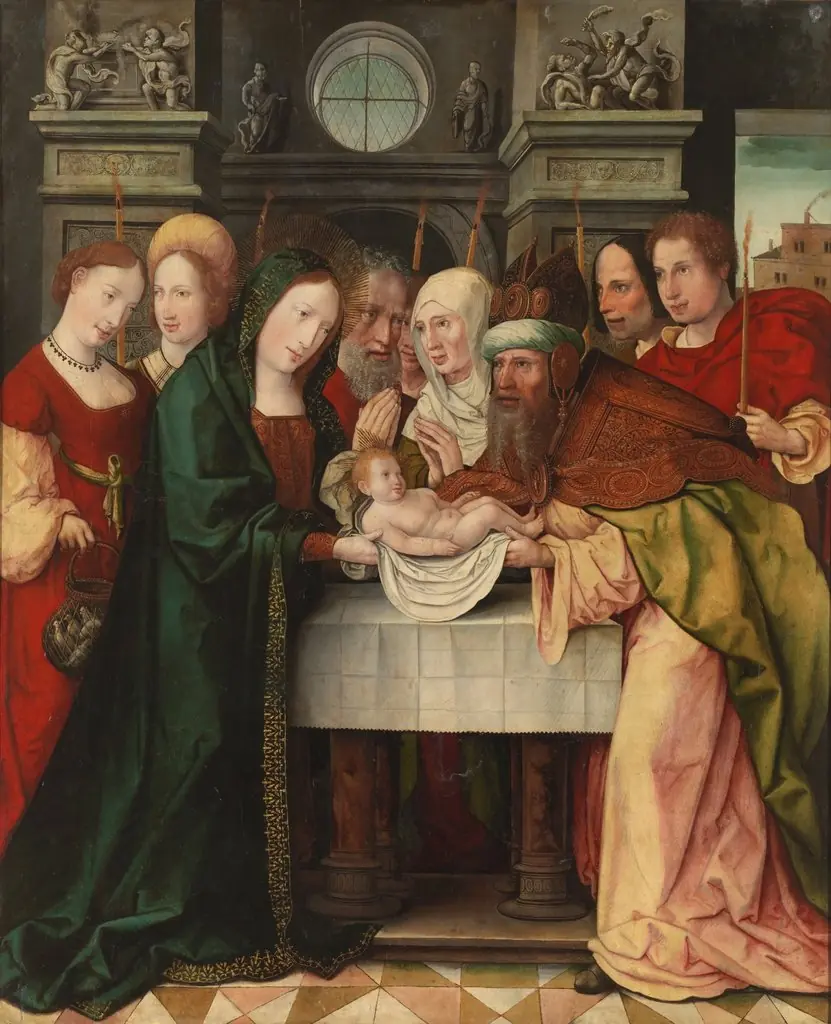 La Purificación de la Virgen
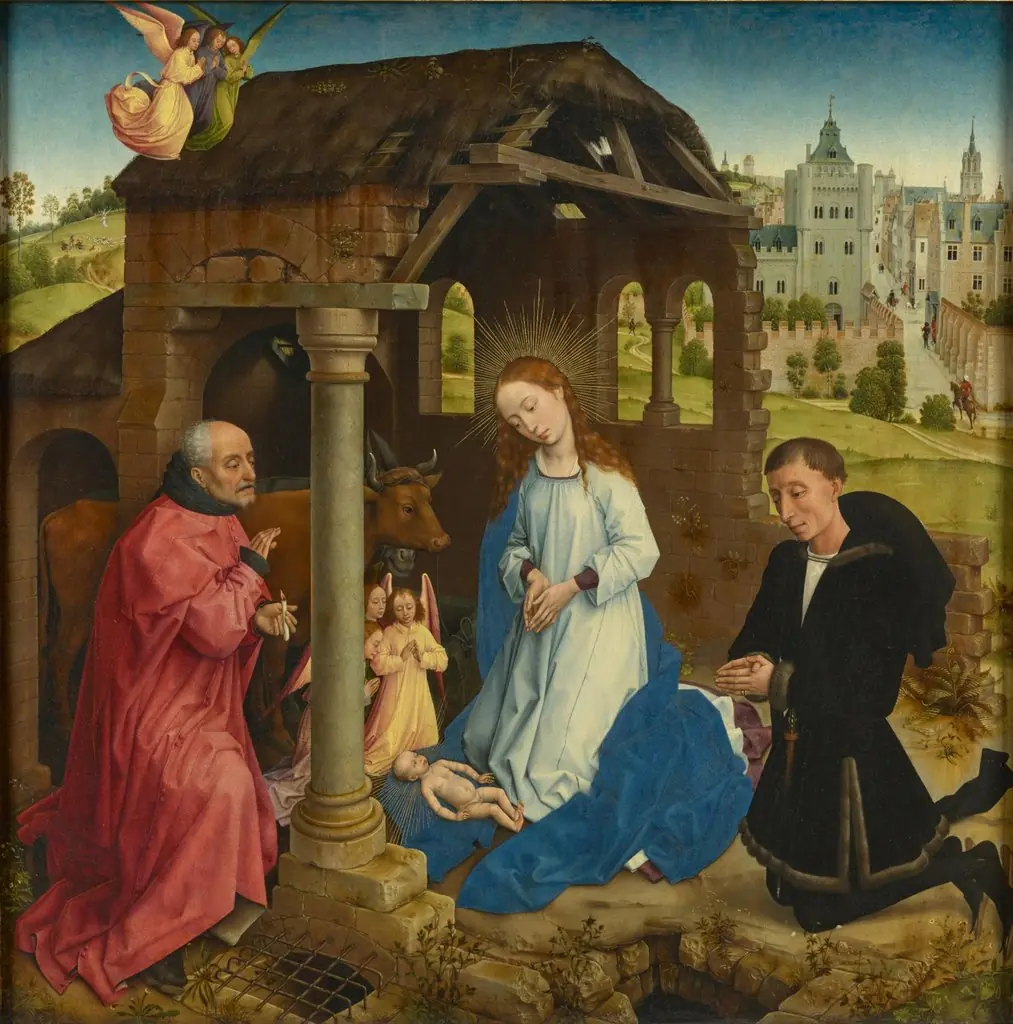 Bladelin Triptych Nativity (central panel)
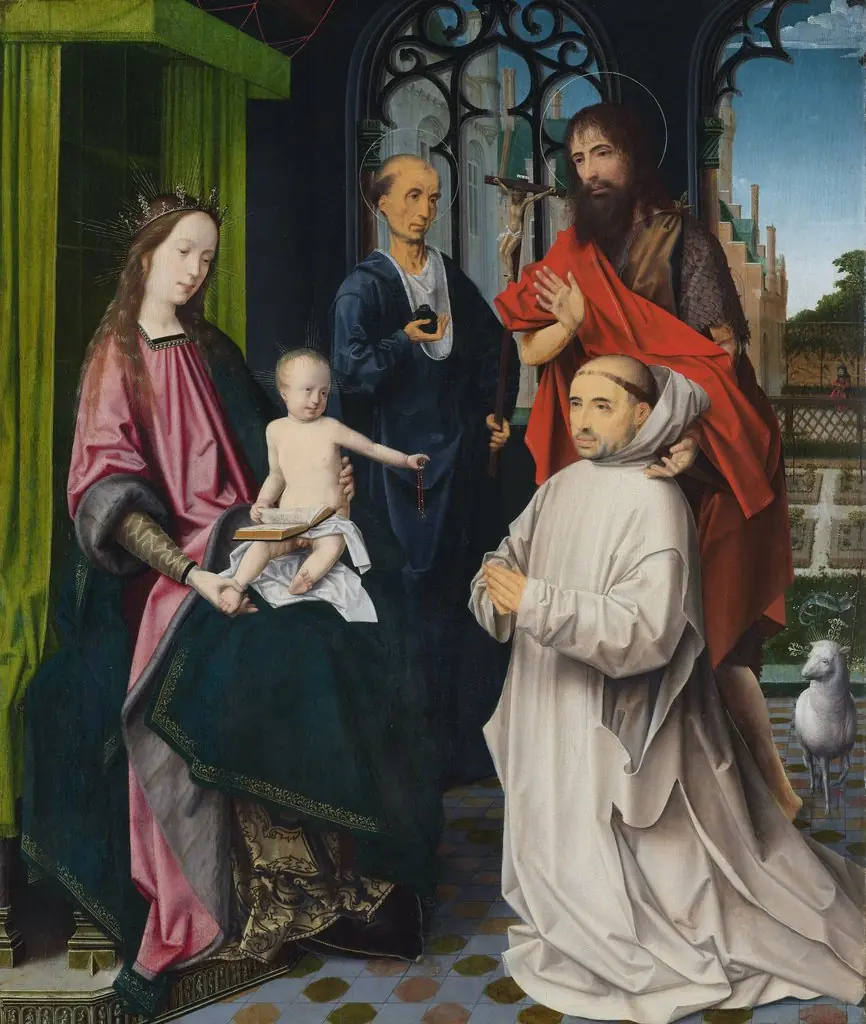 Virgin and Child Enthroned, with Saints Jerome and John the Baptist and a Carthusian Monk
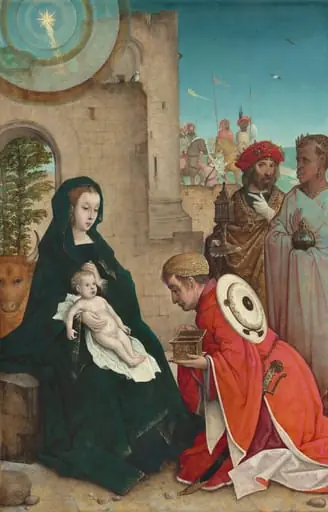 The Adoration of the Magi