Artwork
菖蒲の葉を持つ「野郎」図大津絵|Ōtsu-e of a Youth Holding Irises (Yarō)
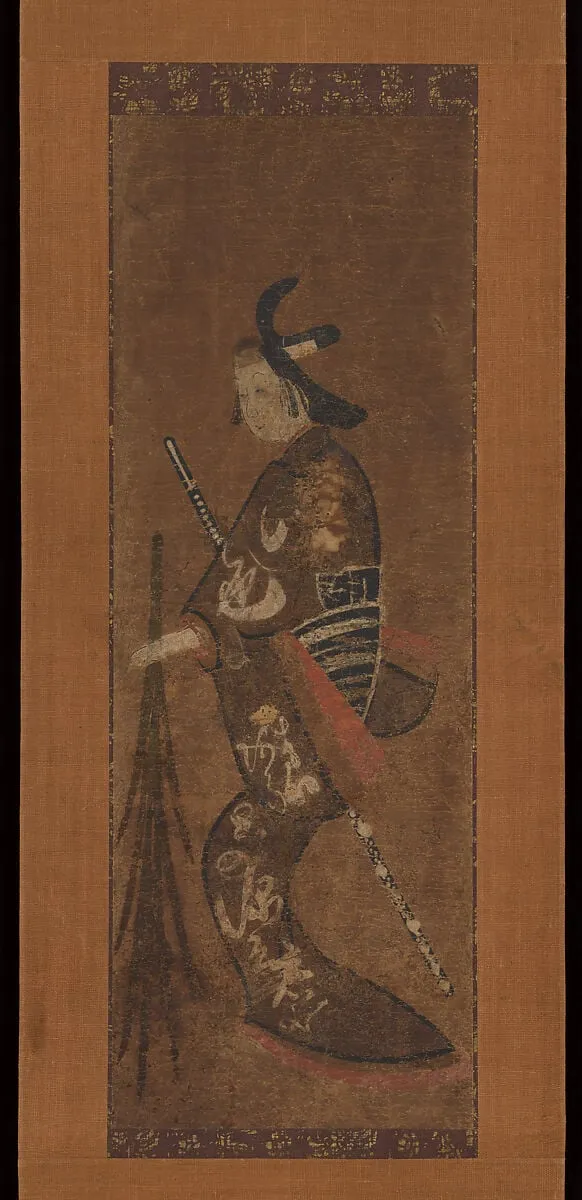
菖蒲の葉を持つ「野郎」図大津絵|Ōtsu-e of a Youth Holding Irises (Yarō) is an ink painting. It dates from 1649 and is held in the collection of the Metropolitan Museum of Art. The work is a hanging scroll executed in ink and color on paper, depicting a youthful figure in a vivid red garment.
About this work
Overview
The work is a hanging scroll executed in ink and color on paper, depicting a youthful figure in a vivid red garment. He holds a cluster of iris leaves, fanned before him, his expression composed with a faint smile. The composition relies on bright pigments that stand out against an otherwise unadorned paper background, creating a lively yet straightforward visual impact.
Subject & Meaning
The central figure is a young man, traditionally identified as a "yarō"—a term for a youthful male—who appears to be enjoying the cool shade of iris foliage. The pose, with the leaves spread like a fan, suggests a moment of leisurely contemplation, perhaps invoking the seasonal freshness of early summer and the modest pleasure of simple pleasures.
Technique & Style
Rendered with brushwork characteristic of Ōtsu-e, the image combines bold outlines in ink with flat washes of color. The artist employs a limited palette, allowing the red robe and green iris leaves to dominate the visual field. The style favors directness over elaborate detail, emphasizing clear silhouettes and flat areas of hue typical of popular, mass‑produced prints of the period.
History & Provenance
Created in the tradition of Ōtsu-e, the piece originates from the town of Ōtsu, a hub for inexpensive folk art sold to travelers. No signature or documented artist accompanies the scroll; anonymity was common for these works, which were produced for the tourist market rather than elite patronage. Such scrolls were often purchased as souvenirs or talismans for good fortune.
Context
Vendors displayed bright, easily recognizable images at roadside stalls, offering affordable decorative objects to a wide audience.
Ōtsu-e emerged in the Edo period as a commercial art form catering to the burgeoning travel culture along the Tōkaidō road. Vendors displayed bright, easily recognizable images at roadside stalls, offering affordable decorative objects to a wide audience. The subject matter—youthful figures, flora, and everyday scenes—reflected the tastes of common people seeking accessible, cheerful art for homes or personal amulets.
Artist & collection