Artwork
Turkish sultans, sultanas and other historical figures
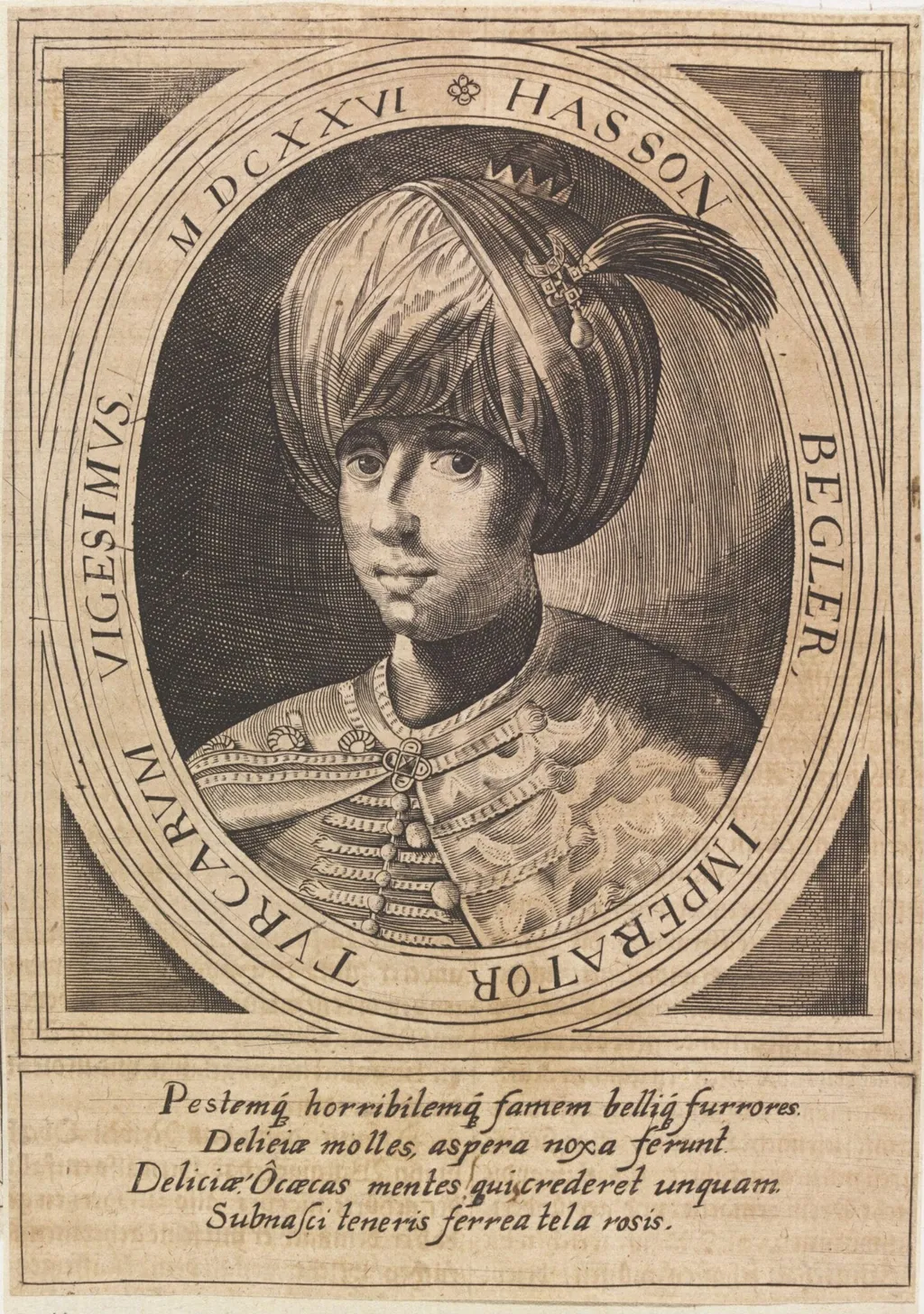
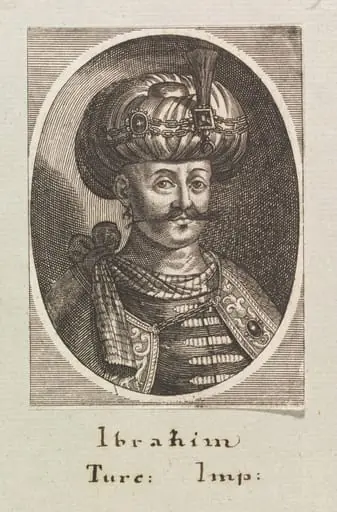
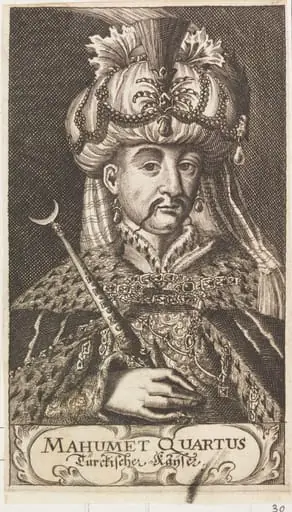
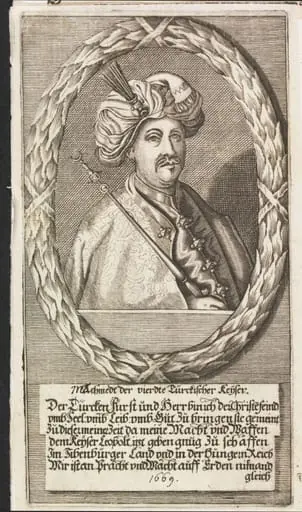
Turkish sultans, sultanas and other historical figures is a print by the Baroque artist Unknown. It dates from 1626 and is held in the collection of the Victoria and Albert Museum.
About this work
Overview
The composition is austere, with no decorative background, emphasizing the subject’s authority through posture and attire.
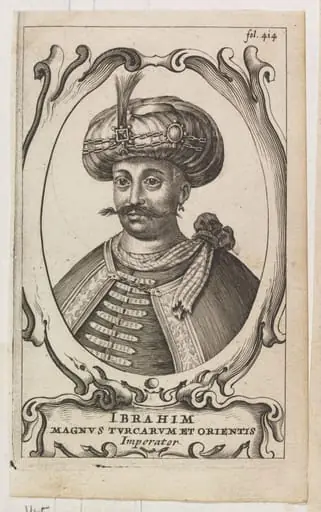
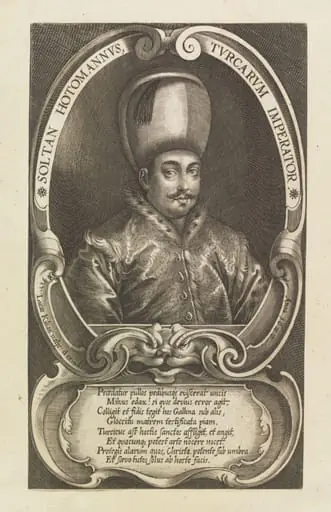
This black-and-white print presents a formal portrait of a high-ranking Ottoman figure, identified by Latin inscriptions as 'Imperator Turcarum Vigesimus'—the twentieth Emperor of the Turks—dated 1626. The composition is austere, with no decorative background, emphasizing the subject’s authority through posture and attire. The text surrounding the image, written in Latin, reflects European attempts to interpret and categorize Ottoman leadership through familiar imperial terminology.
Subject & Meaning
The figure is likely a sultan or a senior court official, rendered with the gravitas typical of European portrayals of Eastern rulers. The tall, fur-lined hat with a feather and the ruffled collar with small buttons are elements of Ottoman elite dress, adapted here into a Western-style portrait format. The use of 'Imperator' suggests an effort to equate Ottoman sovereignty with Roman or Holy Roman imperial ideals, framing the subject as an equal to European monarchs.
Technique & Style
Executed in a monochrome print, likely engraving or etching, the work employs fine linear detail to define texture in fabric, fur, and facial features. The direct gaze and neutral expression align with Baroque portraiture’s emphasis on psychological presence and dignity. The plain background isolates the figure, focusing attention on costume and demeanor, a convention borrowed from contemporary European formal portraiture.
History & Provenance
Created in 1626, the print likely originated in Western Europe, possibly the Netherlands or Germany, where interest in Ottoman court life was growing. Such images circulated among scholars, diplomats, and collectors as visual records of a powerful non-Christian empire. The Latin inscriptions indicate it was intended for an educated, Latin-literate audience unfamiliar with Ottoman titles, seeking to translate the unfamiliar into familiar terms.
Context
In the early 17th century, the Ottoman Empire was a major political force in Europe, prompting both fear and fascination. European publishers produced numerous portraits of Ottoman elites to satisfy curiosity and assert cultural superiority through representation. This print reflects the period’s tendency to interpret foreign rulers through the lens of Western imperial symbolism, blending accurate costume details with misleading titles to fit European frameworks.
Legacy
The print stands as an example of early modern cross-cultural representation, revealing how European artists and publishers mediated perceptions of the Ottoman world. While not a direct portrait of a specific individual, it contributed to a visual lexicon of the 'Turk' in Western art. Its use of Latin and formal composition influenced later depictions of non-European leaders in printed media throughout the 17th and 18th centuries.
Artist & collection

 Domestic Scene
 Giacomo and Cardinal Marco, investing Andrea, Abbot of San Zeno, with his Benefice
 The Nymph of Fontainebleau
 Portrait of a Woman
 Madonna and Child with Saints in the Enclosed Garden
 Venus and Minerva
 Family Group of Four on Sofa
 Wall painting from Room H of the Villa of P. Fannius Synistor at Boscoreale
 Turkish sultans, sultanas and other historical figures
 Turkish sultans, sultanas and other historical figures
 Turkish sultans, sultanas and other historical figures
 Turkish sultans, sultanas and other historical figures
 Turkish sultans, sultanas and other historical figures
 Turkish sultans, sultanas and other historical figures
 Turkish sultans, sultanas and other historical figures
 Turkish sultans, sultanas and other historical figures
 Turkish sultans, sultanas and other historical figures
 Turkish sultans, sultanas and other historical figures