Artwork
Two athletes
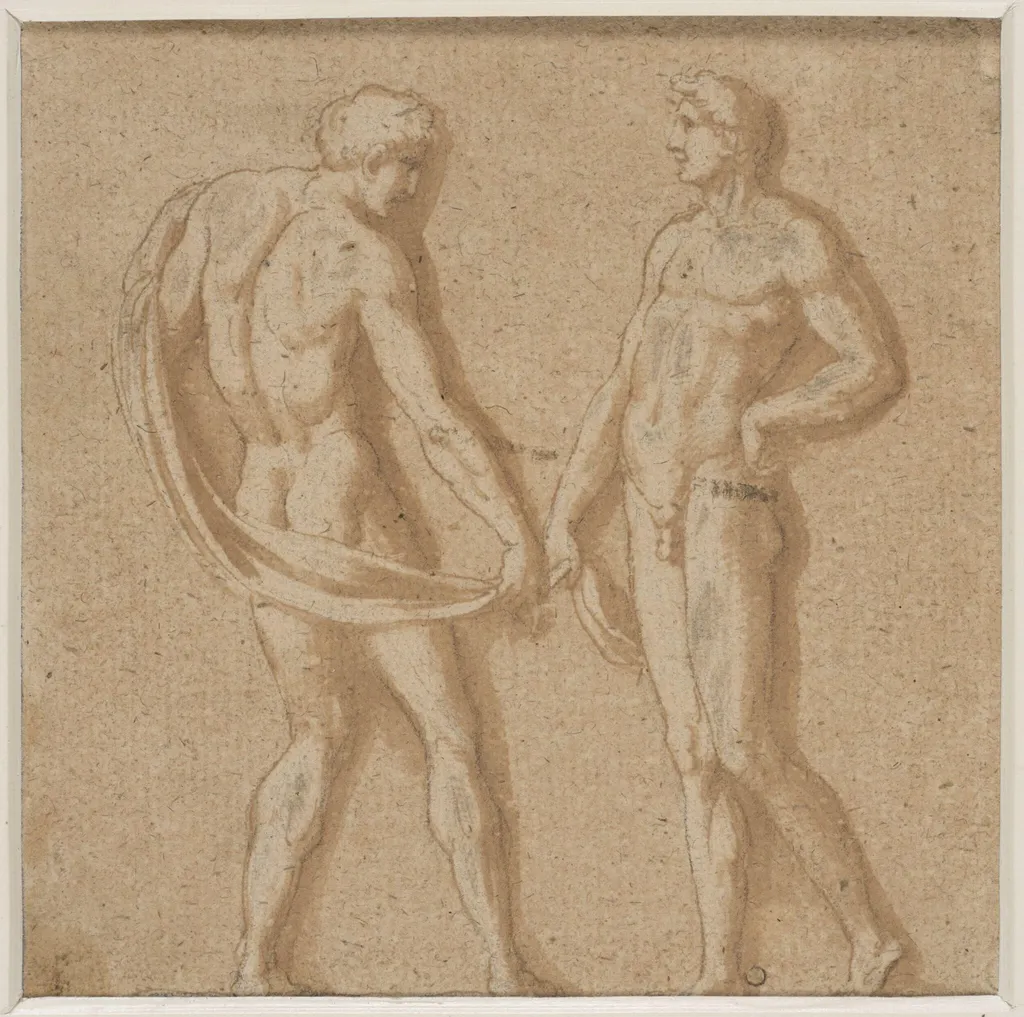
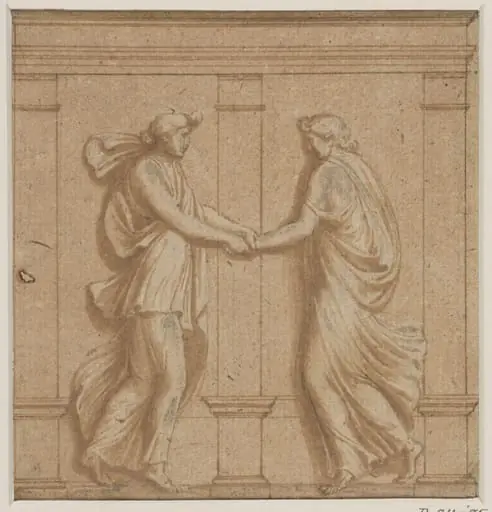
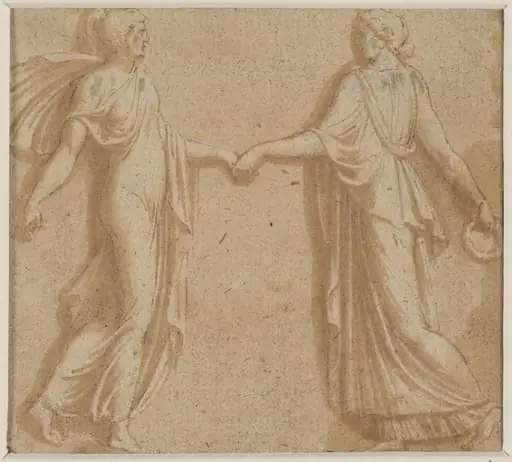
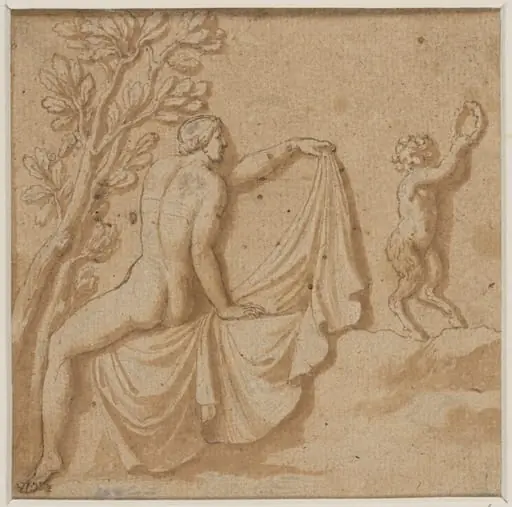
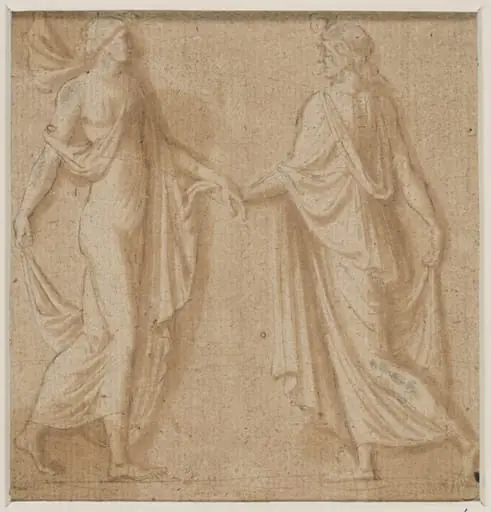
Two athletes is a drawing by Unknown. It dates from 1650 and is held in the collection of the Victoria and Albert Museum. This ink drawing depicts two male figures in dynamic athletic postures, likely intended as a study for a sculptural relief.
About this work
Overview
Though not authored by Nicolas Poussin, the composition reflects his classical sensibility—clean lines, balanced forms, and restrained movement.
This ink drawing depicts two male figures in dynamic athletic postures, likely intended as a study for a sculptural relief. Though not authored by Nicolas Poussin, the composition reflects his classical sensibility—clean lines, balanced forms, and restrained movement. Its purpose may have been to guide a larger decorative project, possibly for architecture or public monument. The work resides in the Victoria and Albert Museum’s collection.
Subject & Meaning
The figures suggest a moment from ancient athletic competition, one poised in stillness, the other in the act of throwing. Their interaction evokes discipline and physical harmony, themes central to classical ideals. No narrative is explicitly defined, but the scene aligns with Renaissance and antiquarian interests in human exertion as a moral and aesthetic pursuit, rather than mere spectacle.
Technique & Style
Executed with precise, economical linework, the drawing emphasizes clarity over texture. Musculature is defined with minimal strokes, suggesting form through contour and proportion rather than shading. The control and economy of line resemble Poussin’s preparatory studies, though the hand is not his. The absence of background focuses attention entirely on the figures’ physical relationship.
History & Provenance
The drawing’s origin remains undocumented, but its style places it within early modern European circles familiar with Poussin’s work. Likely produced in the 17th century, it may have circulated among artists or patrons interested in classical themes. It entered the Victoria and Albert Museum’s holdings as part of a broader collection of Renaissance and Baroque drawings.
Context
During Poussin’s time, artists frequently turned to antiquity for compositional models, especially in decorative arts. Preparatory drawings like this one were common tools for translating human form into relief sculpture or fresco. The emphasis on idealized bodies reflects a broader cultural revival of Greco-Roman values in art, particularly among French and Italian academies.
Legacy
Though unsigned and unattributed, the drawing survives as evidence of how Poussin’s aesthetic influenced contemporaries and followers. It illustrates the enduring role of sketching in transmitting classical ideals across media—from paper to stone. Its preservation underscores the value placed on preparatory work in early modern artistic practice.
Artist & collection

 Domestic Scene
 Giacomo and Cardinal Marco, investing Andrea, Abbot of San Zeno, with his Benefice
 The Nymph of Fontainebleau
 Portrait of a Woman
 Madonna and Child with Saints in the Enclosed Garden
 Venus and Minerva
 Family Group of Four on Sofa
 Wall painting from Room H of the Villa of P. Fannius Synistor at Boscoreale