Artwork
Women dancing
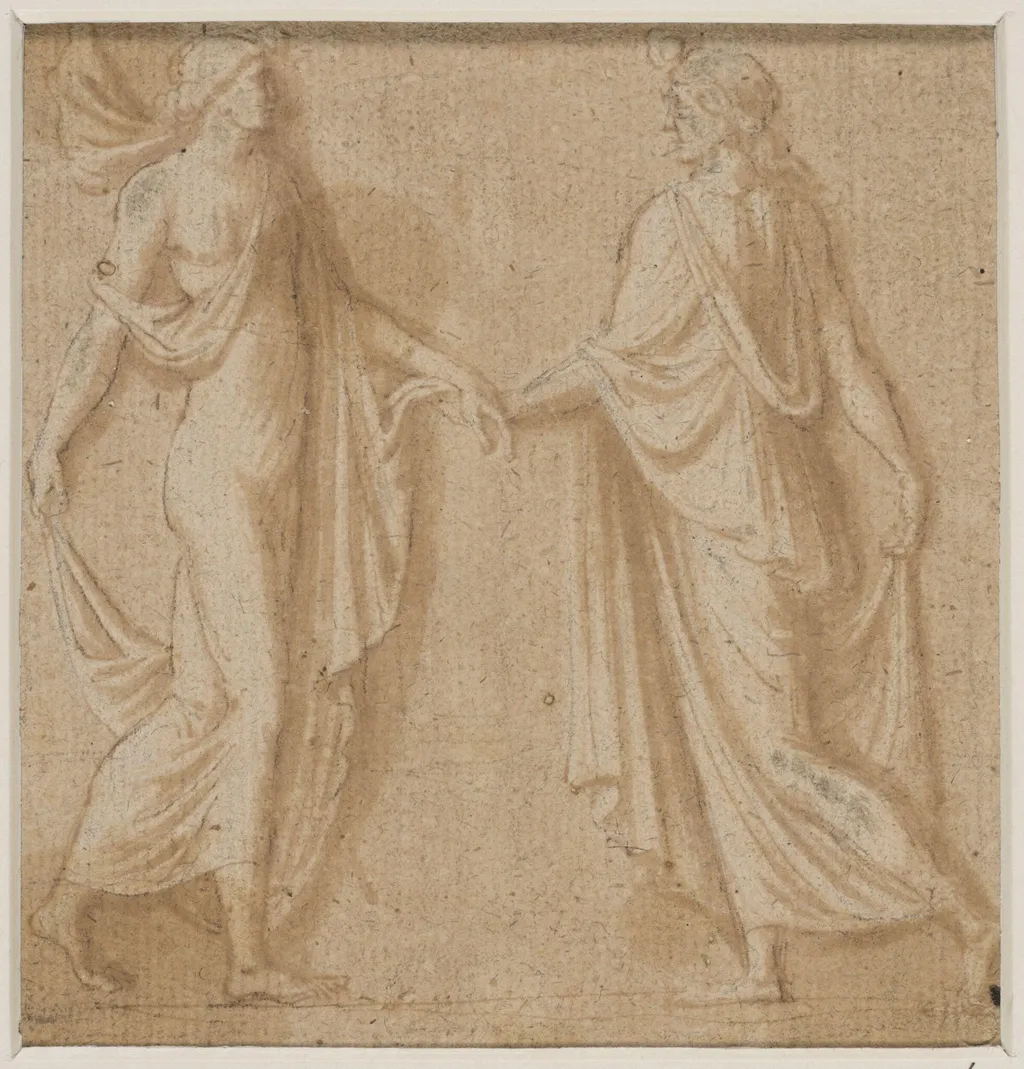
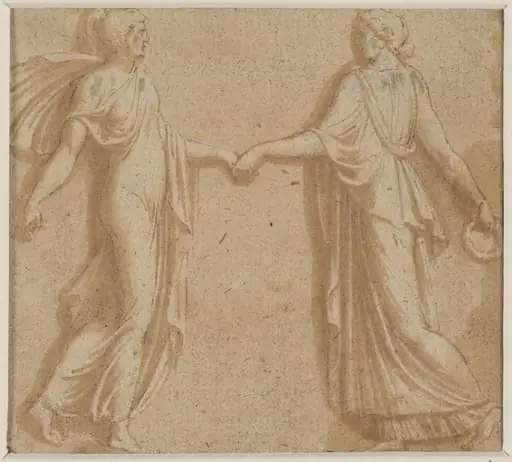
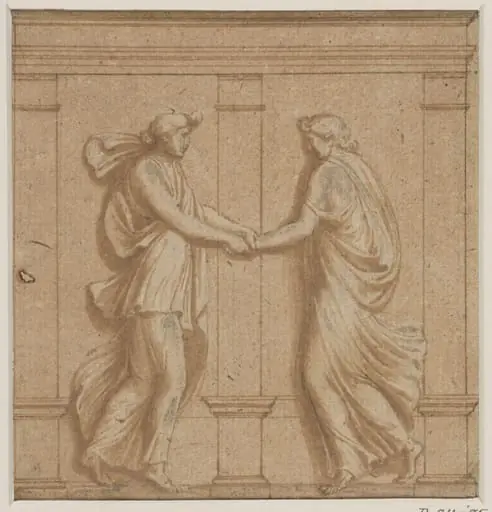
Women dancing is a drawing by Unknown. It dates from 1650 and is held in the collection of the Victoria and Albert Museum. The drawing depicts two women in flowing garments, caught mid‑dance with arms lifted and bodies in motion.
About this work
Overview
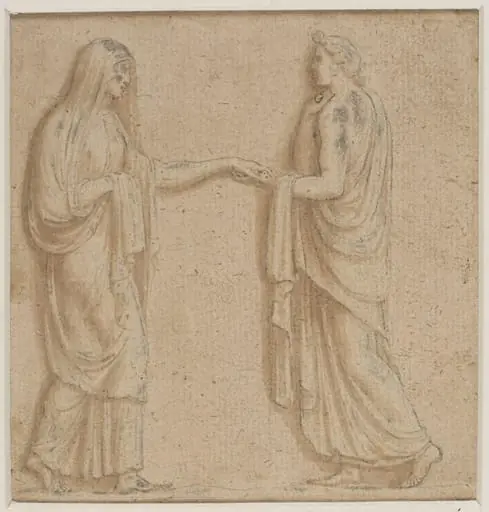
The drawing depicts two women in flowing garments, caught mid‑dance with arms lifted and bodies in motion. Rendered in a delicate, stippled manner, the figures appear in a poised, rhythmic moment. The composition suggests it served as a preparatory design for a low‑relief panel, likely intended for stone or wood carving.
Subject & Meaning
The scene presents a pair of female dancers whose graceful gestures convey a sense of harmonious movement. While the exact narrative is unspecified, the pairing of draped figures in a dance aligns with classical motifs that often carried moral or allegorical connotations in the 17th‑century artistic tradition.
Technique & Style
The artist employed stippling—dense clusters of fine dots—to model volume and shade, creating subtle transitions of light across the drapery. The drawing’s compositional balance, clear contours, and classical pose echo the aesthetic principles associated with Nicolas Poussin and his circle, emphasizing order and restrained elegance.
History & Provenance
Although not directly by Nicolas Poussin, the work is attributed to a close follower active in France and Italy during the mid‑17th century. It likely functioned as a design for a sculptural panel, a common practice among Poussin’s workshop members who produced preparatory drawings for larger decorative programs.
Context
The drawing belongs to a period when French and Italian artists frequently revisited mythological and biblical subjects, infusing them with moral instruction. Such preparatory sketches were integral to the collaborative process of creating reliefs that combined narrative content with the classical ideal of balanced composition.
Artist & collection

 Domestic Scene
 Giacomo and Cardinal Marco, investing Andrea, Abbot of San Zeno, with his Benefice
 The Nymph of Fontainebleau
 Portrait of a Woman
 Madonna and Child with Saints in the Enclosed Garden
 Venus and Minerva
 Family Group of Four on Sofa
 Wall painting from Room H of the Villa of P. Fannius Synistor at Boscoreale