Artwork
Two Indian ladies, one with a drum, the other with a sarangi.
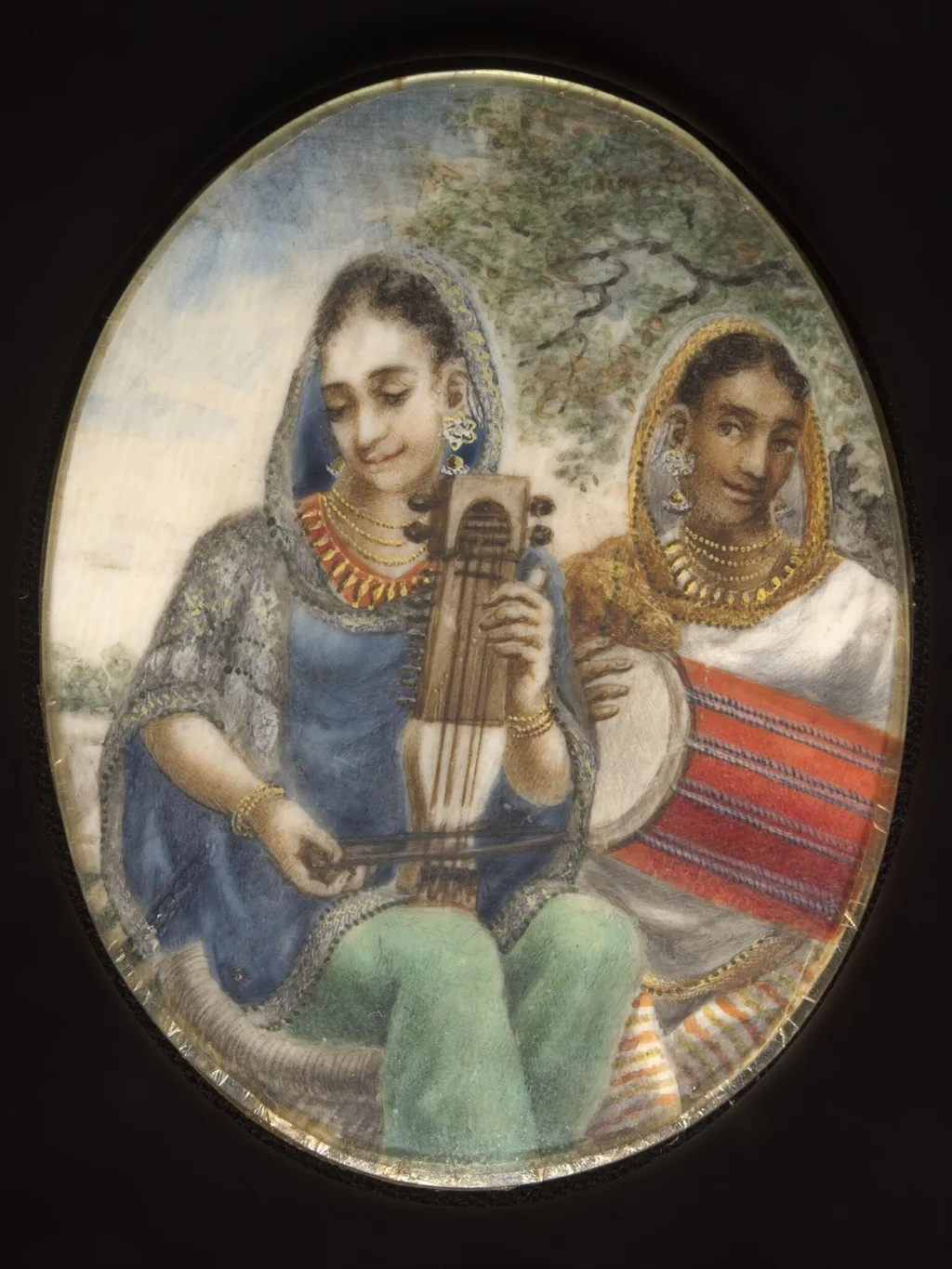
Two Indian ladies, one with a drum, the other with a sarangi. is a watercolor painting by the Patna School of Painting artist Unknown. It dates from 1860 and is held in the collection of the Victoria and Albert Museum. A delicate watercolor on ivory, created around 1860, portrays two Indian women engaged in musical practice.
About this work
Two Indian ladies stand side by side in a watercolor on ivory. One holds a small drum. The other grips a bowed string instrument called a sarangi.
Painted around 1860, this tiny picture shows real instruments with care. Tiny brushstrokes catch the sheen of the drumhead and the wood grain of the sarangi.
See it in person at the Victoria and Albert Museum.
Overview
A delicate watercolor on ivory, created around 1860, portrays two Indian women engaged in musical practice. The small scale of the work, measuring just a few inches, reflects a tradition of intimate portraiture favored in colonial-era Indian studios. The medium’s luminous surface enhances the subtle rendering of textures and light, suggesting a refined, possibly courtly, artistic context.
Subject & Meaning
The two figures, positioned side by side, represent women musicians, each holding a traditional instrument: a small drum and a sarangi. Their quiet, focused demeanor implies a moment of rehearsal or performance, not theatrical display. The inclusion of specific instruments points to an interest in documenting real cultural practices, possibly for a European audience curious about Indian arts.
Technique & Style
The artist employed fine, precise brushwork to capture the sheen of the drum’s skin and the grain of the sarangi’s wooden body. Watercolor on ivory allowed for translucent layers and delicate highlights, lending a lifelike quality to the surfaces. The composition is restrained, with no background or decorative elements, directing attention entirely to the figures and their instruments.
History & Provenance
This work likely originated in a studio catering to British patrons in 19th-century India, where demand grew for detailed depictions of local life. It entered the Victoria and Albert Museum’s collection as part of its broader effort to document material culture from the Indian subcontinent during the colonial period, though the artist’s identity remains unrecorded.
Context
During the mid-1800s, Indian musicians—especially women—were frequently depicted in art commissioned by colonial officials and travelers. These images often served as ethnographic records, blending observation with aesthetic idealization. The careful rendering of instruments suggests an attempt at authenticity, even as the framing remained shaped by foreign perspectives.
Legacy
The painting endures as a quiet testament to the presence of women in Indian musical traditions during a period of cultural transition. Its preservation in a major museum underscores its value as a historical document, offering insight into the intersection of art, identity, and colonial collecting practices without romanticizing its subjects.
Artist & collection

 Domestic Scene
 Giacomo and Cardinal Marco, investing Andrea, Abbot of San Zeno, with his Benefice
 The Nymph of Fontainebleau
 Portrait of a Woman
 Madonna and Child with Saints in the Enclosed Garden
 Venus and Minerva
 Family Group of Four on Sofa
 Wall painting from Room H of the Villa of P. Fannius Synistor at Boscoreale
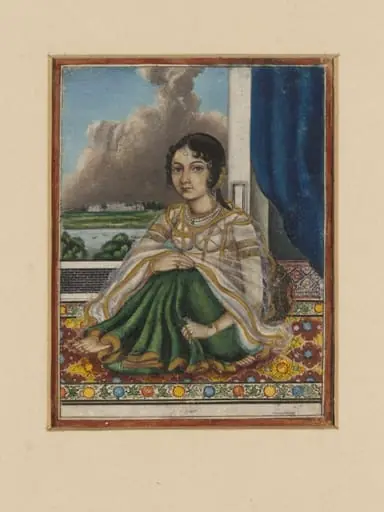 An Indian lady seated on a carpet by an open door overlooking a river with a European-style house on the opposite bank.
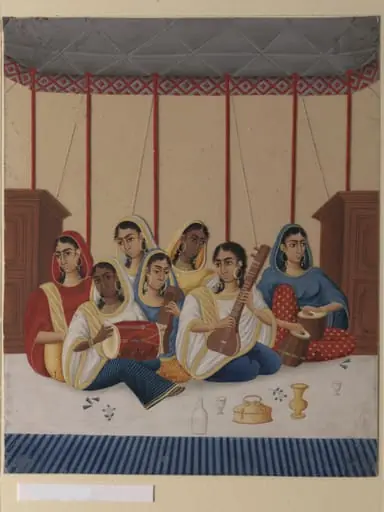 A group of seven female musicians seated under a canopy
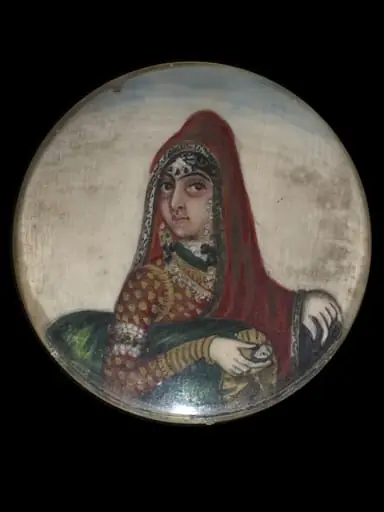 Rani Jindan
 Two Manipuri dancing-girls standing together holding hands.
 Har Day
 A cook and his wife
 Lakshmi and Sarasvati
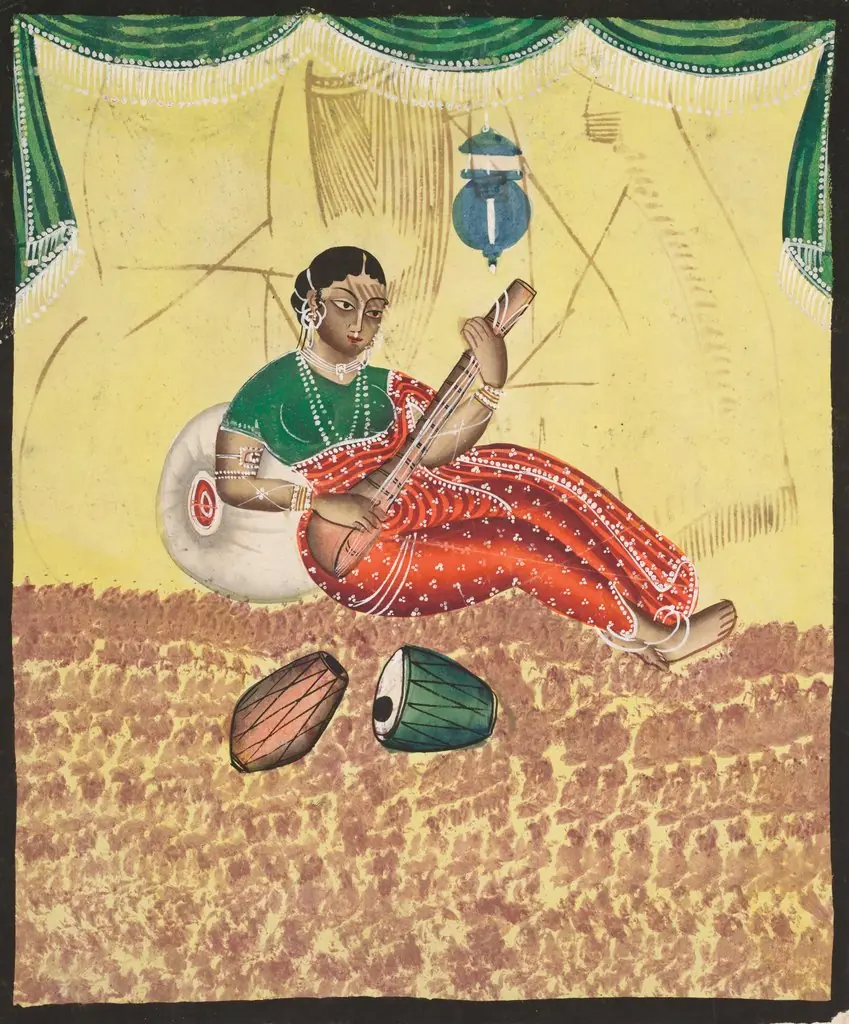 Woman Playing Music (recto), from a Kalighat album
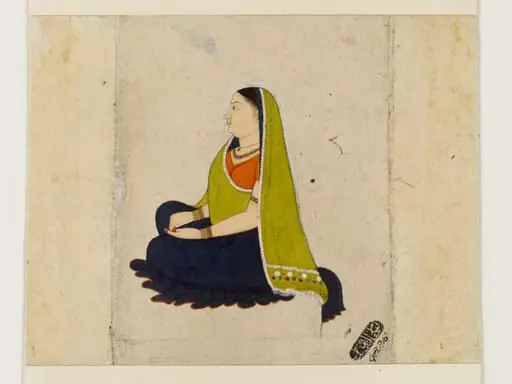 Ladvai Sketch
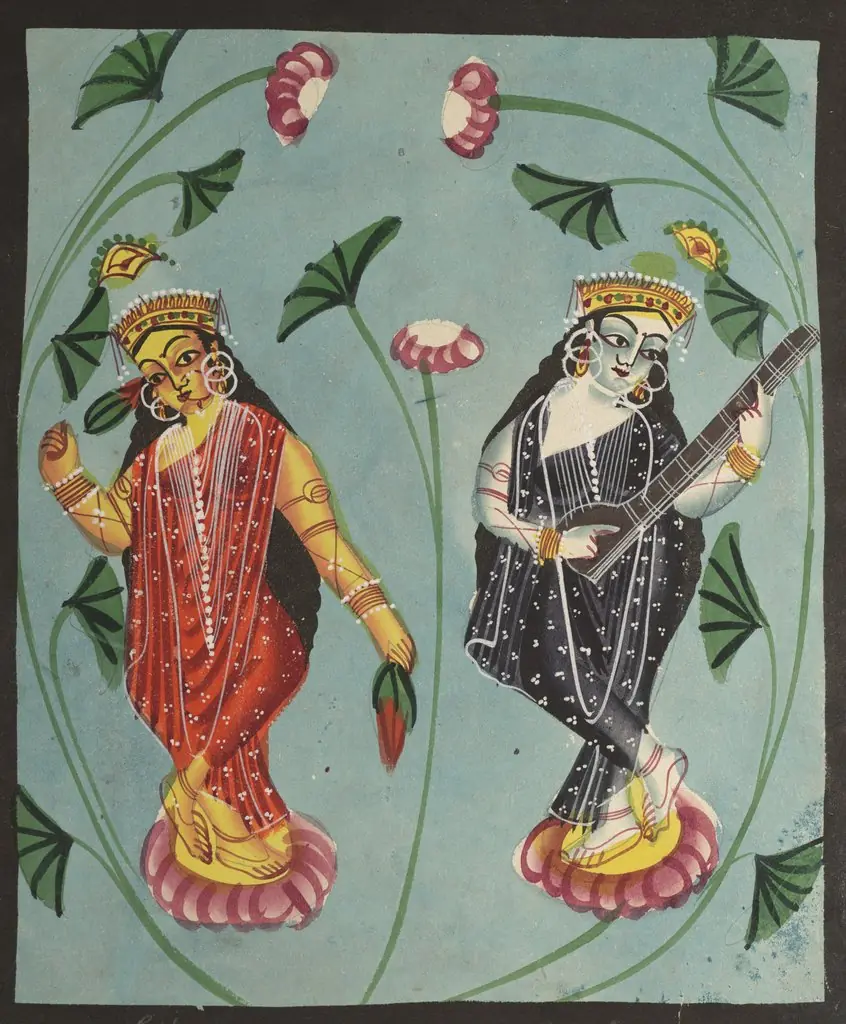 Lakshmi and Sarasvati