Artwork
Tyre
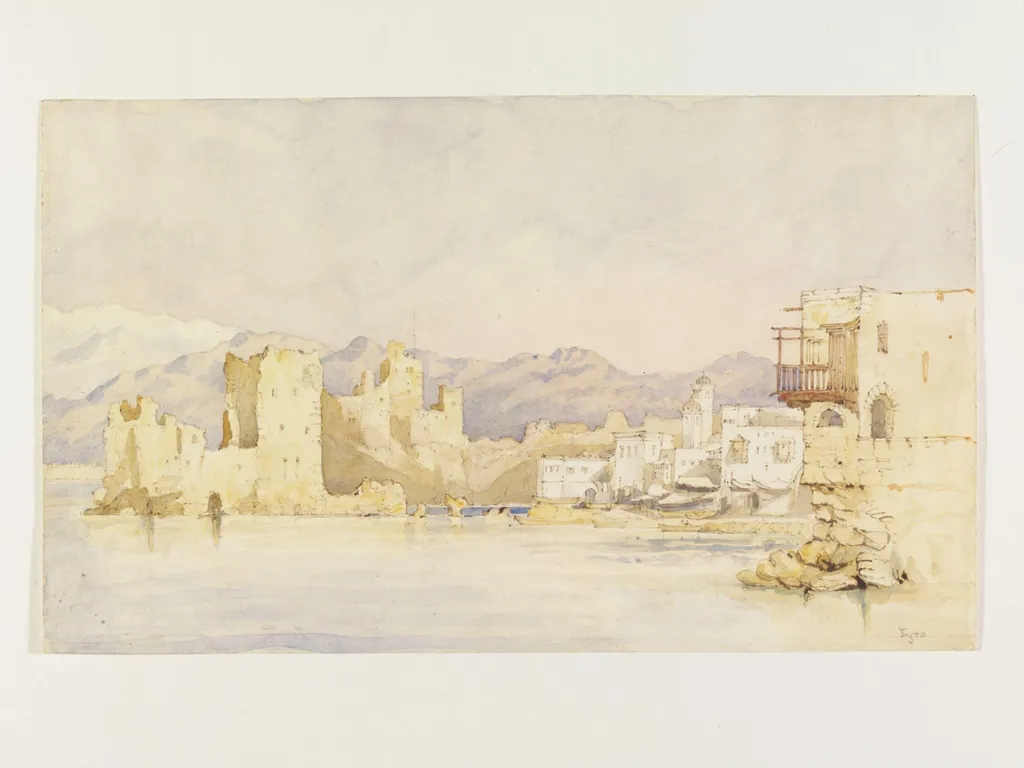
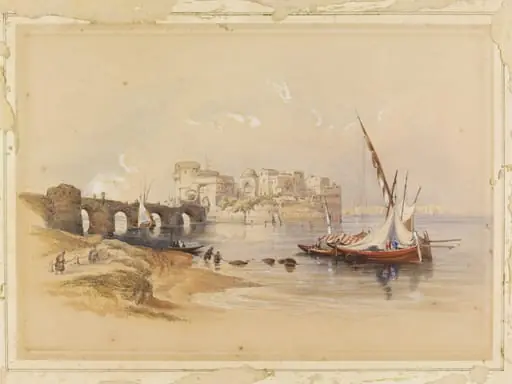
Tyre is a watercolor work on paper by the Impressionist artist Unknown. It dates from 1851 and is held in the collection of the Victoria and Albert Museum.
About this work
Overview
Executed in soft, translucent pigments, the work captures the ruins along the Mediterranean coast in a spontaneous, sketch-like manner.
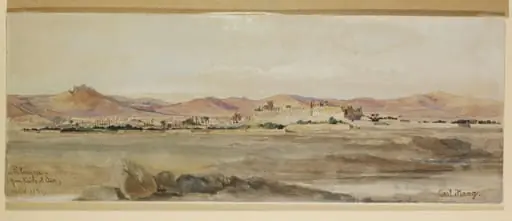
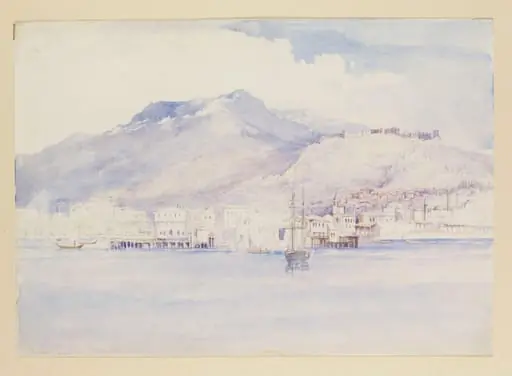
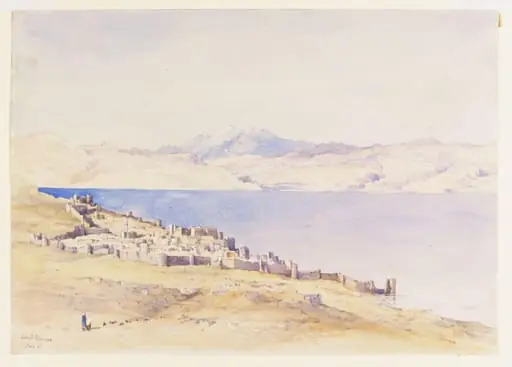
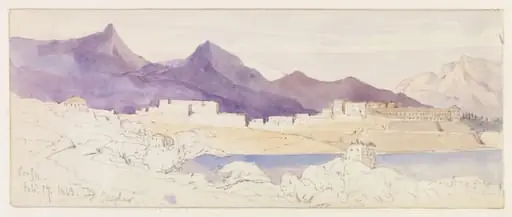
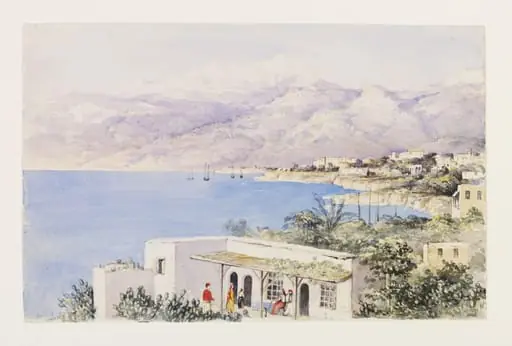
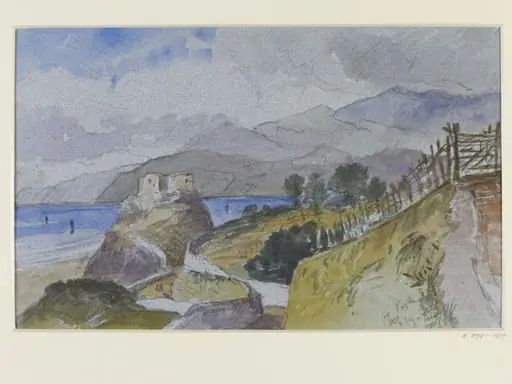
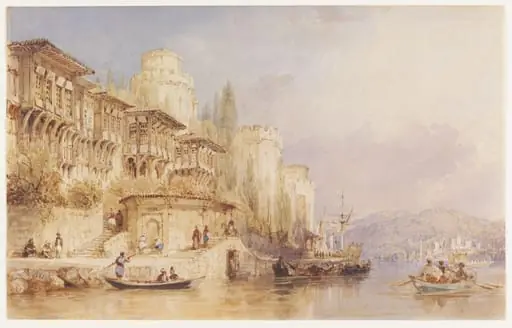
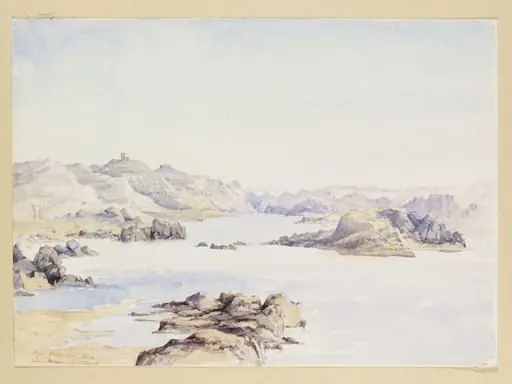
Created in 1851, this watercolour depicts the ancient city of Tyre with a quiet, atmospheric tone. Executed in soft, translucent pigments, the work captures the ruins along the Mediterranean coast in a spontaneous, sketch-like manner. Its modest scale and unassuming execution suggest a personal study rather than a formal commission. The piece entered the Jas. Mackinnon collection in November 1970 after being acquired for £25.
Subject & Meaning
The scene portrays Tyre’s decaying urban fabric—weathered towers, a slender bridge, and scattered vessels—emphasizing time’s erosion rather than historical grandeur. The absence of human figures and the muted palette convey solitude and quiet decay. The artist seems less interested in topographical accuracy than in evoking the melancholy stillness of a once-great city reduced to ruins.
Technique & Style
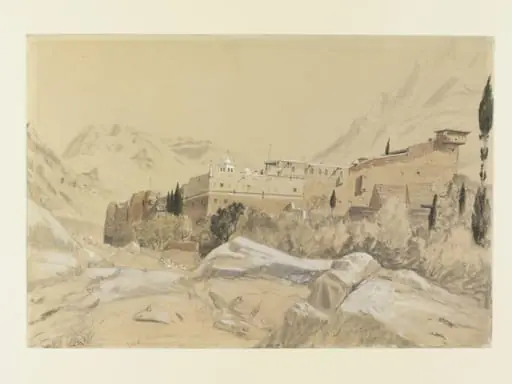
Loose, rapid brushwork defines the composition, with minimal detail and blended washes creating a hazy, luminous effect. The artist employed watercolour’s transparency to suggest distance and atmosphere, using pale browns and blues to unify the landscape. The rocky shoreline and small boats are rendered with suggestive strokes, prioritizing mood over precision, characteristic of topographical sketches from the period.
History & Provenance
The work’s origin remains undocumented, with no record of the artist’s identity. It surfaced in private hands before being purchased by Jas. Mackinnon in 1970 for £25. Its journey from creation to collection reflects the common trajectory of 19th-century travel sketches, often preserved as personal mementos rather than celebrated artworks.
Context
In the mid-19th century, watercolour was widely used by amateur and professional artists to document distant sites during expanding travel and colonial exploration. Tyre, a site of classical antiquity, attracted interest among British travelers and antiquarians. This piece aligns with a broader tradition of topographical watercolours that recorded ruins with poetic restraint rather than archaeological rigor.
Legacy
Though unsigned and unremarked upon in its time, the work contributes to a quiet archive of 19th-century visual responses to ancient landscapes. Its preservation in a public collection underscores the value placed on such modest studies as records of perception and place, offering insight into how distant ruins were felt, not just recorded.
Artist & collection

 Domestic Scene
 Giacomo and Cardinal Marco, investing Andrea, Abbot of San Zeno, with his Benefice
 The Nymph of Fontainebleau
 Portrait of a Woman
 Madonna and Child with Saints in the Enclosed Garden
 Venus and Minerva
 Family Group of Four on Sofa
 Wall painting from Room H of the Villa of P. Fannius Synistor at Boscoreale