Artwork
Ulcior cu corp tronconic, bombat în jumătatea sa superioară, gât subțire cu gură bilobată și cu ciur; este prevăzut cu o toartă laterală de prindere, cu țâță. Decorul este unul geometric, realizat prin pictare cu cornul și cu pensula, motivele fiind concentrate în jumătatea superioară a vasului și sunt formate din: linii circulare simple și ondulate de culoare albă, dungi de culoare maro dispuse circular, linii punctate, linii spiralate de culoare albă dispuse sub formă de brâu, linii drepte verticale ce decorează zona gâtului. Toarta vasului este decorată cu mici linii albe, iar buza cu linii maro. Suprafața ornamentată a vasului este acoperită cu un strat de smalț transparent. Cromatica: alb, maro, pe fondul roșu al lutului ars.
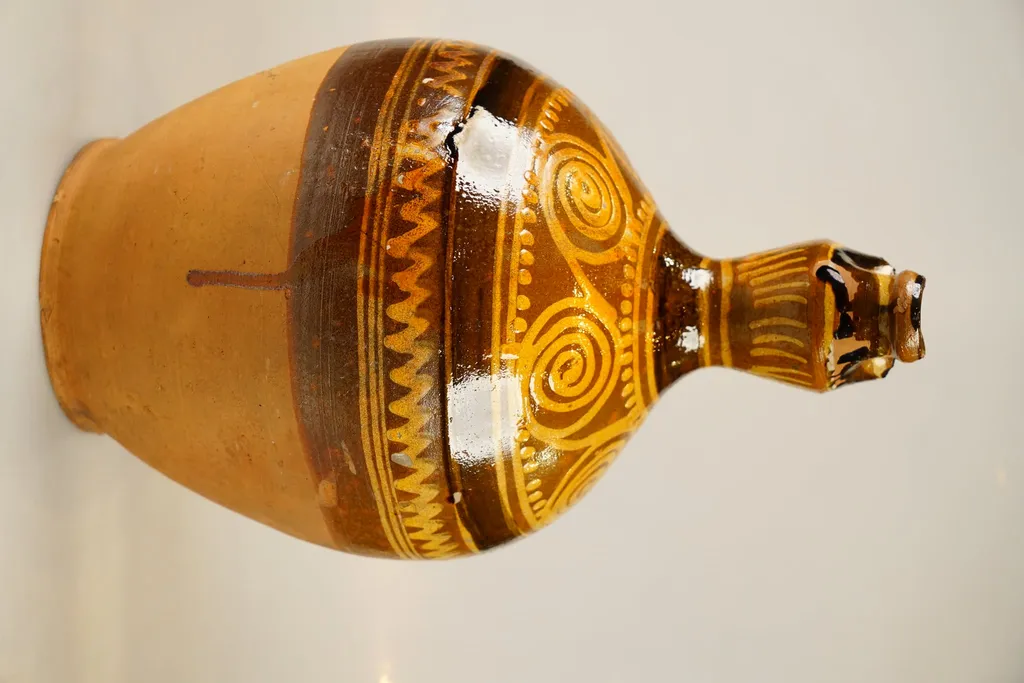
Ulcior cu corp tronconic, bombat în jumătatea sa superioară, gât subțire cu gură bilobată și cu ciur; este prevăzut cu o toartă laterală de prindere, cu țâță. Decorul este unul geometric, realizat prin pictare cu cornul și cu pensula, motivele fiind concentrate în jumătatea superioară a vasului și sunt formate din: linii circulare simple și ondulate de culoare albă, dungi de culoare maro dispuse circular, linii punctate, linii spiralate de culoare albă dispuse sub formă de brâu, linii drepte verticale ce decorează zona gâtului. Toarta vasului este decorată cu mici linii albe, iar buza cu linii maro. Suprafața ornamentată a vasului este acoperită cu un strat de smalț transparent. Cromatica: alb, maro, pe fondul roșu al lutului ars. is a photography by Unknown. It dates from 1850 and is held in the collection of the Ethnographical Museum of Transylvania. This ceramic vessel features a truncated conical body swollen at the upper half, a slender neck with a bilobed mouth, and a spout.
About this work
Overview
Its form and decoration align with Neolithic pottery traditions of the Balkans, particularly those associated with ritual or elite use.
This ceramic vessel features a truncated conical body swollen at the upper half, a slender neck with a bilobed mouth, and a spout. A lateral handle connects to a nipple-like protrusion, suggesting functional or symbolic use. The surface is coated in transparent glaze, enhancing the contrast between the red-baked clay body and the applied pigments. Its form and decoration align with Neolithic pottery traditions of the Balkans, particularly those associated with ritual or elite use.
Subject & Meaning
The vessel’s ornamental focus on the upper half, combined with its spout and handle configuration, implies ceremonial function rather than everyday use. Geometric motifs—spirals, concentric bands, and dotted lines—may symbolize cosmological or ancestral concepts, common in Neolithic belief systems. The deliberate asymmetry and placement of decoration suggest the object was viewed from specific angles during rituals, reinforcing its role in communal or spiritual practices.
Technique & Style
Decorative elements were applied using both fine brushes and plant-based tools, likely bone or reed, to create precise lines and dots. White and brown pigments were painted onto the clay surface before firing, then sealed with a transparent glaze to preserve contrast. The geometric patterns are tightly organized in horizontal bands, with vertical lines framing the neck. The technique reflects a high degree of control and standardized aesthetic conventions within the culture that produced it.
History & Provenance
This vessel originates from a Neolithic settlement in the Carpathian Basin, likely dating to the fifth millennium BCE. Similar forms and motifs appear in archaeological contexts across modern-day Romania and Moldova, particularly in sites associated with the Boian and Gumelnița cultures. Its preservation suggests it was deposited intentionally, possibly as a grave good or ritual offering, rather than discarded after use.
Context
Produced during a period of increasing social complexity in southeastern Europe, such vessels were likely owned by individuals with specialized roles—ritual leaders, artisans, or lineage heads. The use of glaze and labor-intensive decoration indicates access to resources and time beyond subsistence needs. Comparable objects appear in burial contexts, linking them to beliefs about the afterlife or ancestral veneration.
Legacy
This vessel exemplifies the early development of ceramic artistry in Neolithic Europe, where form and decoration were tightly interwoven with cultural identity. Its stylistic elements influenced later regional pottery traditions, and its preservation has contributed to understanding symbolic expression in pre-literate societies. It remains a key reference for tracing the evolution of ritual object production in the Balkans.
Artist & collection
Museum
Ethnographical Museum of Transylvania
Continue through works from the same source collection.
 Domestic Scene
 Giacomo and Cardinal Marco, investing Andrea, Abbot of San Zeno, with his Benefice
 The Nymph of Fontainebleau
 Portrait of a Woman
 Madonna and Child with Saints in the Enclosed Garden
 Venus and Minerva
 Family Group of Four on Sofa
 Wall painting from Room H of the Villa of P. Fannius Synistor at Boscoreale
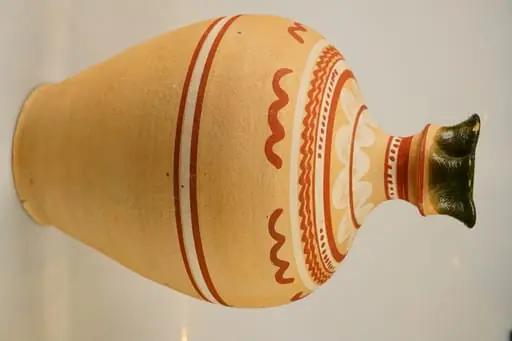 Ulcior mare, cu corp tronconic, bombat în jumătatea sa superioară, gât îngust, buză evazată, bilobată și cu ciur; vasul este prevăzut cu o toartă laterală de prindere, cu țâță, cu puncte de inserție sub buză și în zona diametrului maxim al corpului. Decorul, dispus în jumătatea superioară a corpului, este realizat prin pictare cu pensula și se compune din motive geometrice: linii circulare de culoare albă și roșie, de grosimi diferite; două linii circulare ondulate, de culoare roșie; grupuri de puncte mici roșii dispuse pe o linie circulară albă; linii mici de culoare roșie, ondulate; linie circulară ondulată, groasă, de culoare albă. Gura vasului și toarta acestuia, în zona țâței, sunt marcate cu smalț verde. Cromatica: alb, roșu, verde, pe fondul roșu al lutului ars.
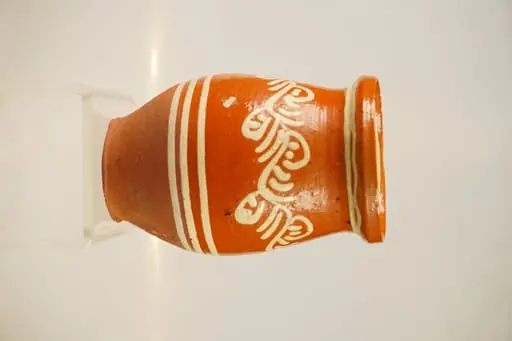 Vas cu corpul de formă bitronconică, ușor rotunjit în zona mediană, cu gât îngust, buză evazată și muchia buzei verticală; este prevăzut cu o toartă laterală de prindere, de formă aplatizată, cu puncte de inserție la buză și în zona mediană a piesei. Decorul monocromatic este realizat prin pictare cu cornul cu humă albă și se compune din motive geometrice (linii circulare paralele, de culoare albă: trei linii dispuse imediat sub toartă și două linii, neglijent realizate, plasate sub buză); motive vegetale geometrizate (un brâu dispus circular la baza gâtului, format din frunze și mici vrejuri pictate sub formă de ghirlandă continuă). Suprafața ornamentată a vasului este acoperită cu un strat de smalț transparent (baza vasului este nesmălțuită). Toarta vasului este decorată cu puncte alungite, realizate prin picurarea culorii. Cromatica: alb, pe fondul roșu al lutului ars.
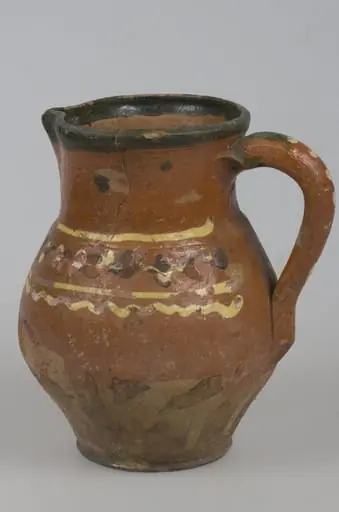 Vas de lut de mici dimensiuni, bombat, cu gât lung și puțin evazat, cu gură largă și cioc de scurgere. Toarta pornește de sub gură și coboară până în zona diametrului maxim al vasului. Este smălțuit în interior și exterior. Decorul dispus pe umărul vasului este format din: motive florale: o cunună din frunze încadrată de motive geometrice: o linie circulară în partea superioară și o linie circulară și una în val în partea inferioară. Buza vasului este vopsită în interior și exterior. Toarta este decorată cu puncte de culoare albă. Cromatică: fond: cărămiziu; motive: alb; verde; negru.
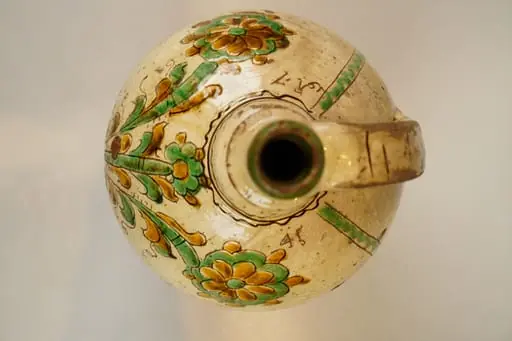 Ulcior cu corp sferic și gât înalt, profilat și cu buza invazată; este prevăzut cu o toartă laterală de prindere, de formă aplatizată, care se inserează începând din zona mediană a gâtului până la treimea superioară a corpului. Este acoperit pe suprafața exterioară cu un strat de angobă albă (exceptând baza vasului) peste care este realizat, prin sgrafitare în pasta de angobă și prin pictare cu pensula și cu cornul, decorul format din motive geometrice, florale și vegetale, dispuse astfel: partea frontală a corpului vasului (opusă torții) este decorată cu un motiv cu contur sgrafitat, reprezentând un buchet cu trei tulpini groase cu cinci flori (cele două flori de la bază posibil flori de lalea, cele trei din partea superioară având formă rotundă, cu petale ușor alungite sau rotunde), cu vrejuri și frunze, realizate în culorile galben-ocru și verde. Gura vasului este marcată cu culoare verde iar partea inferioară a corpului și baza gâtului sunt decorate cu linii circulare simple și ondulate, de culoare maro. Toarta vasului conține cîteva linii subțiri maro orizontale, iar de o parte și alta a acesteia se găsește câte o linie ondulată verticală de culoare verde, între două linii sgrafitate. Linii circulare realizate prin incizare decorează baza gâtului și partea superioară a acestuia, sub dunga verde. De o parte și de alta a decorului central, în partea superioară a corpului, se găsește înscris prin sgrafitare anul realizării piesei, 1745. Suprafața ornamentată a vasului este acoperită cu un strat de smalț transparent. Cromatica: alb, verde, galben ocru, maro.
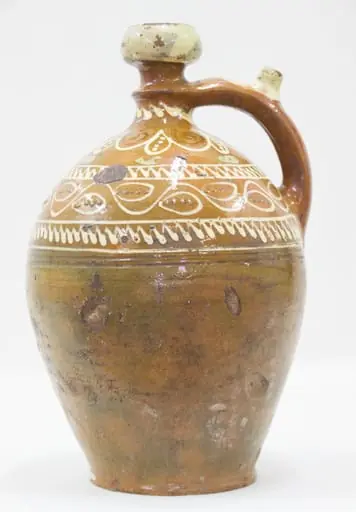 Ulcior de formă bitronconică cu gura îngustă și rotundă, cu o toartă și un orificiu pentru scurgerea lichidului, smălțuit și decorat pe jumătatea superioară cu motive vegetale (ghirlande) și geometrice (spirale; patru cercuri concentrice cu o linie șerpuită între ele).Cromatică: maro (fond), decor - galben, bej, alb, verde. Jumătatea inferioară a obiectului este nesmălțuită.
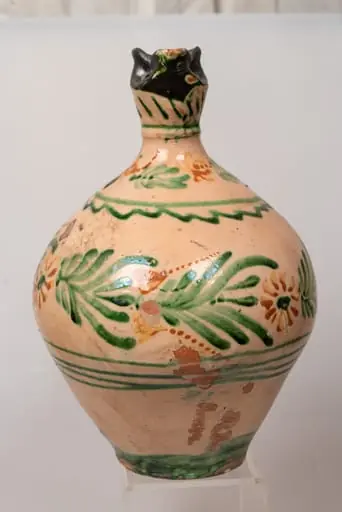 Piesă cu corp sfericl bombat, cu gât profilat, cu gât și gură îngustă, bilobată, cu cior. Din pântecul vasului pornește o toartă tubulară cu orificiu pronunțat pentru băut (cu țâță), care se unește cu vasul sub buza acestuia. Fața exterioară a ulciorului este angobată cu un strat de humă albă, peste care este pictat decorul, cu pensula și cu cornul, astfel: pe partea superioară a vasului, între două grupări de linii concentrice apare o bandă decorată cu motiv floral (o floare rotundă cu multe petale) alternând cu motivul fitomorf caracteristic centrului: frunze alungite, de culoare verde. Pe cant, delimitată de banda decorativă de pe burta vasului de către două linii concentrice, realizate drept și în valuri, este dispusă o bandă decorativă mai îngustă, cu motiv floral și motiv fitomorf delimitat de gât de un brâu colorat. Sub buza bilobată sunt realizate o serie de linii oblice paralele pictate, care continuă pe toată suprafața torții. Fundul vasului este marcat cu o bandă lată orizontală, pictată. Cromatica: alb, maro, verde. Vasul este acoperit cu un strat de smalț transparent.
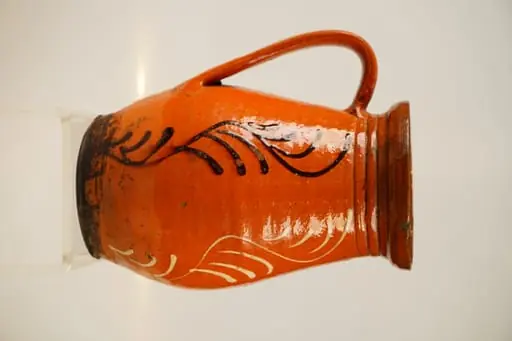 Vas cu corp bitronconic ușor rotunjit, gât scund, buză evazată cu muchia verticală; este prevăzut cu o toartă laterală de prindere, de formă aplatizată, cu puncte de inserție la gât și în zona diametrului maxim al corpului. Decorul este realizat prin pictare cu pensula și se compune din patru motive vegetale stilizate, aproximativ identice, două de culoare maro și două de culoare albă, pictate alternant și formate dintr-o linie verticală sub formă de S, ce are în onduleuri grupuri de câte trei linii curbe, sugerând niște frunze subțiri. Gâtul vasului este decorat cu trei linii circulare realizate prin incizare în pasta de lut. Suprafața vasului este acoperită cu un strat de smalț transparent.
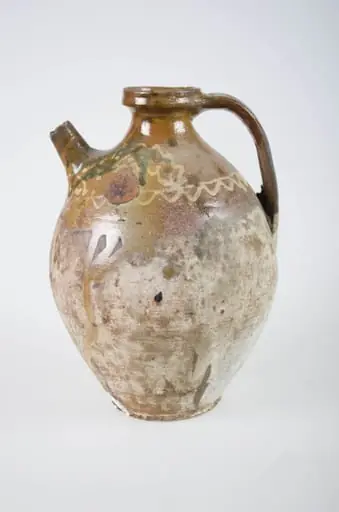 Vas de formă ovoidală cu gât lung, cu gura largă și buza înălțată. Prezintă o toartă care pleacă din gura vasului și se unește cu corpul în zona diametrului maxim. Din umăr, în partea opusă torții pleacă o țâță scurtă (burciuc). Vasul este smălțuit pe exterior în partea superioară unde prezintă și un decor format din motive geometrice: linie și linie în val deasupra cărora se regăsesc motive florale. Cromatica: fond: cărămiziu; motiver: alb-gălbui, verde. Prezintă uzură funcțională.
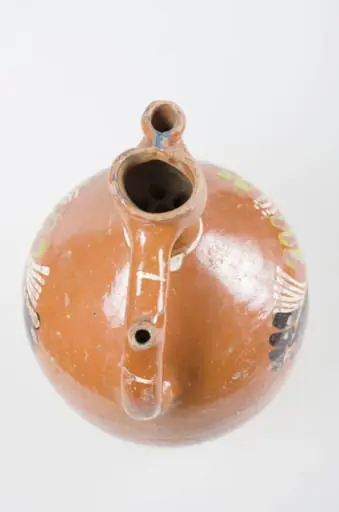 Ulcior mic cu corpul de formă sferică, smălțuit (80-85% din suprafața exterioară). Prezintă un orificiu lângă gură (pentru turnat) și unul pe mâner (pentru băut - ”țâță”). Este ornamentat cu motive geometrice: linii drepte și curbe și motive fitomorfe (flori și frunze). Cromatică: fond: maro deschis; motive: alb; negru; verde; albastru.
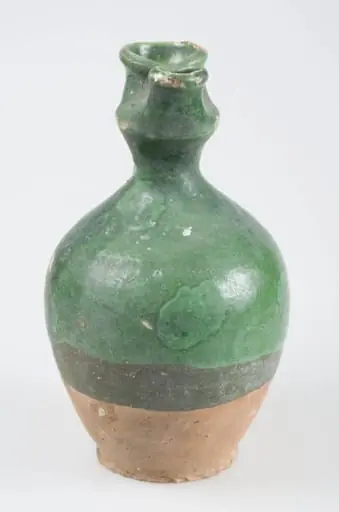 Ulcior mic de formă sferică smălțuit pe jumătatea superioară din suprafața exterioară. Vaul prezintă gură largă, bilobată și evazată, cu ciur în interior. Vasul are "țâță" pentru băut poziționat la jumătatea torții. Decorul este realizat prin stropirea cu smalț, formând linii și puncte neregulate. Cromatică: maro deschis; verde (trei nuanțe).
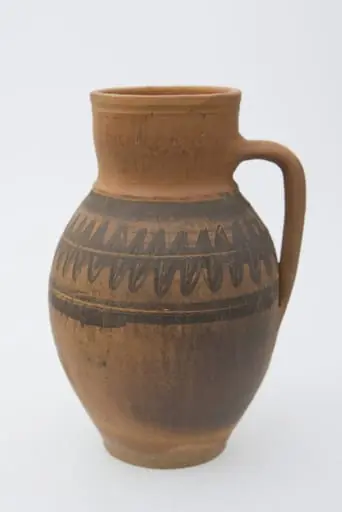 Recipient sferoidal, bombat în partea mediană, gât puțin adunat și gura largă. Prezintă toartă laterală ce leagă partea inferioară a gâtului cu partea de diametru maxim al ulciorului. Decor în partea superioară a vasului compus din linii orizontale dintr-o bandă zimțată neagră ce ilustrează motivul ”dintelui de lup'' (linie frântă în unghi ascuțit), încadratată de două linii dispuse circular. Peste linia zimțată se suprapune o linie trasată în humă, precum și incizii superficiale ce urmăresc conturul motivului decorativ. Cromatică: fond: rosu-cărămiziu; motive: negru.